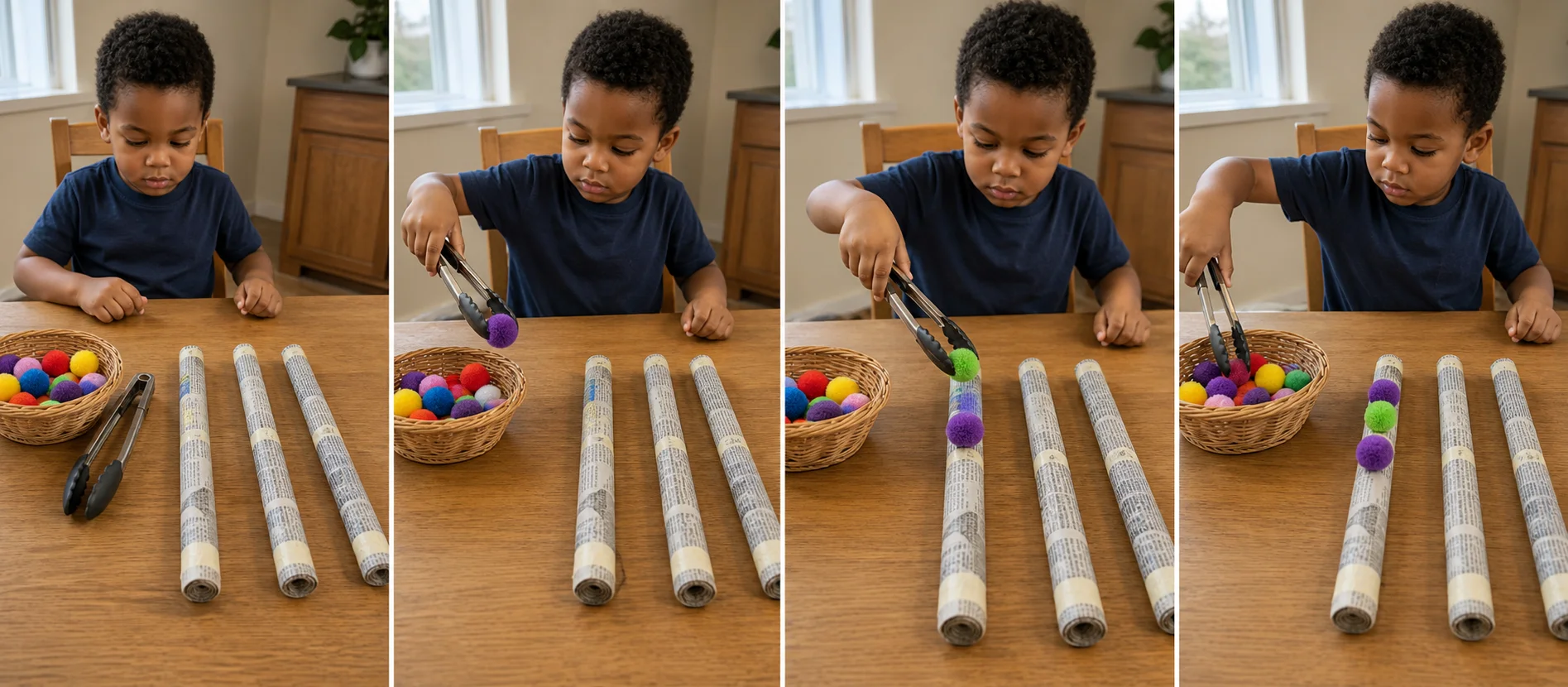

Newspaper Log Tongs Balance
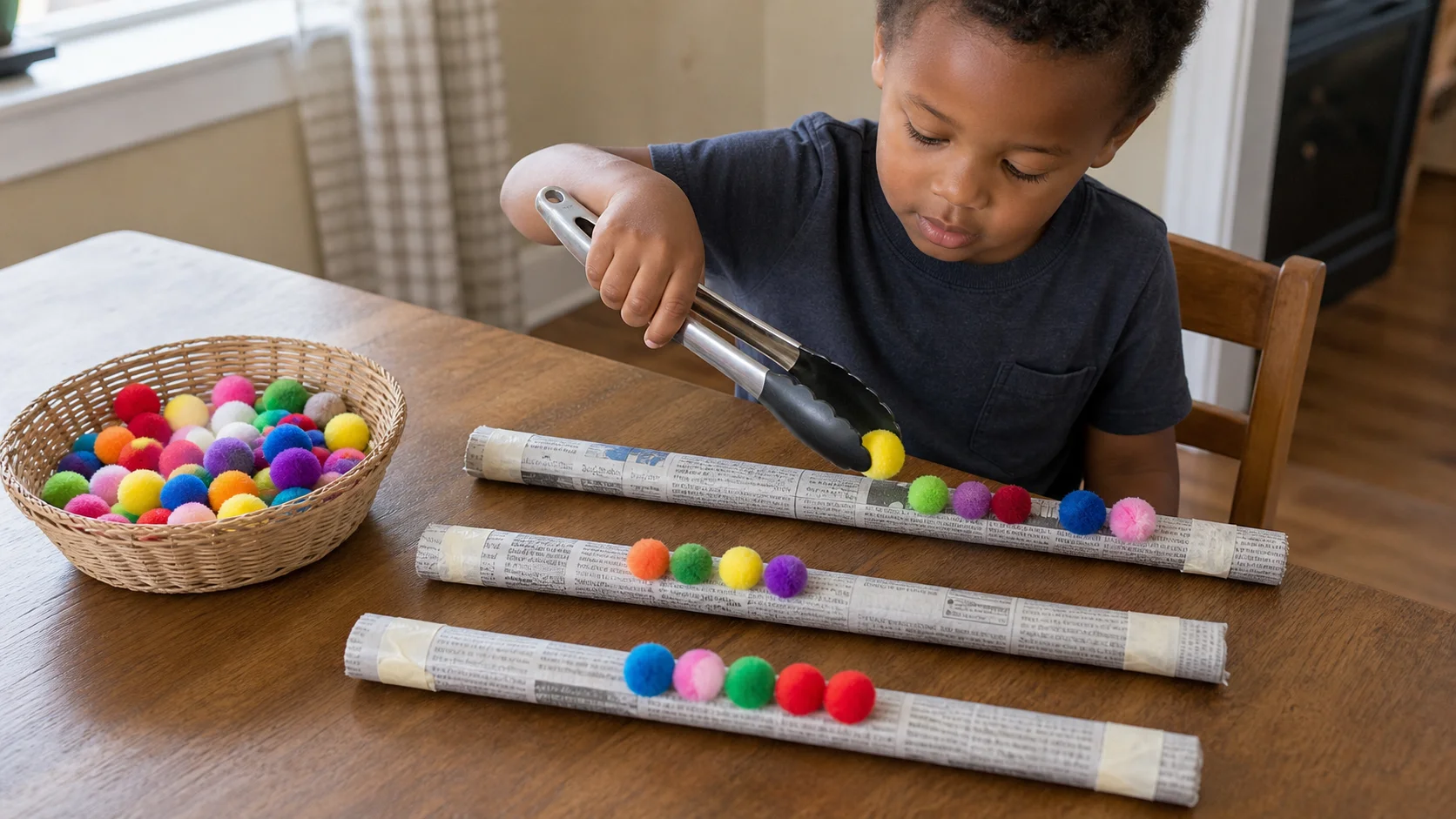
Use tongs to balance pom-poms along rolled newspaper logs. Each squeeze, lift, and careful landing builds hand strength, coordination, and controlled release.
Find engaging activities for 3-year-olds who are ready for more pretend play, problem-solving, movement, art, early learning, and simple turn-taking. Browse flexible at-home and indoor ideas without complicated setup.


Use tongs to balance pom-poms along rolled newspaper logs. Each squeeze, lift, and careful landing builds hand strength, coordination, and controlled release.


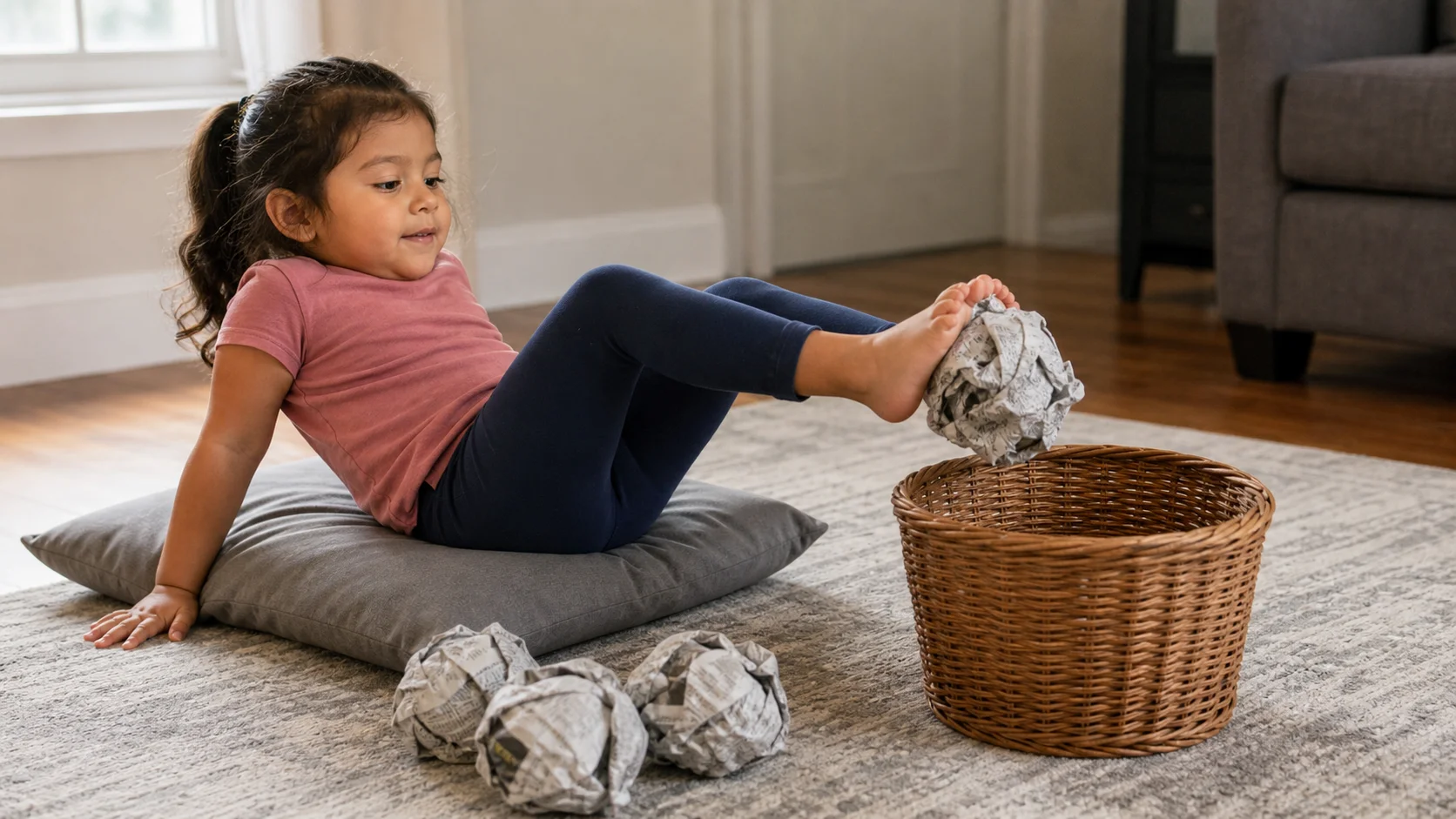
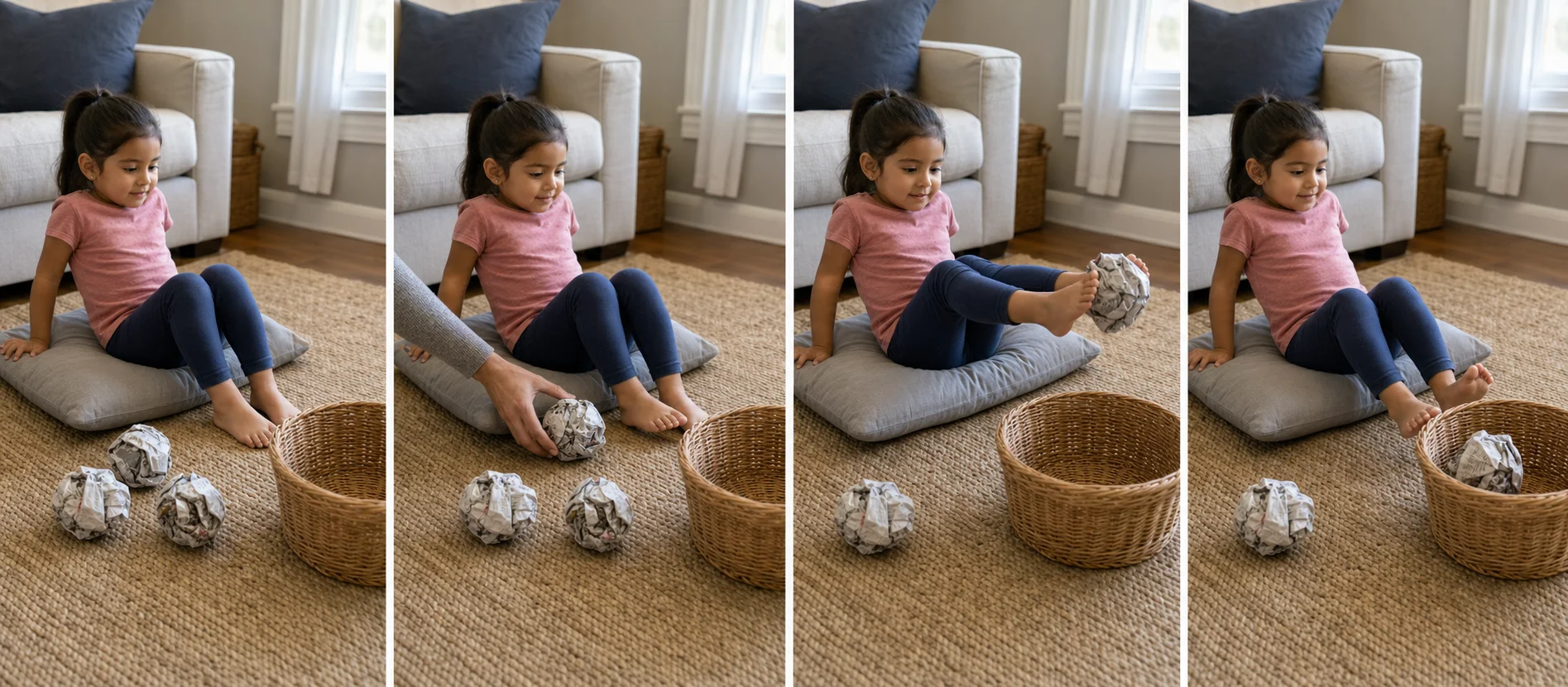
Turn newspaper cleanup into a foot-powered delivery game. Your child pinches each crumpled paper nest between both feet, lifts it into a basket, and practices core control, balance, and body awareness.

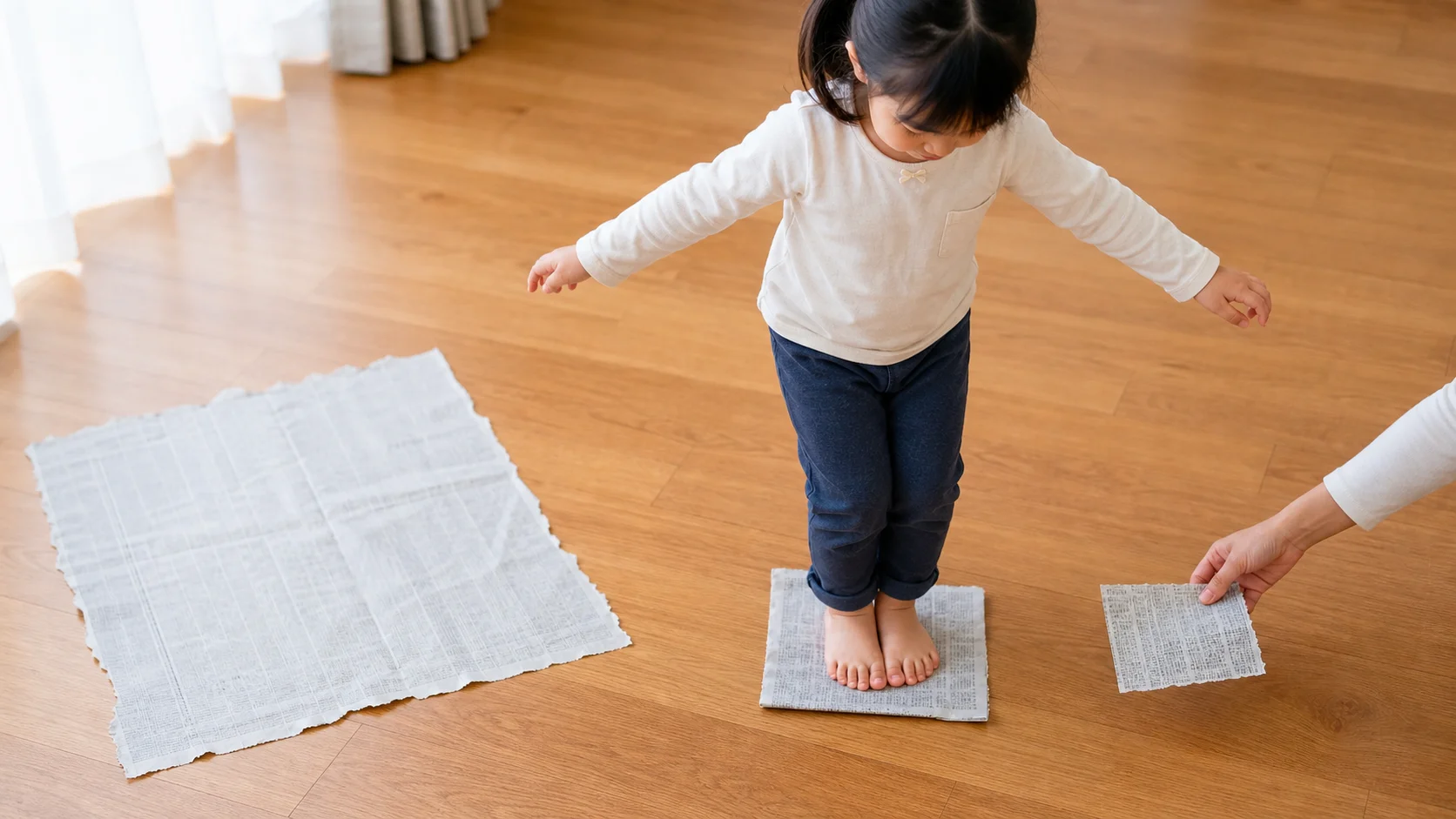
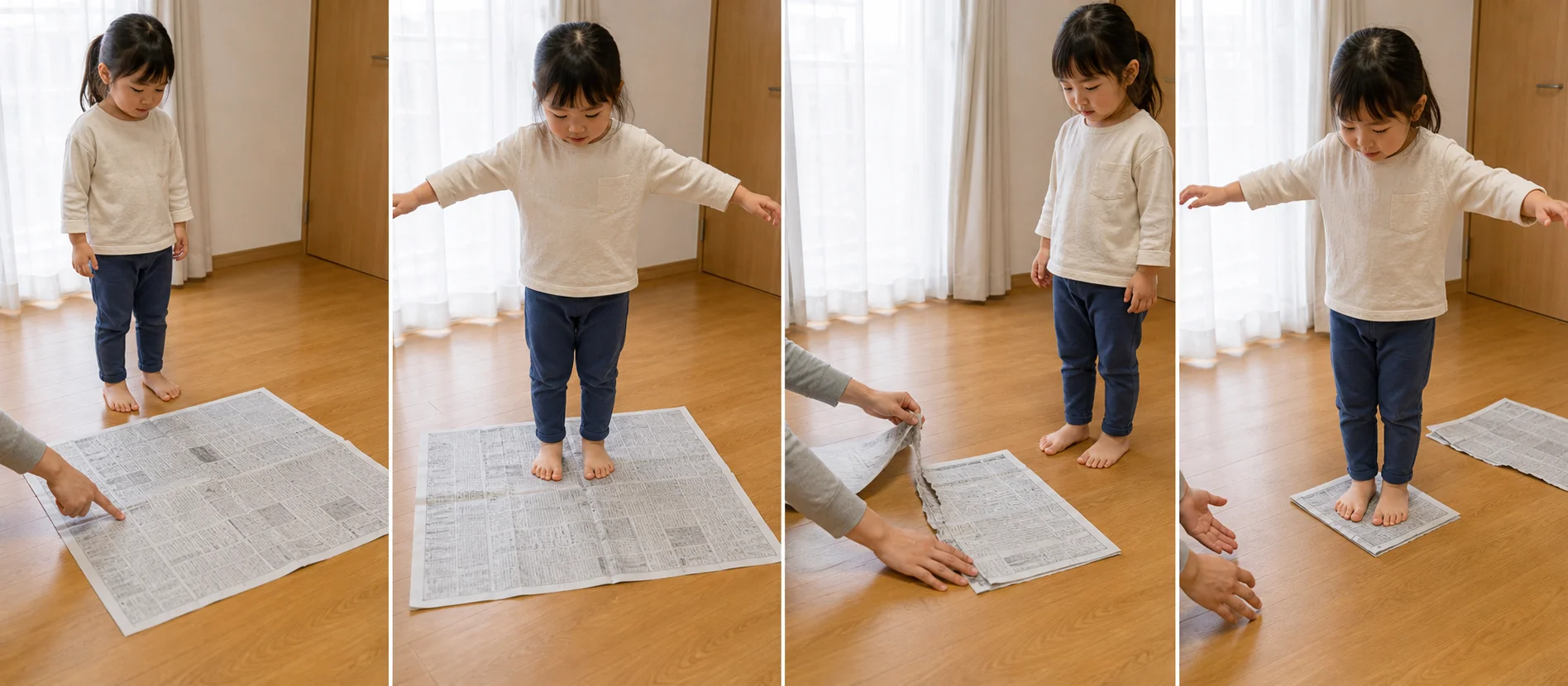
Turn one newspaper sheet into a balance challenge that changes every round. Your child steps onto the paper, steps off while you tear it in half, then returns to practice balance and body control on the shrinking island.


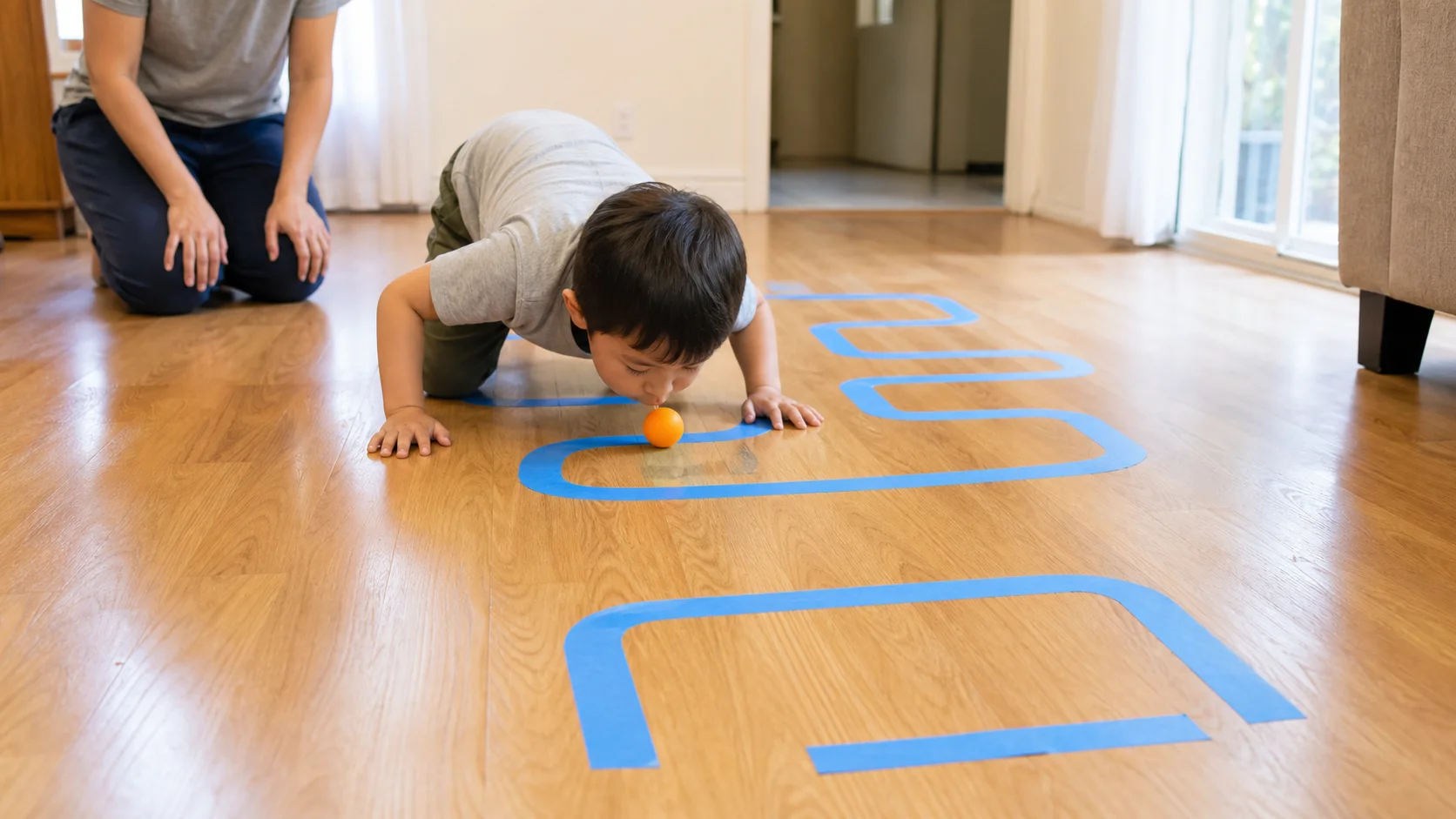
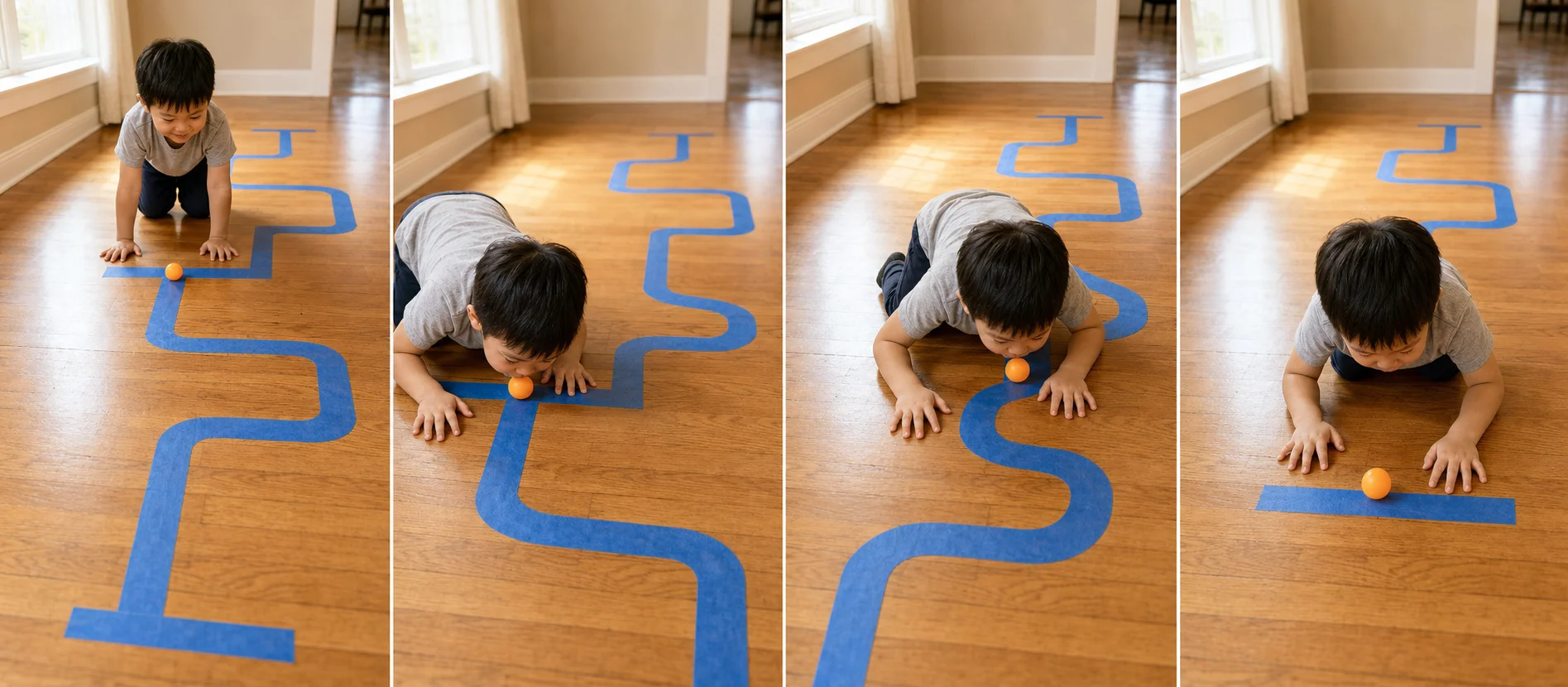
Turn a ping-pong ball and a taped floor lane into a silly crawling challenge. Your child keeps both hands down and uses nose nudges to guide the ball from start to finish, practicing body awareness, core strength, and careful movement planning.


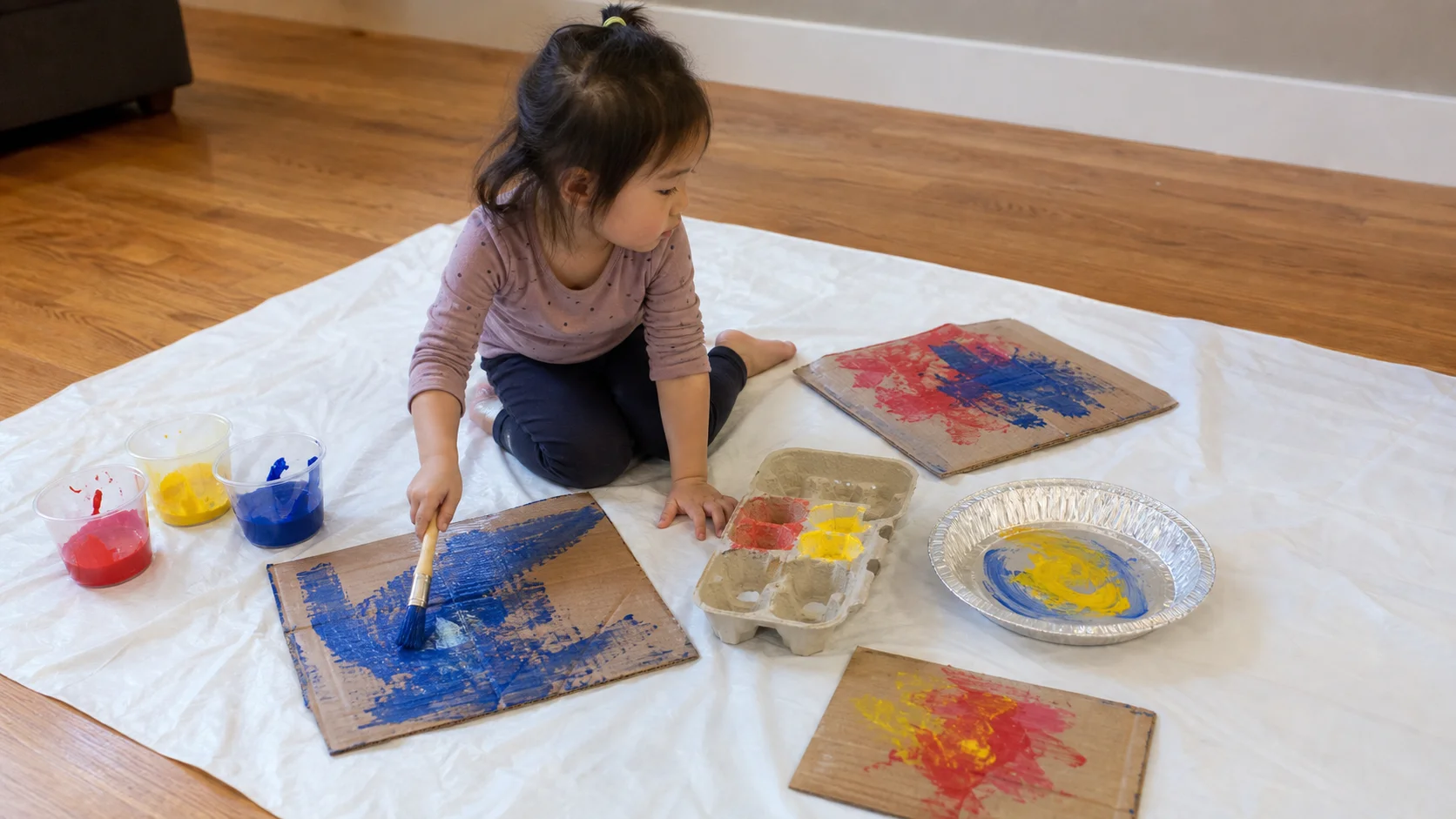
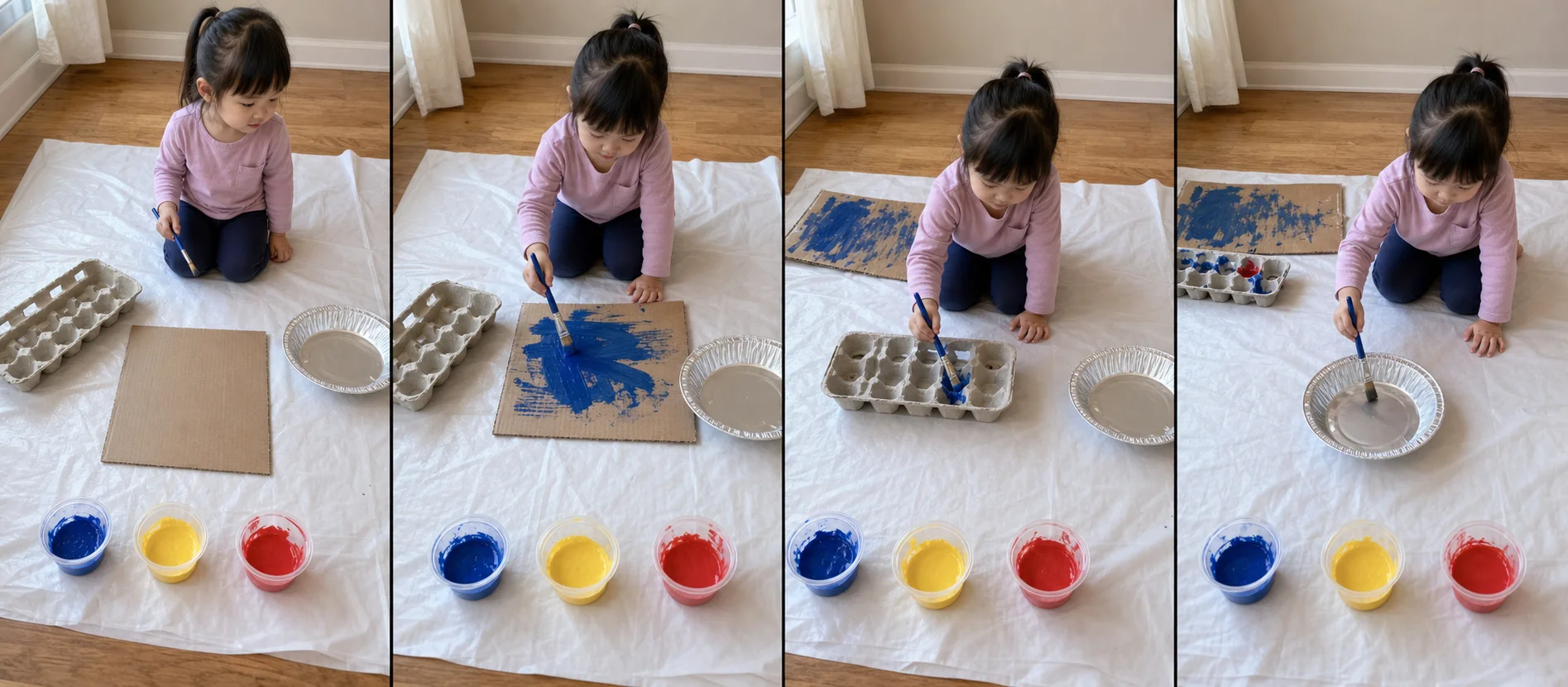
Give clean recycling one colorful last job with an open-ended painting round. Your child brushes washable paint across cardboard, egg cartons, and pie tins, practicing brush control as each surface calls for a different hand movement.


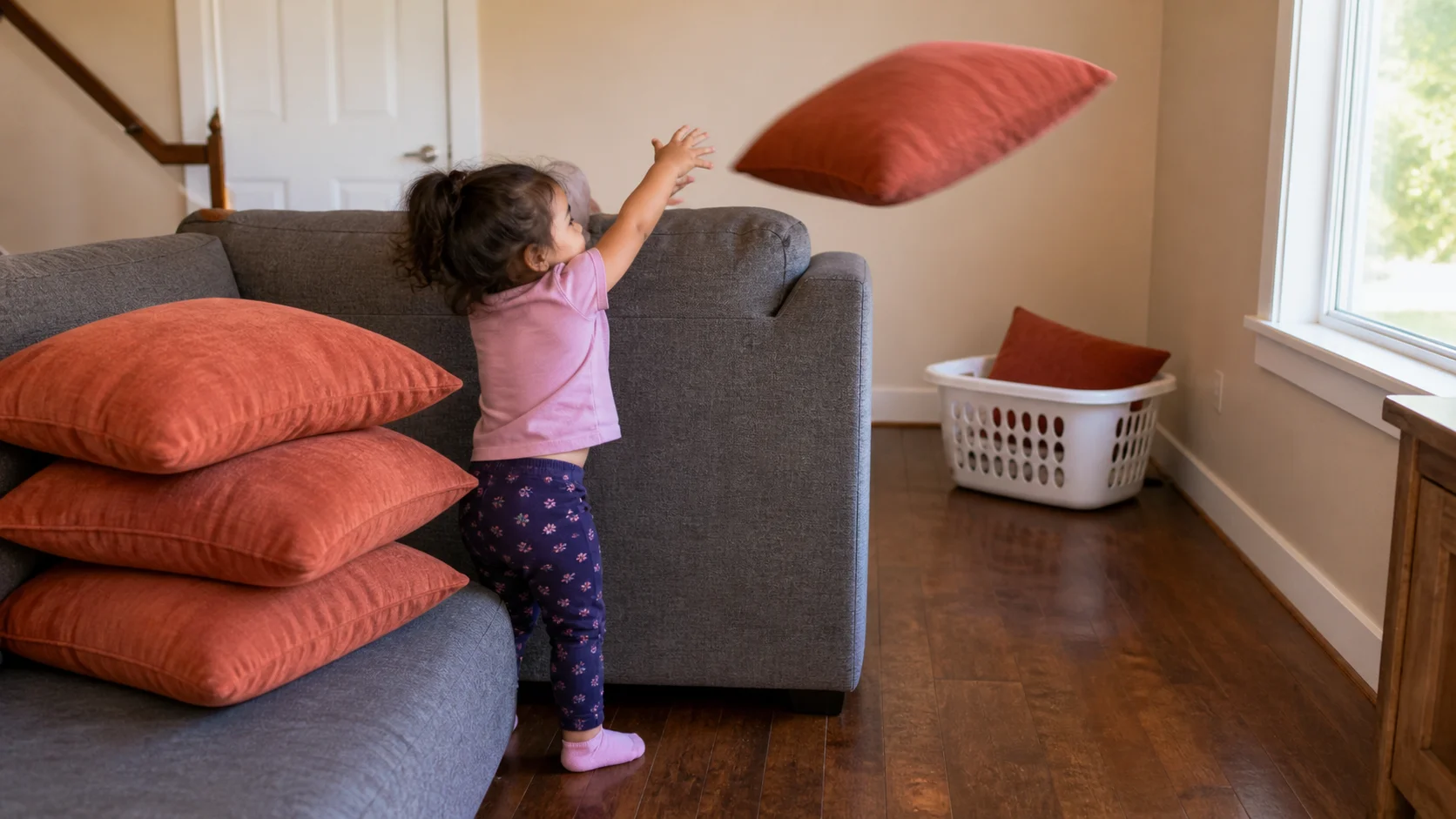
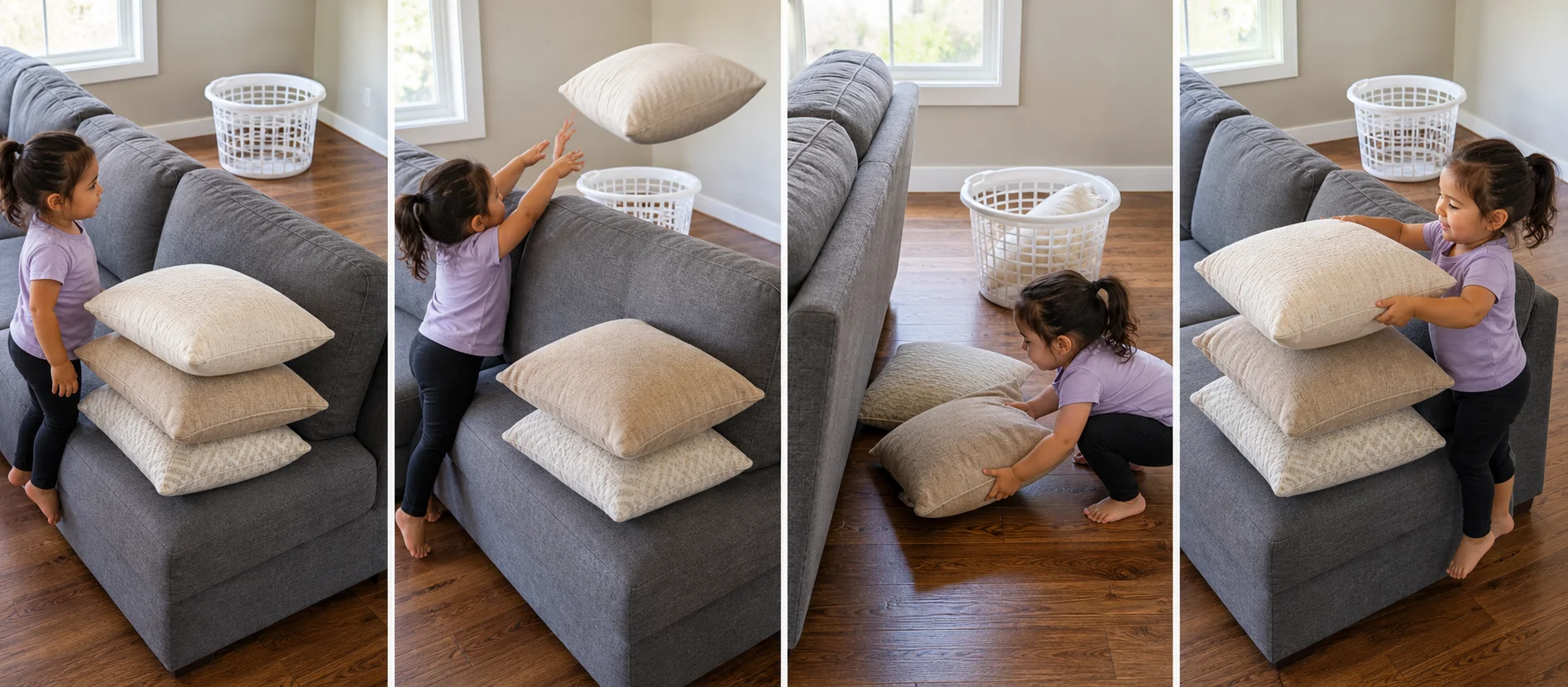
Try to land large soft pillows inside a nearby laundry basket, then collect them and start again. Each throw gives your child a safe way to use whole-body force while practicing aim and coordination.


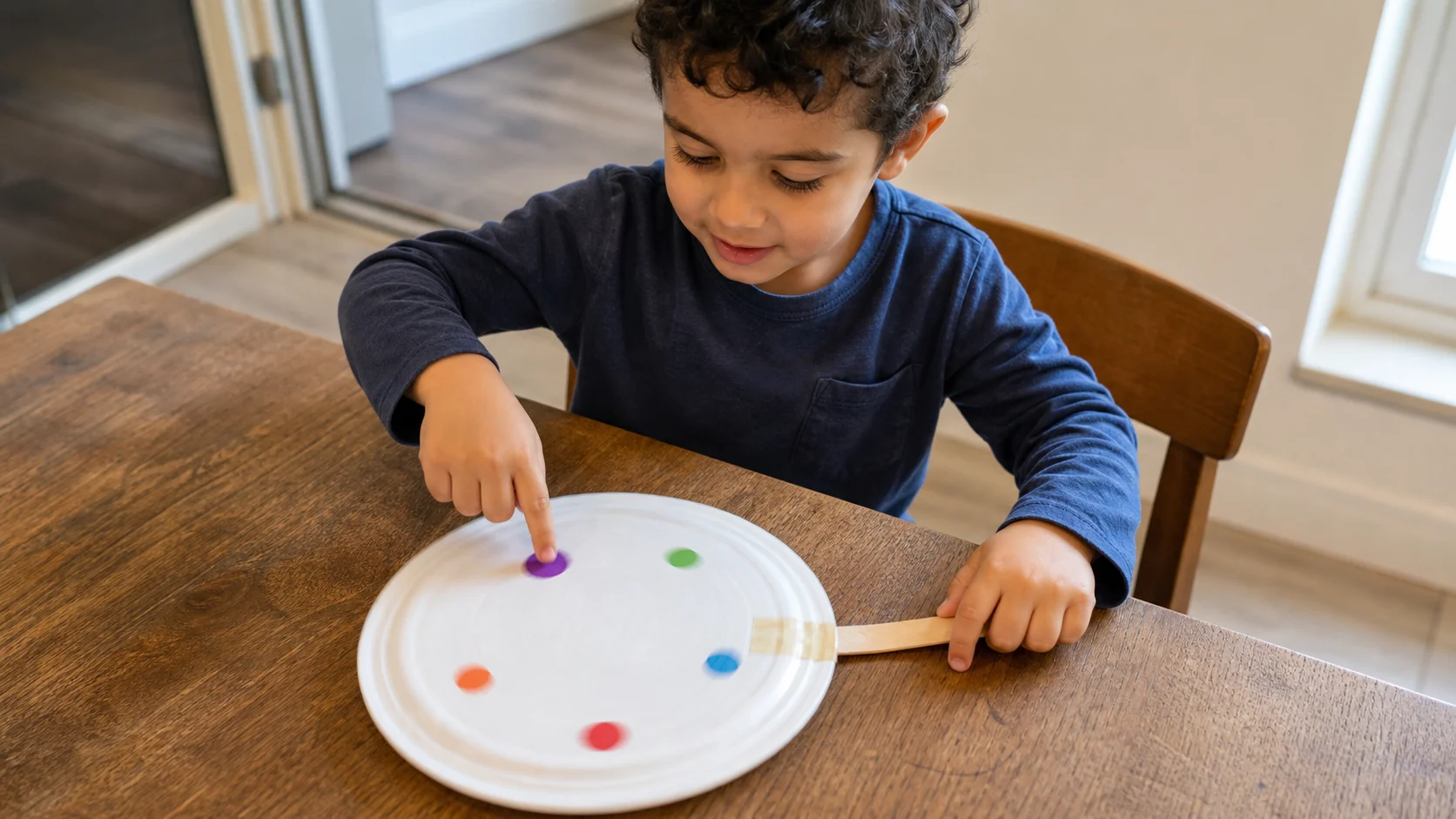
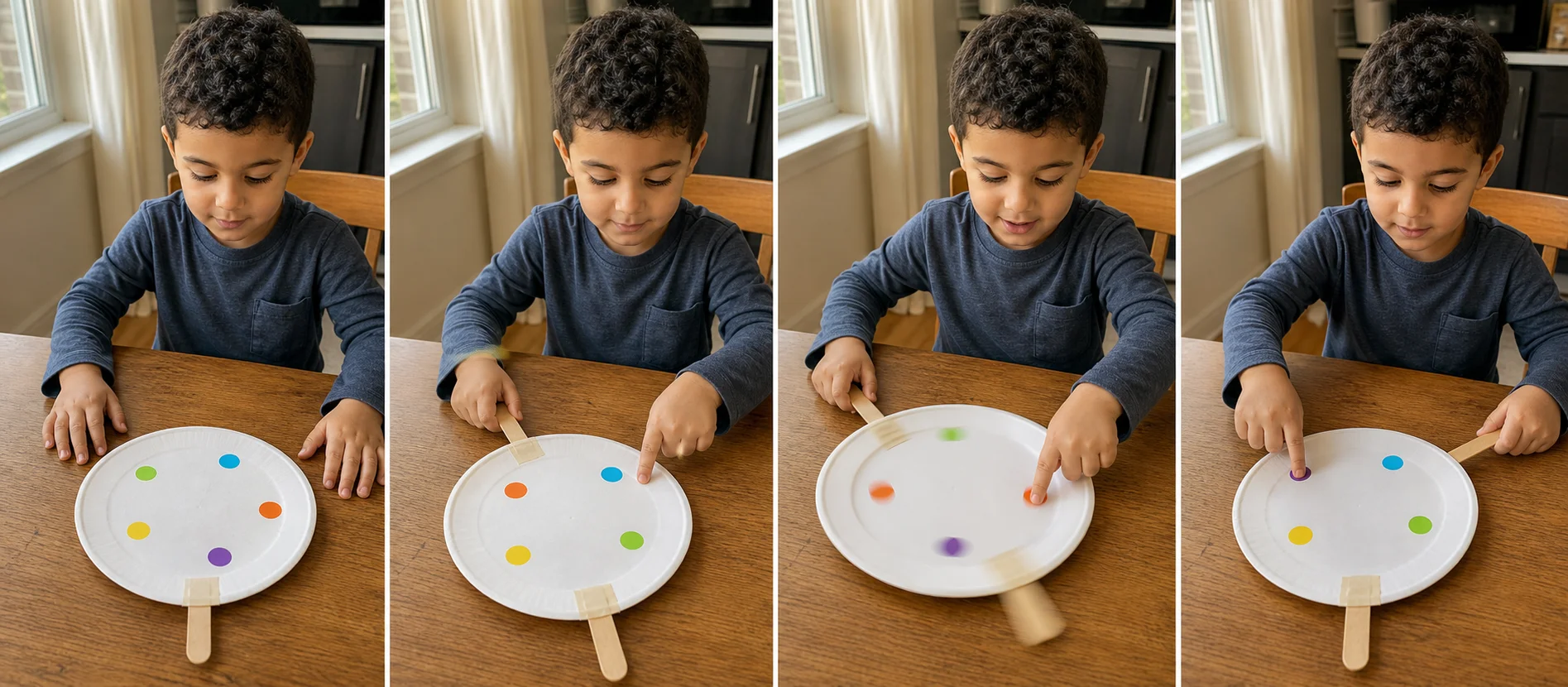
Spin the plate and tap a moving color dot before it stops. Your child uses one hand to spin and the other to tap, building two-hand coordination, reaction time, and visual tracking.


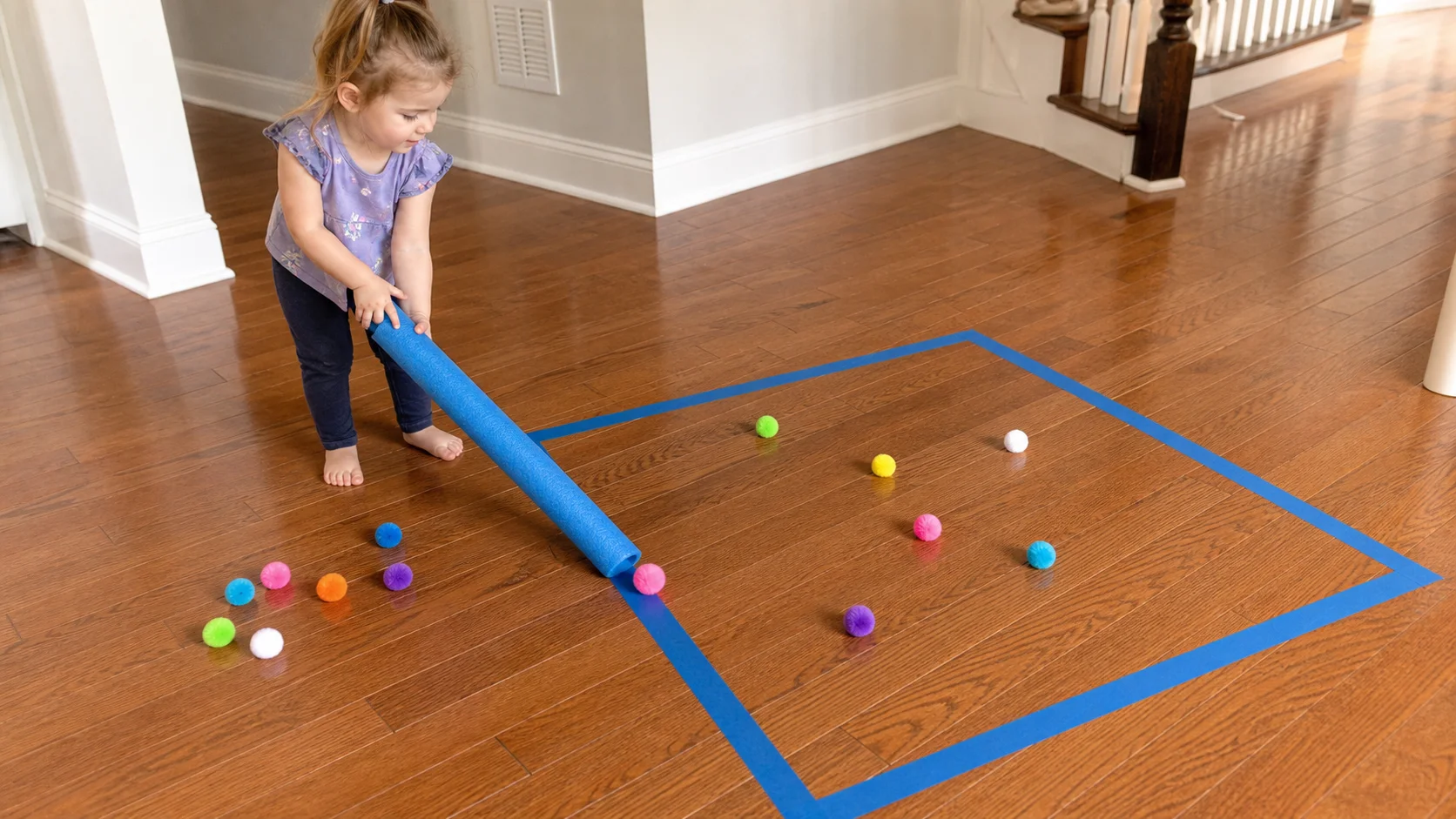
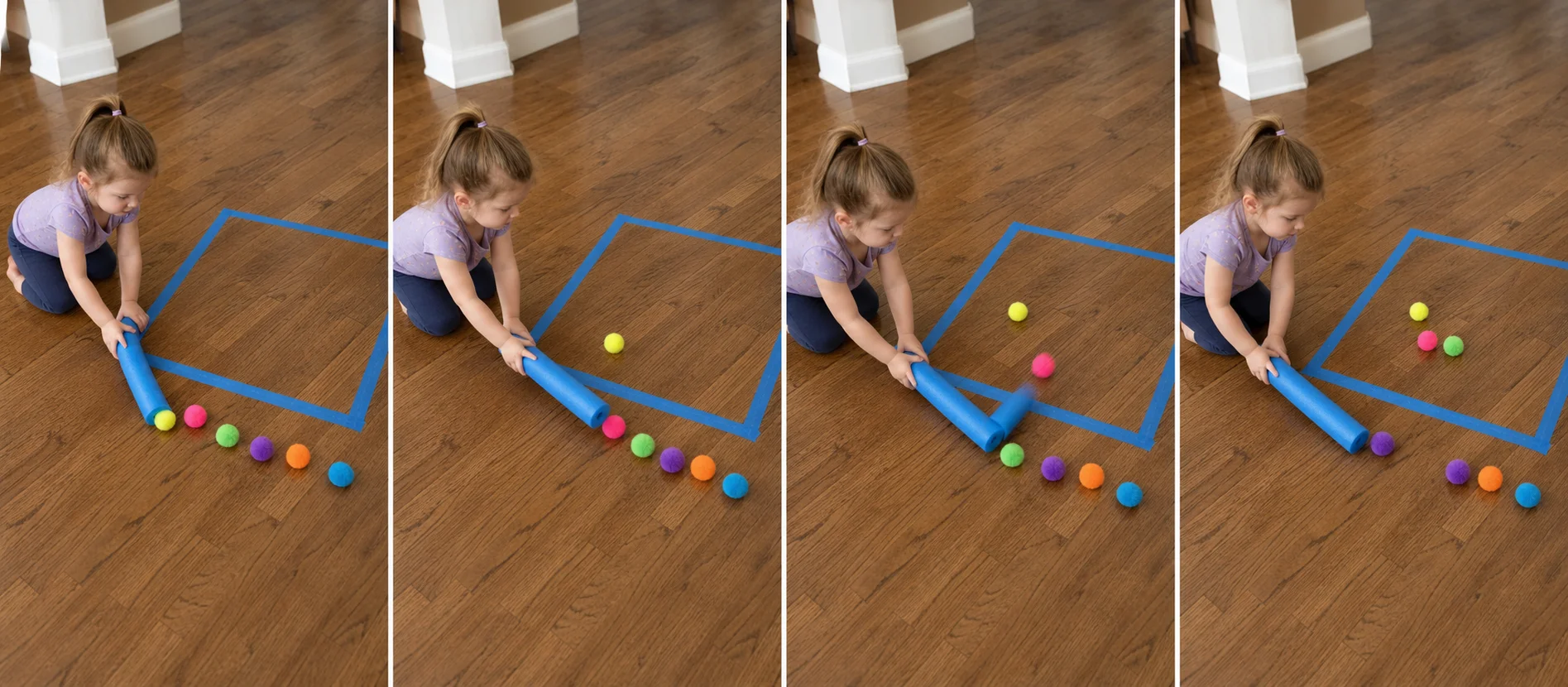
Give a pool noodle a surprisingly precise job. Have your child push pom-poms into a taped floor square for an active indoor game that practices aiming and hand-eye coordination.


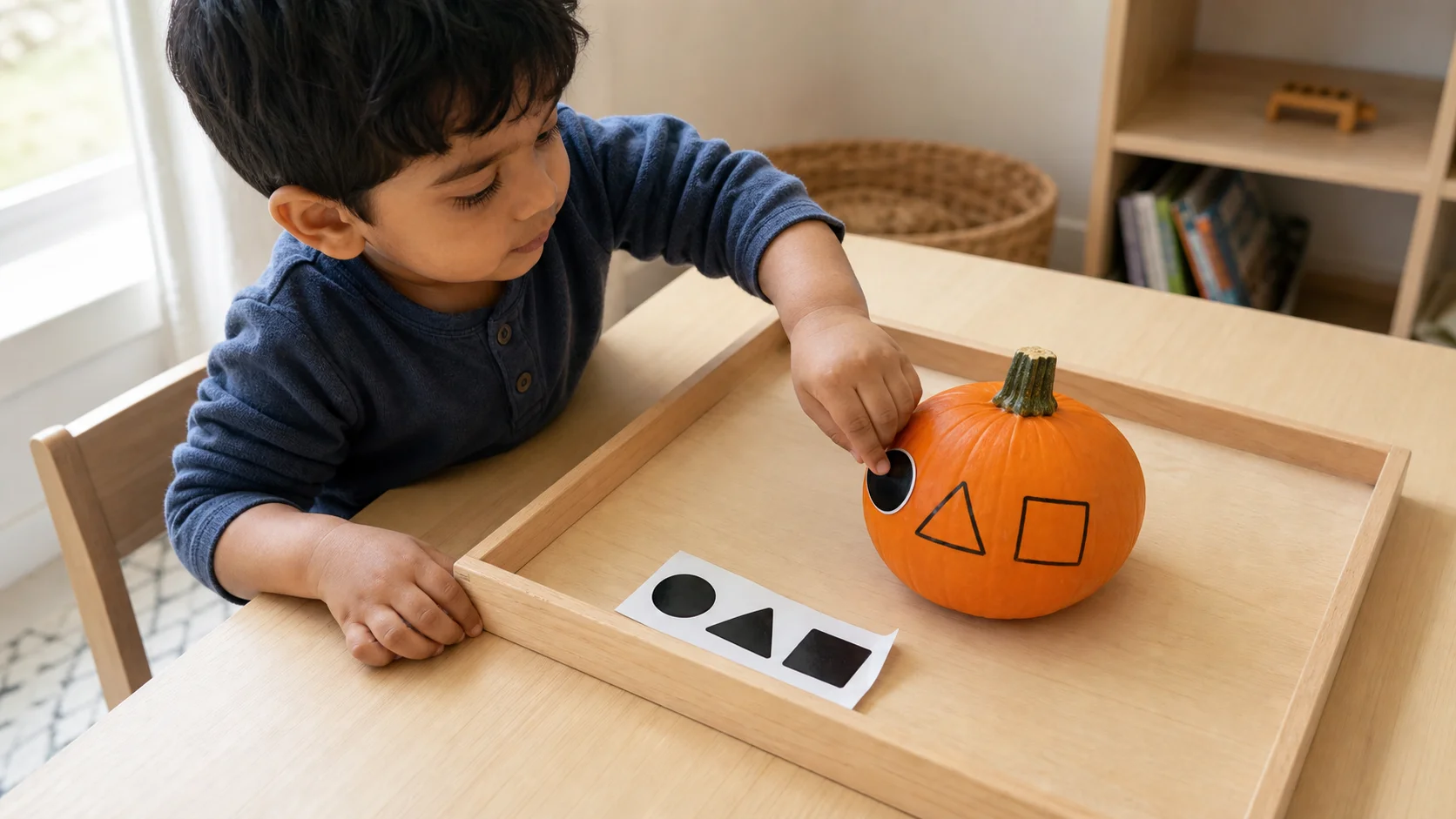
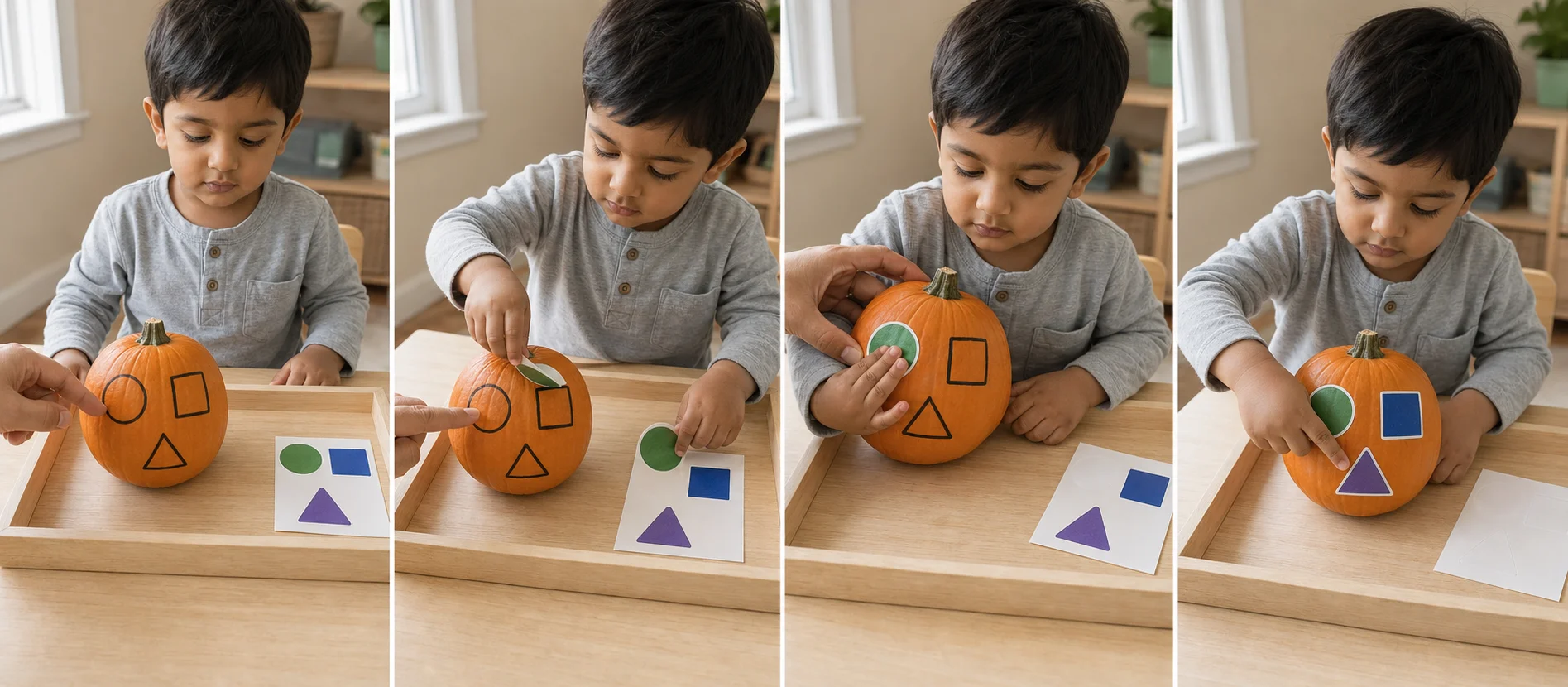
Skip the goo and turn pumpkin decorating into a calm shape-matching game. Draw three simple shapes on a pumpkin, then have your child find, peel, and press the matching stickers for low-mess fine-motor practice.


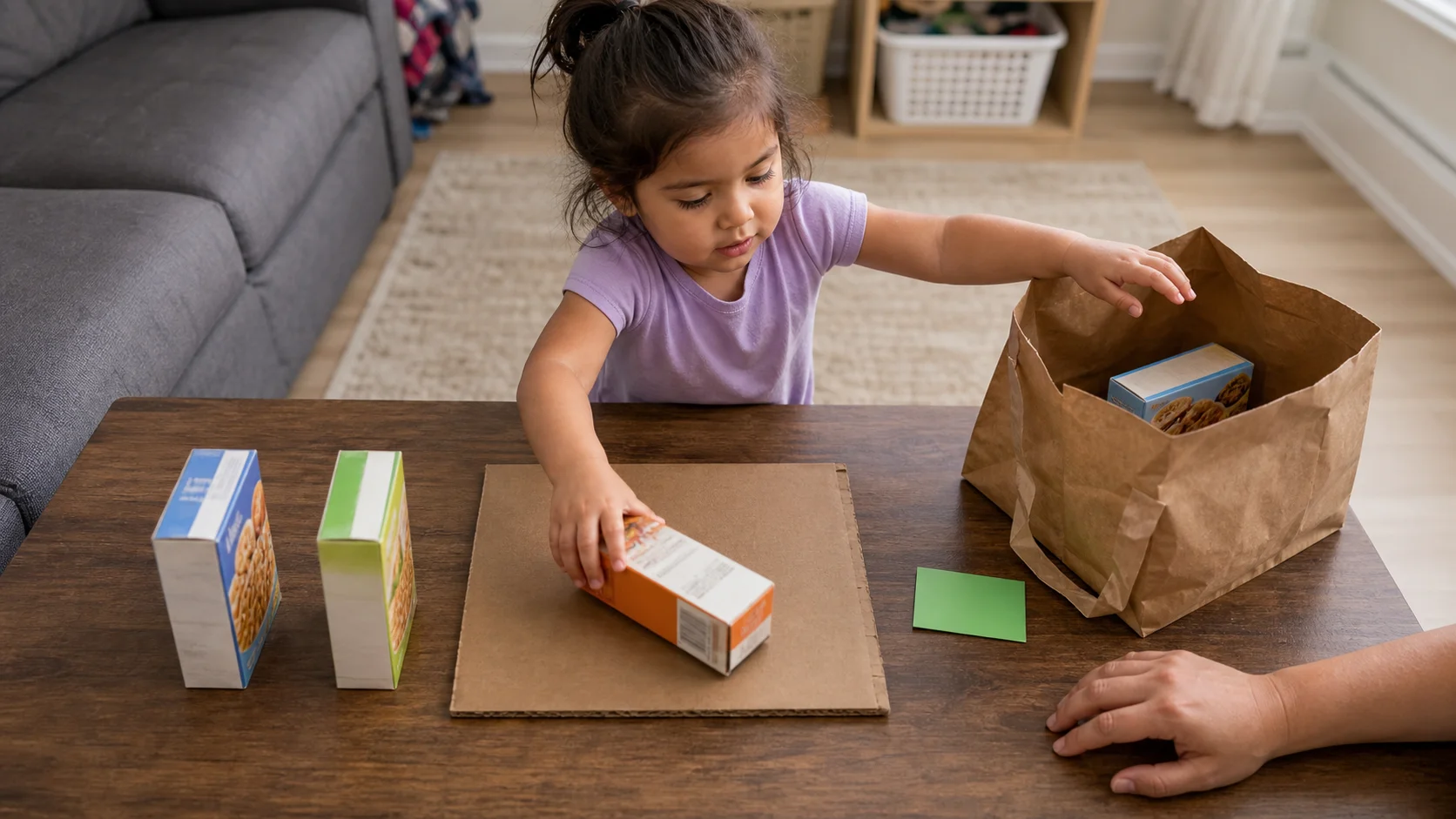
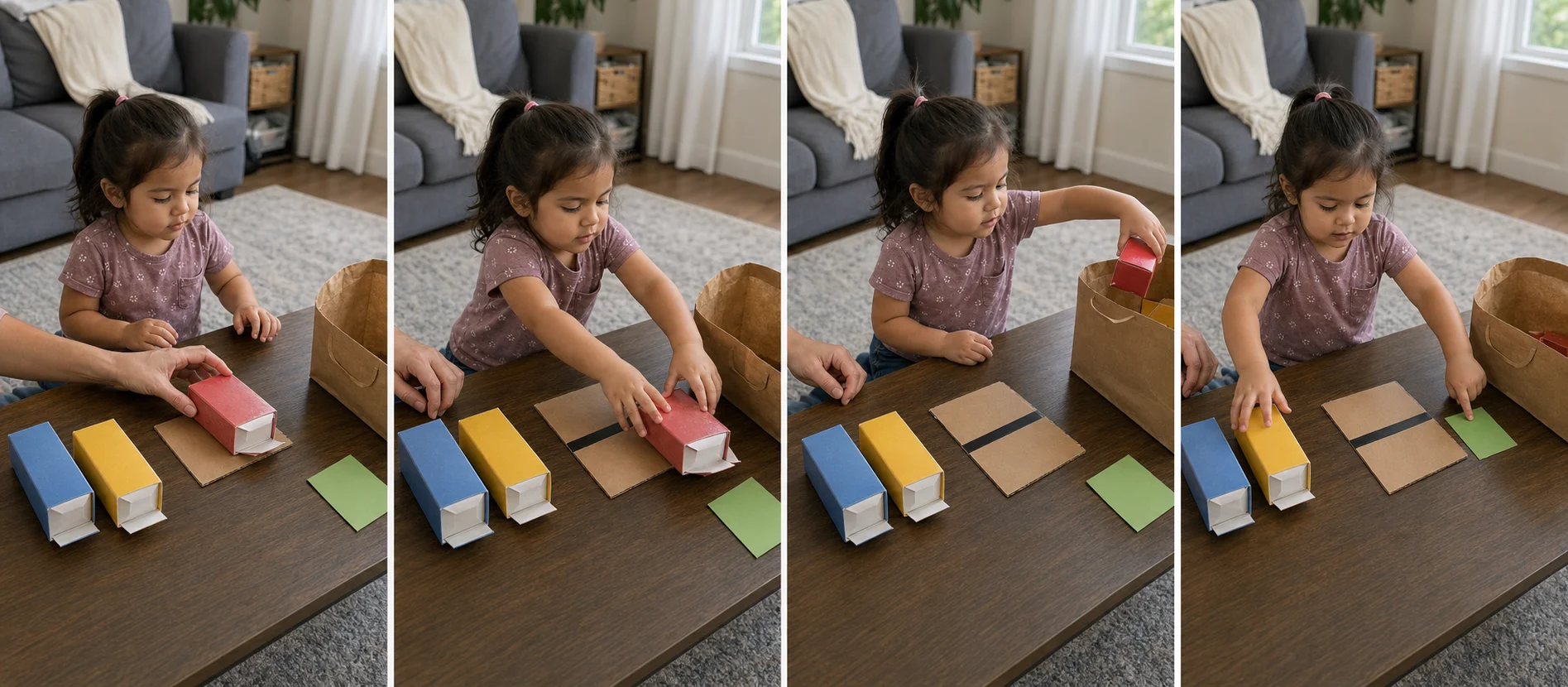
Bring the grocery checkout home with a simple scan, bag, and done routine. Your child slides each box across a pretend scanner, drops it into a bag, and marks the turn complete while practicing a familiar sequence from start to finish.


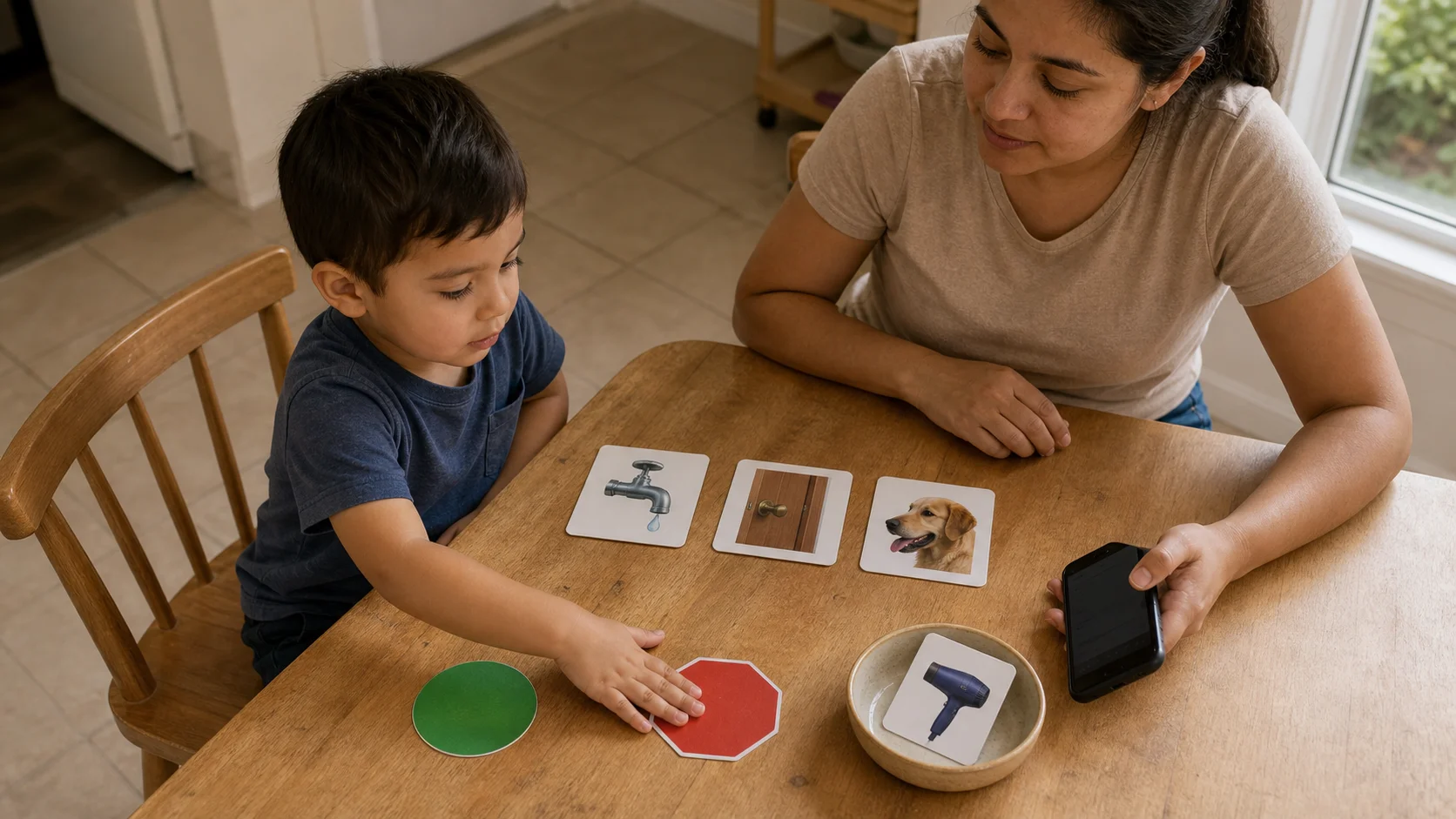
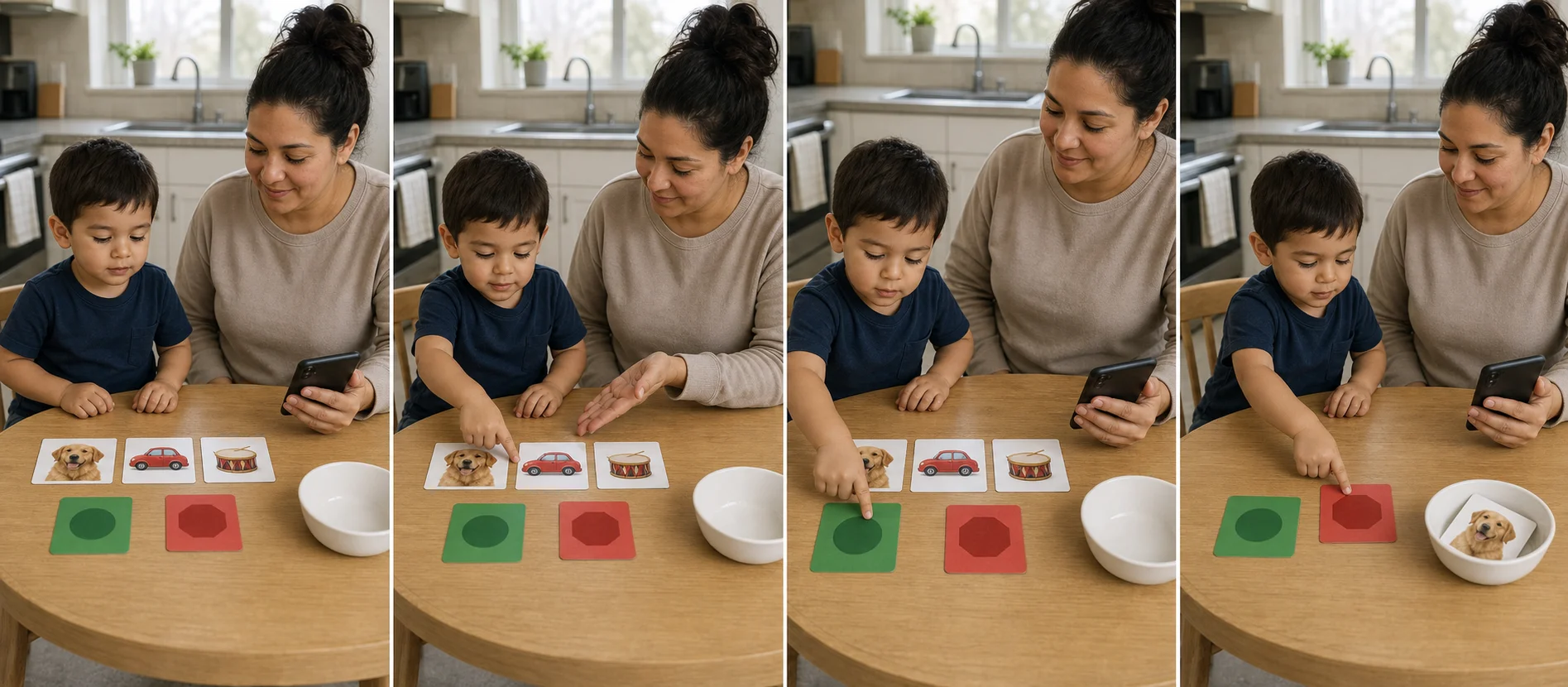
Let your child decide when a sound starts and when it stops. They choose a picture, tap GO to hear its matching clip, then tap STOP when they have heard enough, making listening practice predictable and child-controlled.


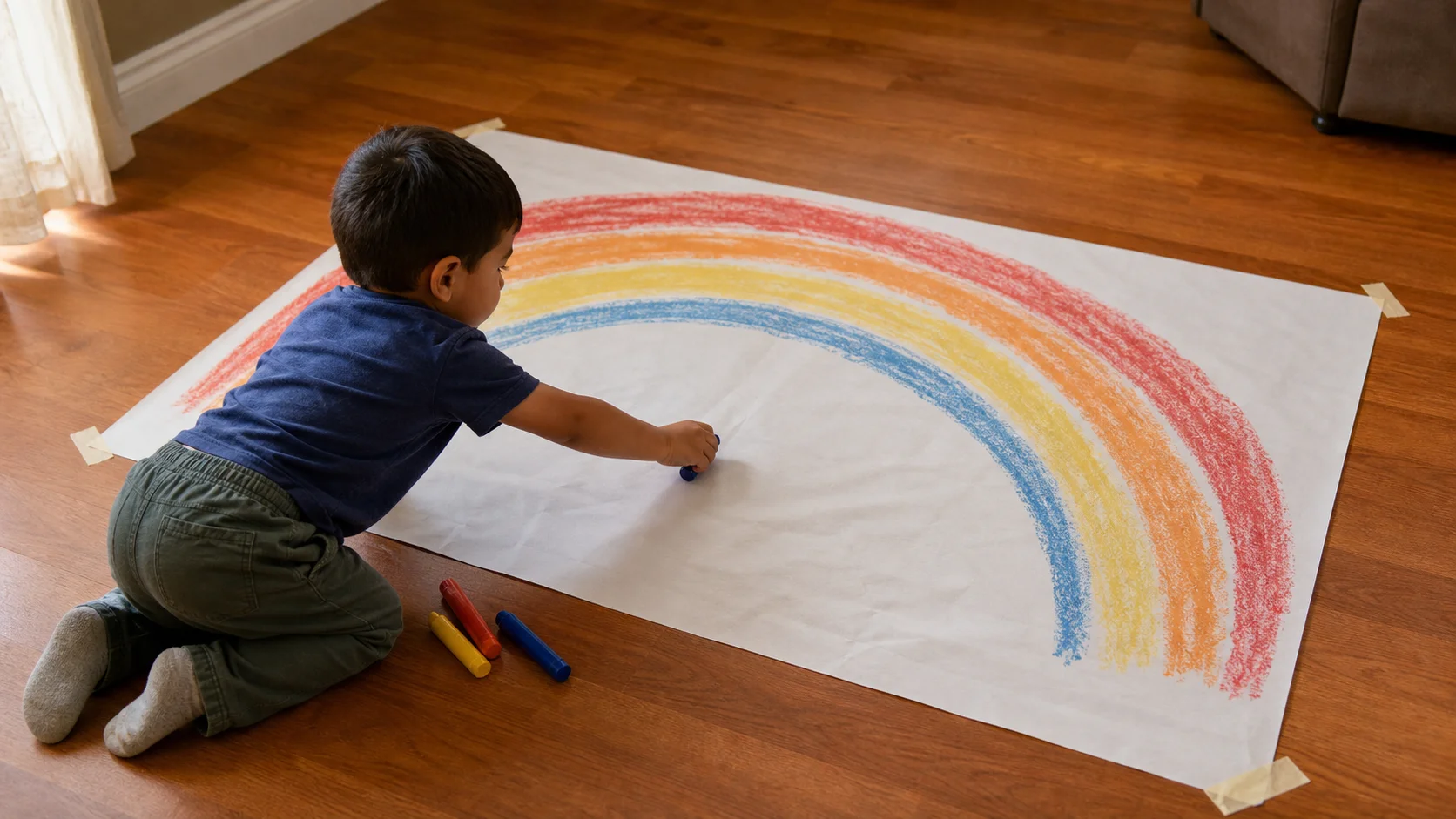
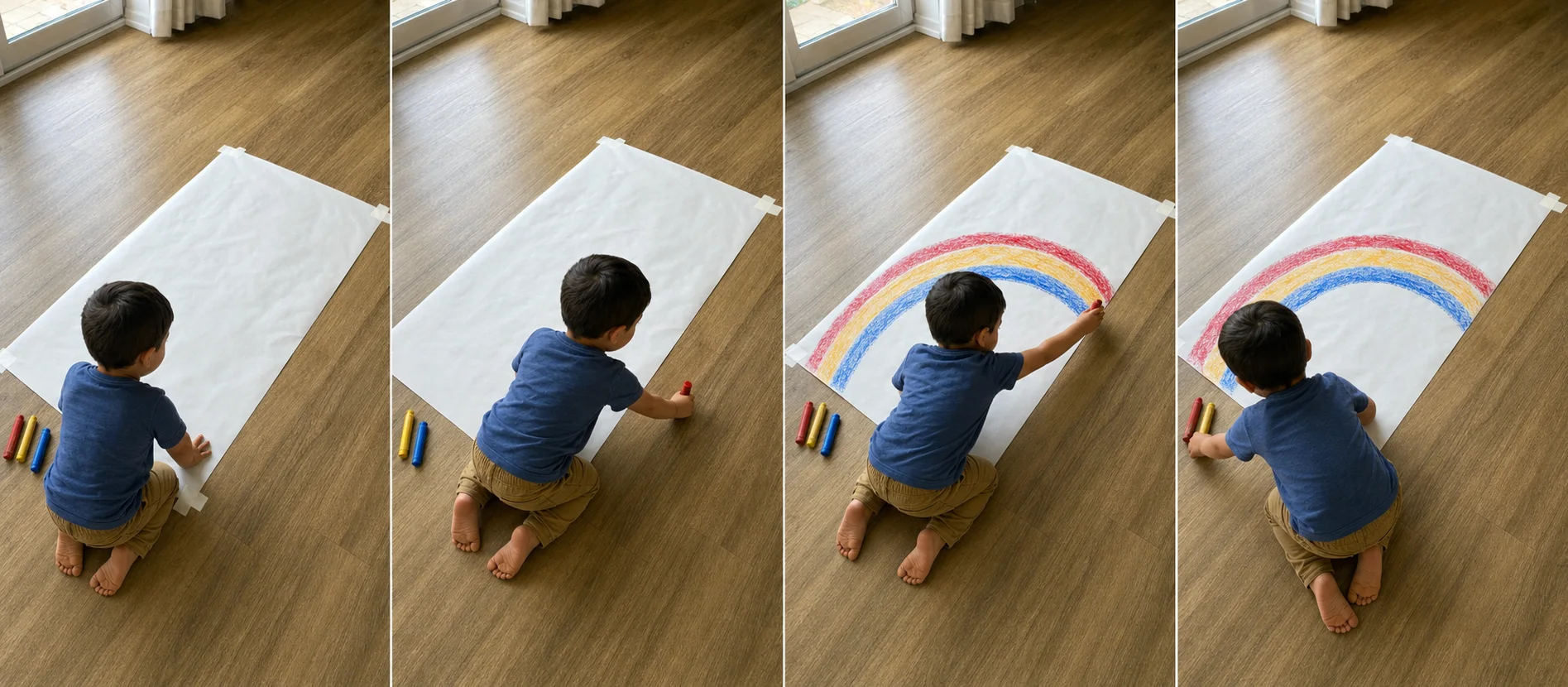
Make rainbow drawing bigger with giant arcs that stretch across the whole page. Using the same hand to sweep each crayon or chalk line from one side to the other gives your child satisfying cross-body practice that supports drawing, dressing, and active play.


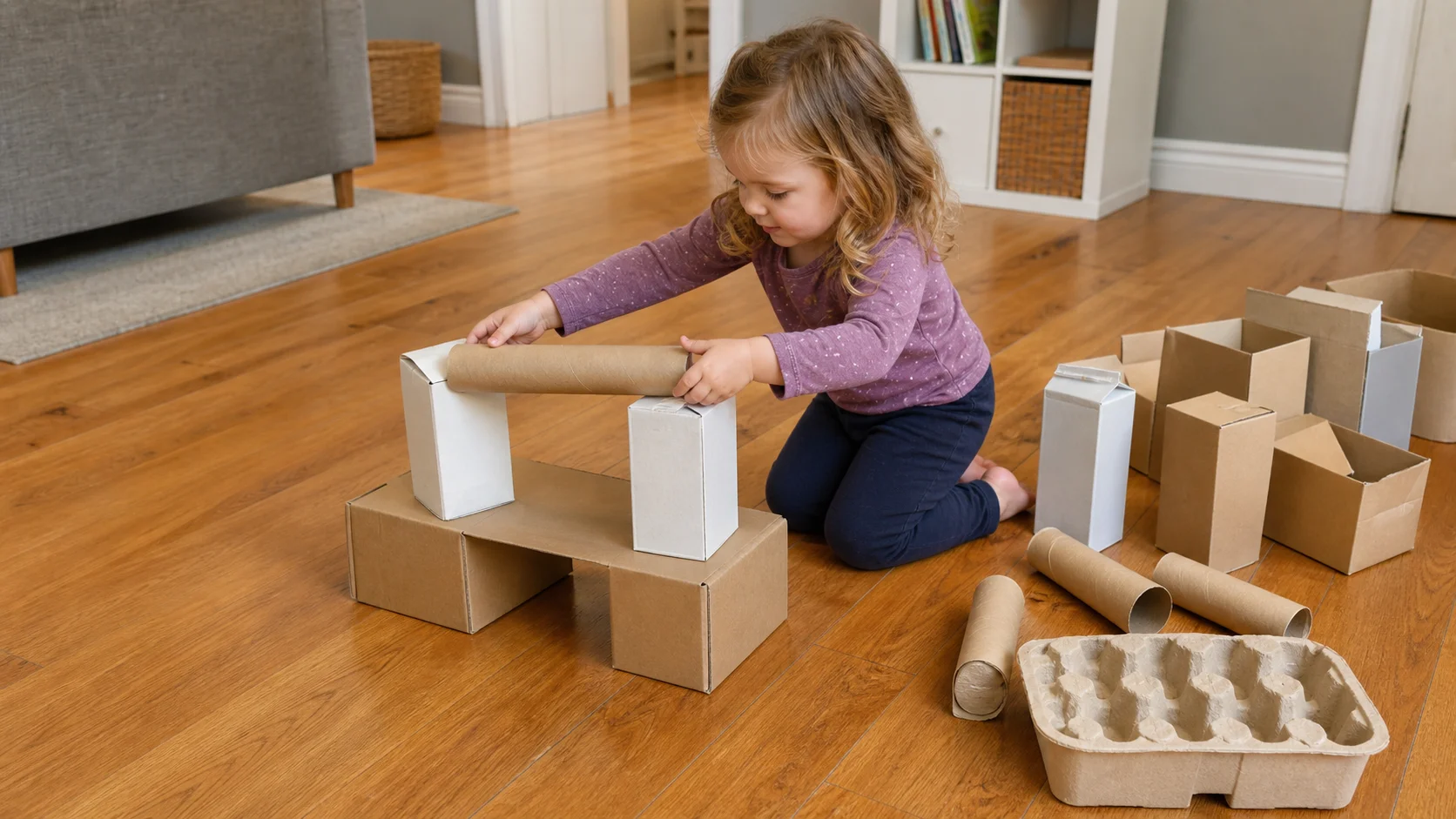
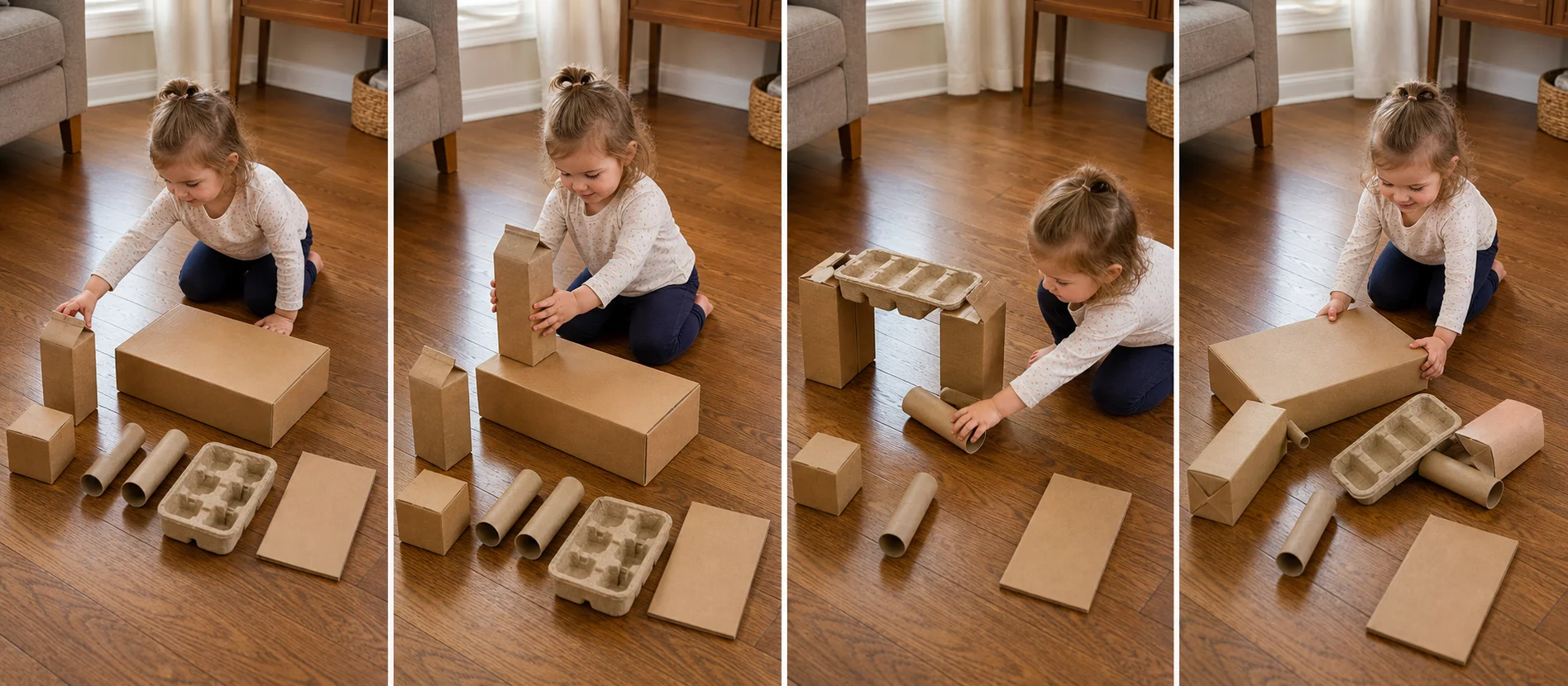
Give the recycling pile one last job before bin day. Your child stacks and arranges clean boxes, cartons, and cardboard tubes into towers, bridges, roads, or tunnels, then knocks them down and rebuilds while practicing problem-solving.


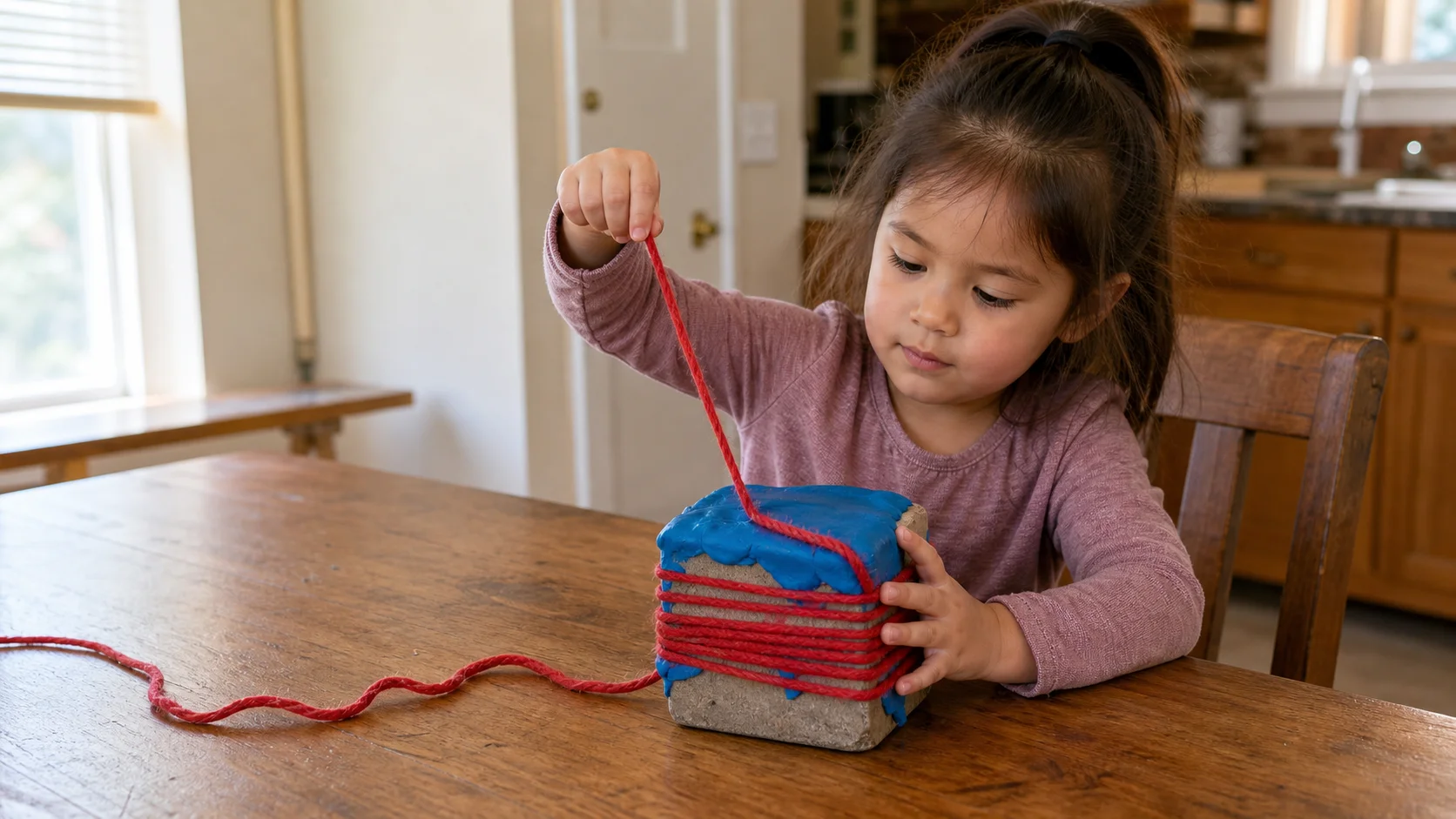
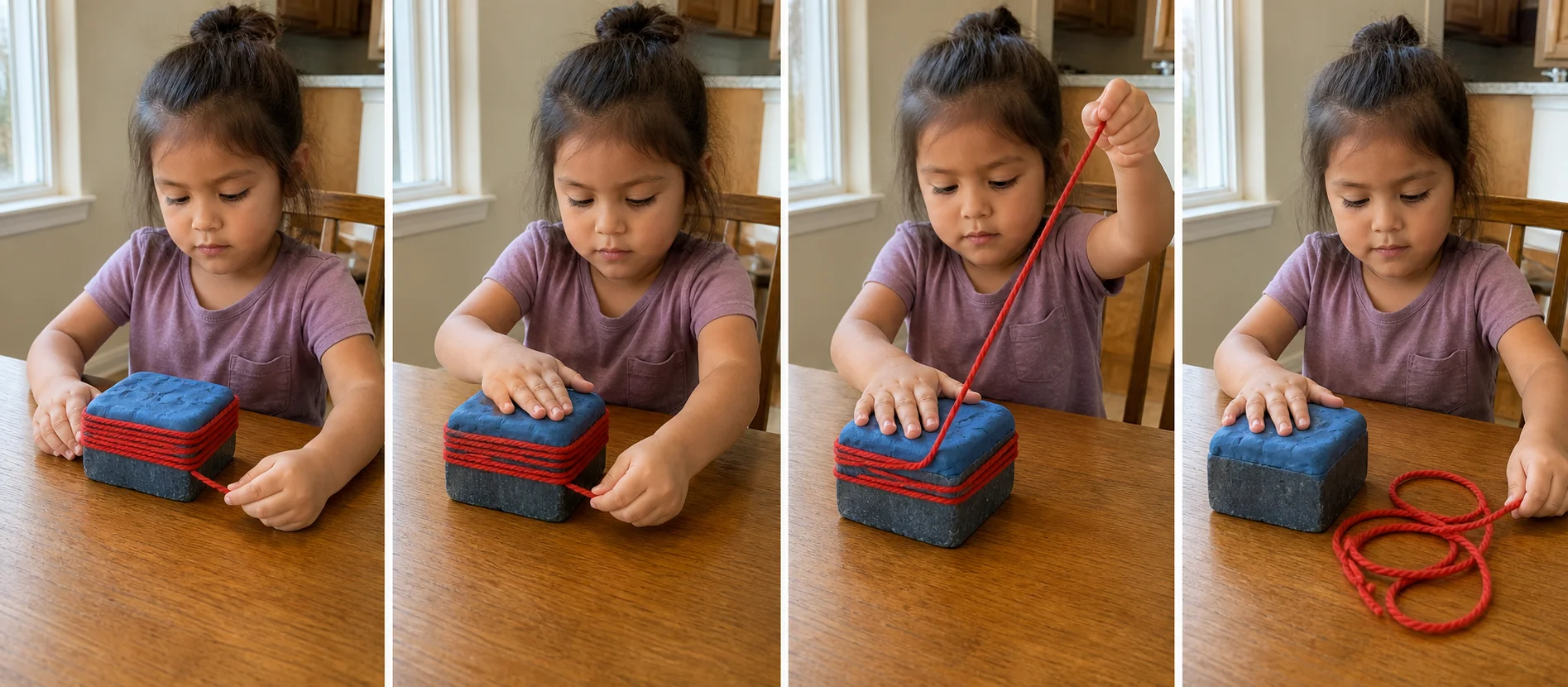
Give both hands a job with one satisfying unravel. Your child holds a playdough-covered block steady while pulling damp yarn free, strengthening their pinch and two-hand coordination.


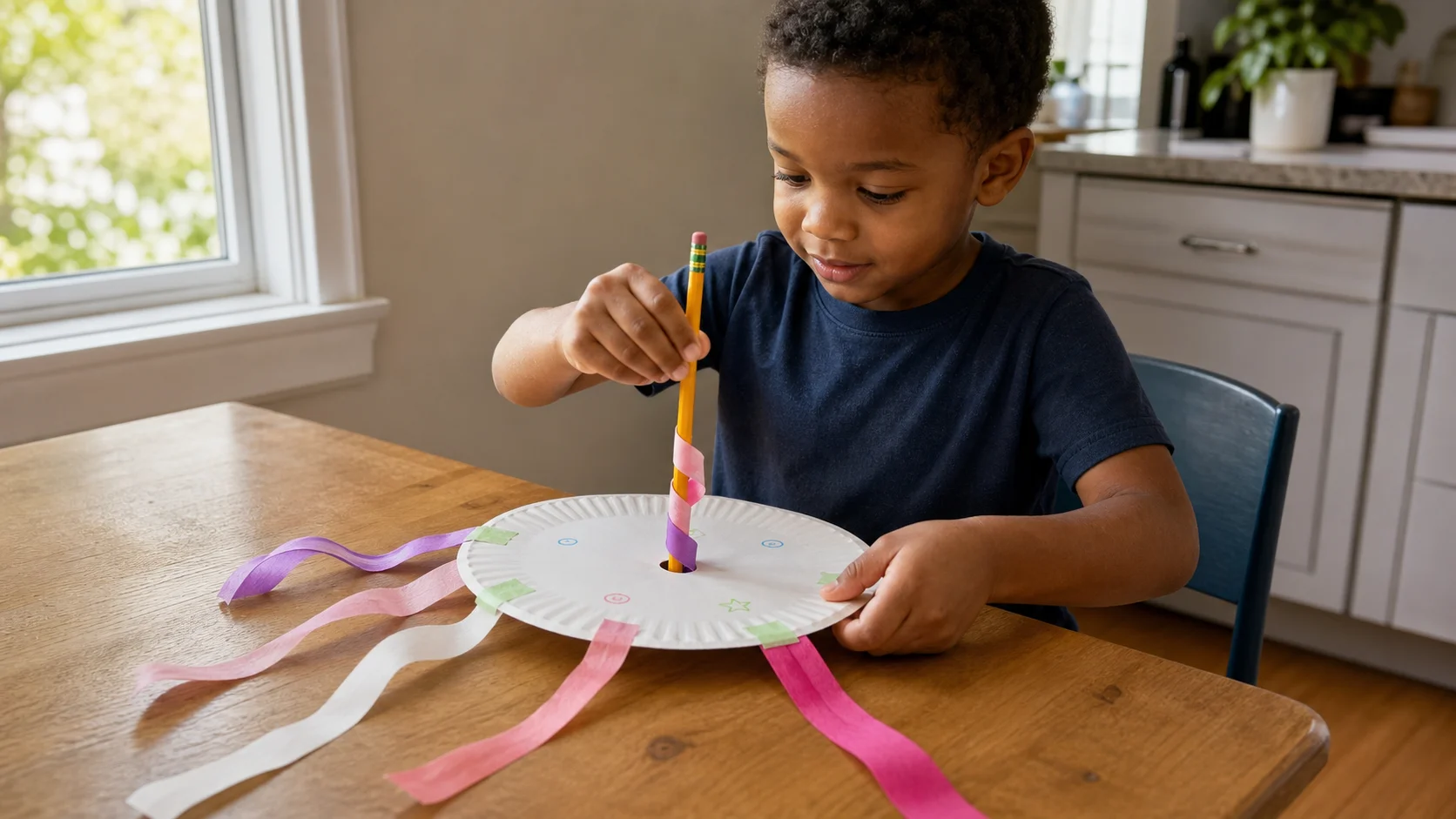
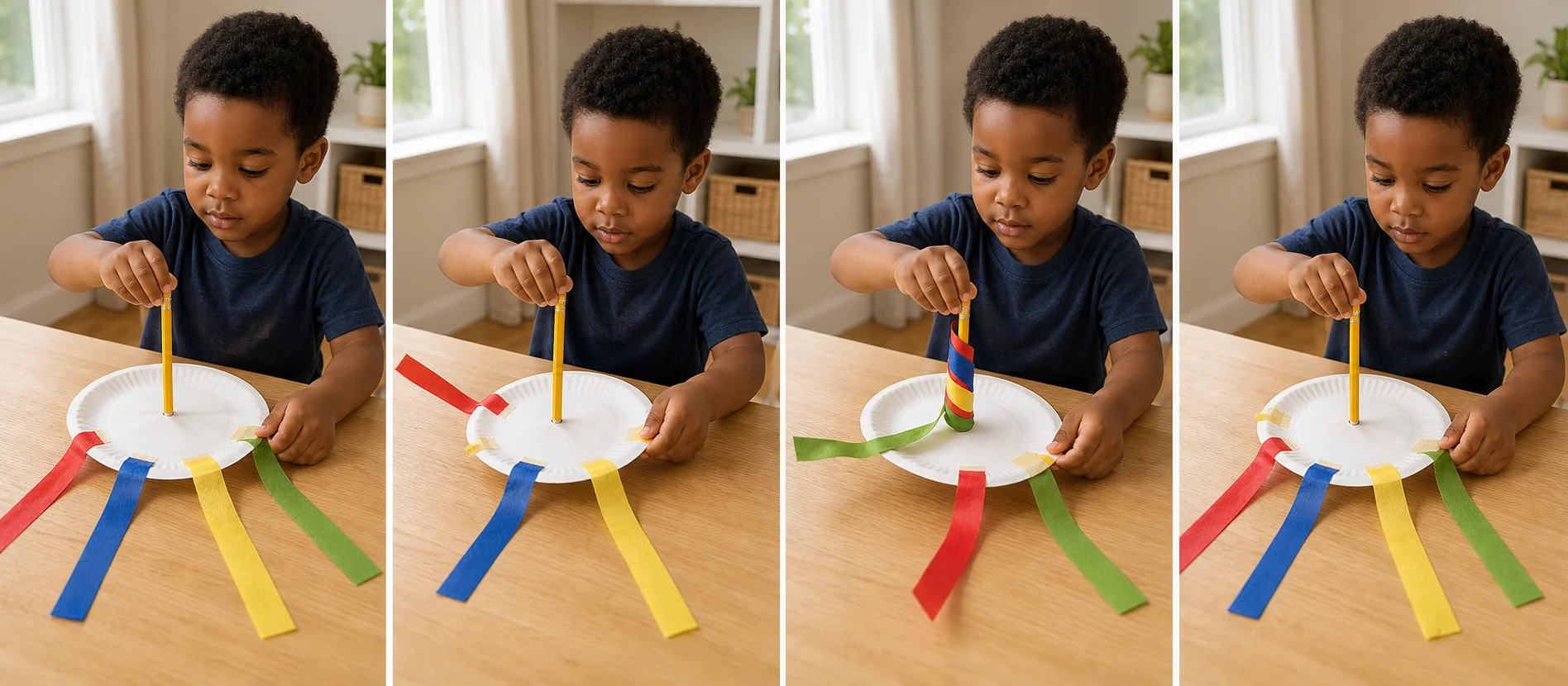
Turn the paper plate and watch the ribbons wind around the pencil, then reverse to set them free. Your child holds the pencil with one hand and turns the plate with the other, building two-hand coordination and controlled wrist movement.


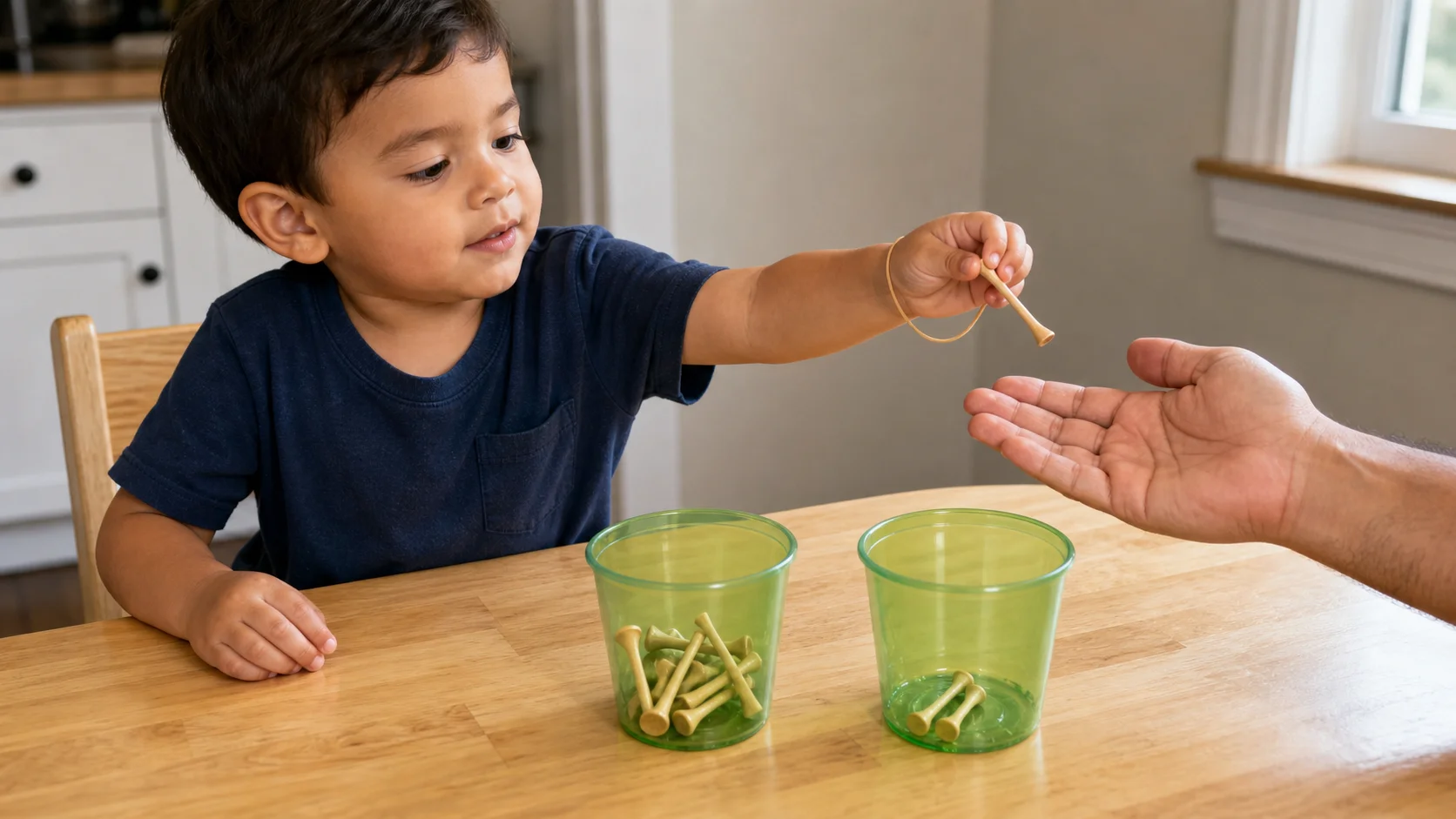
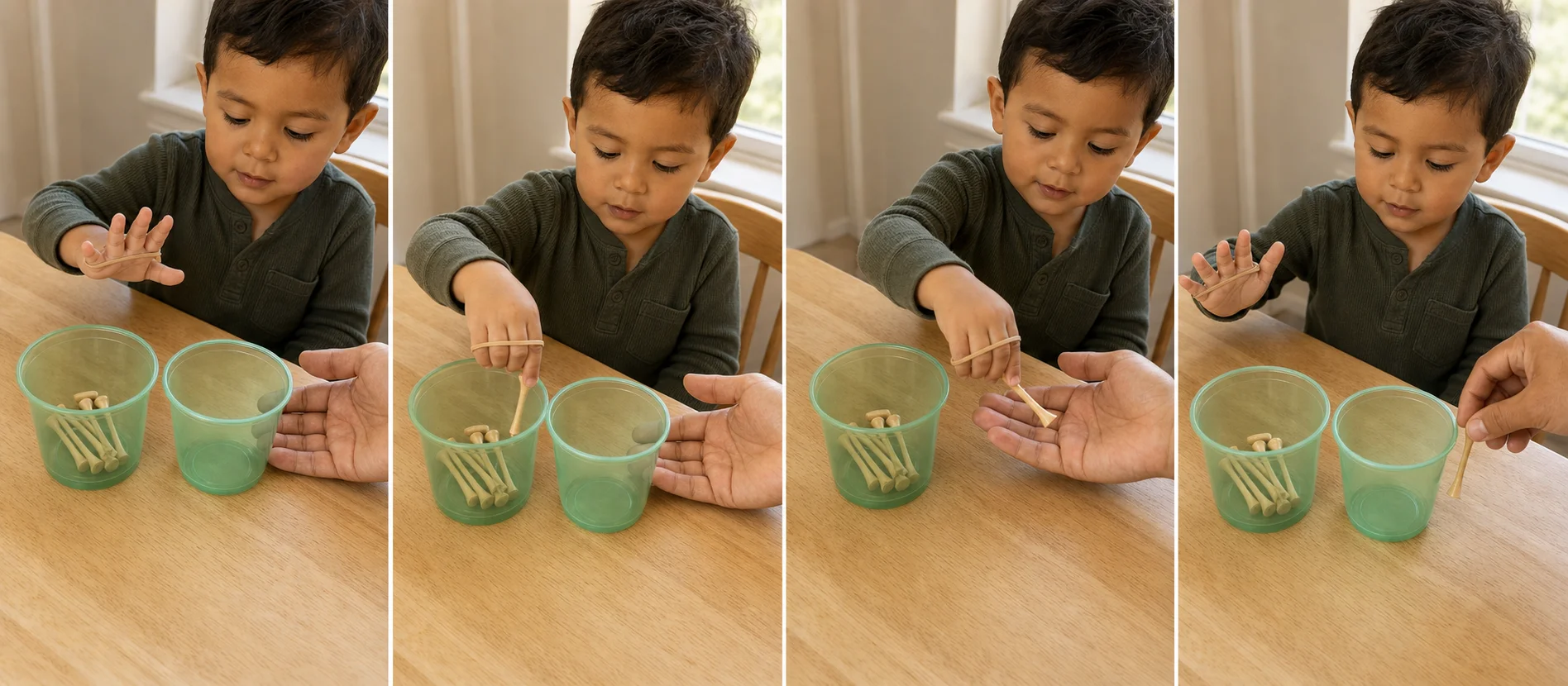
Turn two cups and a rubber band into a tiny strength challenge. With the band loosely around their fingers, your child picks up golf tees one at a time and passes them to a partner, building hand strength and cooperative turn-taking.


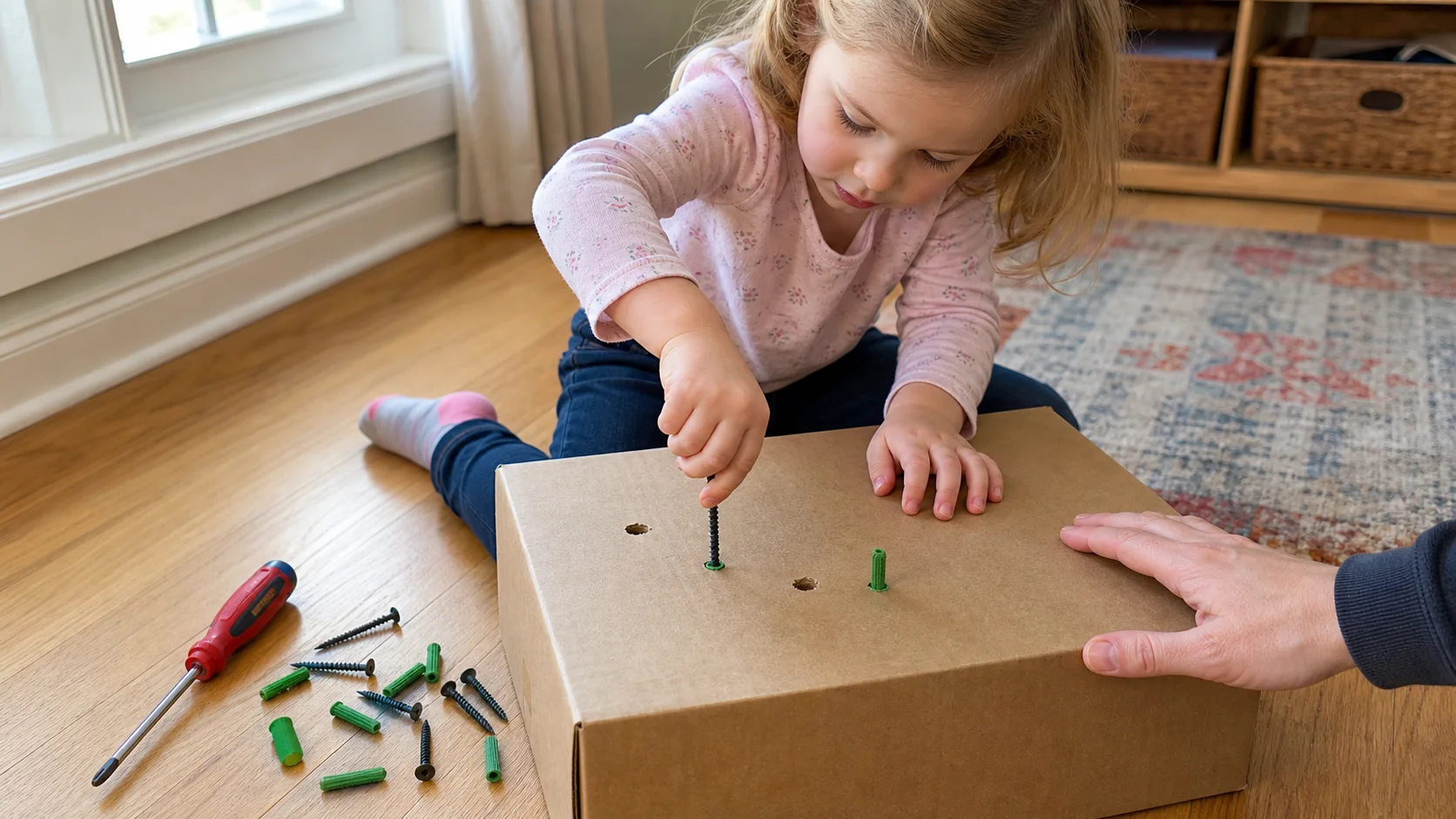
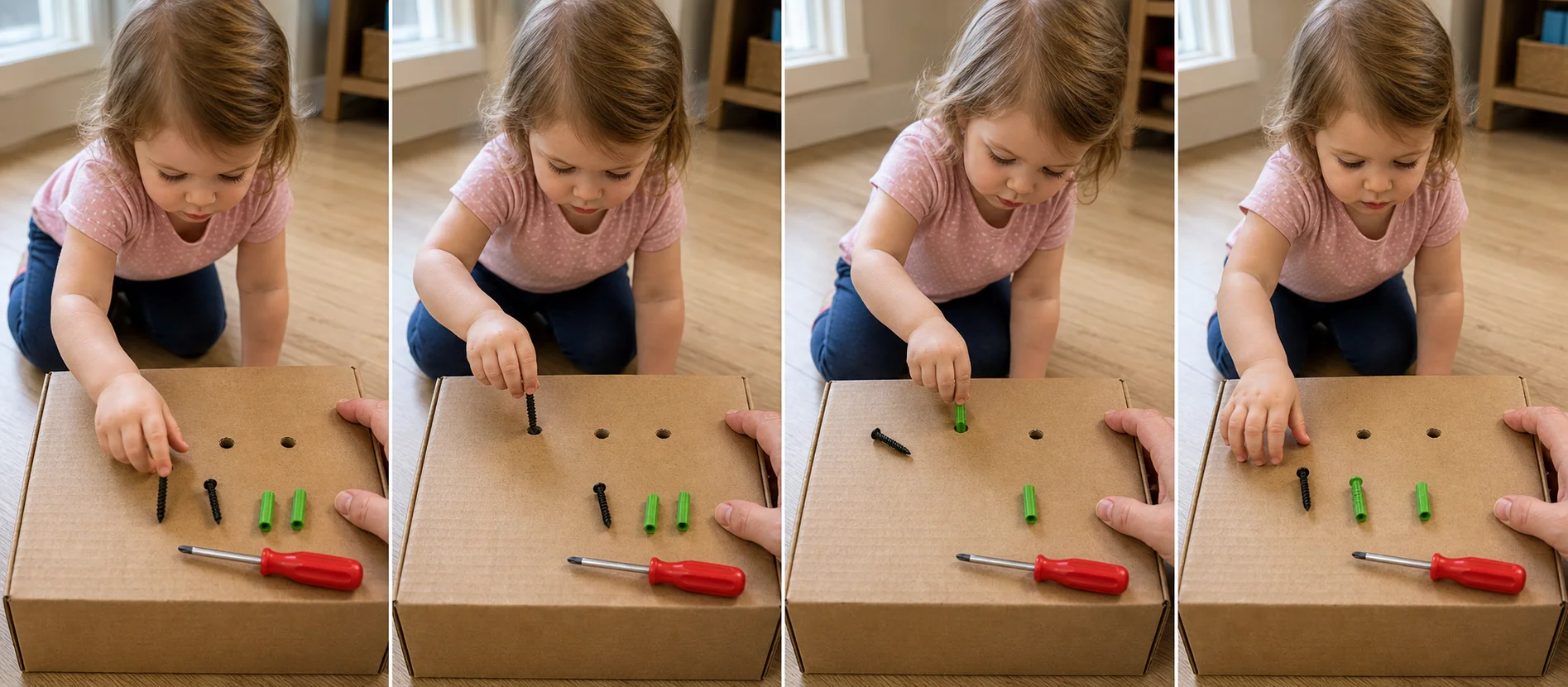
Give your child a real construction-style job with a cardboard box and a handful of hardware. They twist screws, push anchors, and test different holes while building hand control and early problem-solving.


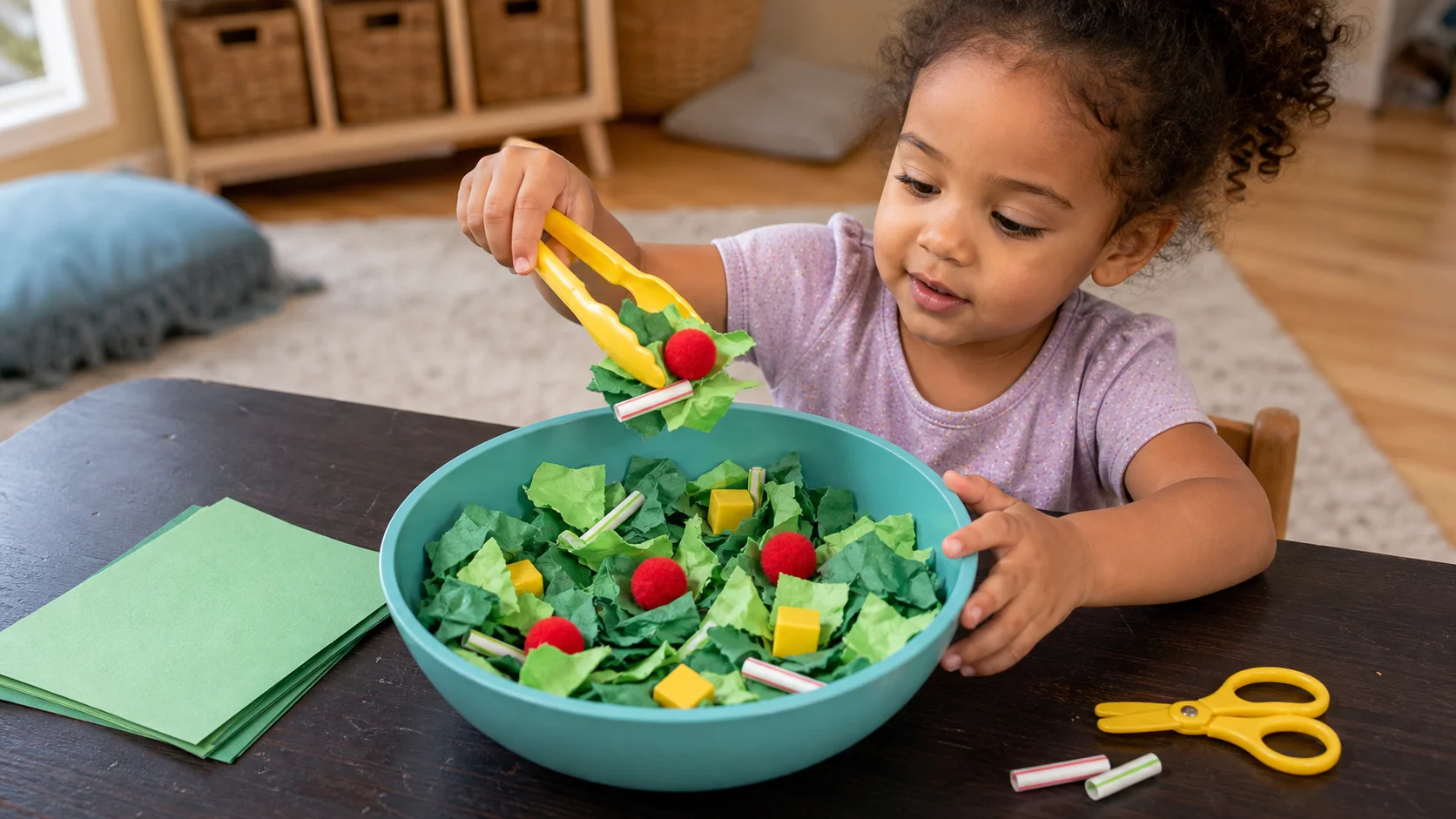
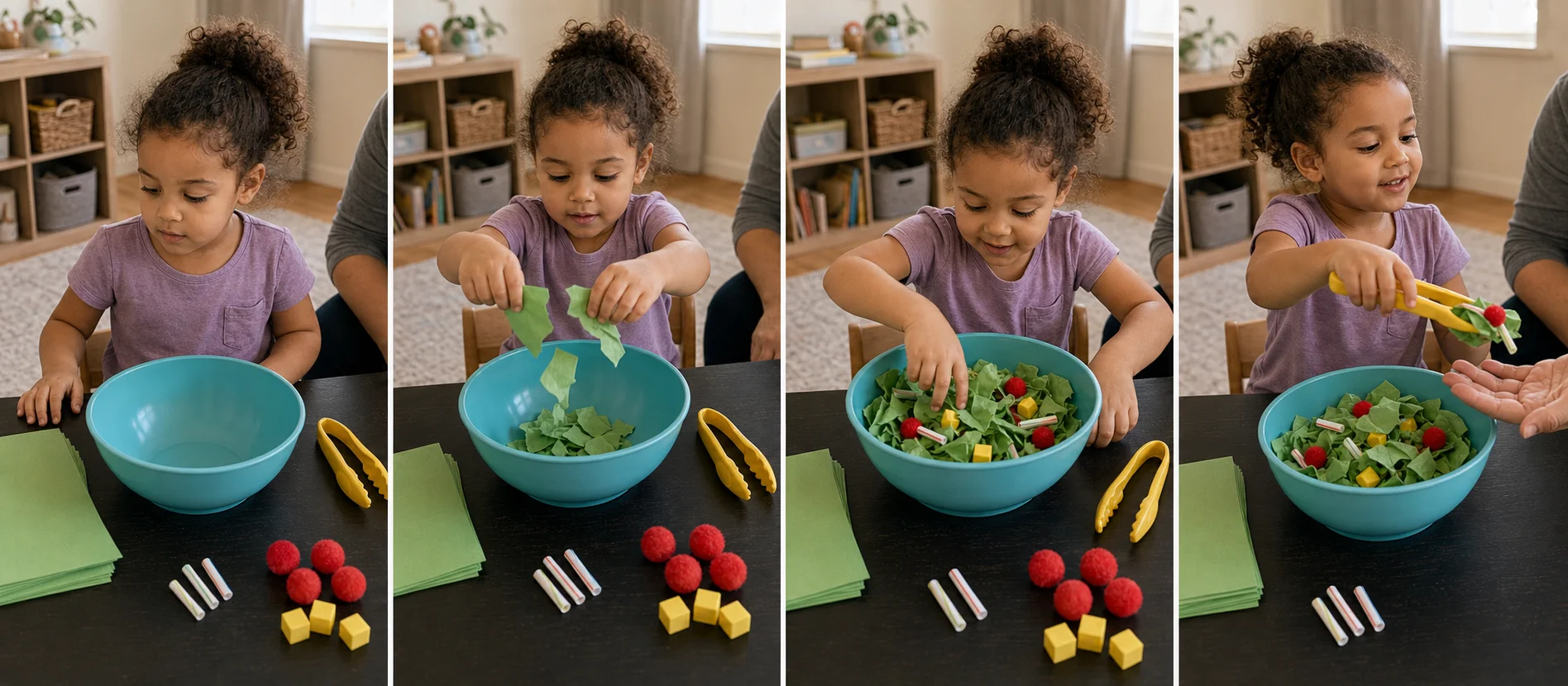
Build a pretend salad that is made for touching. Your child tears paper lettuce, cuts straw toppings, mixes in textured objects, and serves each portion with tongs while practicing fine-motor skills and tactile processing.


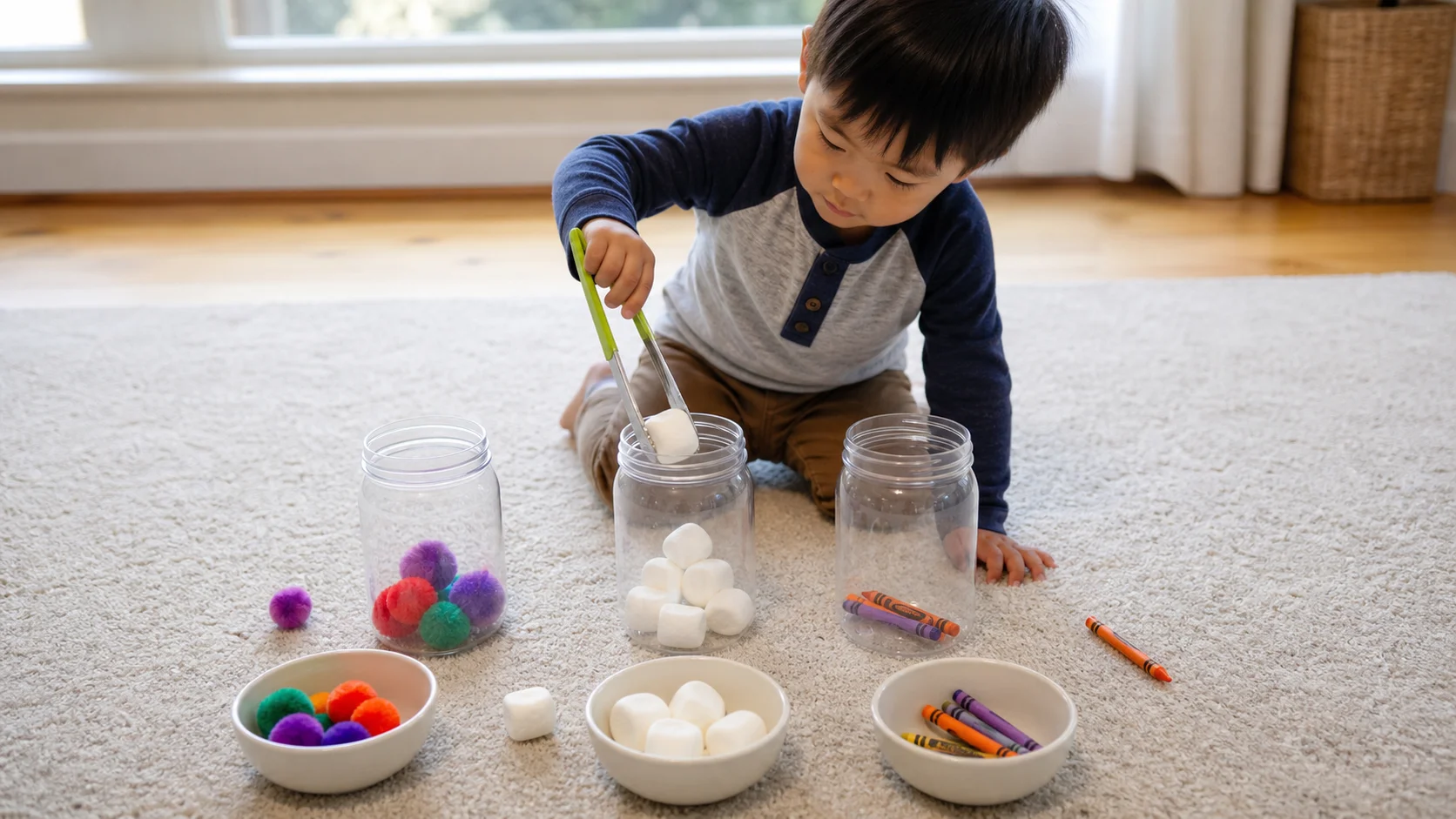
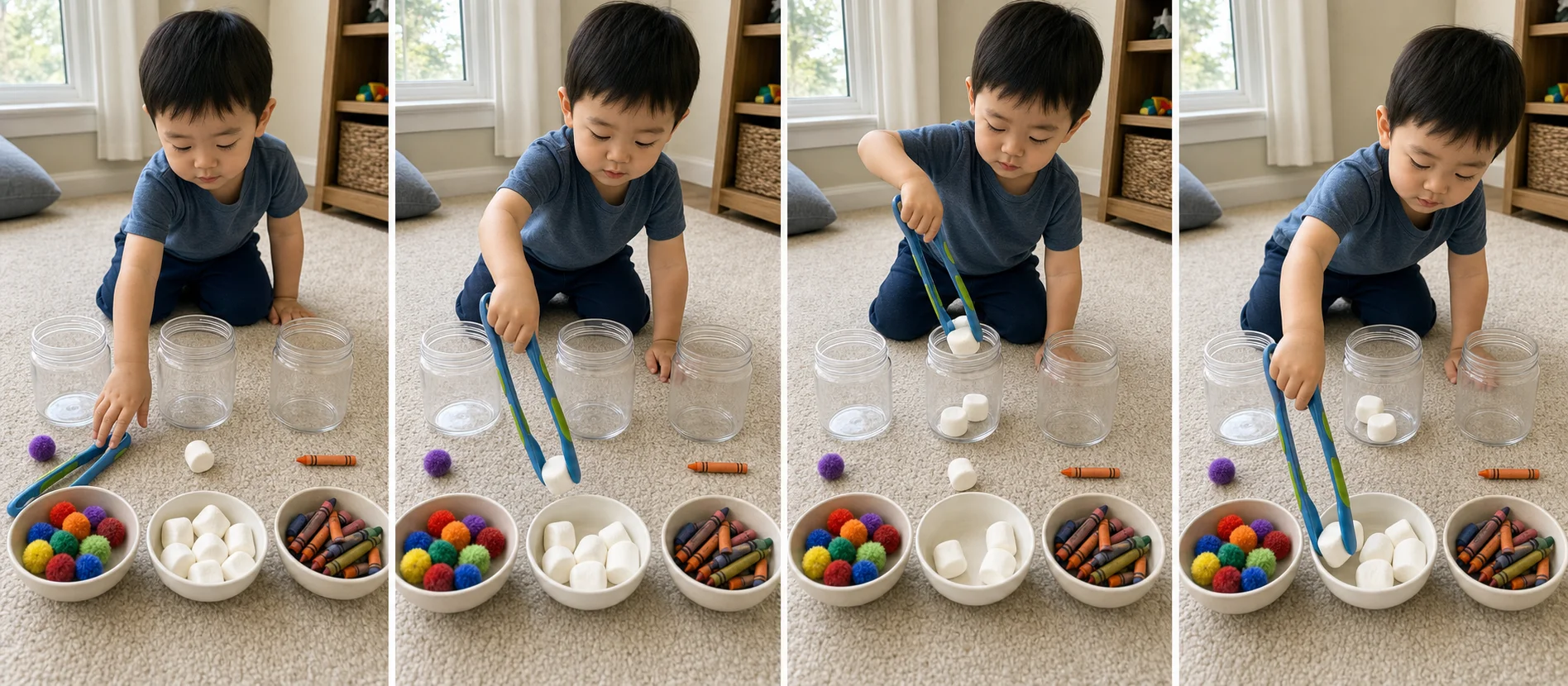
Give your toddler a satisfying sorting job with jars, tongs, and three easy-to-grab materials. They pick up each piece, carry it to its matching jar, and push it through the opening, building fine-motor control and simple sorting skills.


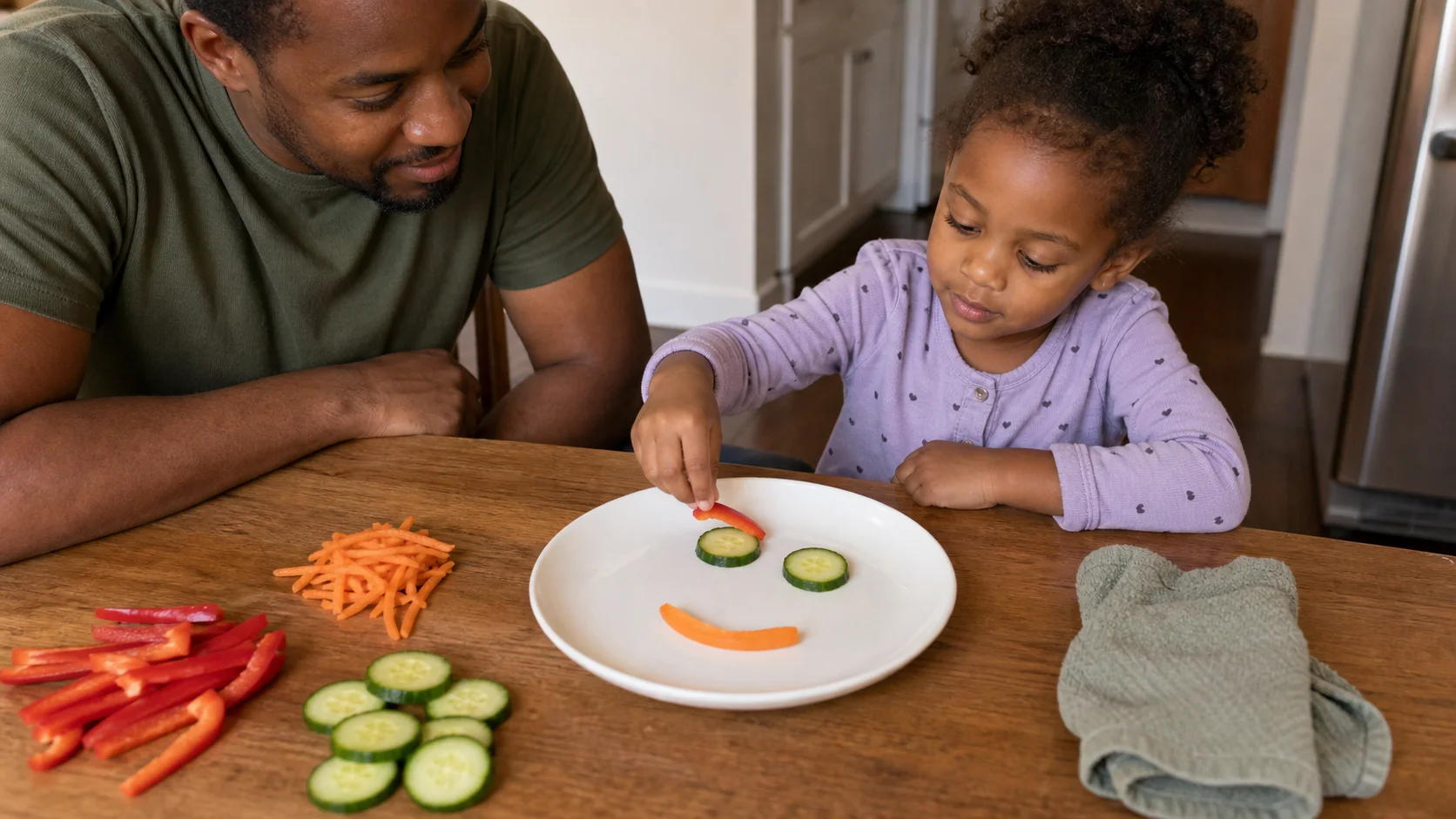
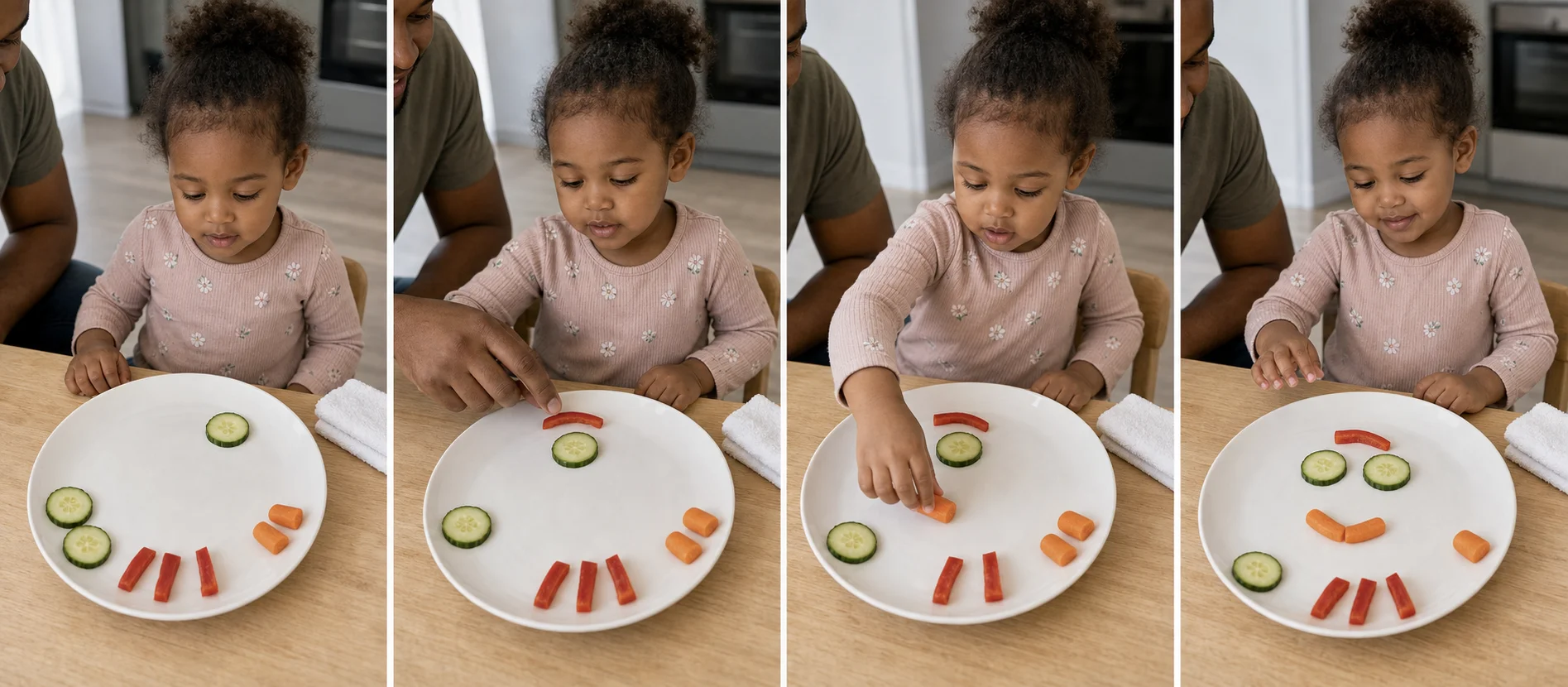
Turn a few vegetable pieces into a silly face with no pressure to take a bite. Your child builds cucumber eyes, carrot smiles, and pepper eyebrows while exploring food and practicing precise placement.


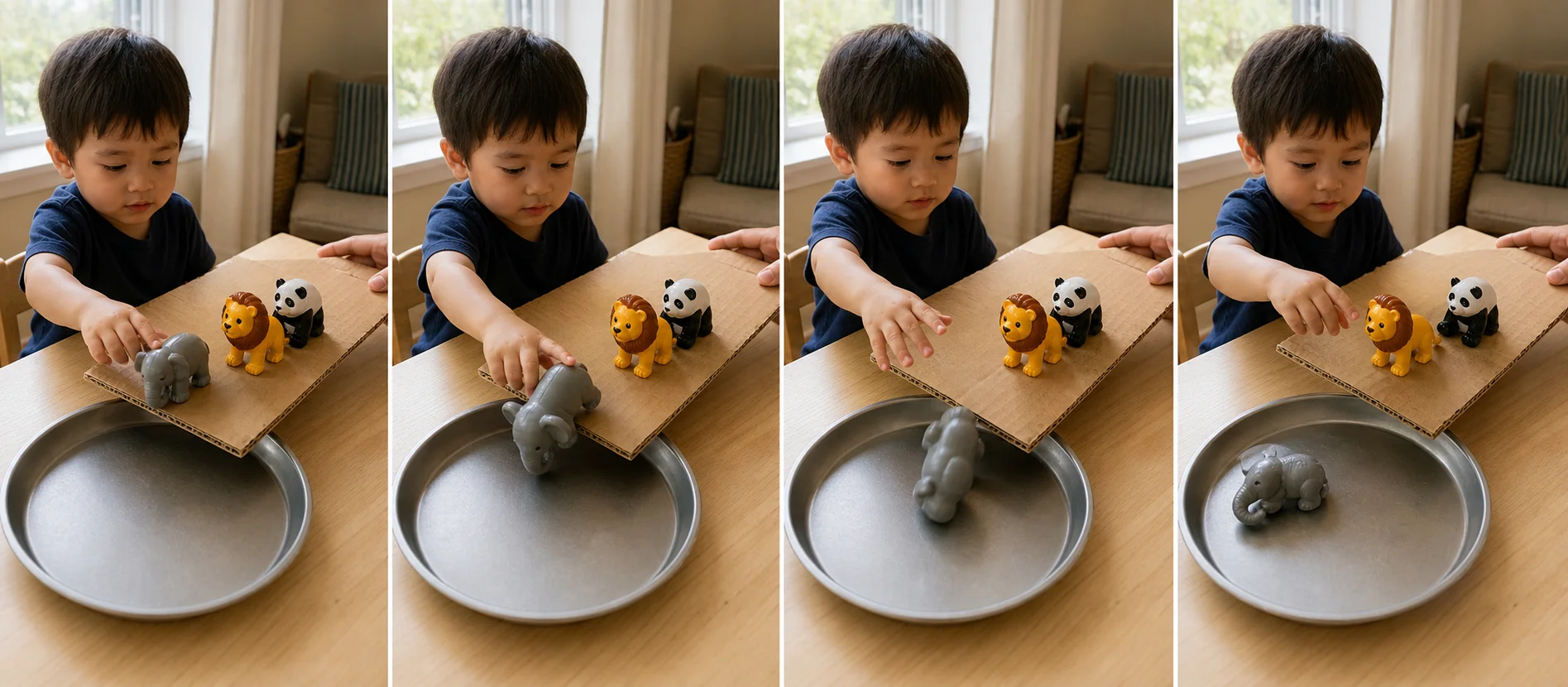
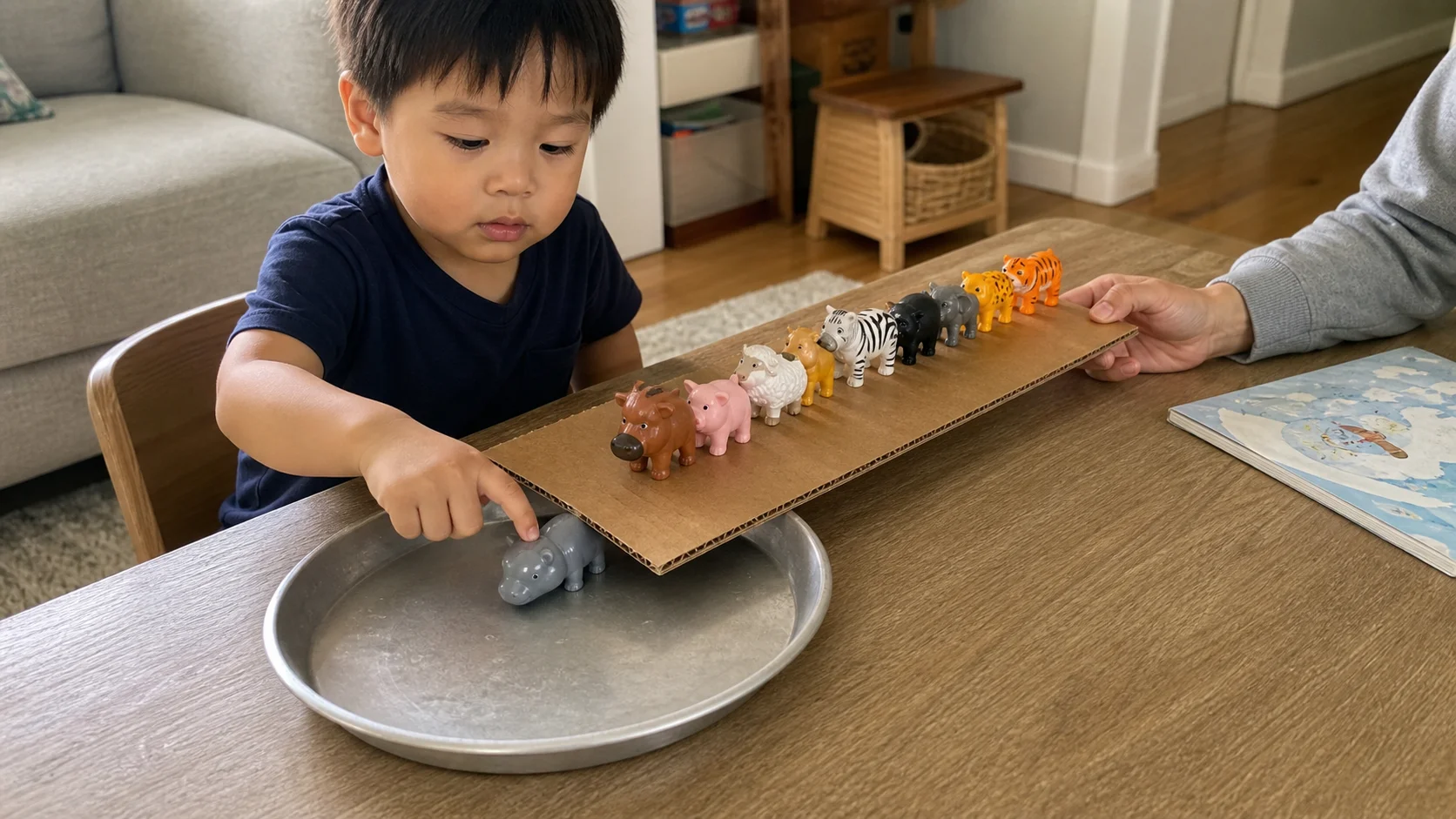
Turn every clatter into a counting moment. Line up toy animals on a sled board, then have your child knock them one at a time into a metal tray as you count down how many remain.


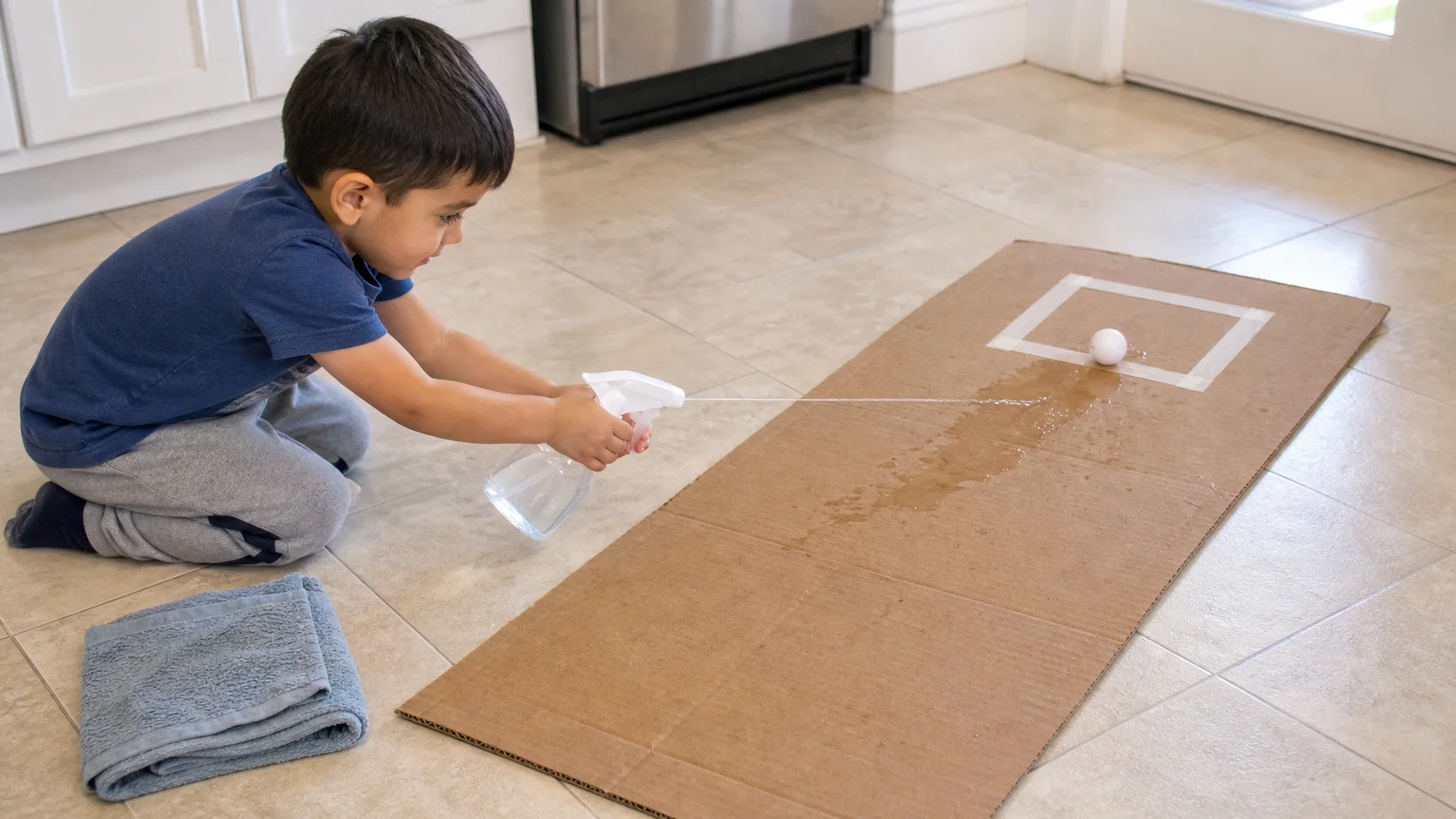
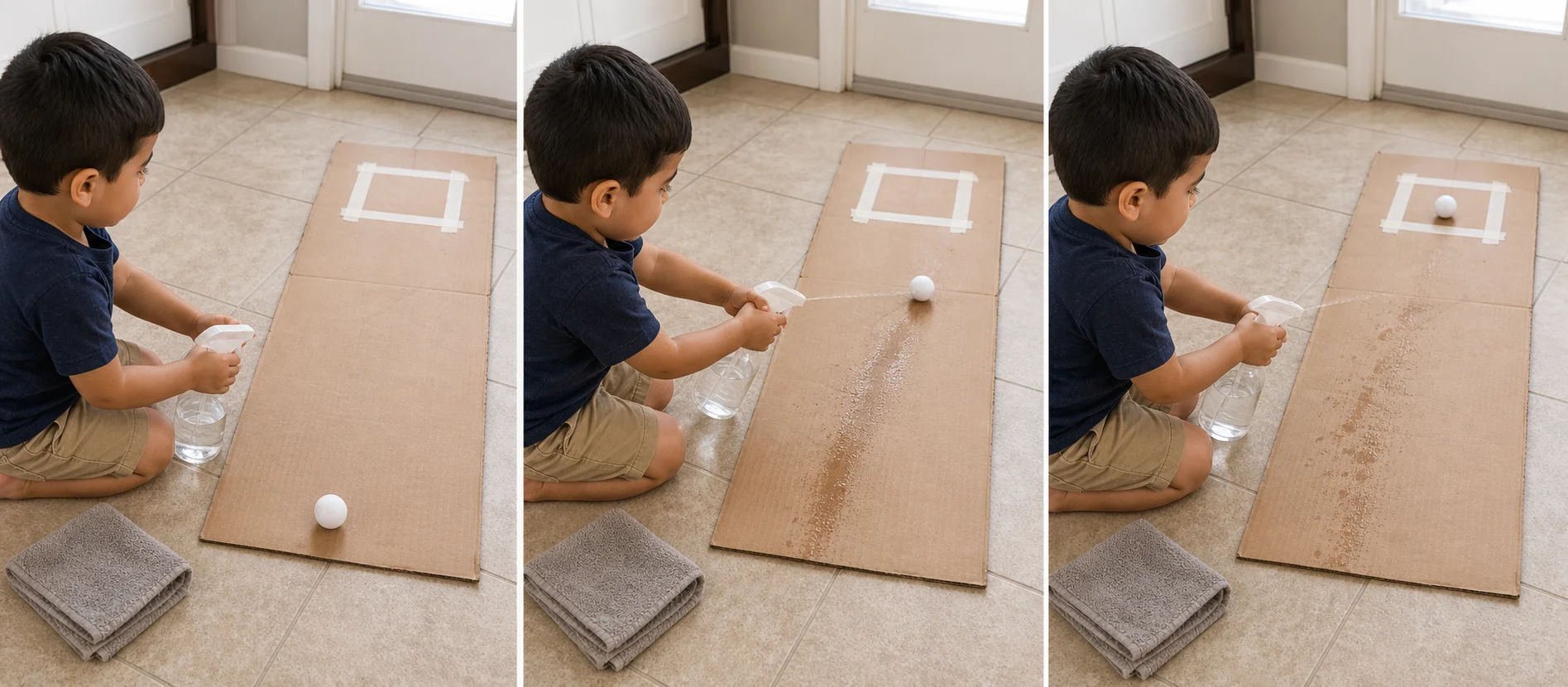
Turn a spray bottle into a goal-scoring challenge. Your child aims streams of water to push a ping-pong ball across cardboard and into a taped square, building hand strength and eye-hand coordination with every squeeze.


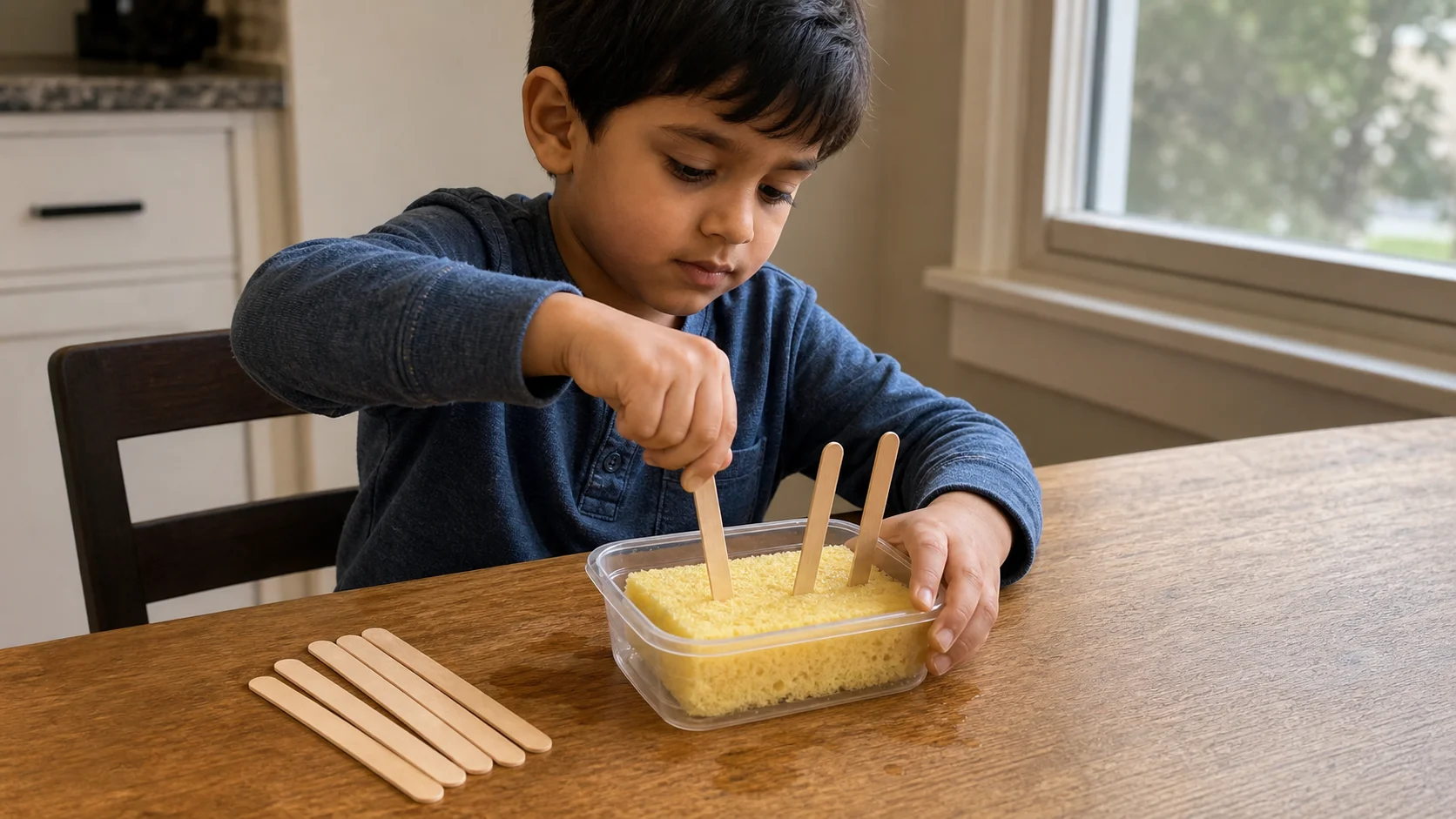
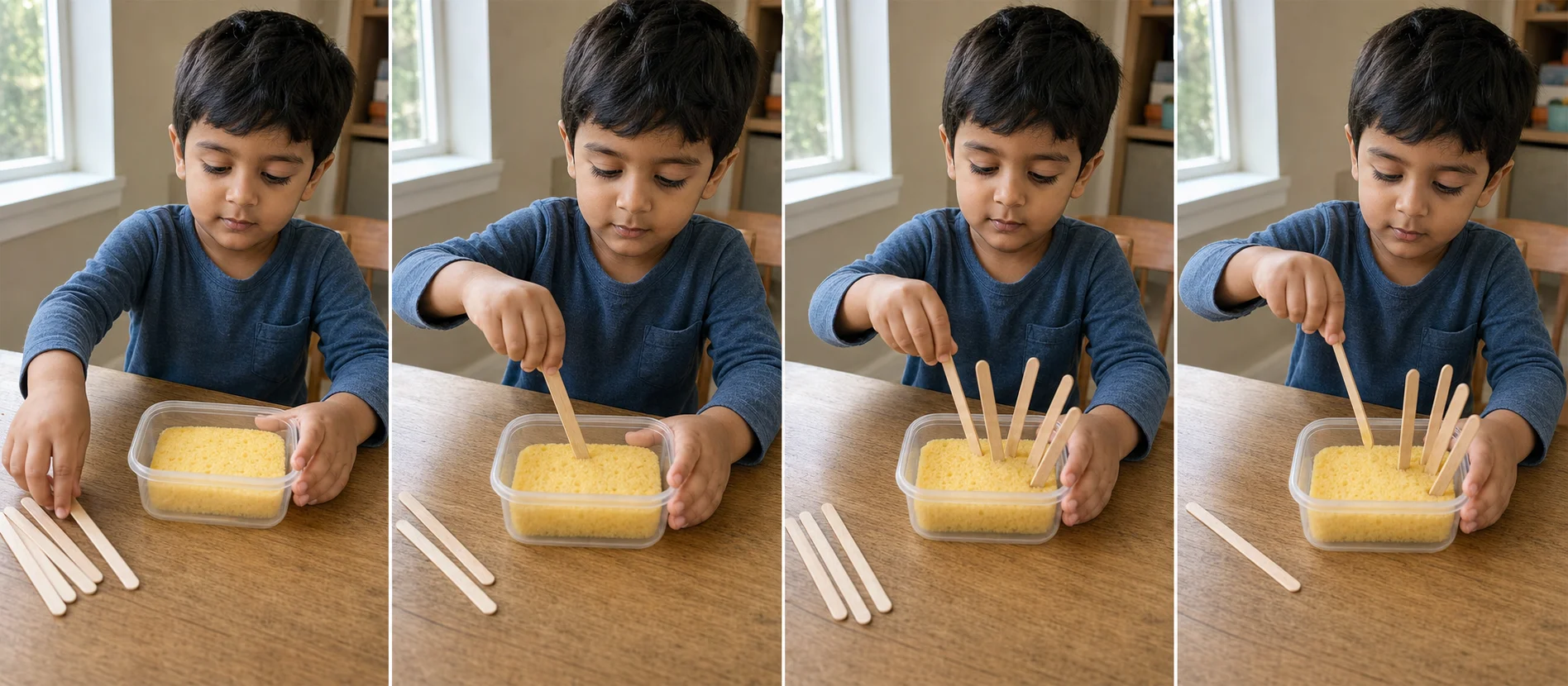
Turn a damp sponge and craft sticks into a satisfying twist-in, twist-out challenge. Your child steadies the container with one hand while twisting each stick into the sponge with the other, building hand strength and two-hand coordination.


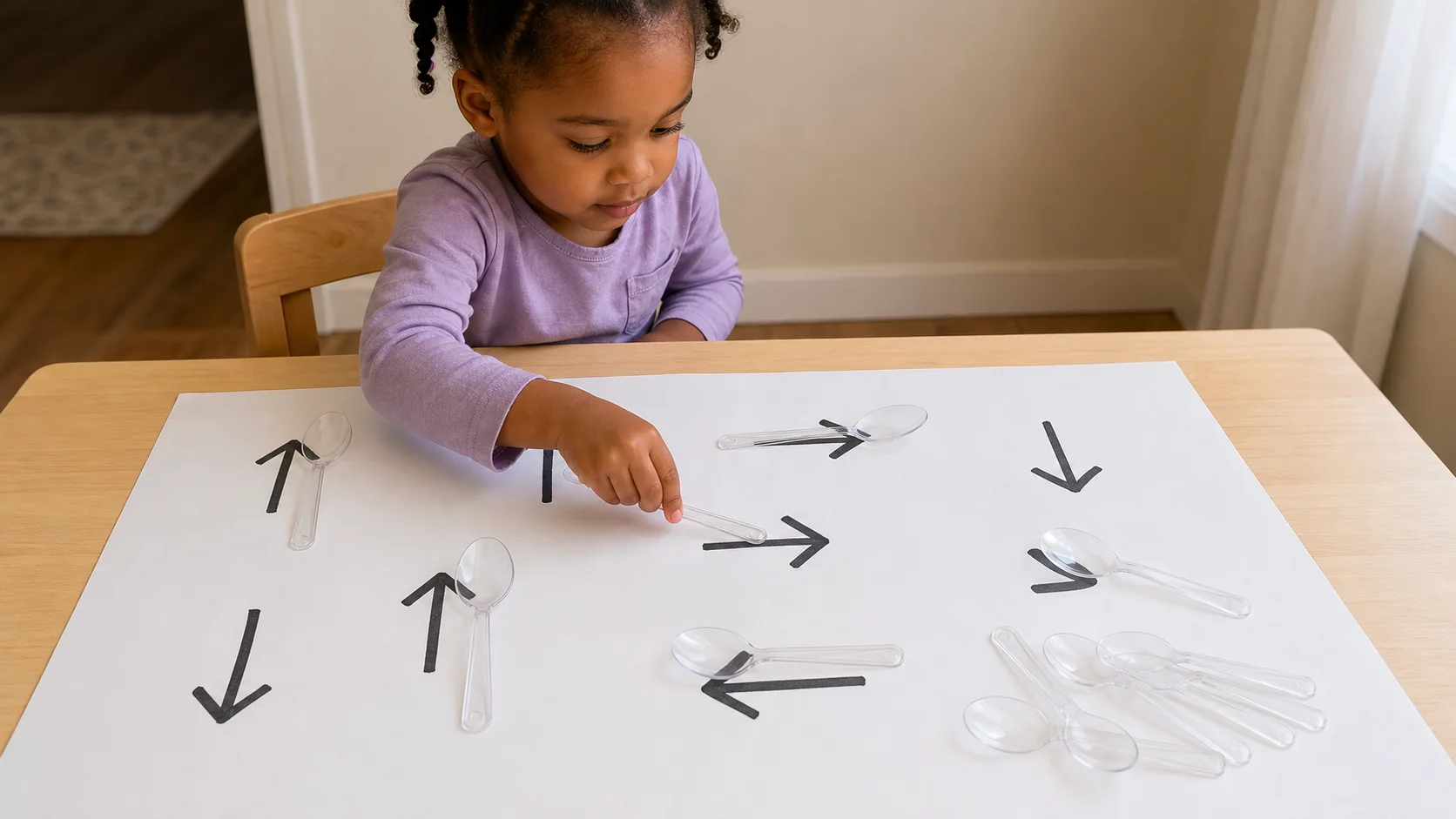
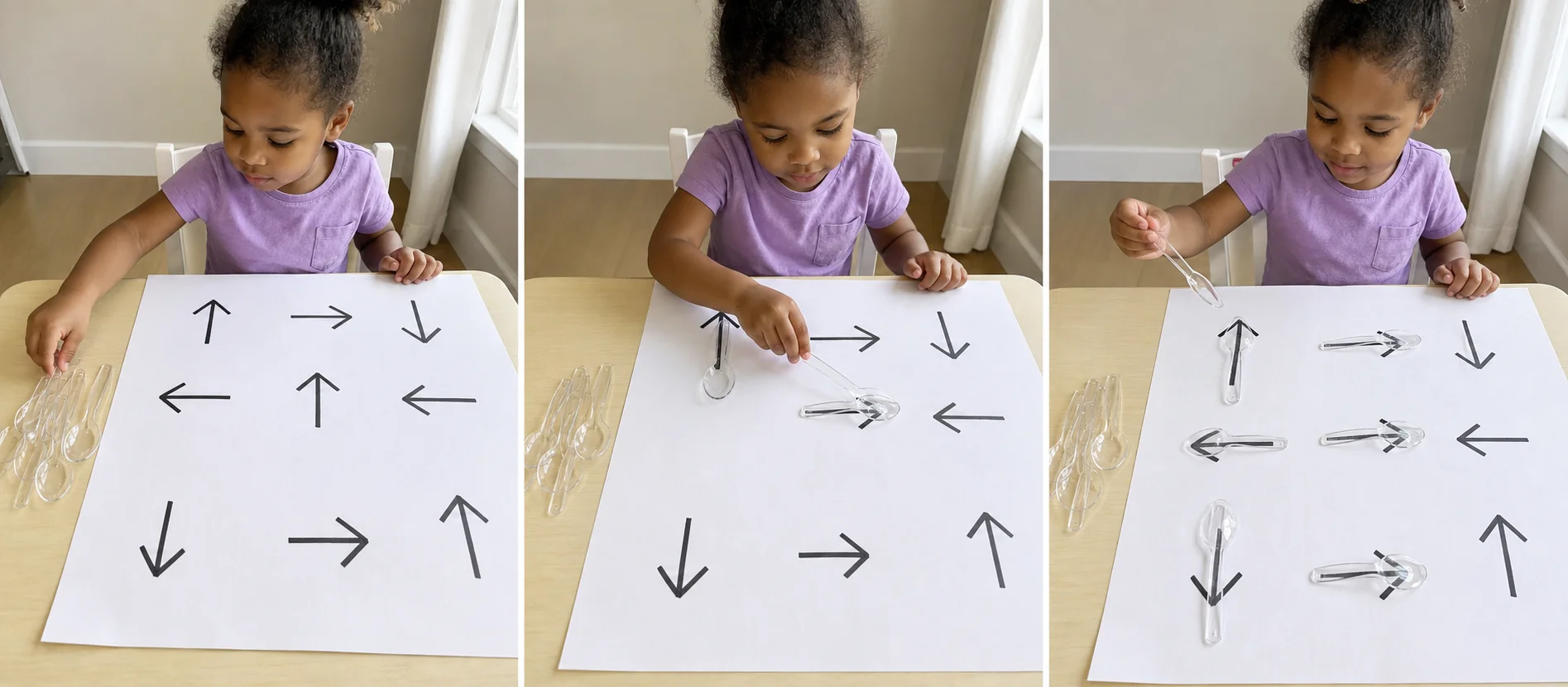
Can your child make every spoon point the right way? Draw arrows on a sheet of paper, then have them place and turn plastic spoons to match each direction, building visual matching and fine motor control.