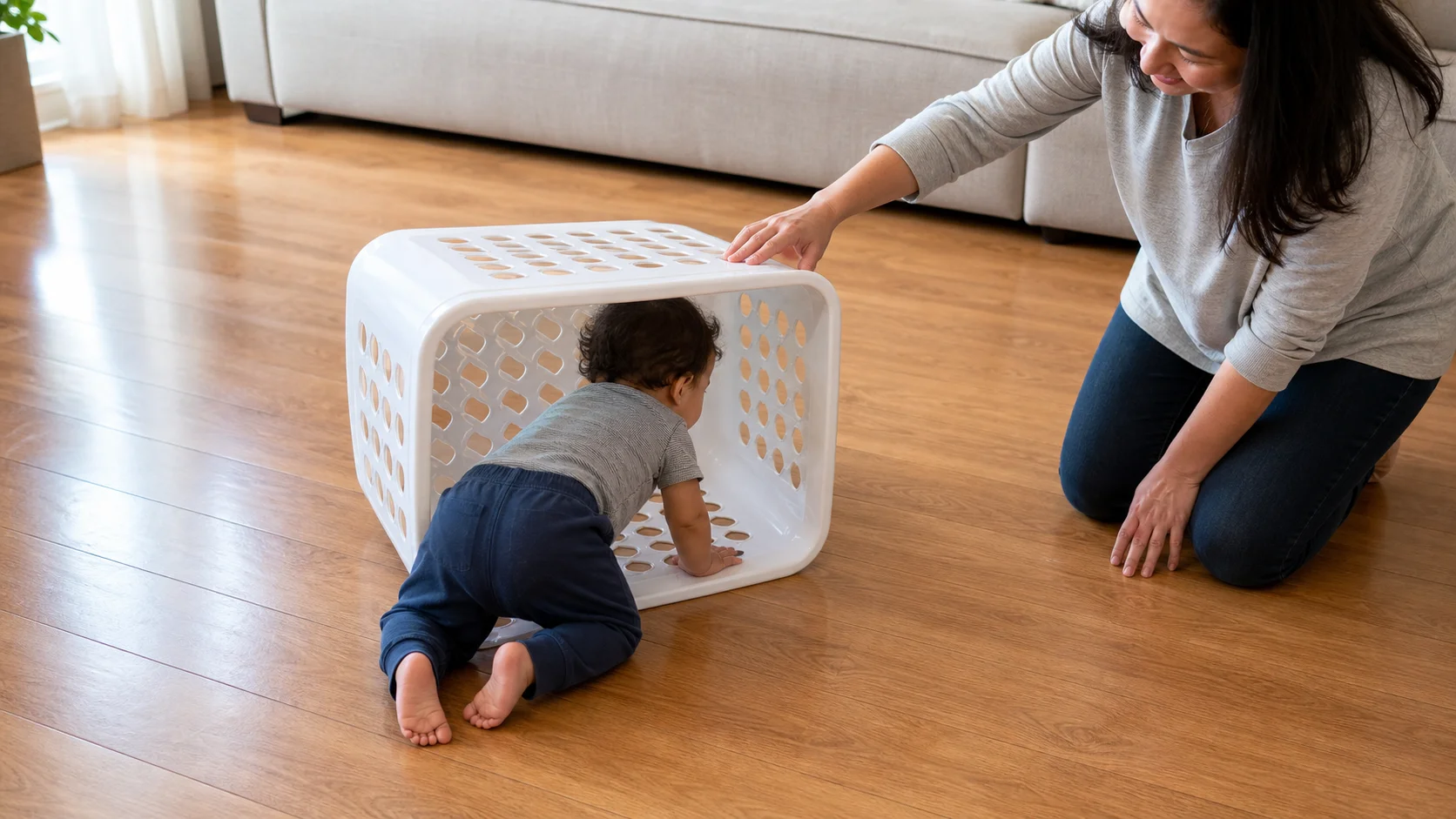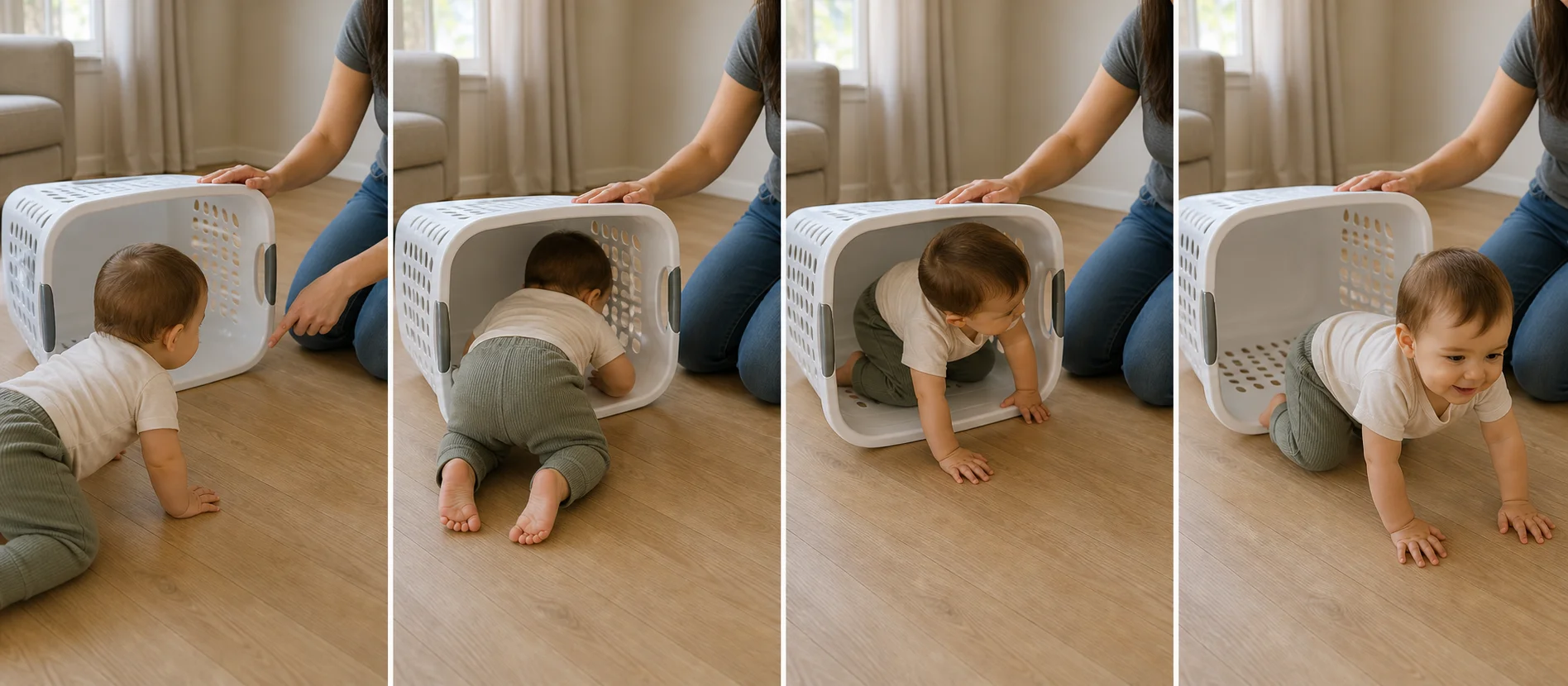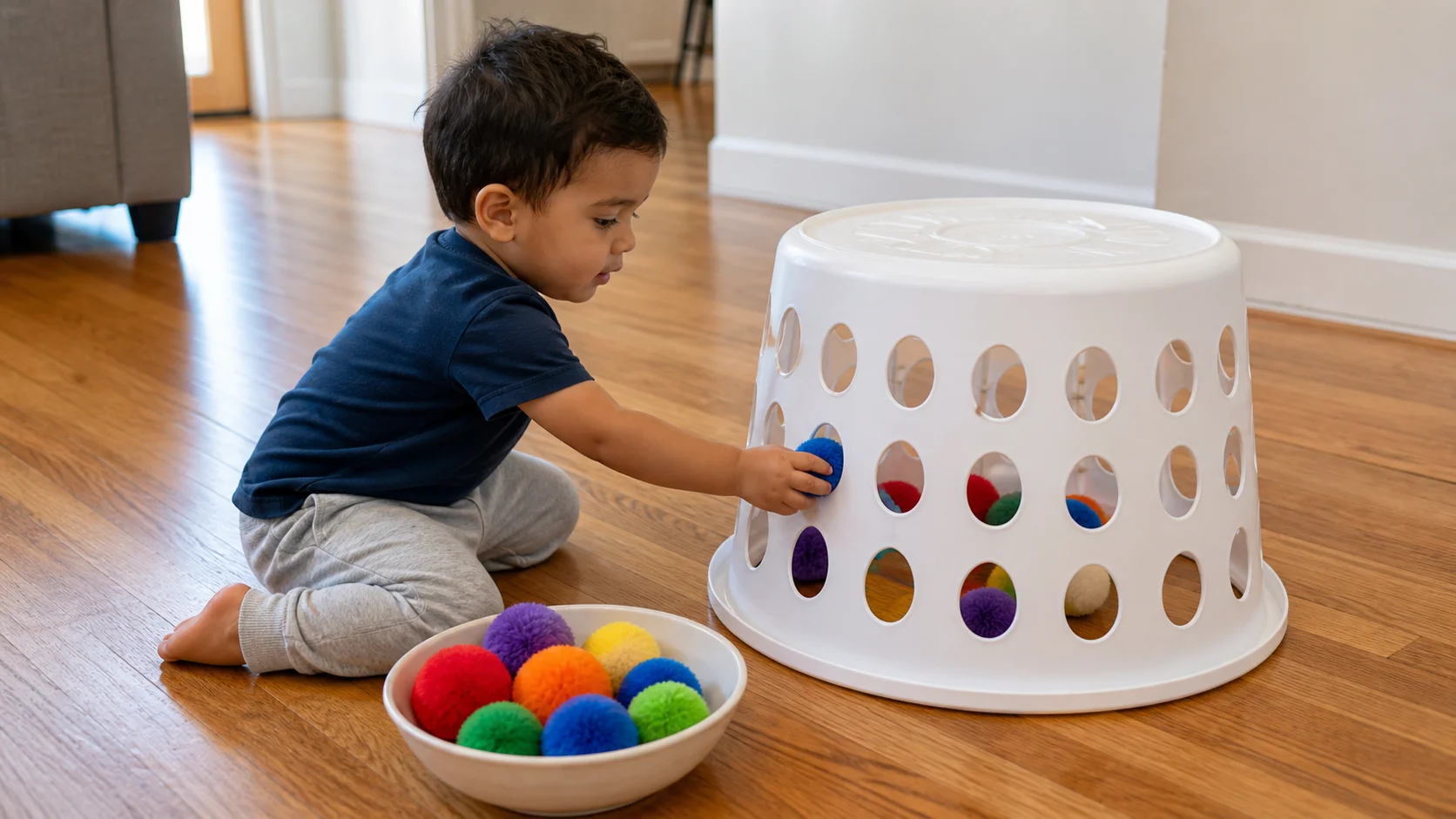
A toddler pushing a large pom-pom through the side hole of an upside-down laundry hamper.
Fine motorPush Through ResistanceIndoor Floor

Hamper Pom-Pom Push.

Your child pushes large pom-poms through the side holes of an upside-down hamper and tips them out for another round.

Play time
10-15+ min
Age
1-3 years
Energy
Low
Mess
Low
Effort
Low
Where
Indoor Floor
Start here

The recipe.

Low parent effort
5 things

What you need

  • 1 plastic laundry hamper or basket with side holes
  • 1 bowl or basket of pom-poms in a few sizes, chosen large enough for supervised toddler play
  • 1 open indoor floor space
  • 1 adult for direct supervision
  • 1 child
10 min minimum

Setup

Then start the loop
Step 01
Flip the hamper upside down on the floor so the side holes face outward at your child's hand level.
Step 02
Place the bowl of pom-poms beside one open side of the hamper.
Step 03
Seat, kneel, or stand your child where the holes and bowl are both within easy reach.
Step 04
Press gently on the hamper to check that it does not wobble, and test that the pom-poms squeeze through the holes.
"Push. Plop."
The loop

How play unfolds.

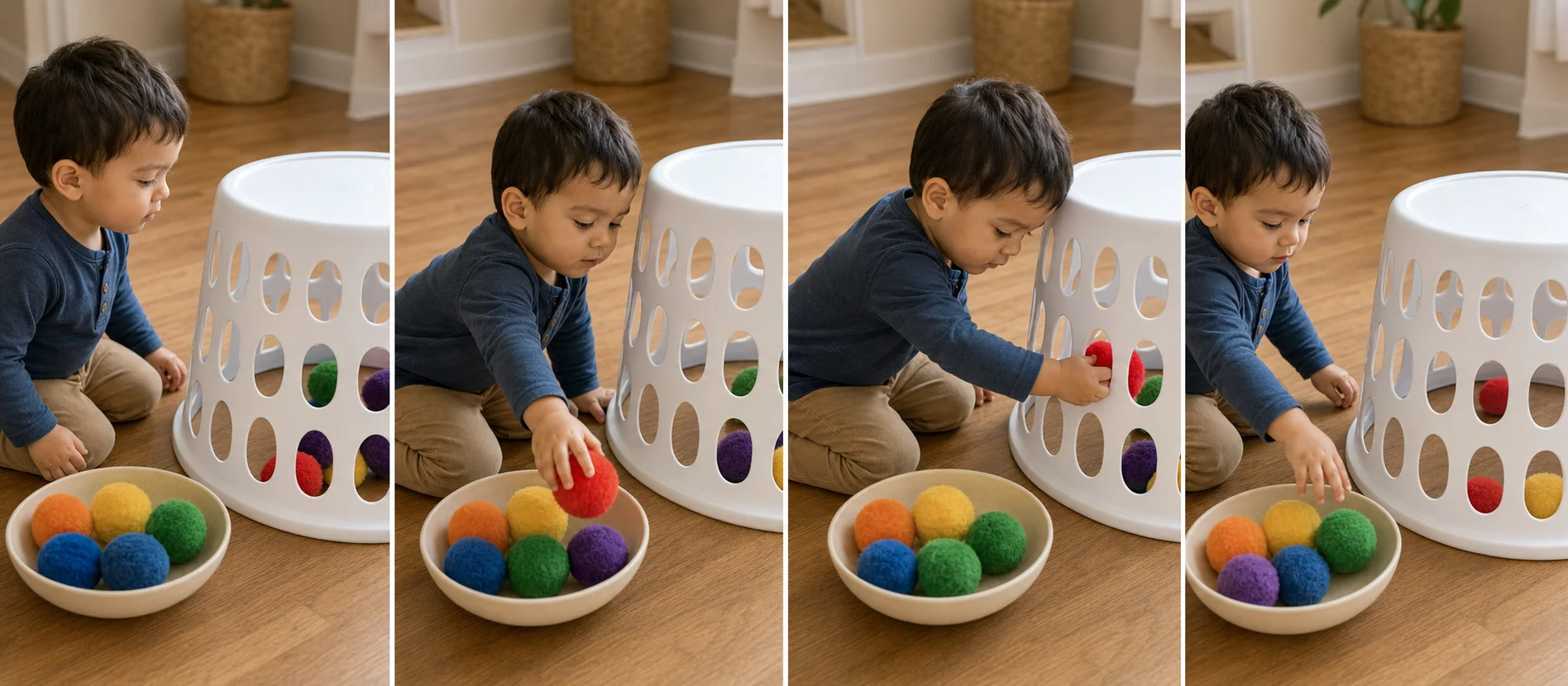
A sequence showing a grown-up demo push, a child pushing pom-poms through hamper holes, and a reset with pom-poms tipped back out.
  1. 01
    Push one pom-pom through a side hole and say, "Push. Plop."
  2. 02
    Hand your child one pom-pom and let them push it through any easy hole.
  3. 03
    Keep the bowl close so your child can reach back for another pom-pom.
  4. 04
    Repeat until the bowl is empty or interest fades.
  5. 05
    Tip or lift the hamper, scoop the pom-poms back into the bowl, and play again if your child wants another round.

Safety Check

  • Stay close and supervise the whole time because pom-poms can be a choking risk.
  • Use pom-poms large enough for supervised toddler play.
  • Check that the hamper has no broken or sharp edges.
  • Pause or stop if your child mouths, throws, or scatters the pom-poms repeatedly.
Supporting the play

What to say in the moment

Match what you say to what you see.

Prompt ladder
Level 1 (Start)
Push 1 pom-pom through and let your child hear the drop.
Level 2 (Keep going)
Point to the next easy hole and say, "Another one."
Level 3 (Stretch)
Invite your child to choose a different hole for the next push.
Level 4 (Extend)
After a few pushes, dump the pom-poms out and start a fresh round.
If your child seems...
What you'd see
Focused
What to do
Say
"Pick a hole."
Add
Name the pom-pom color after the push lands.
Extend
Move the bowl to the other side of the hamper for a new reach.

Make it easier

Younger end
  • -Put only 2 or 3 pom-poms in the bowl so the round feels finishable.
  • -Turn the hamper until the easiest holes face your child.
  • -Hand the pom-pom directly to your child's pushing hand.

Make it harder

Older end
  • +Ask your child to push through a hole on the far side of the same panel.
  • +Offer 2 pom-poms and let your child choose which one goes first.
  • +Count each finished push up to 5 before dumping the hamper.

If it's not working

If you see
If child ignores it
Do 2 quick demo pushes in a row, make the drop sound each time, then hand them 1 pom-pom instead of pointing to the bowl.
If you see
If child misuses it
If they throw, scatter, or mouth pom-poms, move the loose pom-poms back to the bowl and offer 1 at a time; stop for the day if mouthing continues.
If you see
If child gets frustrated
Use the largest pom-poms and easiest holes, hold the hamper steady with one hand, and count 3 successful pushes as enough.
Skill spotlight
Push Through Resistance

Fine-motor push control, Small-object aiming

This helps your child use fingertips for everyday tasks that need aim and pressure, like pressing pieces into place, starting fasteners, and putting small items away.

  • The side hole gives your child a visible target, so aiming and pressing have an immediate result.
  • The plop inside the hamper connects a small finger push with a clear sound and visual change.
  • Reaching back for another pom-pom keeps the pattern predictable without needing much language.
Real-world transfer
  • Pressing puzzle pieces, pegs, or lids into place
  • Using fingers with more control during dressing and mealtime
  • Staying with a short household-style task until the pieces are done

Parent questions