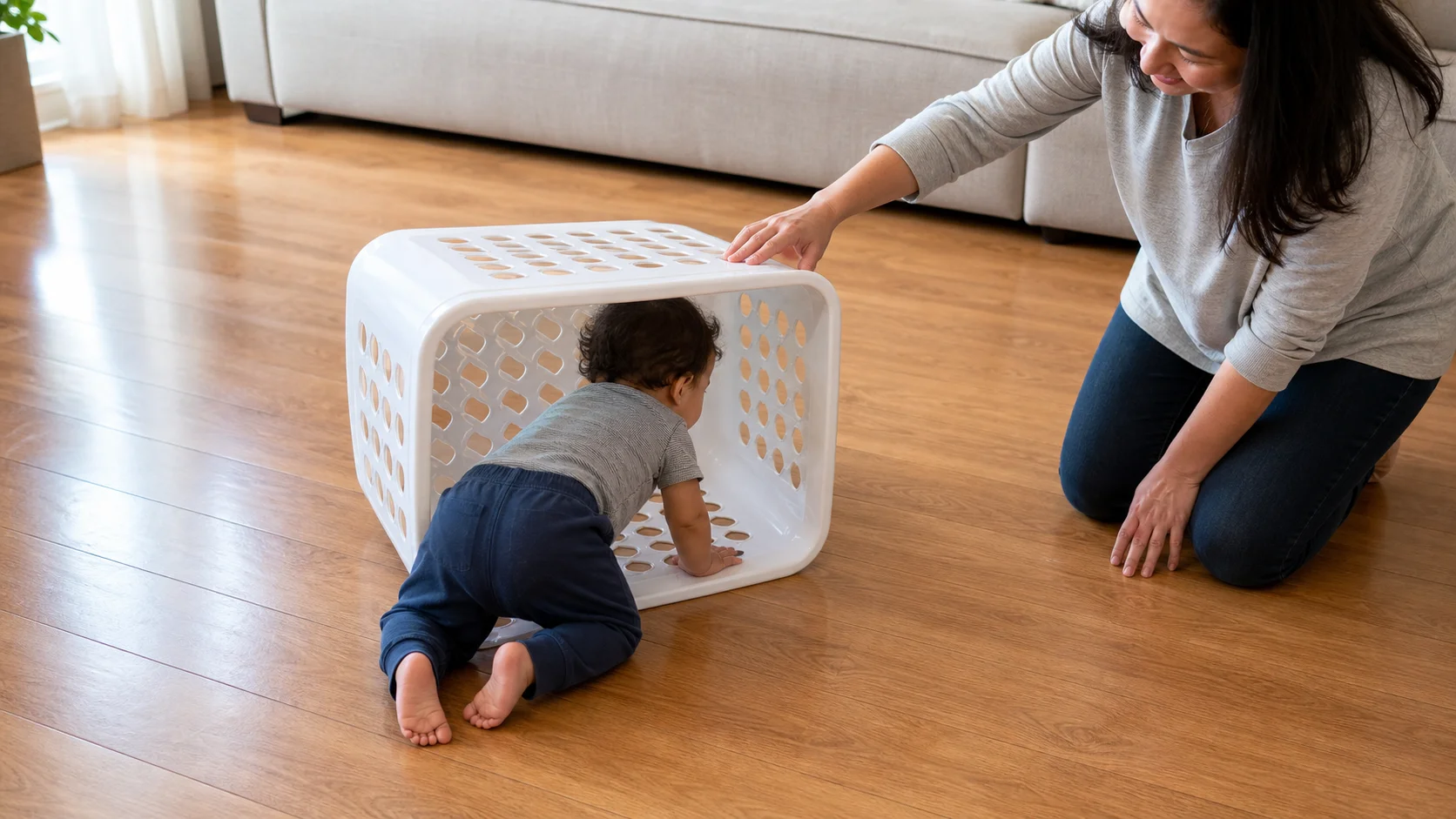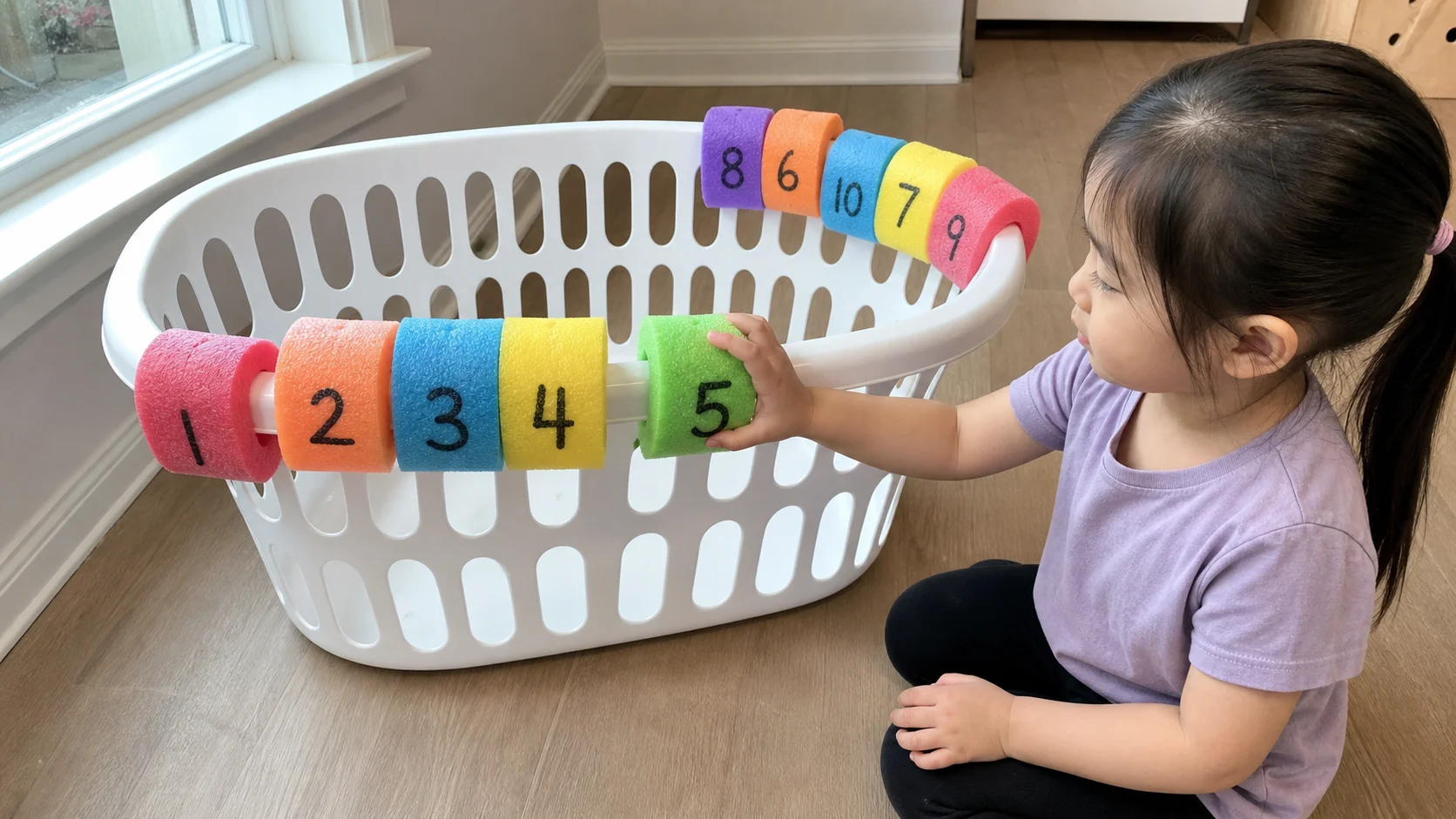
A child clipping numbered pool noodle pieces onto the rim of a laundry hamper.
ThinkingRemember Number SequenceIndoor Floor

Hamper Noodle Number Ordering.

Clip numbered pool-noodle pieces around a hamper rim and build a simple 1 to 10 number line.

Play time
5-10+ min
Age
3-4 years
Energy
Low
Mess
Low
Effort
Low
Where
Indoor Floor
Start here

The recipe.

Low parent effort
4 things

What you need

  • 1 pool noodle
  • 1 sharp knife or serrated bread knife, for adult setup only
  • 1 black Sharpie
  • 1 laundry hamper with a rim or holes that hold clipped noodle pieces
5 min minimum

Setup

Then start the loop
Step 01
On a safe adult prep surface, cut the pool noodle into 10 pieces about 2 inches wide.
Step 02
On the same prep surface, cut 1 slit into each pool-noodle piece so it can clip onto the hamper.
Step 03
On the outside of the pieces, write the numbers 1 through 10 with the black Sharpie.
Step 04
On the hamper rim, choose one clear starting spot for number 1.
Step 05
Around the hamper rim, clip the 10 numbered pieces in mixed order.
Step 06
On the floor in front of your child, set the hamper upright so your child can reach the working side without leaning into it.
"Find 1."
The loop

How play unfolds.

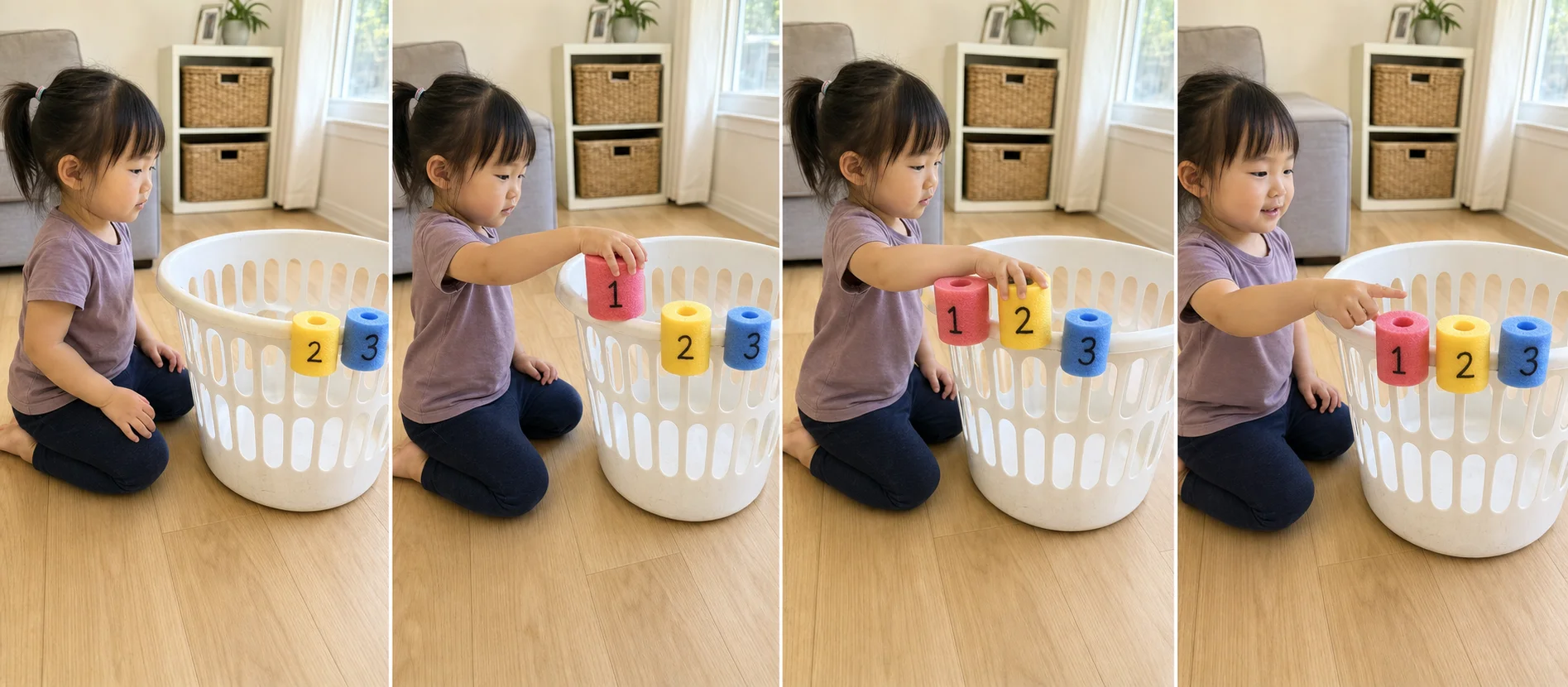
A sequence showing mixed numbered noodle clips, a child moving the next number, and a finished hamper number line.
  1. 01
    Move the number 1 piece to the starting spot and say, "What number comes next?"
  2. 02
    Let your child find the next number and clip it beside the last correct number.
  3. 03
    Read the ordered part together from the start: "1, 2, 3..."
  4. 04
    Repeat until the rim reads 1 through 10, or stop after a shorter finished line.
  5. 05
    Mix the pieces and play again if your child wants another round.

Safety Check

  • Keep the knife or serrated bread knife for adult setup only.
  • Give your child only the finished, numbered noodle pieces.
  • Check the cut pieces and hamper edge before play so your child handles smooth, safe materials.
  • Pause and remove the pieces if they go in your child's mouth or start being thrown.
Supporting the play

What to say in the moment

Match what you say to what you see.

Prompt ladder
Level 1 (Start)
Put 1 at the start.
Level 2 (Keep going)
What number comes next?
Level 3 (Stretch)
Read the line and check it.
Level 4 (Extend)
Fix 1 mixed-up number.
If your child seems...
What you'd see
Focused
What to do
Say
"Read it from the start."
Add
Ask for the next number only after the piece is clipped.
Extend
Mix 1 piece near the end and let your child spot the fix.

Make it easier

Younger end
  • -Turn the hamper so only the working edge faces your child.
  • -Start with the next needed piece already in your child's hand.
  • -Stop the round at 3 or 5 and call that a finished number line.

Make it harder

Older end
  • +Ask your child to find the number that comes before the open spot.
  • +Leave 1 blank space in the line and ask which number belongs there.
  • +After 1 to 10 is finished, rebuild the line from 10 back to 1.

If it's not working

If you see
If child ignores it
Hand them the number 1 piece and say, "Can you clip this one anywhere on the hamper?" Then build from that spot.
If you see
If child misuses it
Pause the number task and offer 1 piece at a time for clipping practice.
If you see
If child gets frustrated
Drop to numbers 1 to 3 or 1 to 5, place the next needed number close by, and read the line together after each move.
Skill spotlight
Number Sequence

Putting number pieces in order while moving them carefully.

This helps the child hold a simple order in mind, match each number to the next spot, and use careful hand control while the plan grows.

  • Looking for the next number gives your child repeated practice with number order.
  • Clipping each noodle piece into place adds careful finger work to the math play.
  • Reading the line after each move helps your child check the order before choosing again.
Real-world transfer
  • Following simple counting routines
  • Noticing what comes next in a familiar order
  • Using careful fingers for clips, buttons, and tool-like objects
  • Sticking with a short plan until it has a clear finish

Parent questions