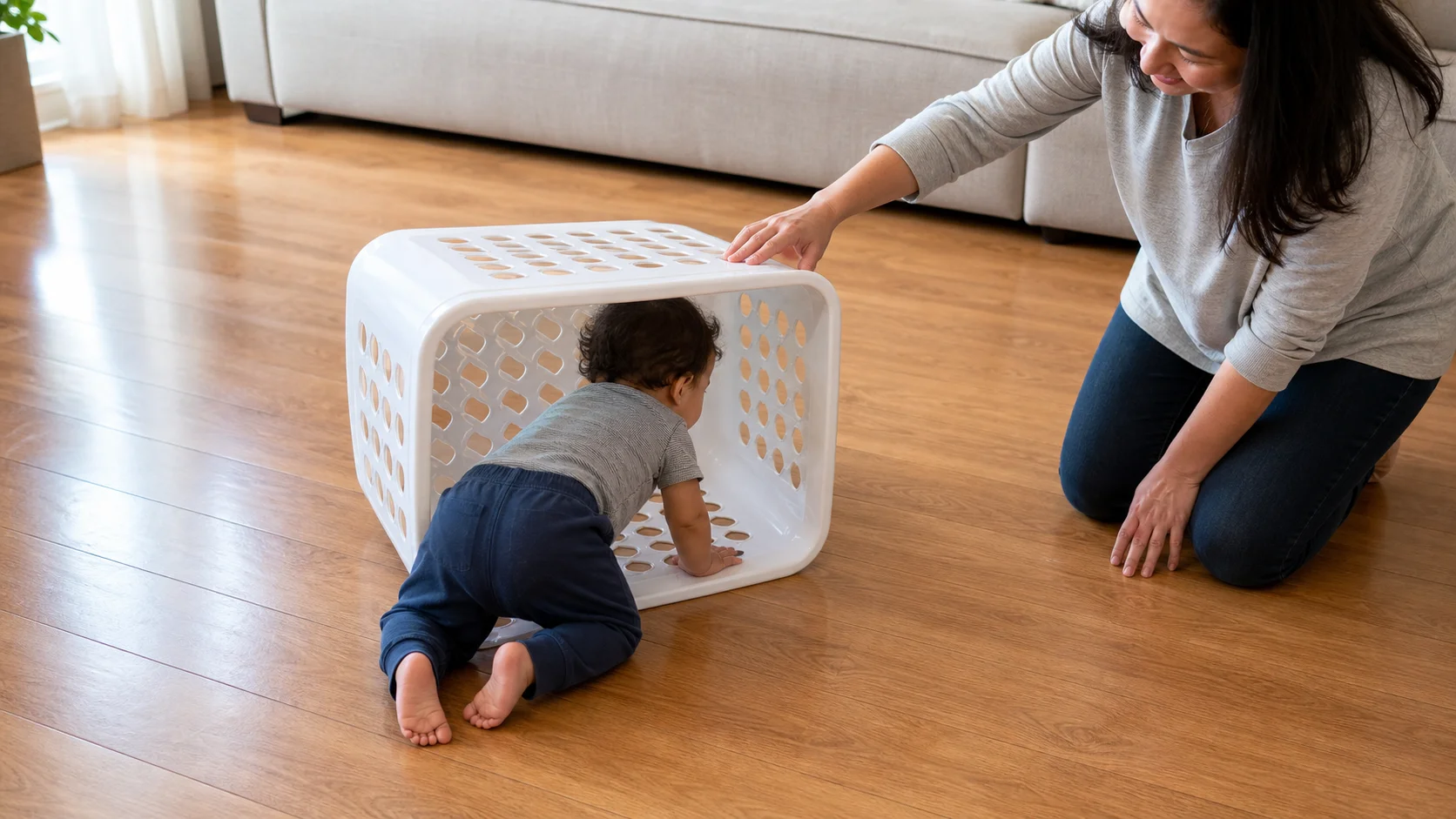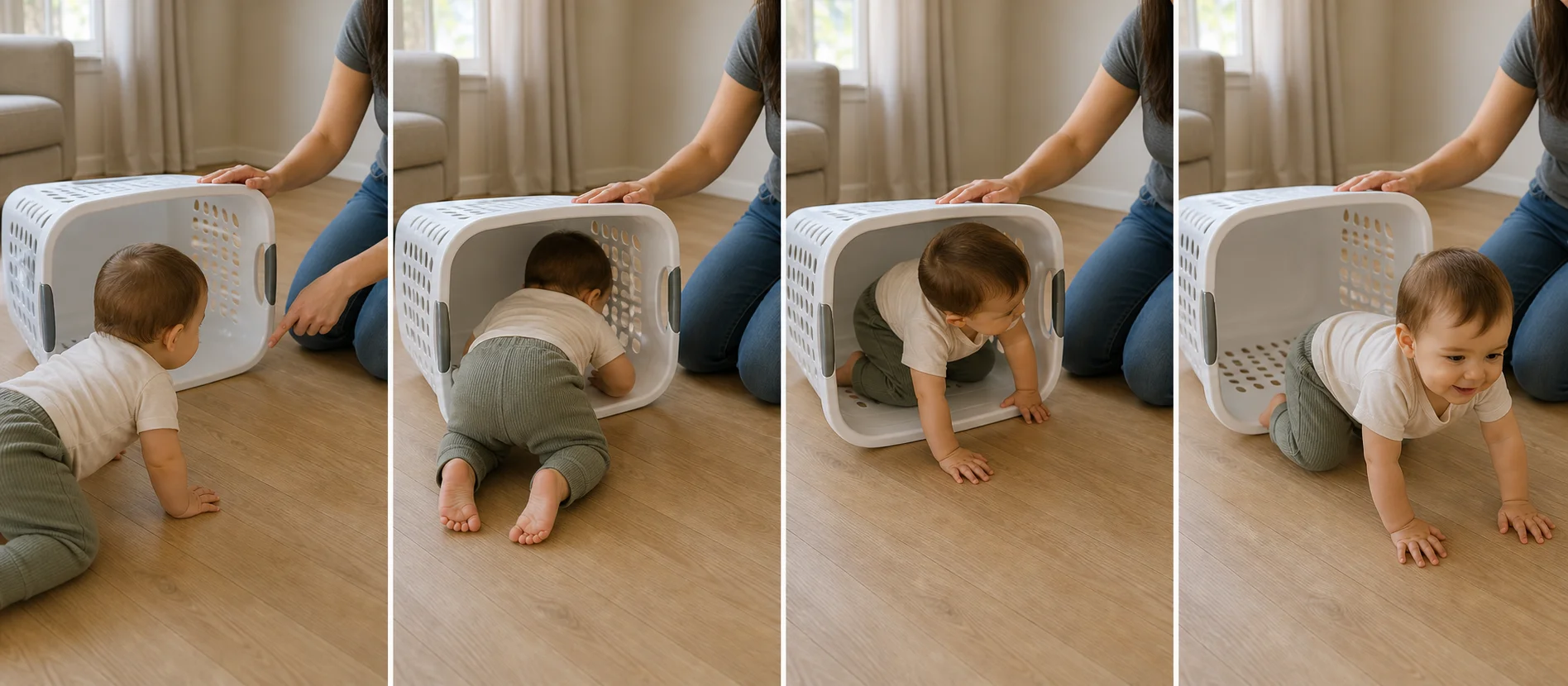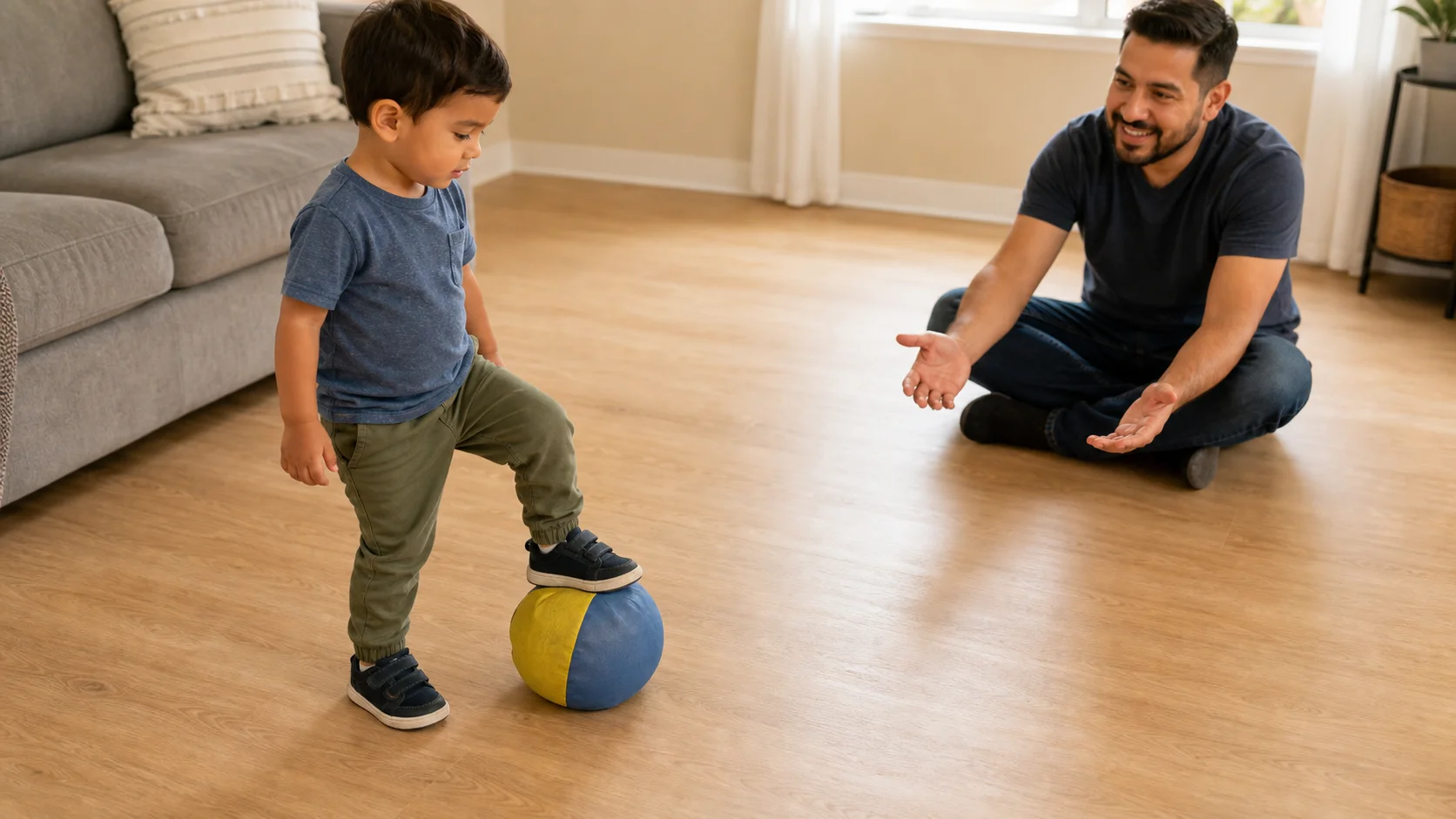
Toddler stopping a soft ball with one foot while a grown-up sits nearby in a clear play lane.
Fine motorOT-adjacent supportStop And StartIndoor Or Outdoor

Foot Ball Stop.

Roll a soft ball slowly, let your child stop it with one foot, hold it for a short count, and roll it back.

Play time
5+ min
Age
2-3 years
Energy
Medium
Mess
Low
Effort
Medium
Where
Indoor Or Outdoor
Start here

The recipe.

Medium parent effort
4 things

What you need

  • 1 slightly deflated soft ball or playground ball
  • 1 flat indoor floor area or smooth outdoor ground space
  • 1 child in supportive footwear
  • 1 adult
5 min minimum

Setup

Then start the loop
Step 01
On a flat indoor floor or smooth outdoor ground, clear one straight lane so the ball can roll between you with no toys or clutter under either foot.
Step 02
At one end of the lane, put your child in supportive shoes, squeeze the ball once to make sure it gives a little instead of feeling rock hard, and set the ball between you.
Step 03
At the other end of the lane, kneel or sit facing your child a short gentle roll away, then show one slow turn by stopping the ball with your foot, holding it for 1, 2, 3, and rolling it back.
`Foot on top.`
The loop

How play unfolds.

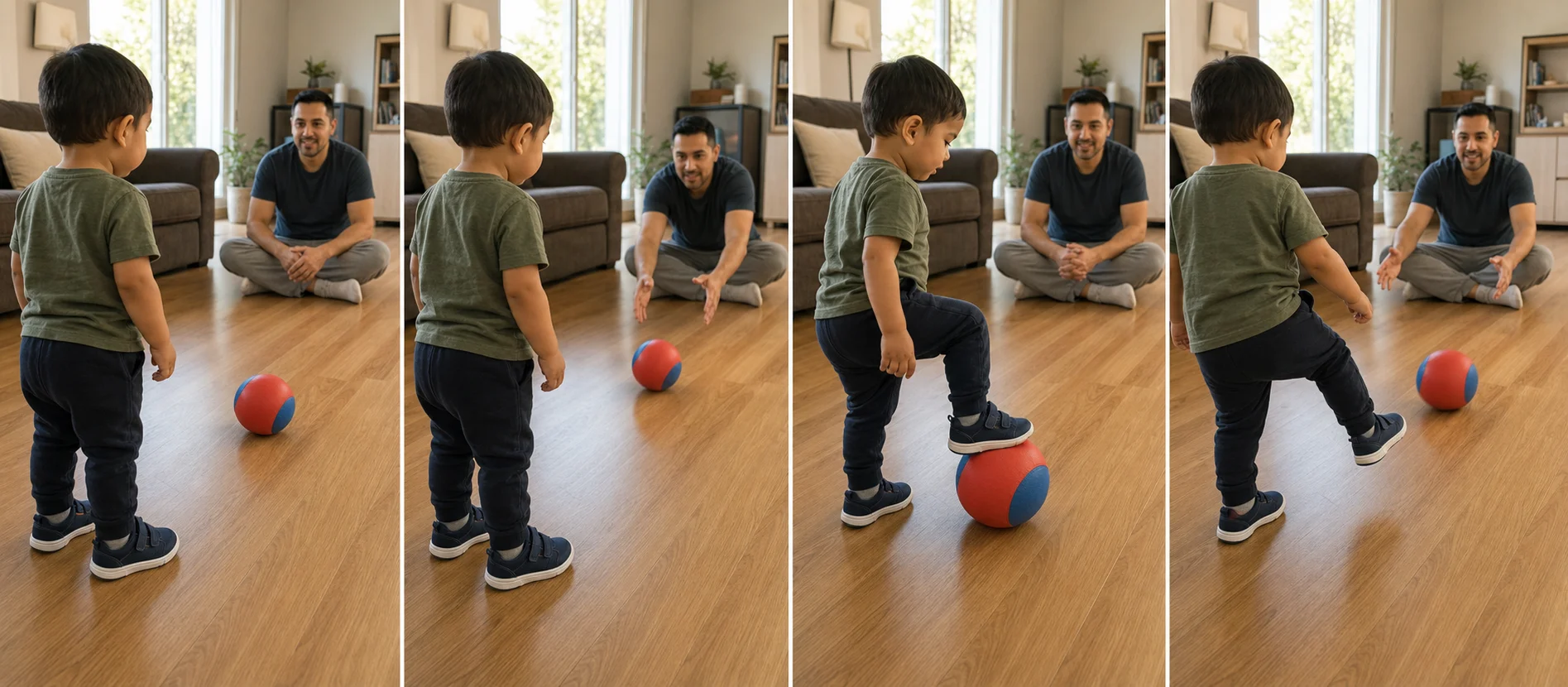
Multi-panel sequence showing a grown-up rolling a soft ball, the child stopping it with one foot, holding it still, and rolling it back.
  1. 01
    Roll the ball slowly toward your child's easier foot and say, `Stop it with your foot. Hold it. One, two, three. Now roll it back.`
  2. 02
    Let your child step one foot on top of the ball, hold it for the count, and nudge it back with the same foot.
  3. 03
    Repeat from the same short distance until a few turns stay calm, then offer the other foot.
  4. 04
    If the ball gets kicked or chased, reset closer or start with the ball still under your child's foot.
  5. 05
    Stop after a short round while balance still looks steady.

Safety Check

  • Keep your child in supportive footwear and use a slightly deflated soft ball so the stop stays slow and controllable.
  • Stay close enough to steady your child if balance breaks during the hold, and keep the roll slow enough that they can step on top instead of lunging.
  • Stop if your child looks wobbly, slips, complains of pain, or the moving-ball step still feels scary after you shorten the distance.
Supporting the play

What to say in the moment

Match what you say to what you see.

Prompt ladder
Level 1 (Start)
Stop the ball with your foot and hold it still.
Level 2 (Keep going)
Stop it, count `1, 2, 3`, and roll it back to me.
Level 3 (Stretch)
Try the next turn with the other foot.
Level 4 (Extend)
Stop the next roll without letting the ball wiggle away.
If your child seems...
What you'd see
Focused
What to do
Say
`You stopped it. Roll it back.`
Add
Name one body action only, like `left foot` or `hold still`.
Extend
Offer one other-foot turn after two smooth returns.

Make it easier

Younger end
  • -Roll the ball directly to the middle of your child's easier foot each time.
  • -Accept a short still moment on top of the ball before asking for the return roll.
  • -Let your child nudge the ball back with either foot after a successful stop.

Make it harder

Older end
  • +Alternate feet every single turn instead of staying with one side.
  • +Hold the ball still for a longer count before the return roll.
  • +Roll slightly to the left or right so your child has to step across to trap it.

If it's not working

If you see
If child ignores it
Start with the ball still under their foot and count `1, 2, 3` together before you try any rolling turn.
If you see
If child misuses it
If your child keeps kicking or chasing the ball, switch back to `stop and hold` only, then add the roll-back once they can keep one foot on top.
If you see
If child gets frustrated
Drop the count to `1`, give a hand to steady them if needed, and take a short rest break before offering one last easy turn.
Skill spotlight
Stop And Start Control

Stopping and starting a rolling ball with one steady foot

This helps a child shift weight onto one leg, steady the body long enough for the other foot to do a control job, and manage simple ball play with less rushing.

  • Stopping the roll gives your child one clear body job: foot on top, hold, then send it back.
  • The short count slows the action before the return roll.
  • Switching feet keeps the same pattern while giving the other side a turn.
  • A closer reset after a miss keeps the game from turning into chasing.
Real-world transfer
  • Stopping the body and feet with more control during simple ball play
  • Standing steady on one leg long enough to do a small foot job
  • Handling back-and-forth play without rushing the next move

Parent questions