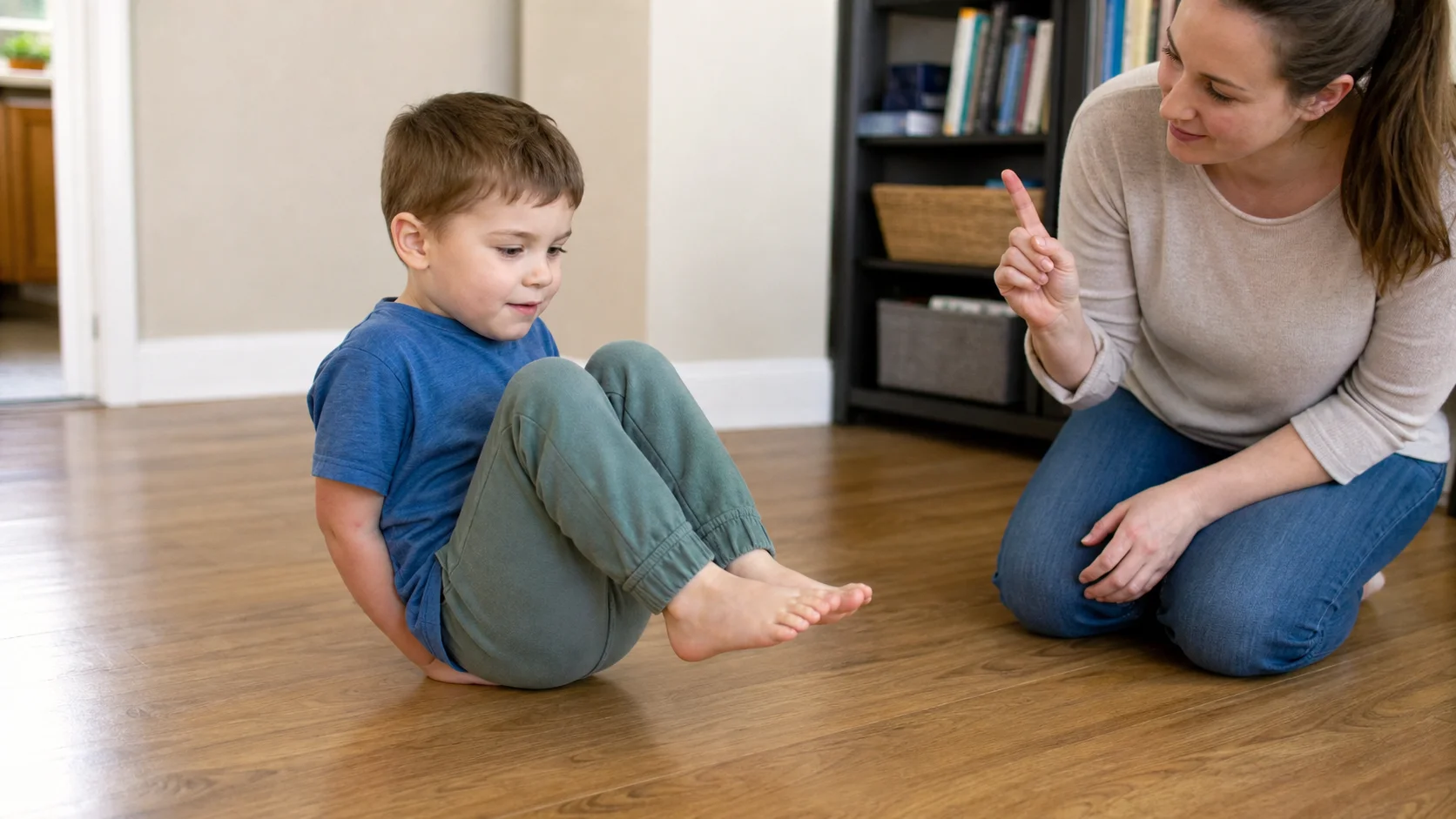
A child seated on a clear floor spot with hands tucked under their body while a grown-up counts nearby.
Fine motorSensory-friendly supportShift Weight`Indoor Floor Space

Hand Seat Rocket.

A short no-prop floor activity where your child squeezes, lifts both feet, and relaxes on cue.

Play time
1-5+ min
Age
2-4 years
Energy
Low
Mess
No
Effort
Low
Where
Indoor Floor Space
Start here

The recipe.

Low parent effort
3 things

What you need

  • Clear floor space
  • 1 child
  • 1 adult nearby for cueing and counting
1 min minimum

Setup

Then start the loop
Step 01
On the floor, clear one small spot so your child can lift both feet without brushing toys, table legs, or another person.
Step 02
In the middle of that spot, sit your child with knees bent and feet resting on the floor.
Step 03
Under your child's bottom, help them slide both hands so they are sitting on their hands before the first lift.
"Hands tucked."
The loop

How play unfolds.

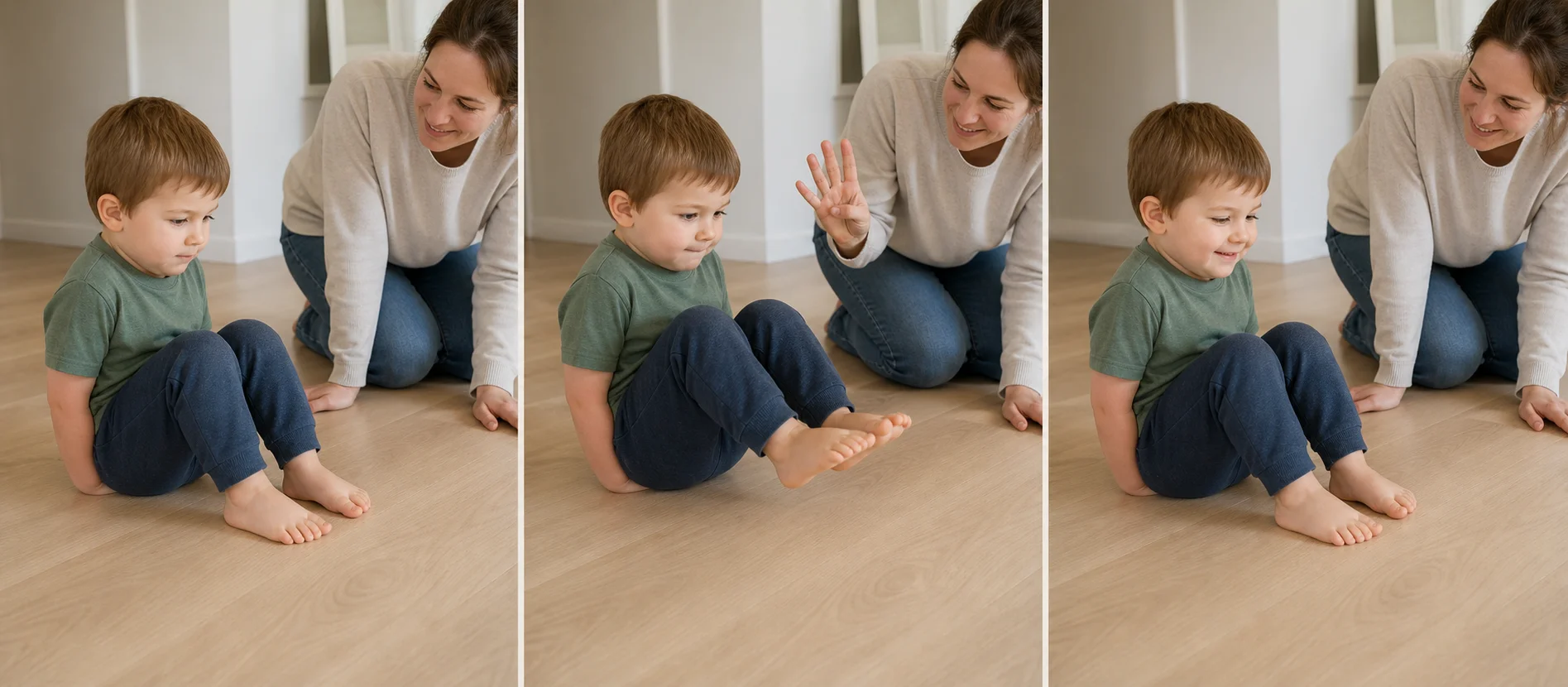
A three-panel sequence showing the child tuck hands, lift both feet, then lower and relax.
  1. 01
    Sit beside your child and model one rocket: hands tucked, body tight, feet lifted, then relaxed.
  2. 02
    Say, "Sit on your hands. Squeeze, lift, hold, then relax."
  3. 03
    Count slowly while your child lifts both feet, using a short count unless the hold is steady.
  4. 04
    Have your child lower both feet and soften the whole body.
  5. 05
    Repeat only while your child wants more body input.

Safety Check

  • Use a clear floor spot so lifted feet do not hit furniture or another person.
  • Stay close enough to help if your child tips backward, kicks fast, or loses the seated balance.
  • Keep the hold short if your child wobbles, strains, resists the hand position, or looks uncomfortable.
  • Choose another activity if pressure under the hands or seated balance feels unsafe or overwhelming for your child.
Supporting the play

What to say in the moment

Match what you say to what you see.

Prompt ladder
Level 1 (Start)
"Sit on your hands and make your body tight."
Level 2 (Keep going)
"Lift your feet for my slow count."
Level 3 (Stretch)
"Hold until you hear 'relax.'"
Level 4 (Extend)
"Try one quiet rocket hold."
If your child seems...
What you'd see
Focused
What to do
Say
"Your body is tight and still."
Add
Count slowly while the feet stay lifted.
Extend
Ask for one quiet relax before the next turn.

Make it easier

Younger end
  • -Count only to 3 and celebrate the relaxed finish.
  • -Let one heel stay close to the floor while your child learns the body shape.
  • -Do one adult demo right beside your child, then offer one copy turn.

Make it harder

Older end
  • +Ask your child to keep both feet quiet in the air until the count ends.
  • +Vary the count between short and medium holds so your child listens for "relax."
  • +Add one calm repeat after a successful relaxed finish.

If it's not working

If you see
If child ignores it
Do one quick round beside them so they can copy the body shape, then invite, "Your turn to sit on your hands."
If you see
If child misuses it
If your child kicks, rolls, or pushes with their feet, bring both feet down, retuck the hands, and cue one calm lift instead of repeated fast tries.
If you see
If child gets frustrated
Shorten the hold to one slow breath or a count of 3, then stop after one smooth relax so the turn still ends calmly.
Skill spotlight
Shift Weight`

Body awareness, Calm body control

This helps the child notice where their body is, hold a steady position, pause before moving, and settle before the next routine.

  • Sitting on both hands gives your child a clear body shape to copy and feel.
  • The squeeze, lift, hold, and relax loop practices body awareness without props or mess.
  • The slow count gives the hold a predictable beginning and ending.
  • The soft-body finish makes the transition out of the activity visible.
Real-world transfer
  • Sitting more steadily during floor play.
  • Noticing when the body is tight or soft.
  • Using a short body reset before dressing, cleanup, or quiet time.
  • Waiting through one simple cue before moving again.

Parent questions