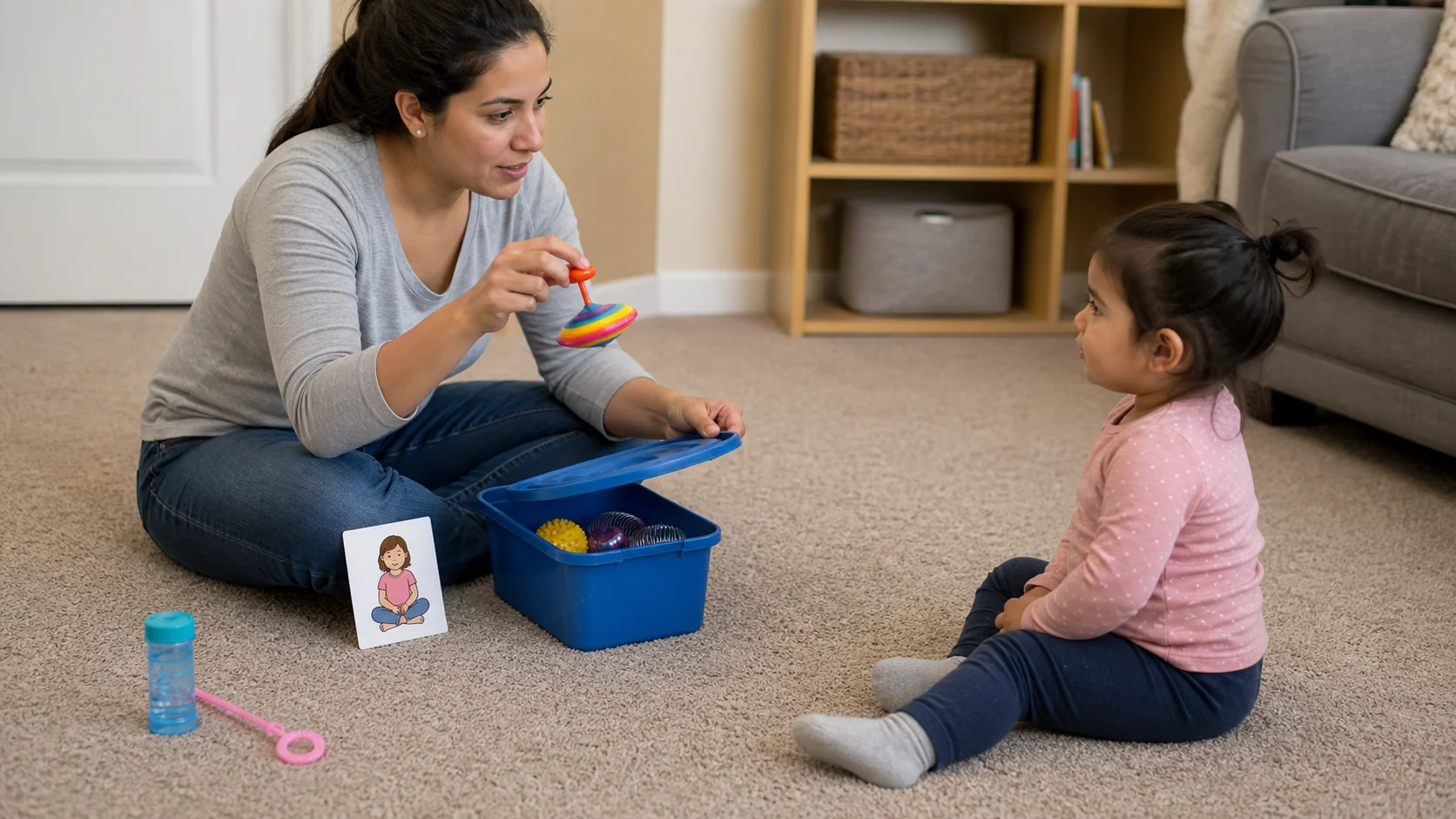

Attention Bucket
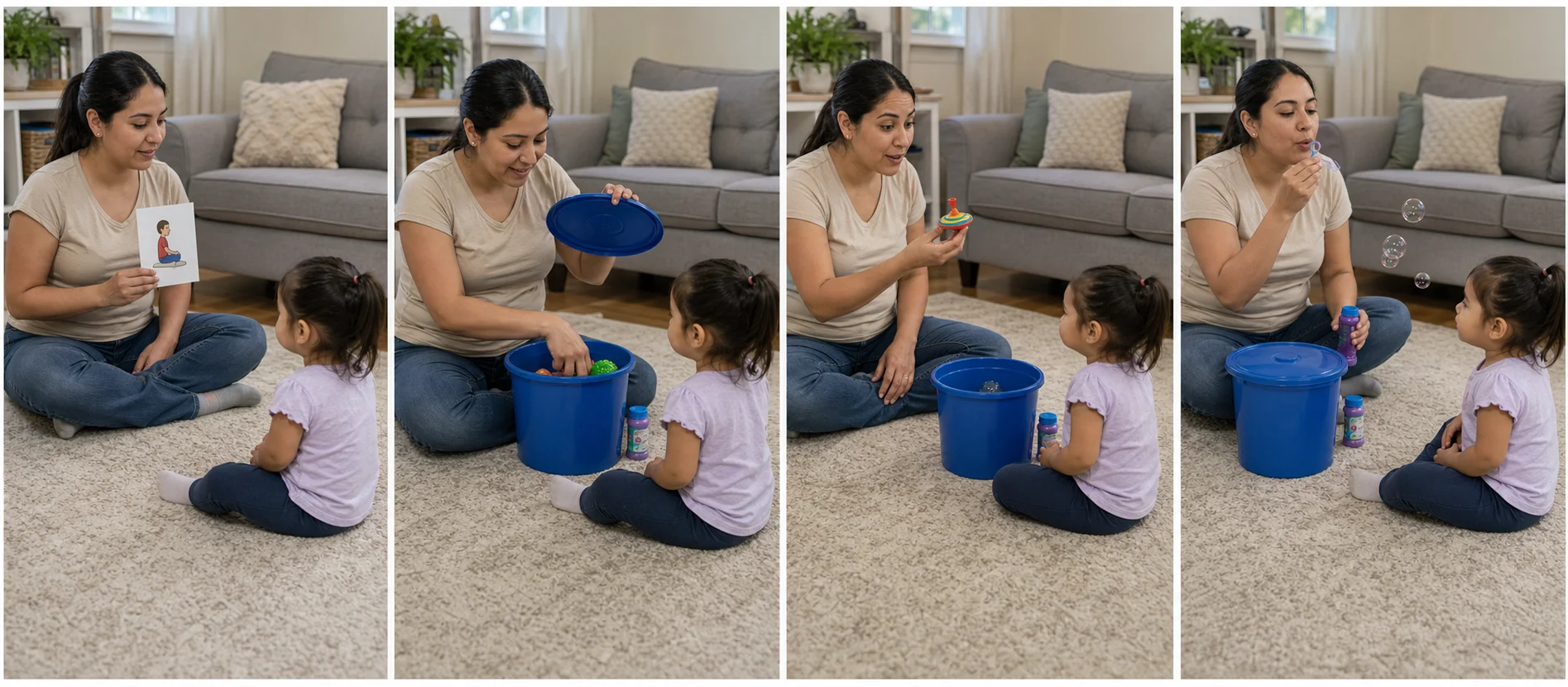
Turn a lidded container and a few interesting objects into a short reveal game. Your child watches one item at a time, then waits for the next to support attention and practice pausing before reaching.
Low-pressure play ideas that create chances for choices, gestures, sounds, turn-taking, and repeatable words. These activities can work with pointing, modeling, signs, or short phrases. They are everyday play ideas, not speech therapy or treatment guidance.

Turn a lidded container and a few interesting objects into a short reveal game. Your child watches one item at a time, then waits for the next to support attention and practice pausing before reaching.


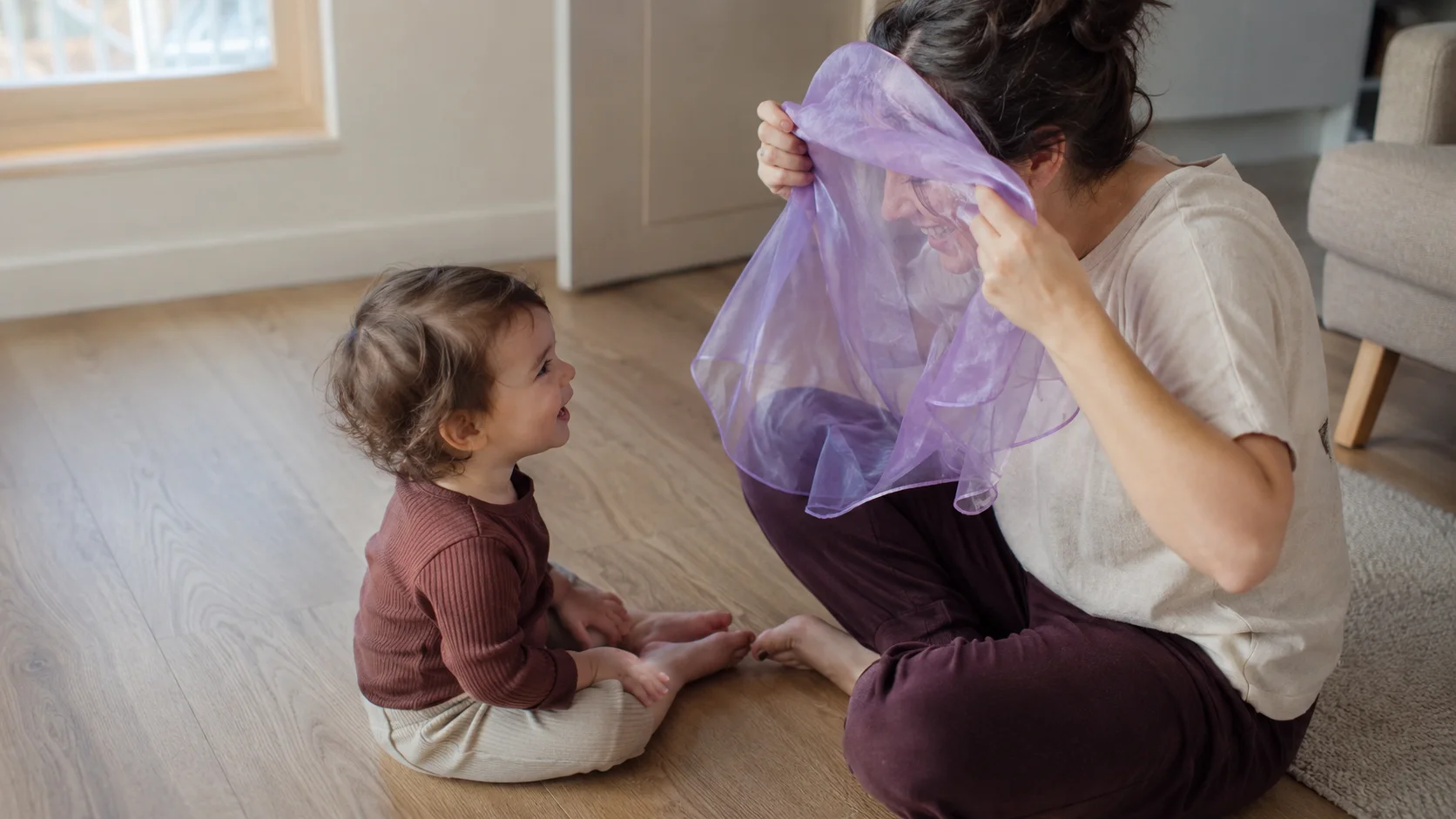
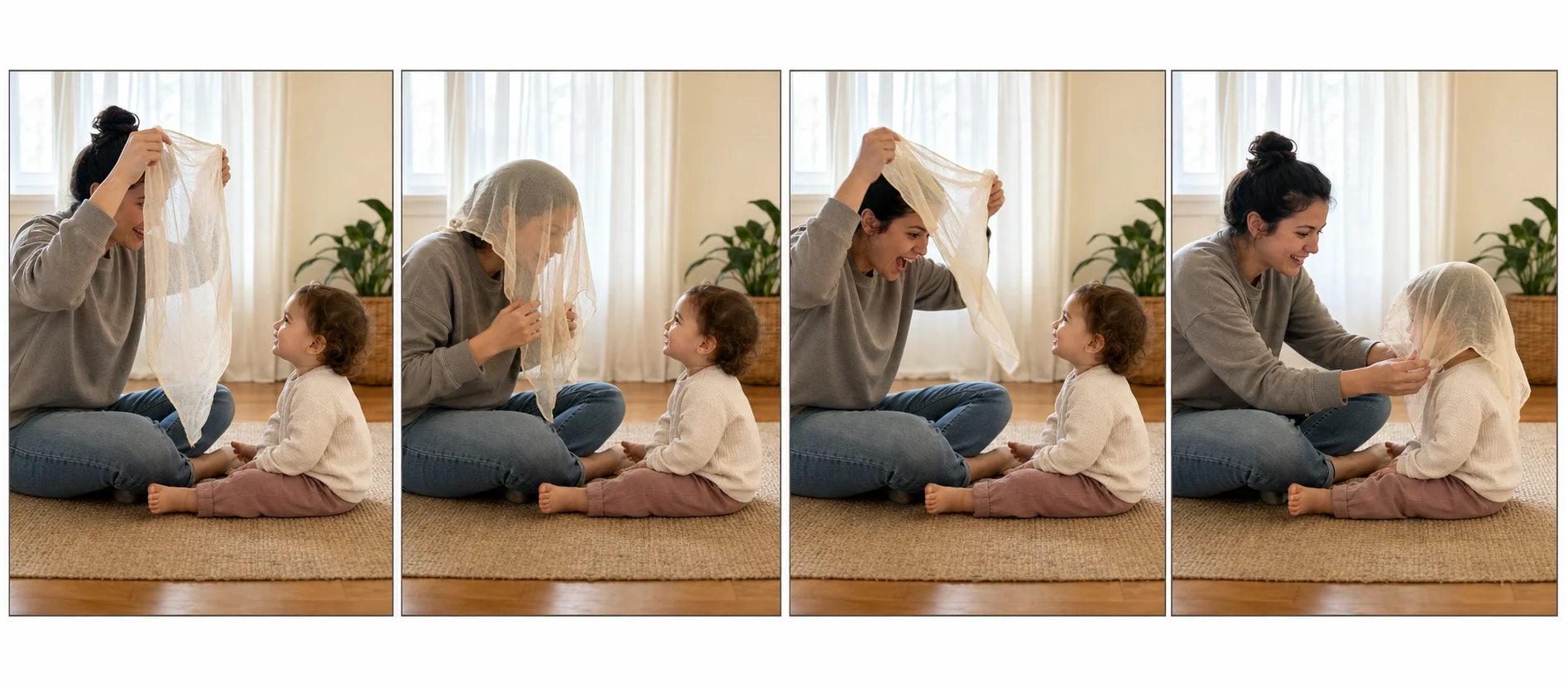
Turn one light scarf into a slow-motion peekaboo game. Let it float over your face and pull it away, then repeat with your child for an easy shared game filled with opportunities to connect and communicate.


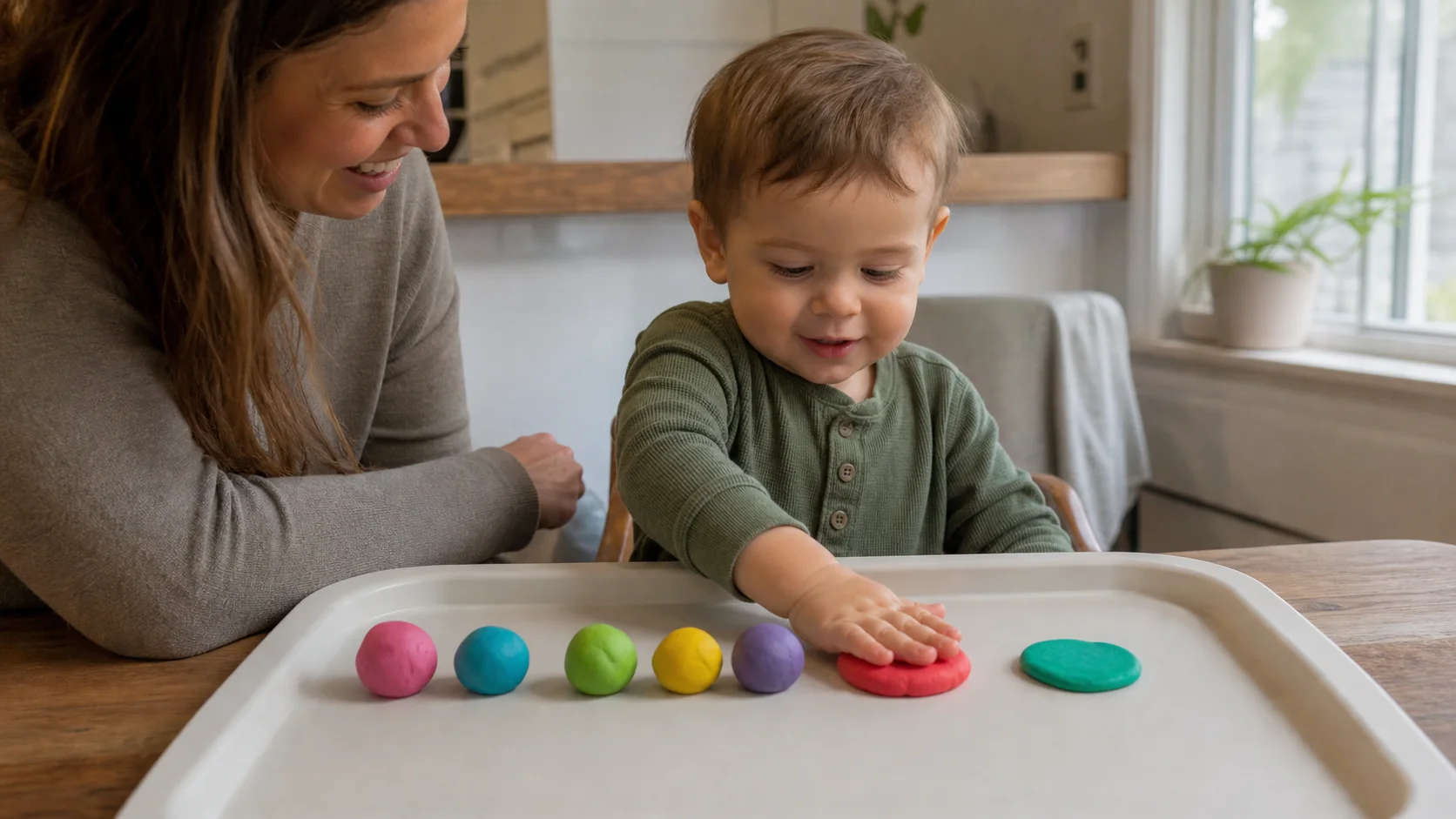
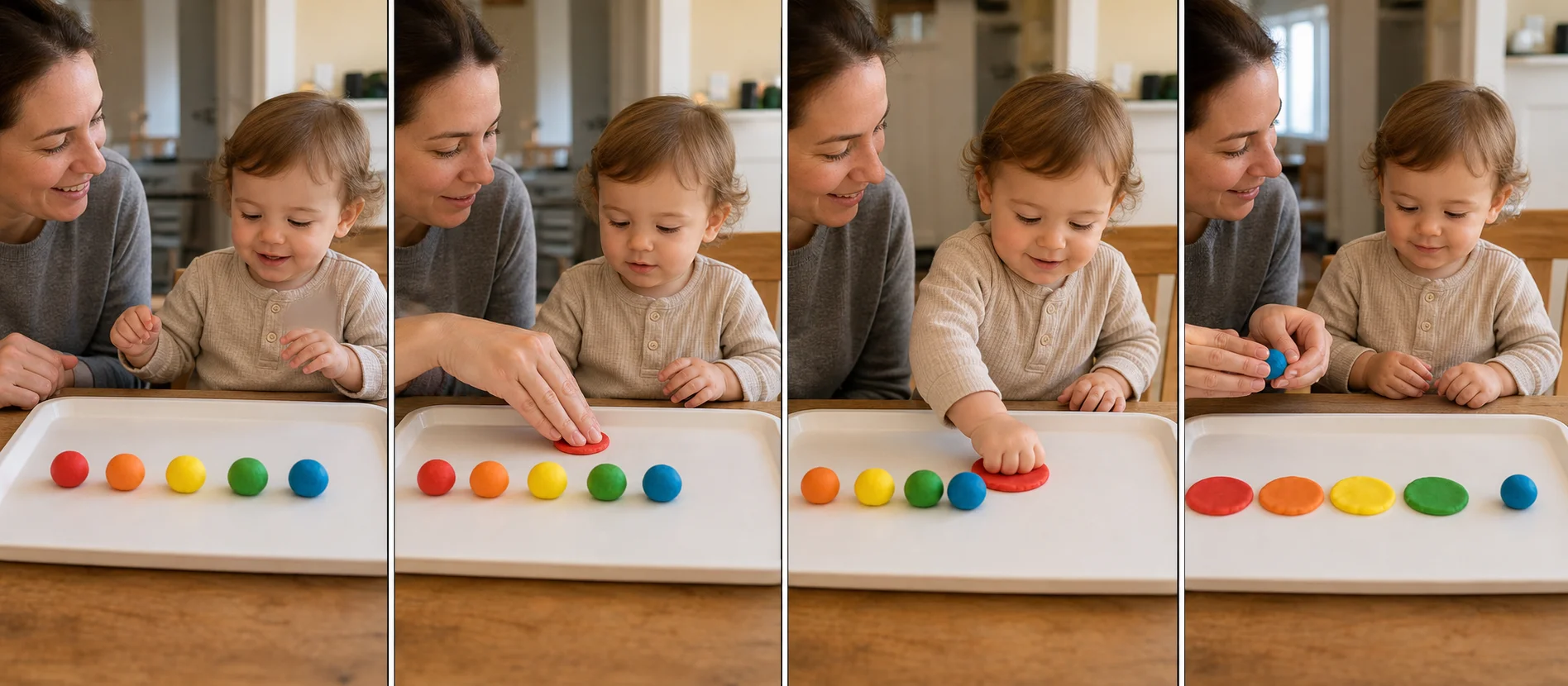
Turn a few Play-Doh balls into smash cakes with one satisfying press. Your child flattens each ball with their palm or fist, pairing the action with a funny sound while practicing hand pressure and simple sound imitation.


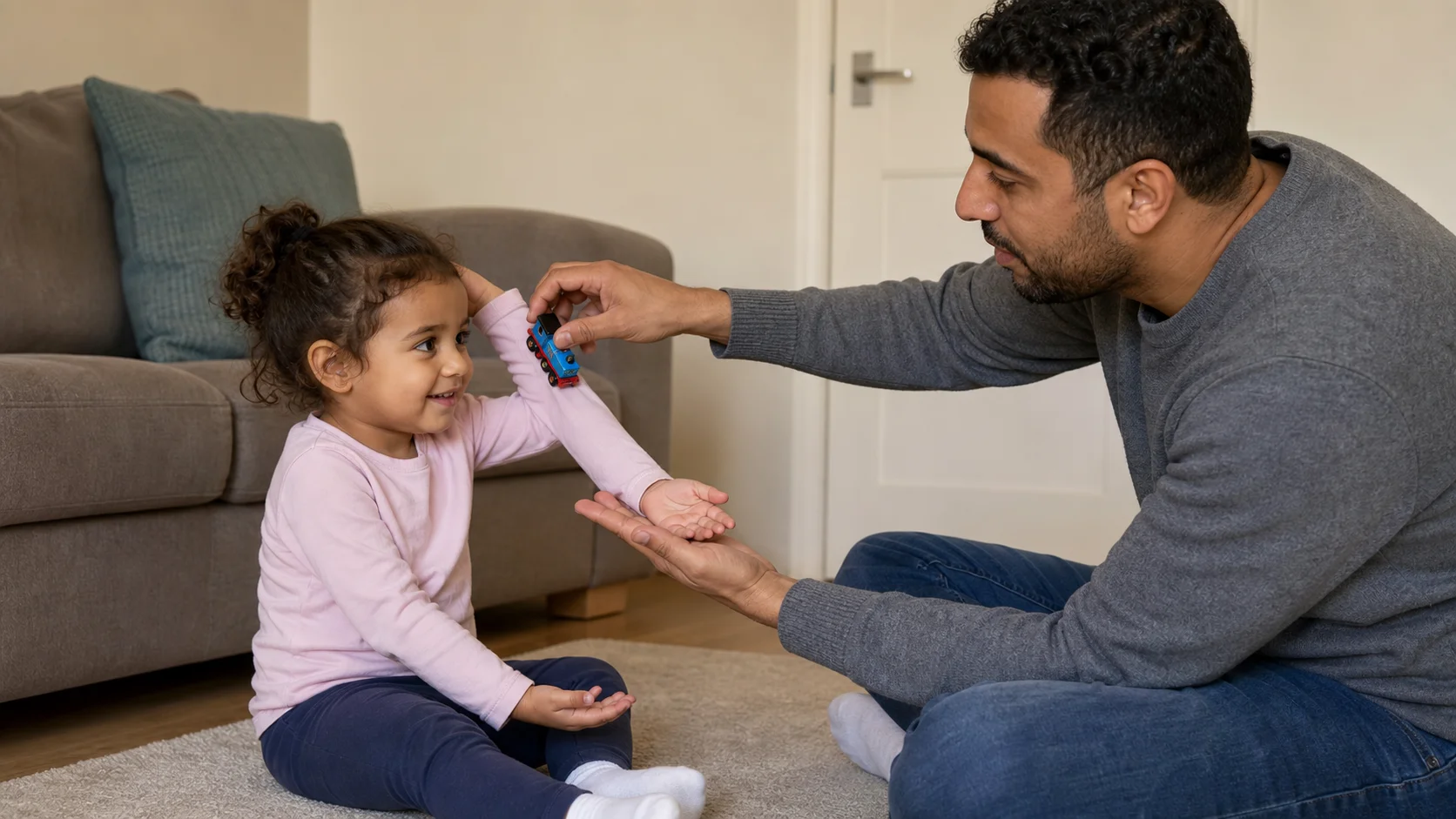
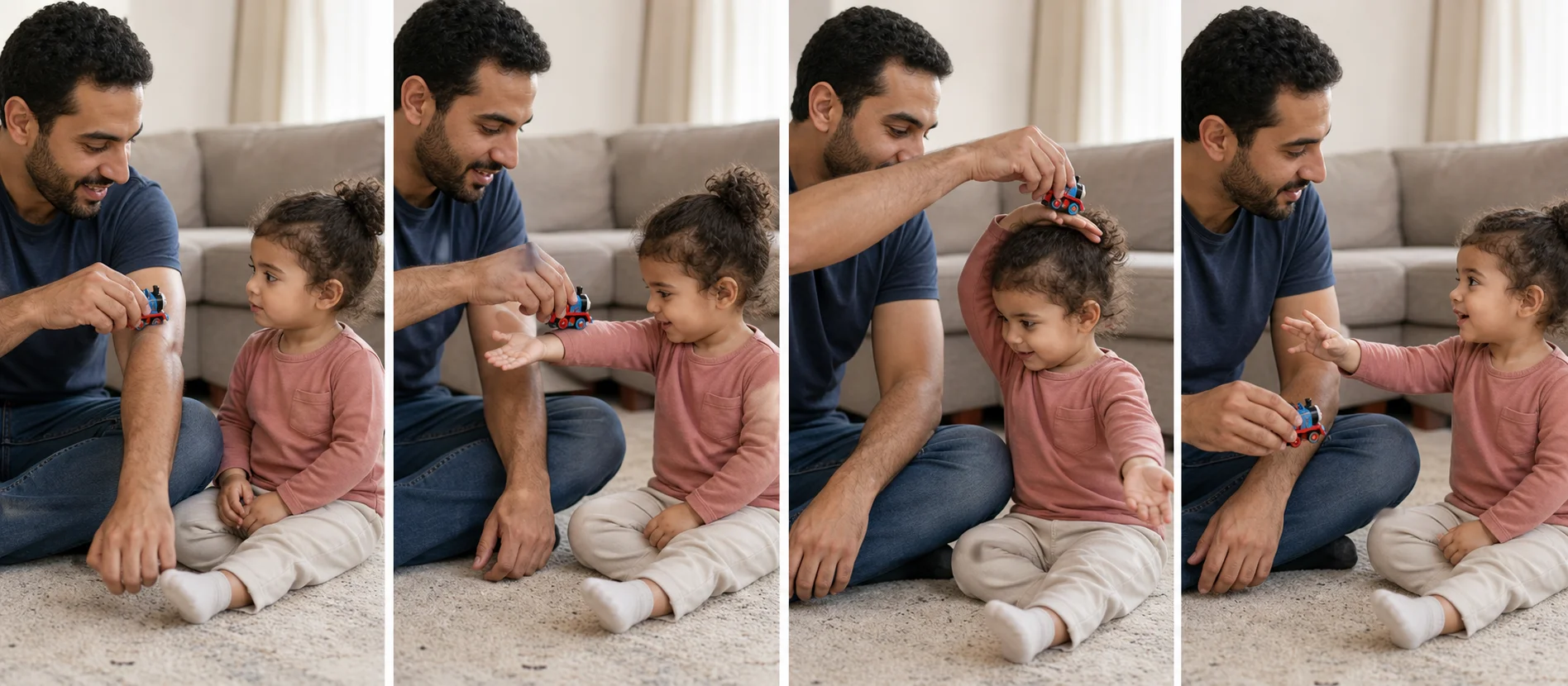
Turn one toy train into a predictable body ride your toddler can ask to repeat. Roll it up one arm, over the head, and down the other, then pause so your child can anticipate what comes next and signal for more.


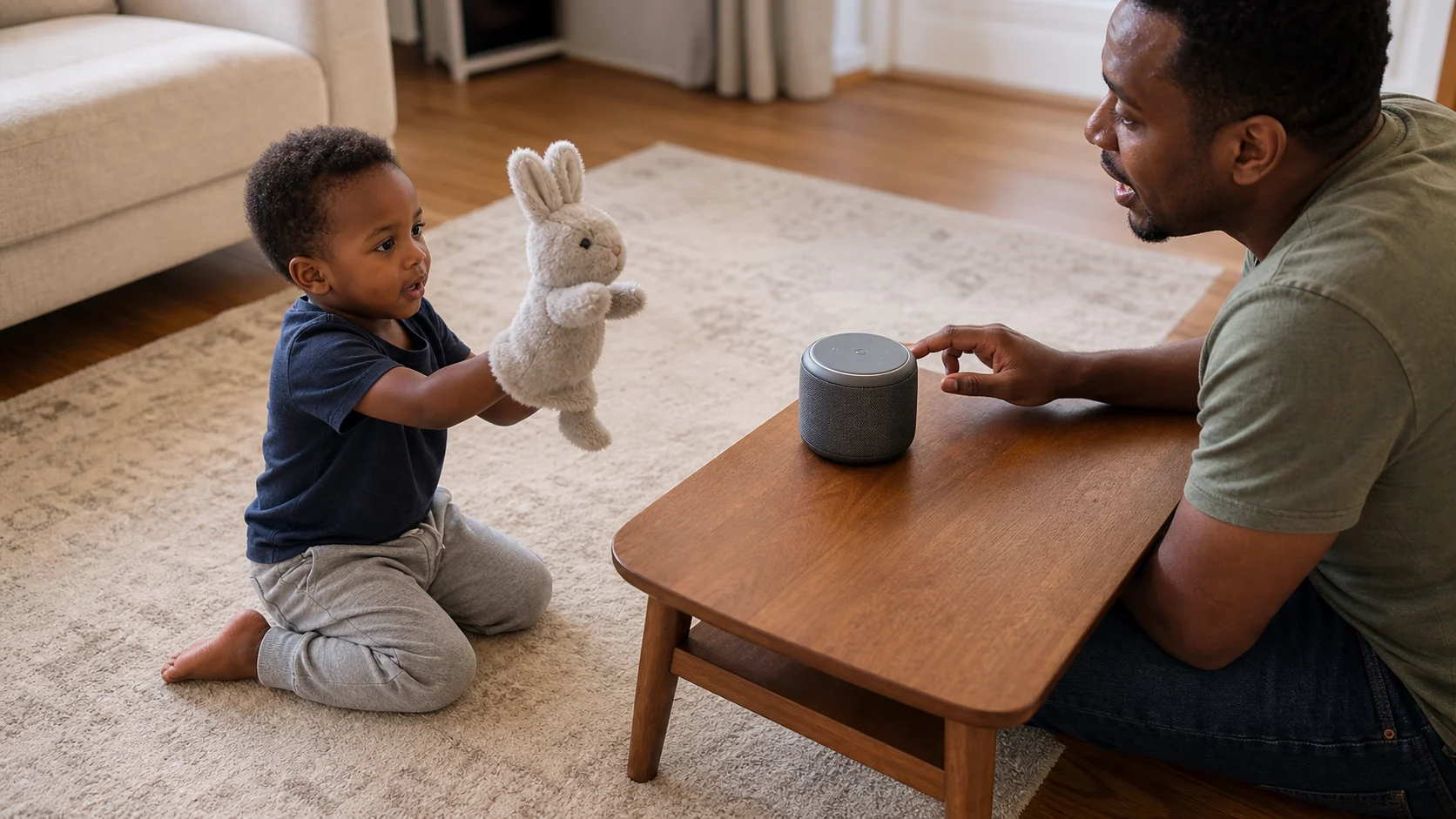
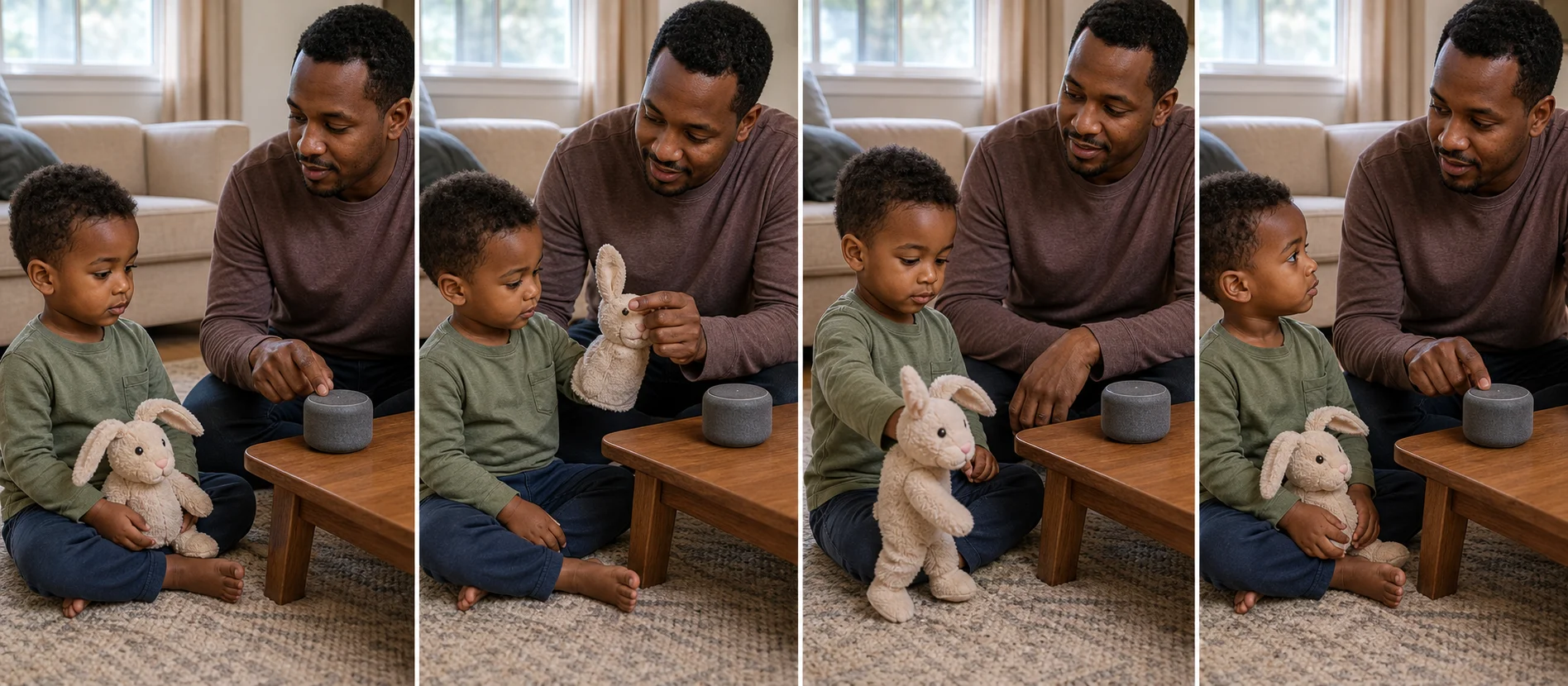
Turn one short music clip and a puppet into a calm story your child can help tell. Your child listens, moves the puppet to show an idea, and practices responding through movement, sound, gesture, or words.


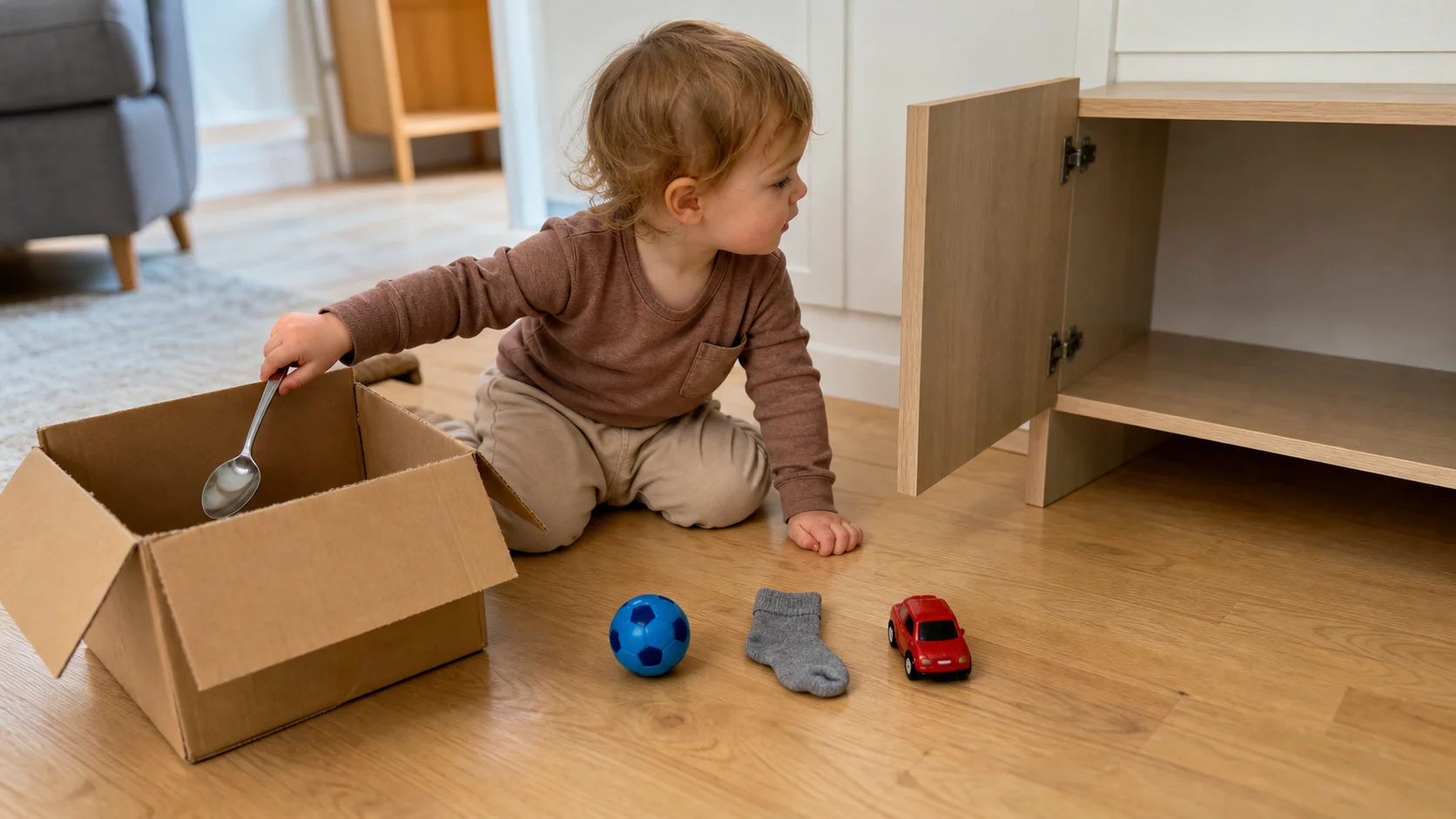
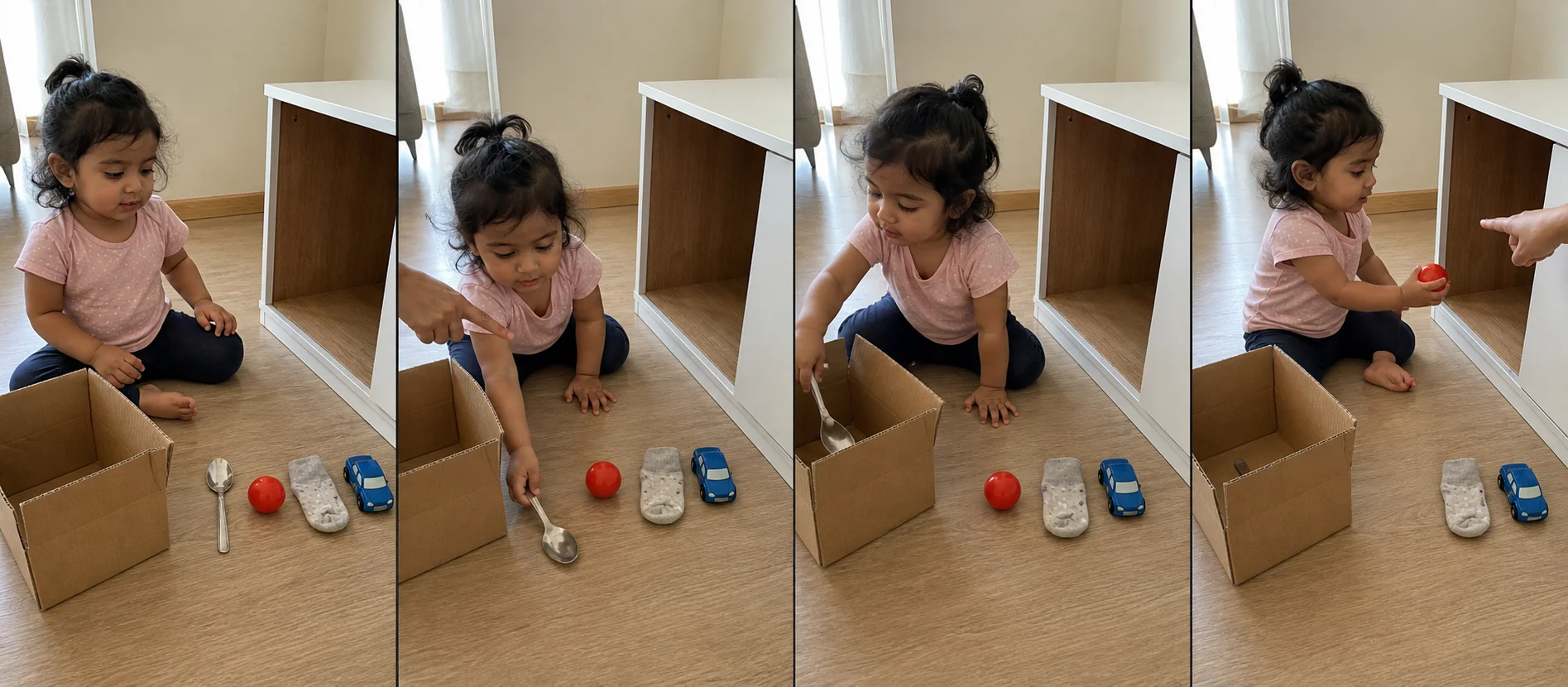
Can your child remember both what to hide and where it goes? With four everyday objects and two hiding spots, they listen for an object-and-place direction, choose the right item, and hide it in the named spot to practice following directions.


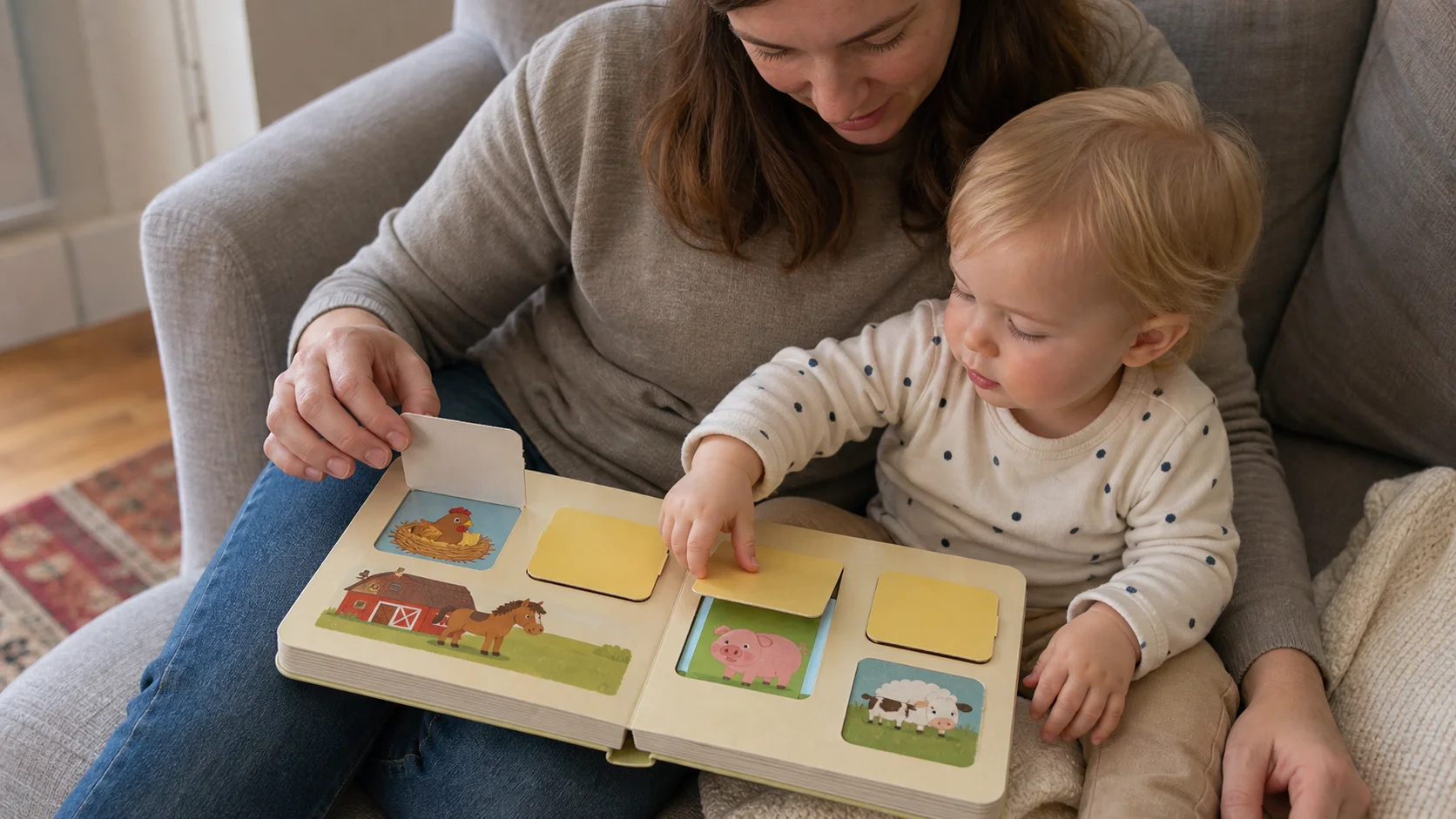
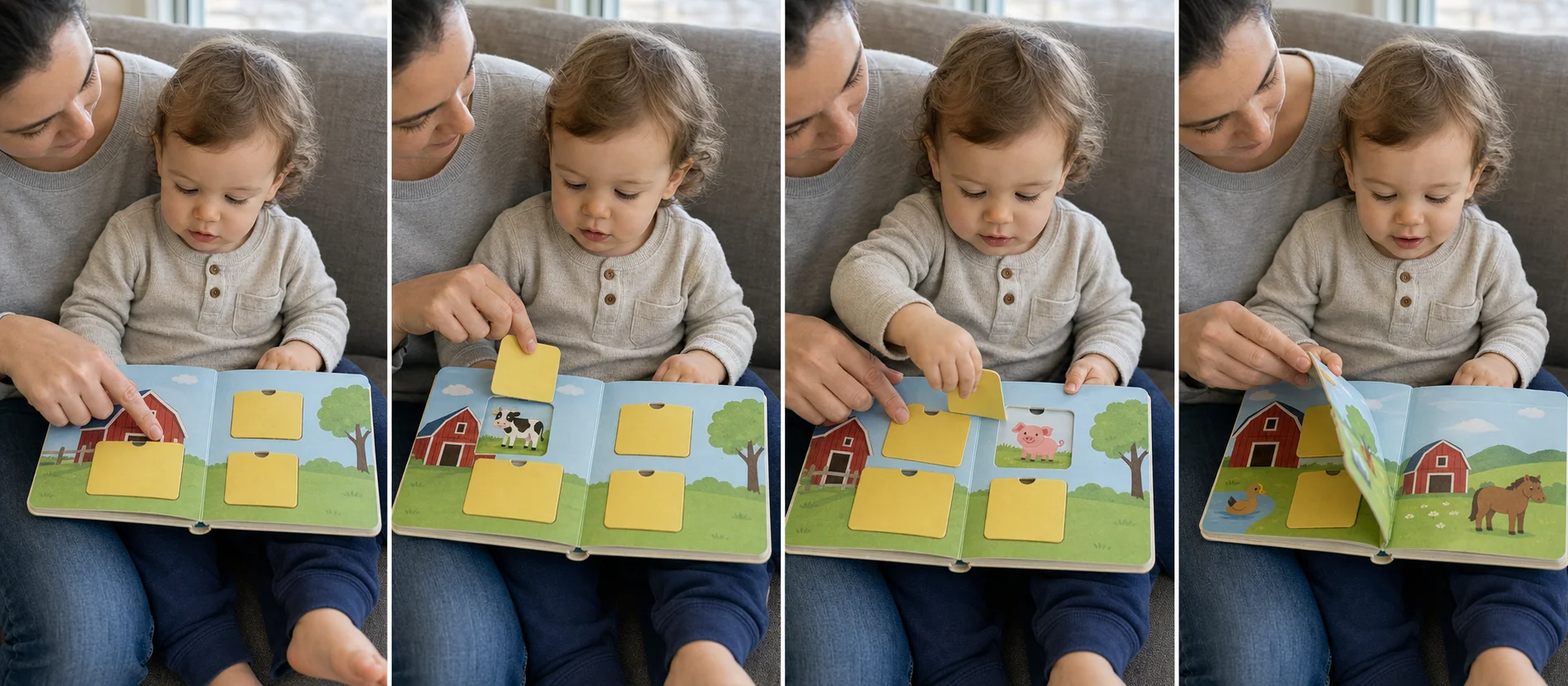
Turn every hidden picture into a reason to take turns. You lift one flap, your child lifts the next, and each reveal gives them quick practice watching, waiting, and joining a back-and-forth game.


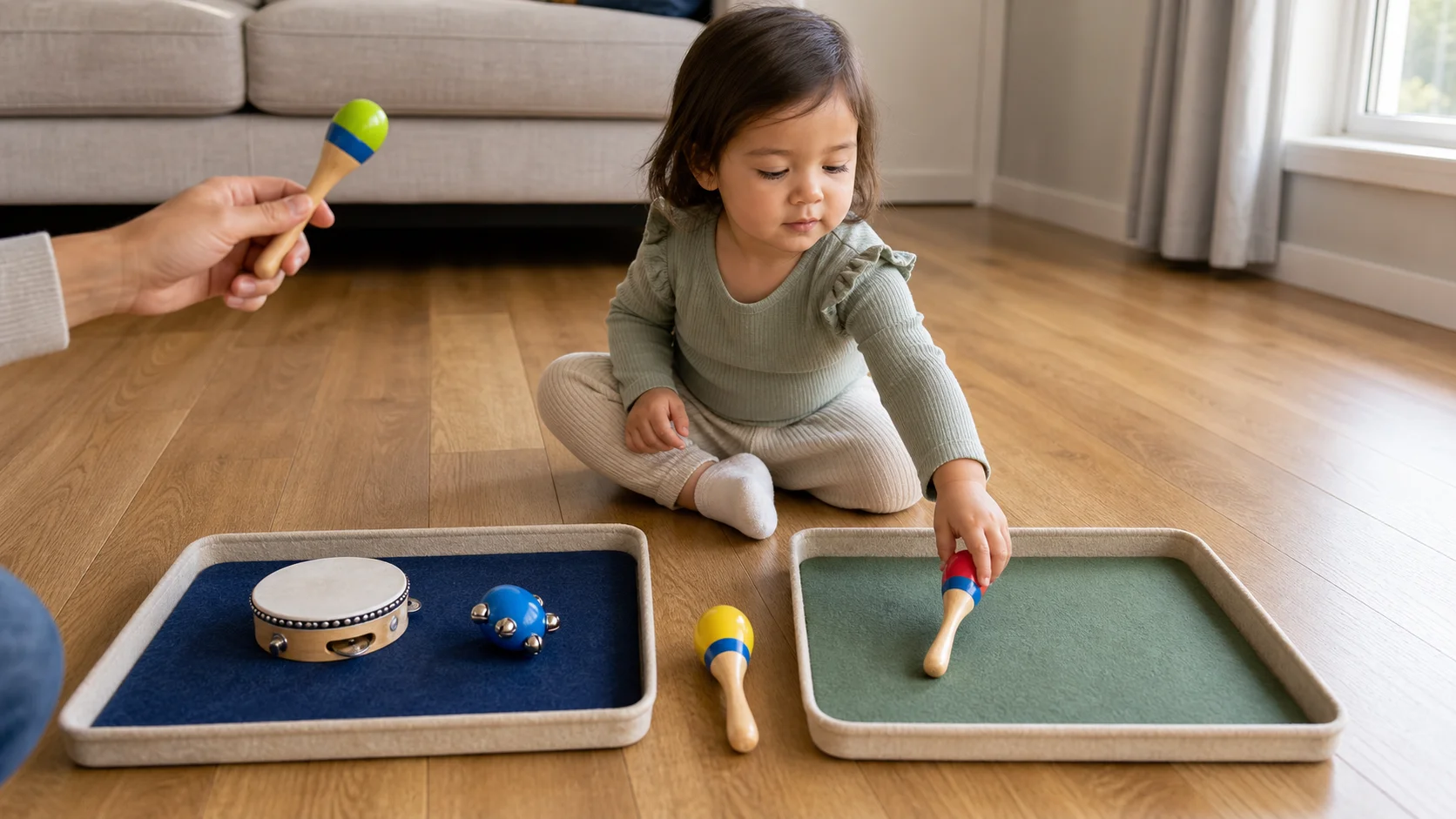
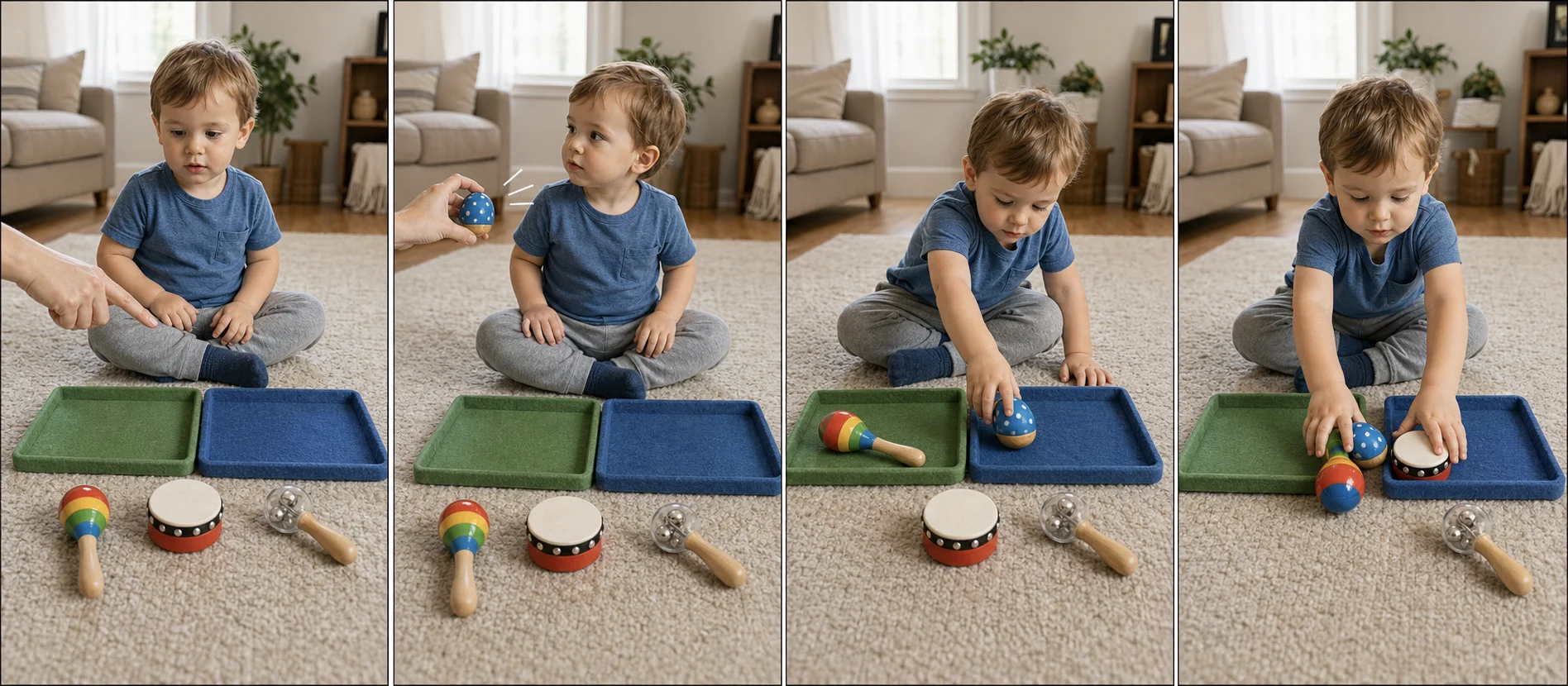
Play one instrument loudly or quietly, then let your child decide what they heard and place it in that group. Because volume changes by turn, the same instrument can land on either side in a later round.


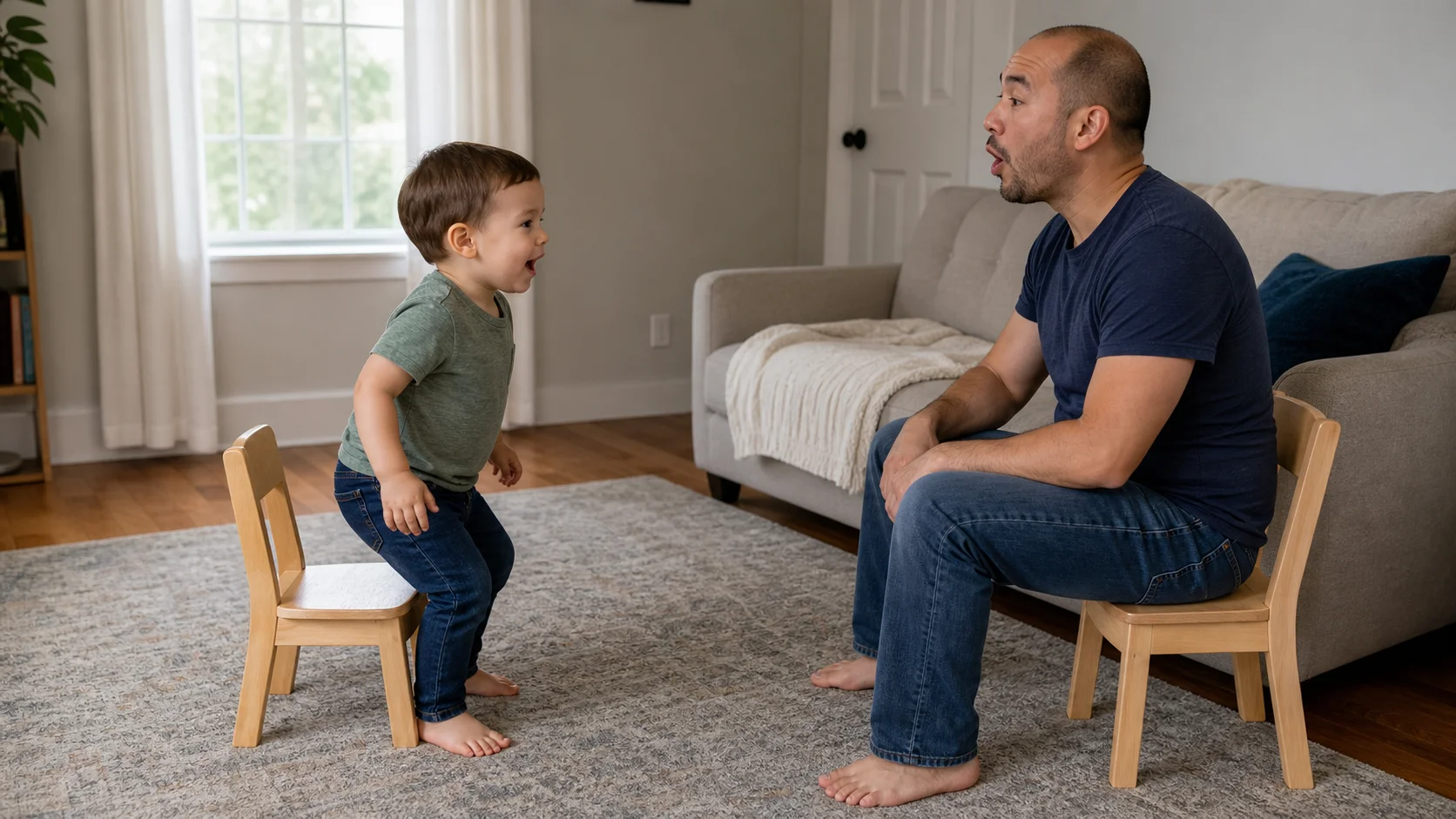
Give listening a visible action: your child stays seated through one familiar sound and pops up when they hear the chosen one. Repeating the same sit, listen, and stand rule helps them practice telling sounds apart before moving.


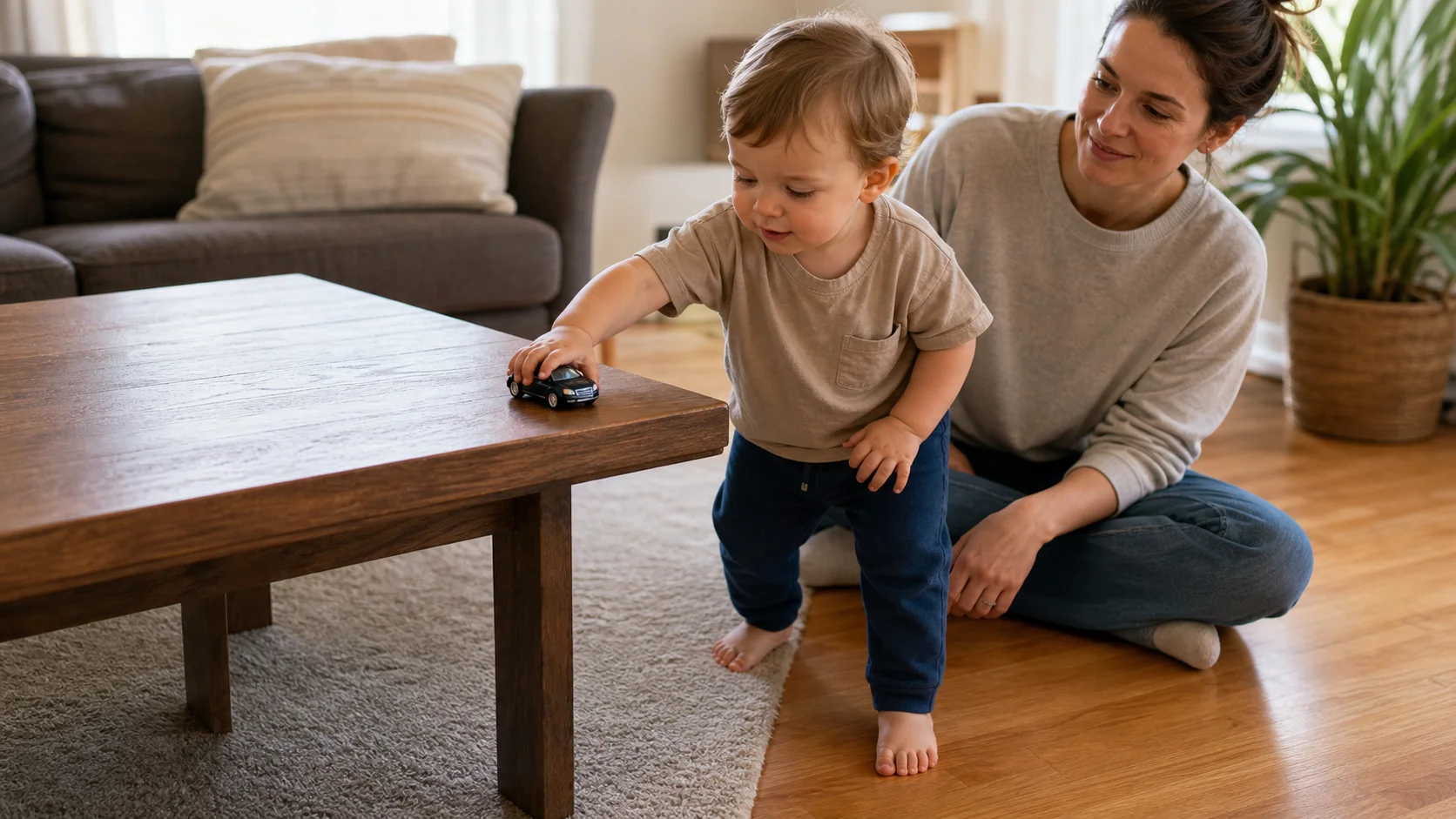
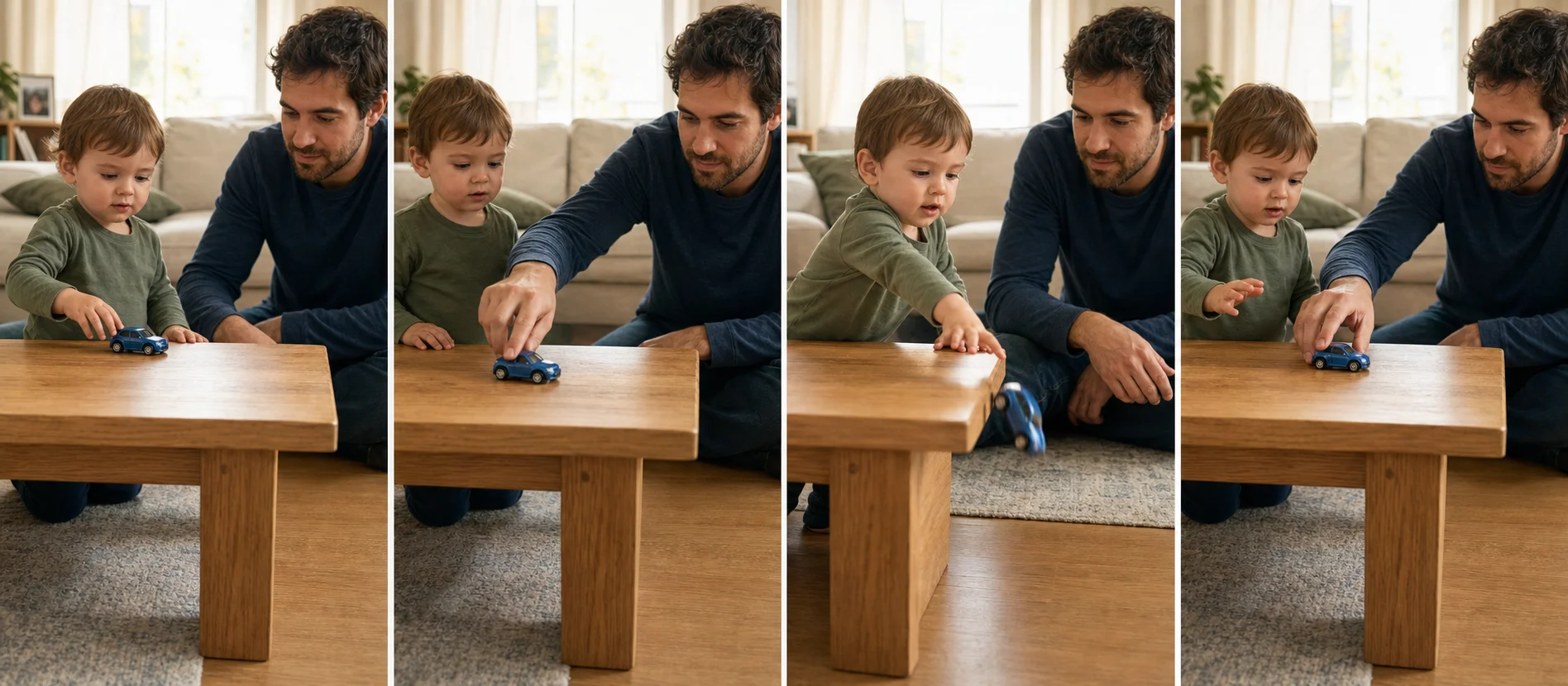
Turn one toy car and a table edge into instant cause-and-effect fun. Your child pushes the car forward, watches it drop with a crash, then sees the same action create the same result again.


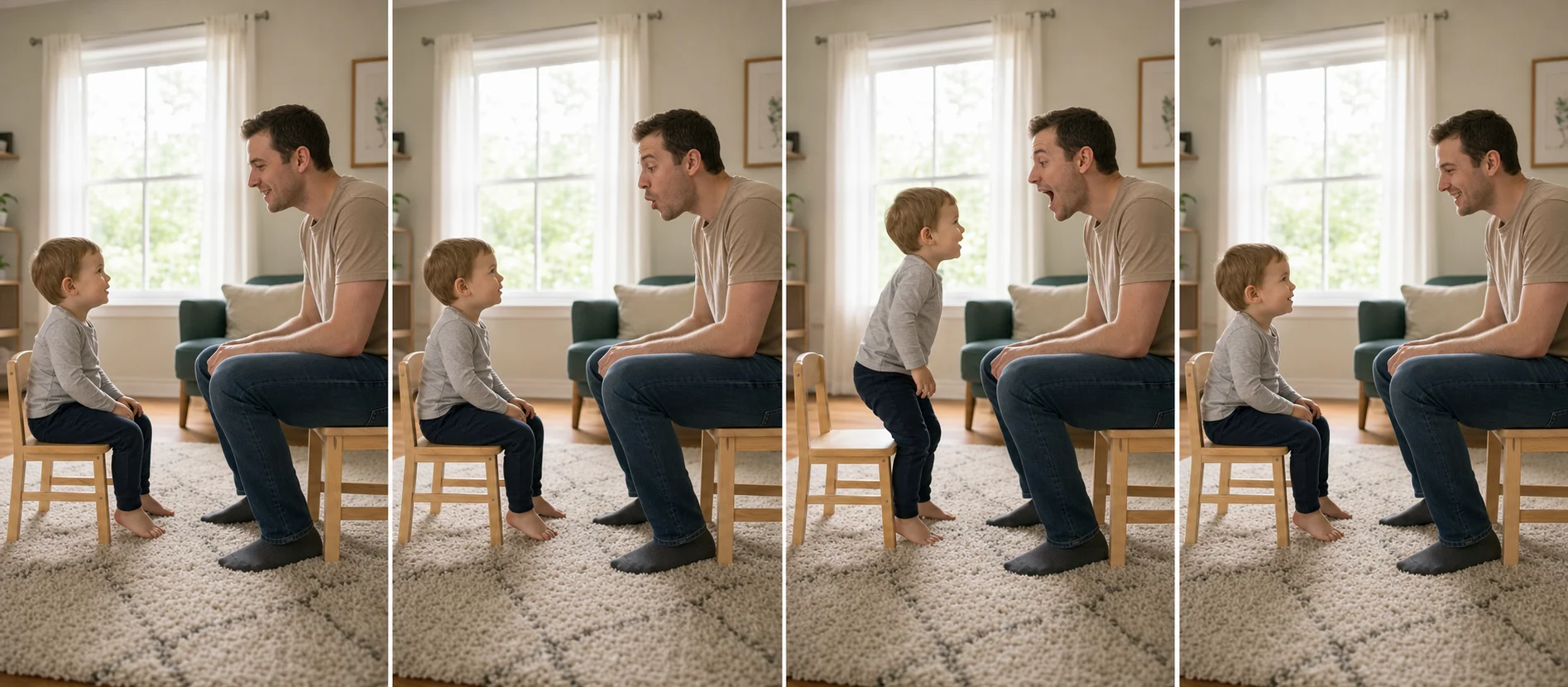
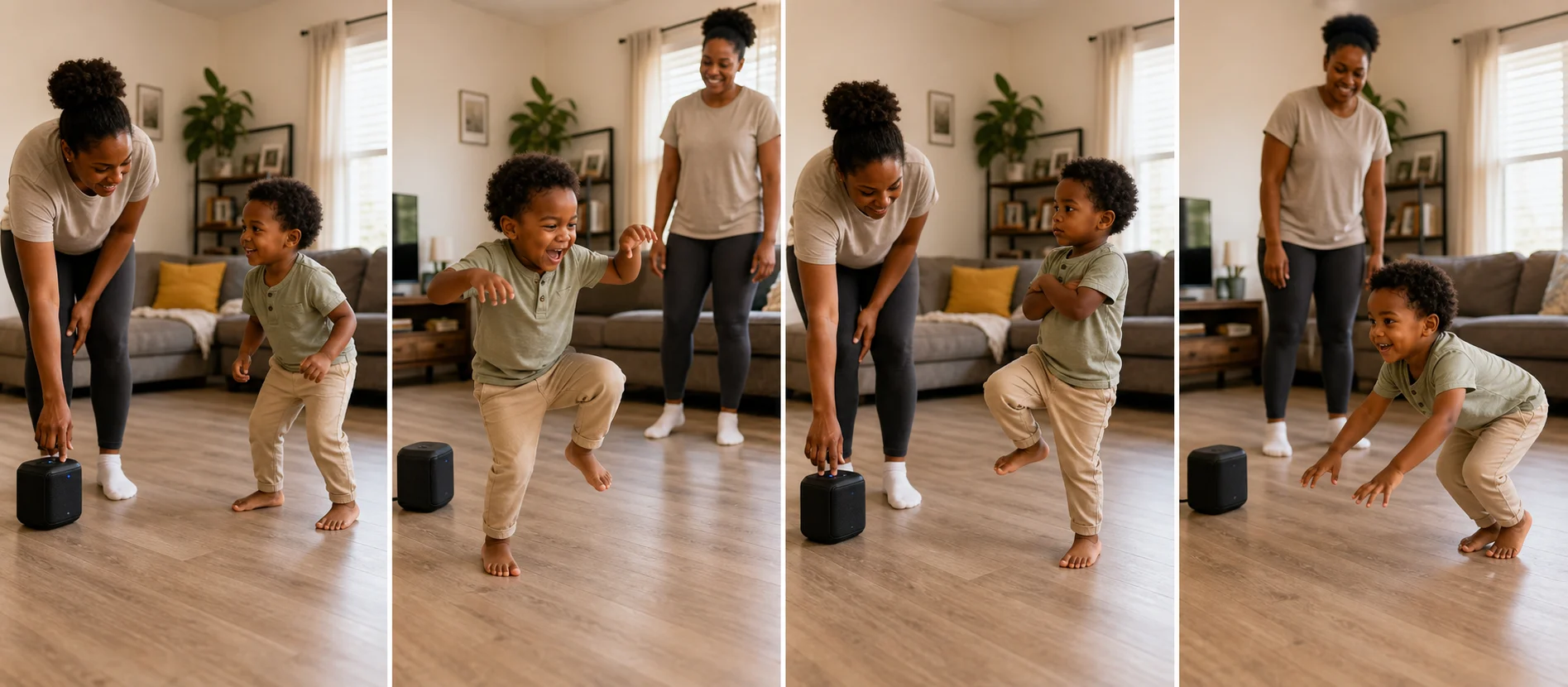
Give your toddler a simple reason to move, then a clear cue to stop. They stomp, slither, or flap like an animal while music plays, freeze when it stops, and practice listening and body control with every round.


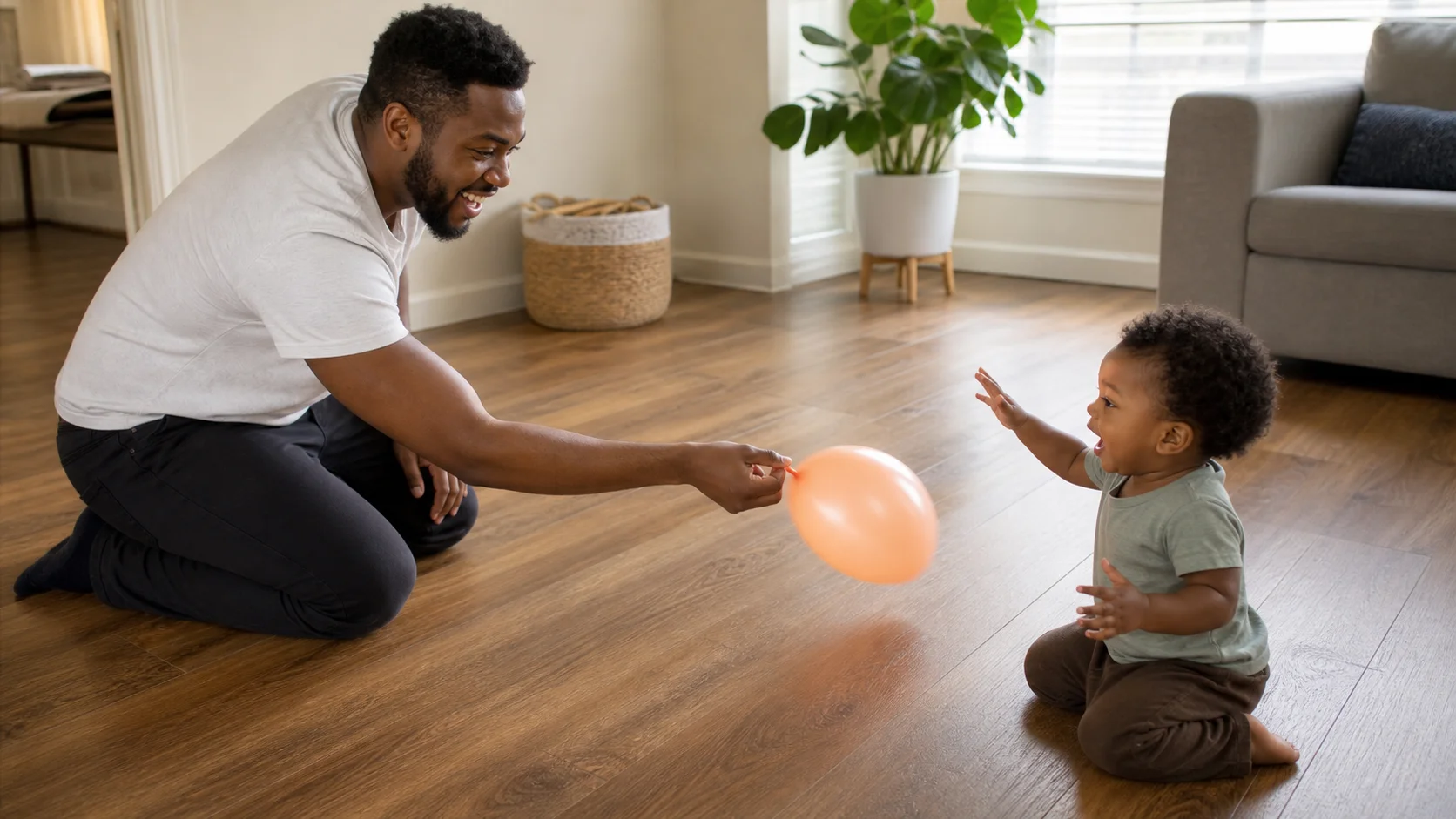
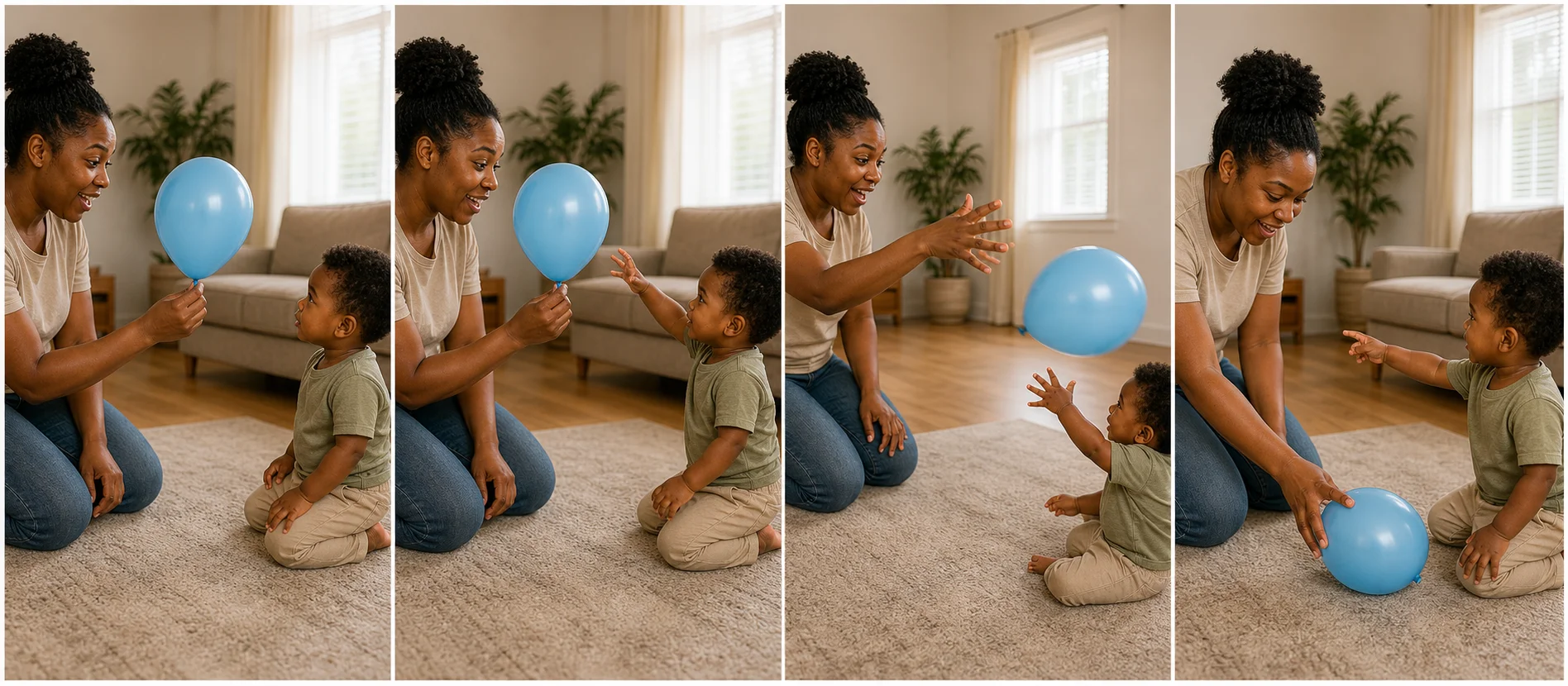
Make a tiny wait feel worth it: hold an inflated balloon through "ready, steady," release it when your toddler signals "go," and watch it fly. The immediate payoff supports attention and shows that a look, sound, gesture, or word can make something happen.


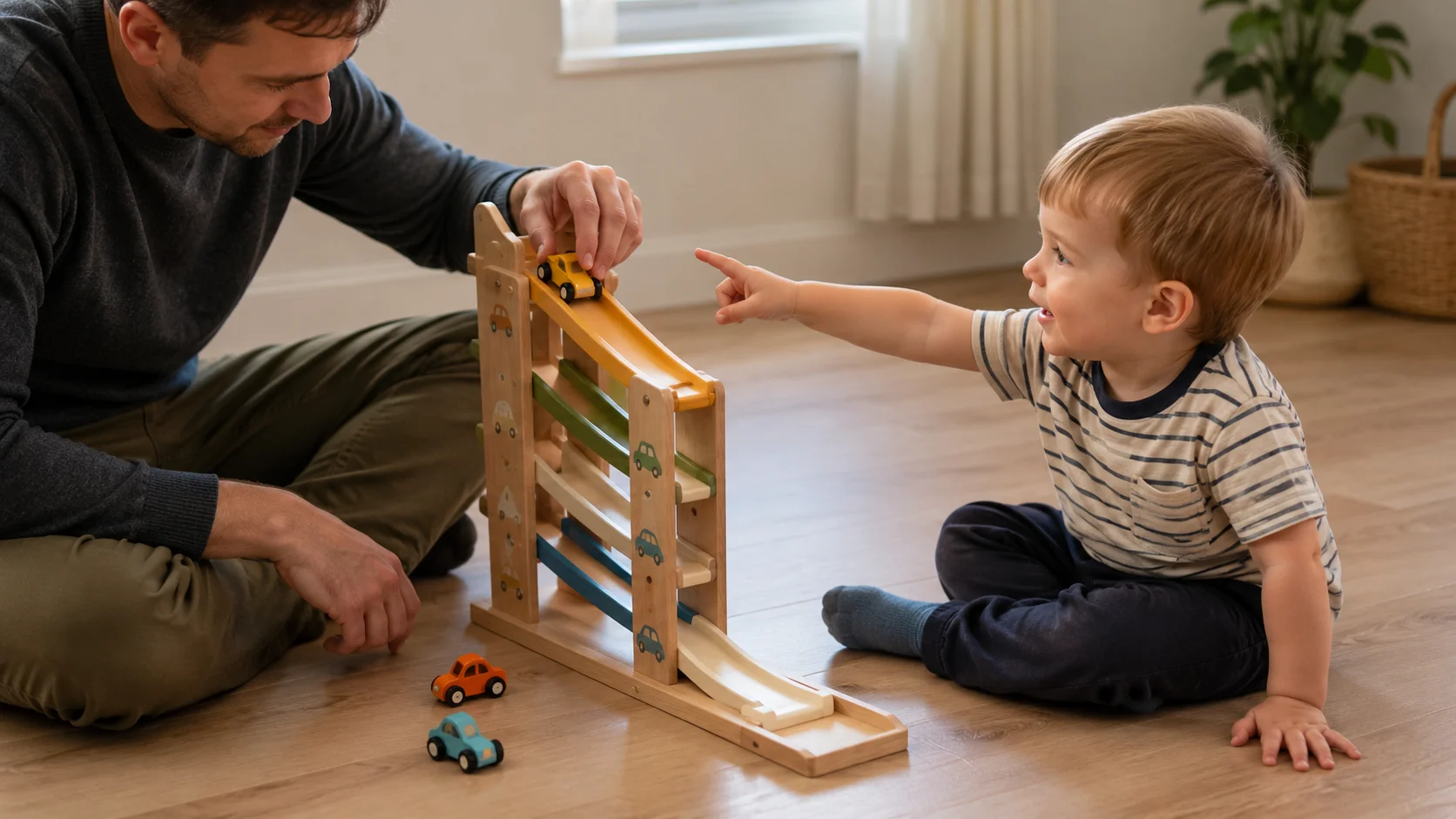
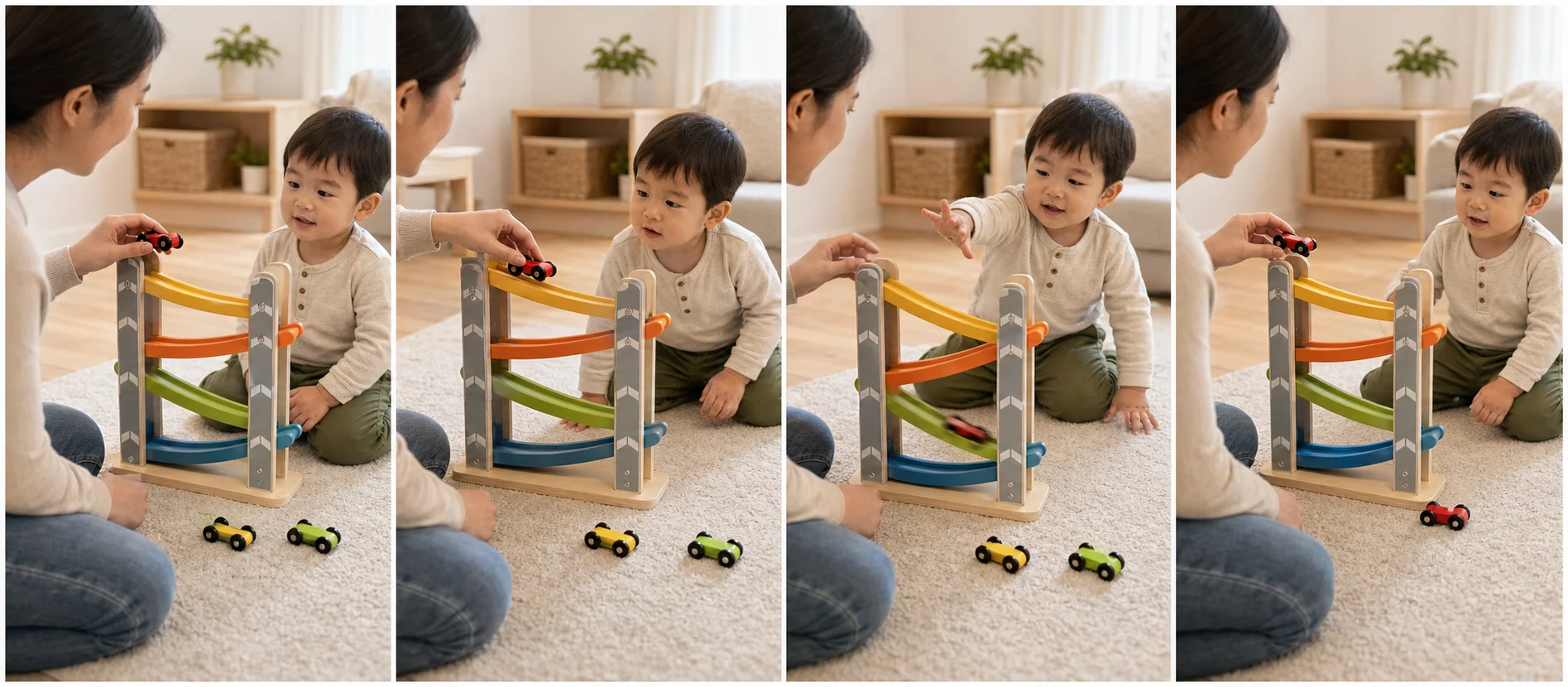
Turn a toy-car ramp into a quick communication game: pause at the top, wait for your toddler's signal, then let the car roll. The repeated wait-and-go turns build attention, early communication, and turn-taking.


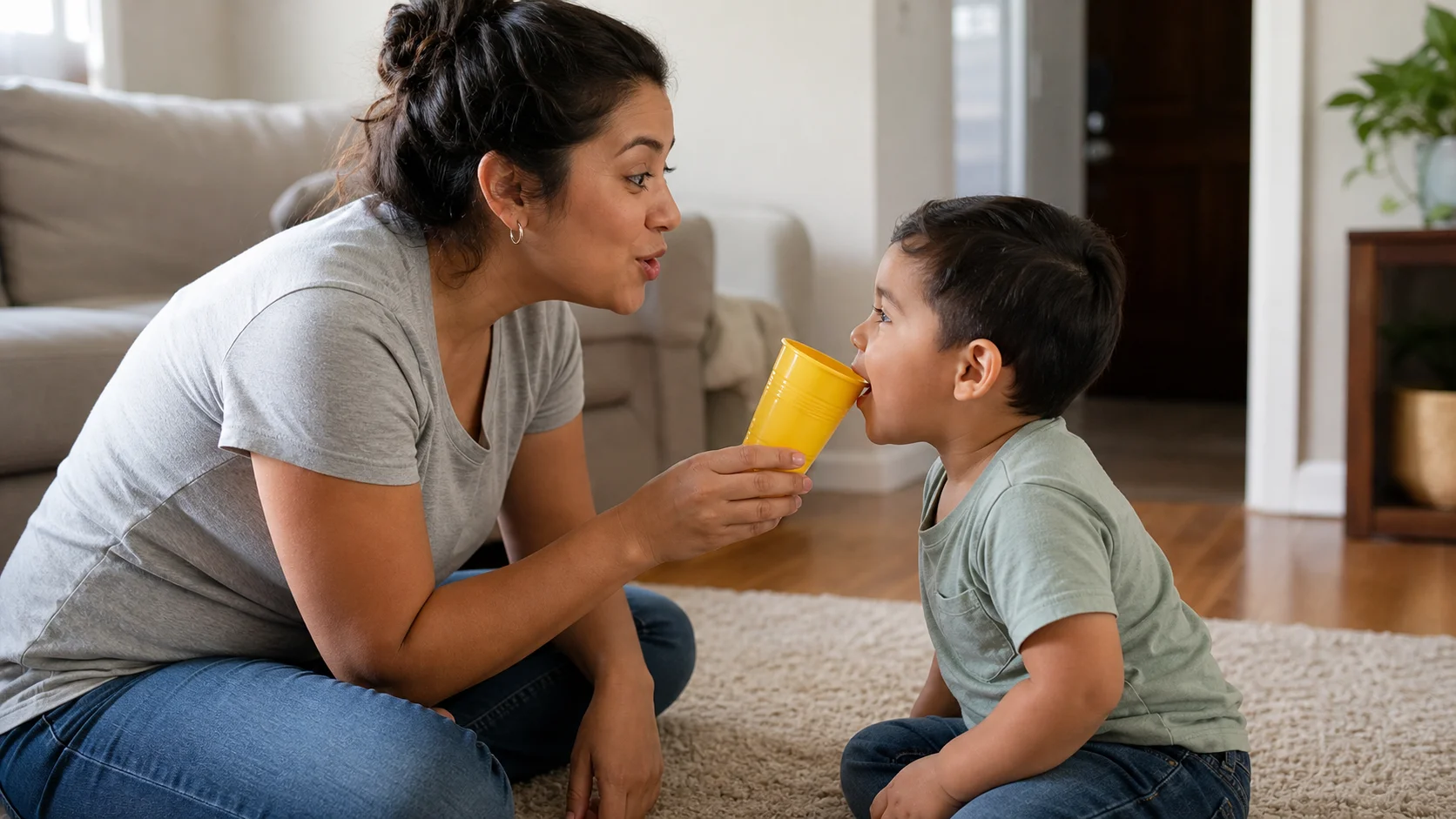
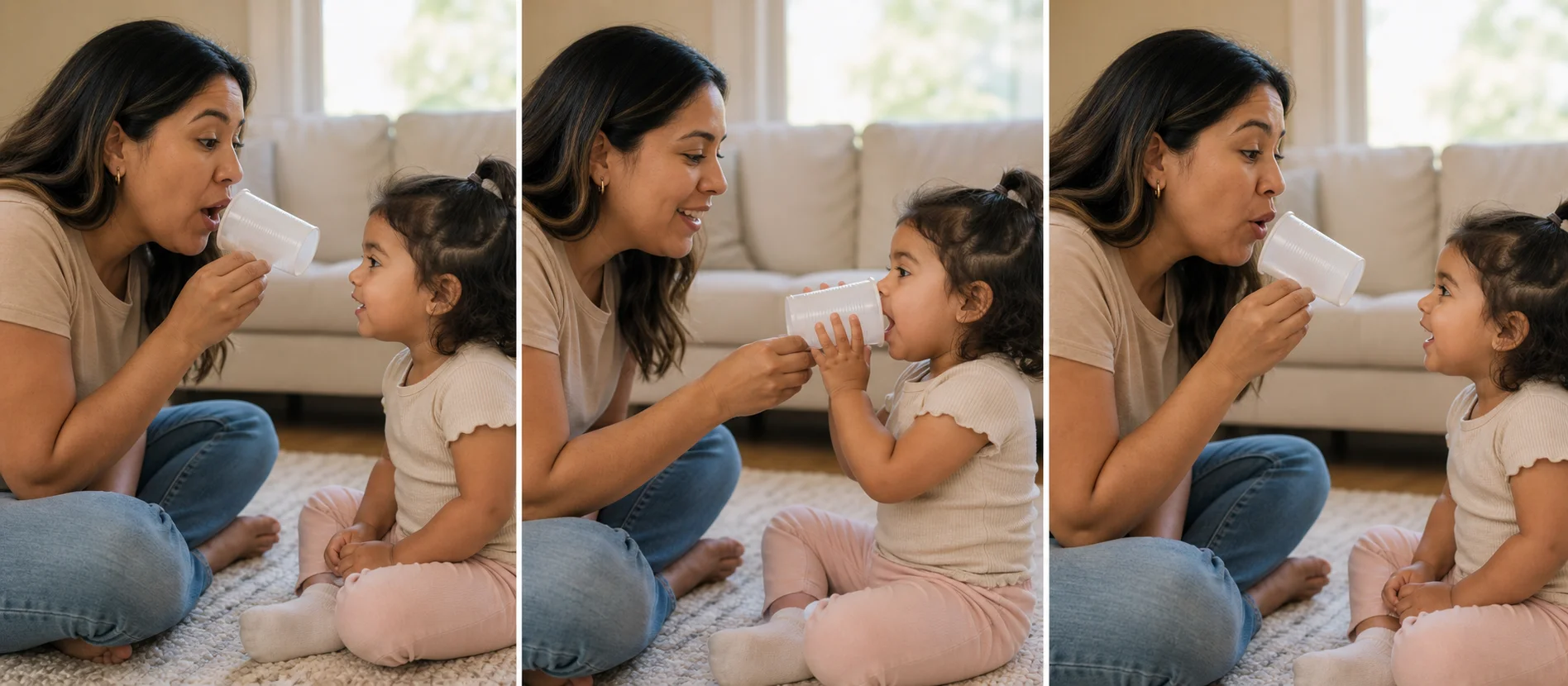
Turn one plastic cup into a pretend microphone for a quick animal-sound exchange. Your toddler hears a familiar sound, takes a vocal turn, and hears you echo it back, practicing sound imitation and back-and-forth communication.


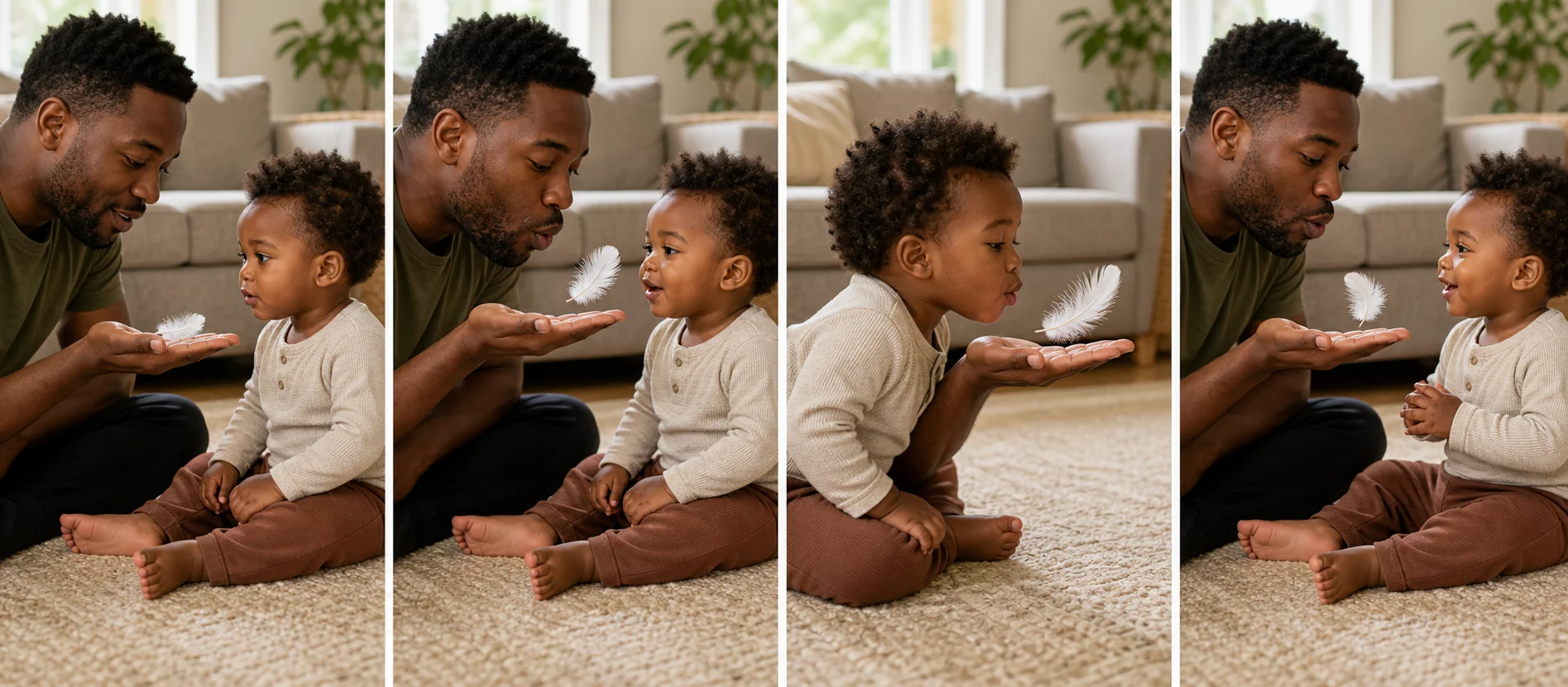
Give your toddler a tiny turn-taking game with an instant visual payoff. You and your child take turns blowing a feather or toy windmill and watching it move, practicing imitation and shared turns.


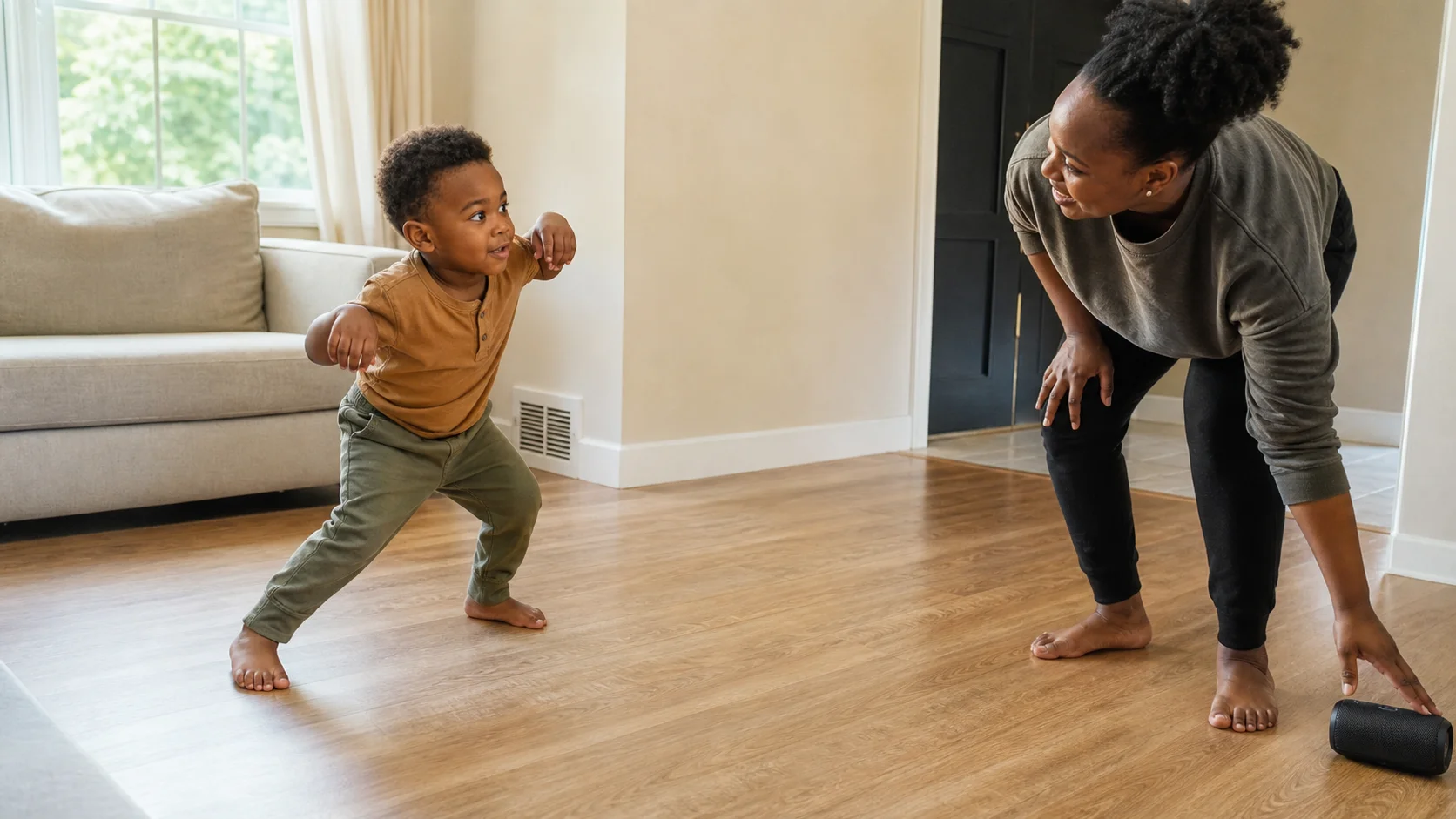
Where is that sound coming from? Hide a noisy toy or music player in the room and let your child listen, follow the sound, and track it down, building focused listening and sound-location skills.


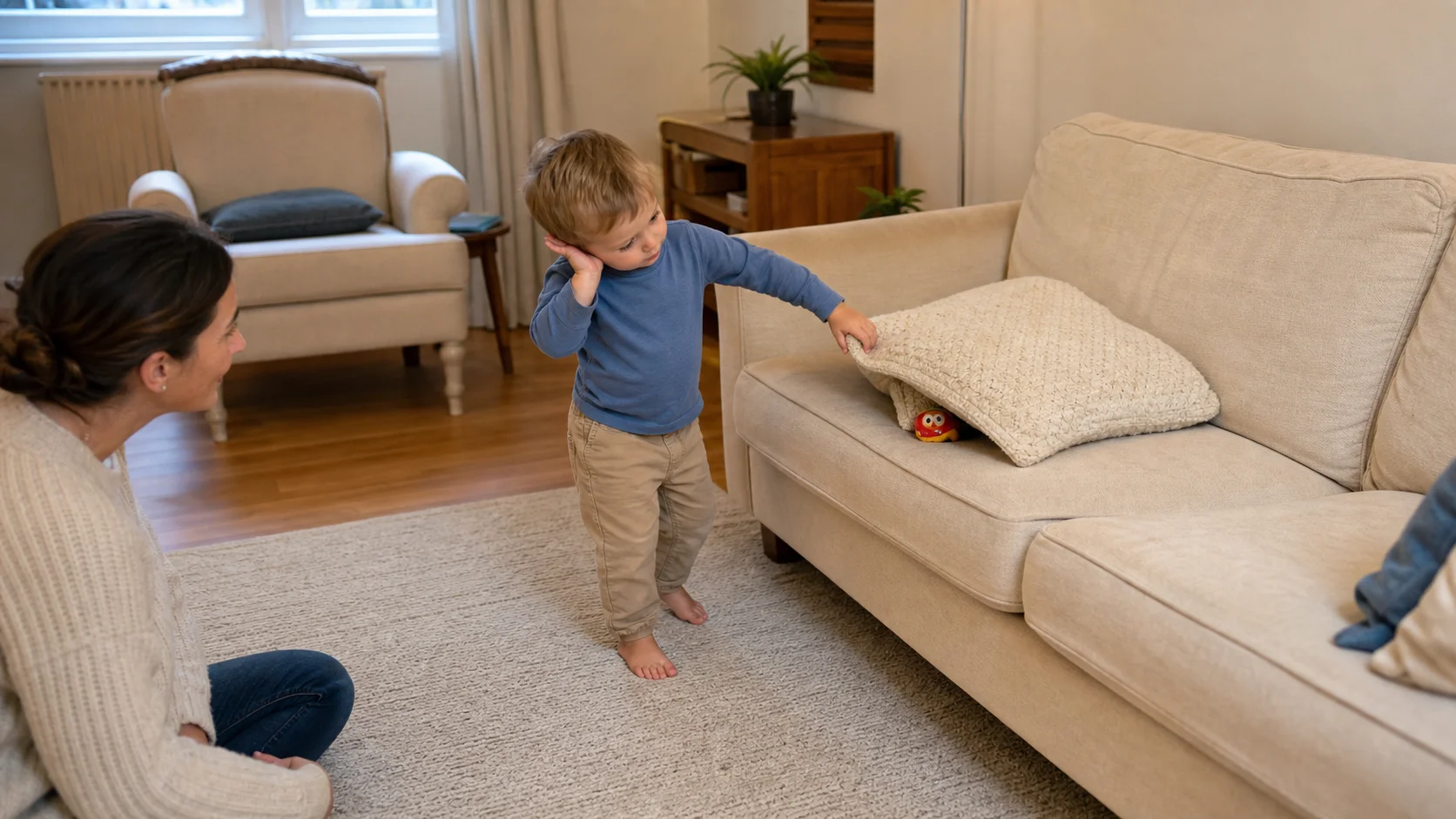
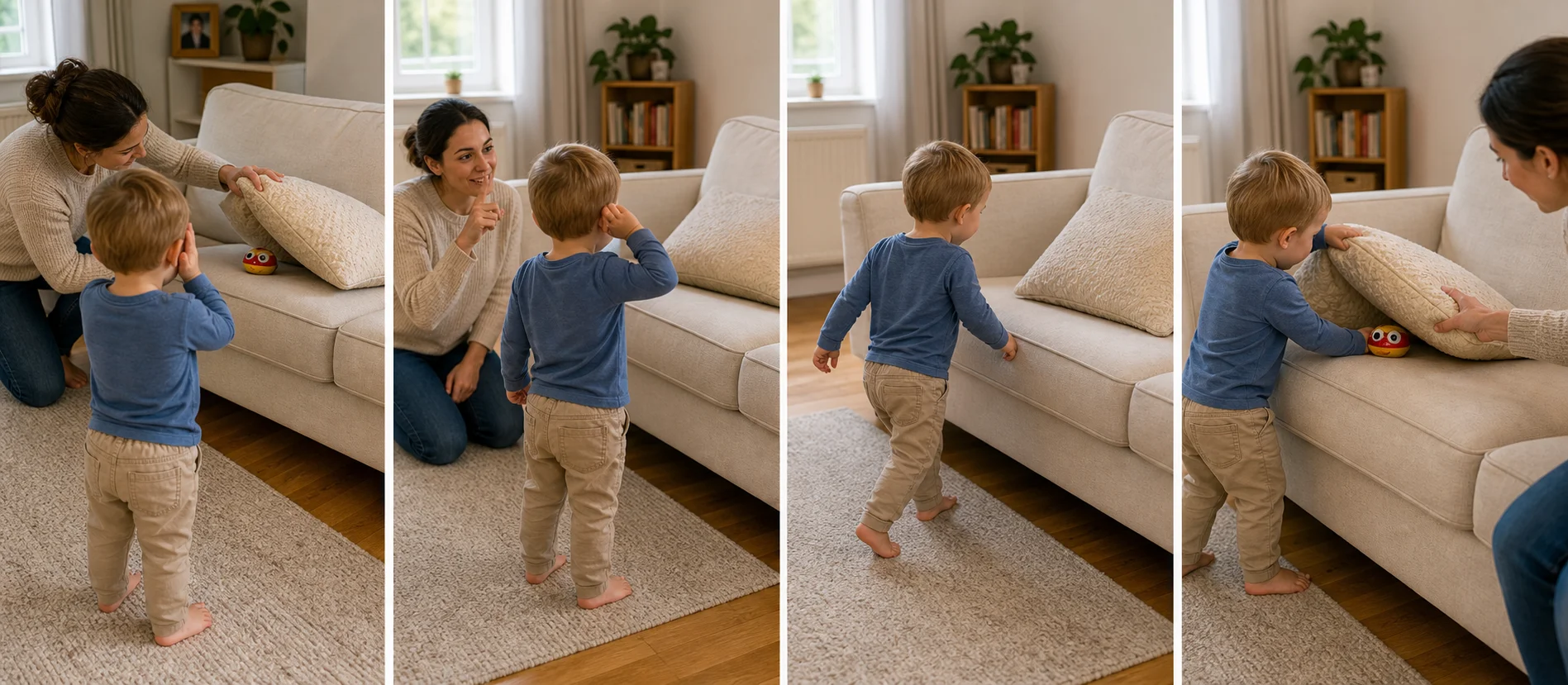
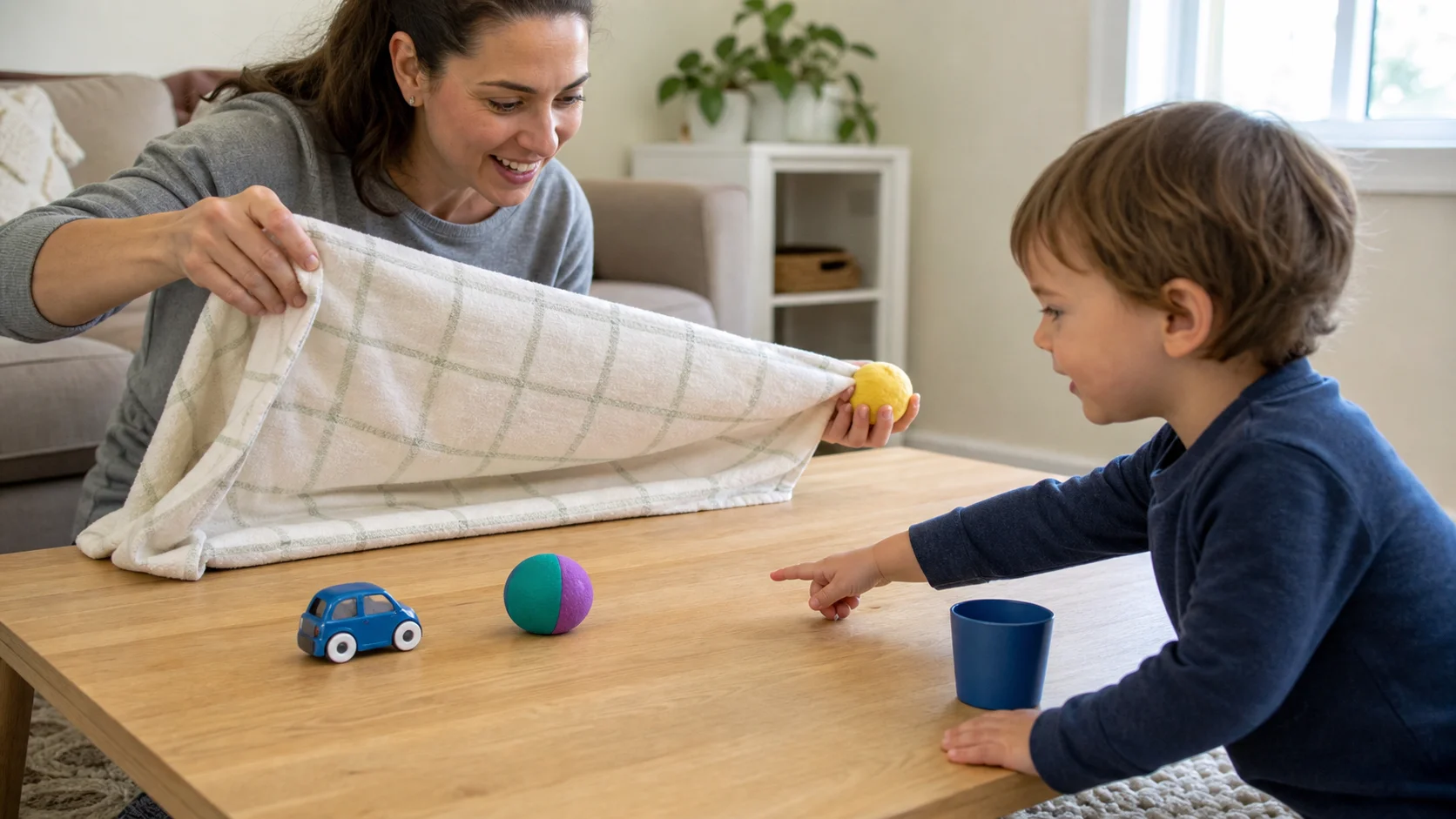
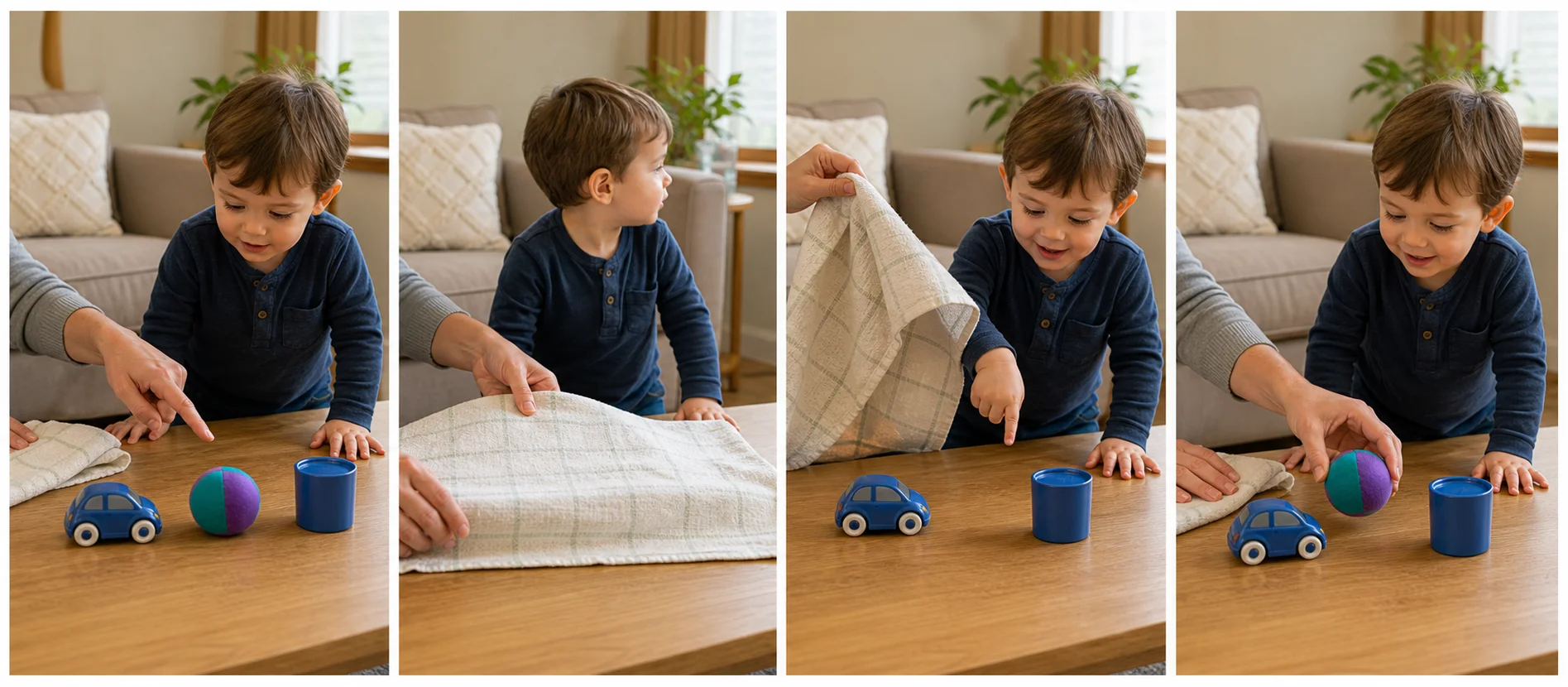
Turn a few familiar objects into a quick memory mystery. After you cover the group and remove one item, your child spots what disappeared and practices remembering a small visual set.


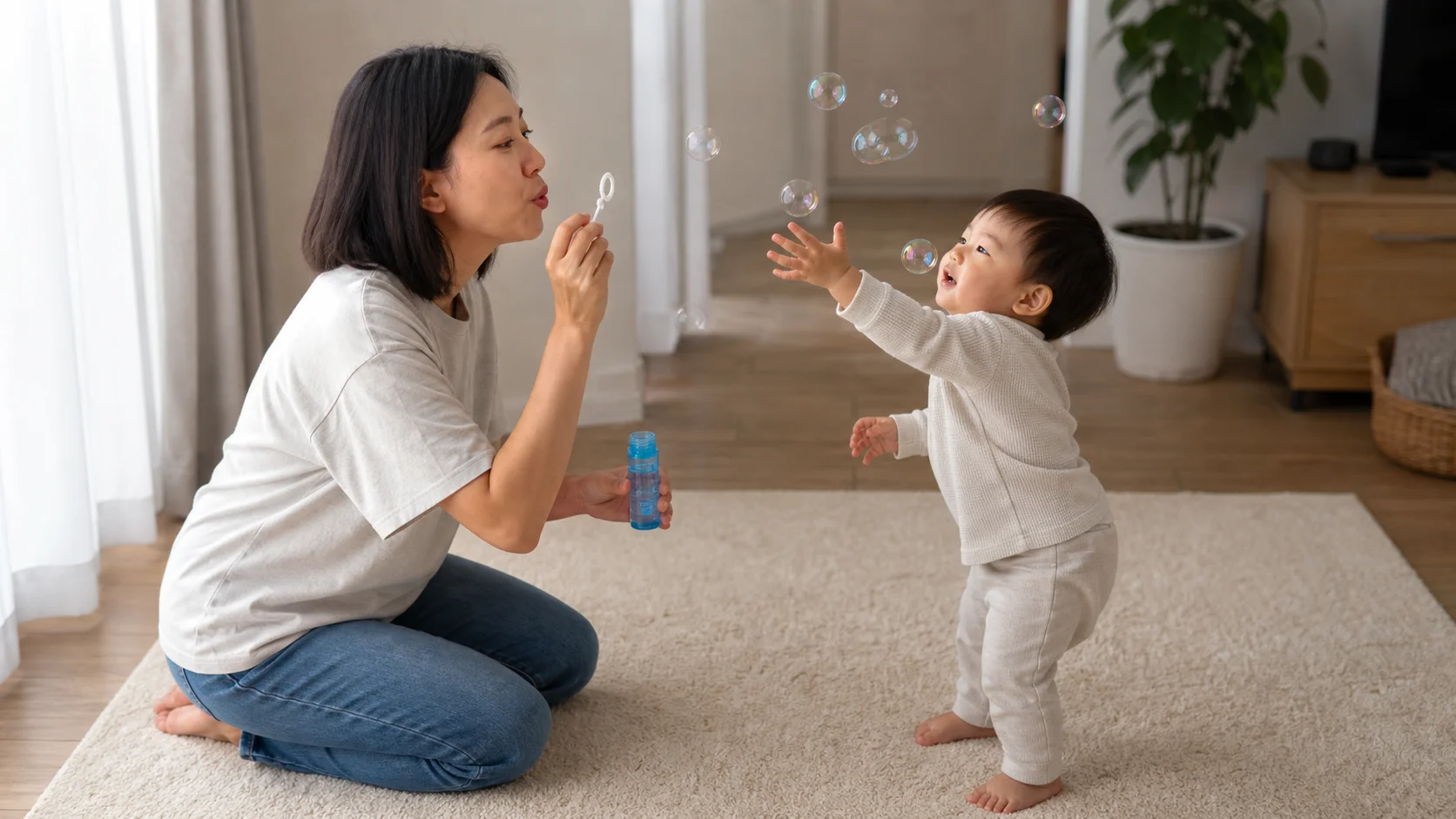
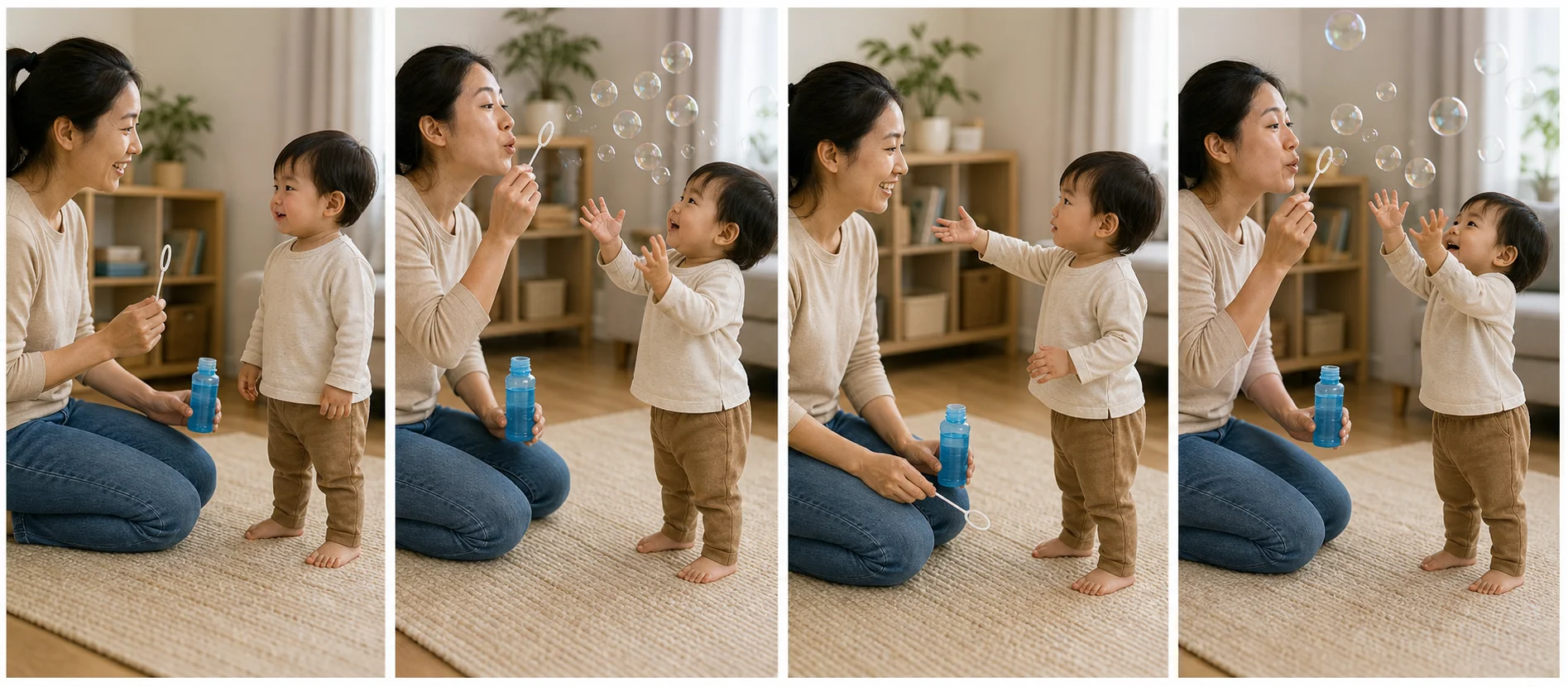
Turn each bubble pause into an easy reason for your child to communicate. After a look, reach, sound, sign, or word, say "More" and blow the next round so your child can connect their signal with another burst of bubbles.


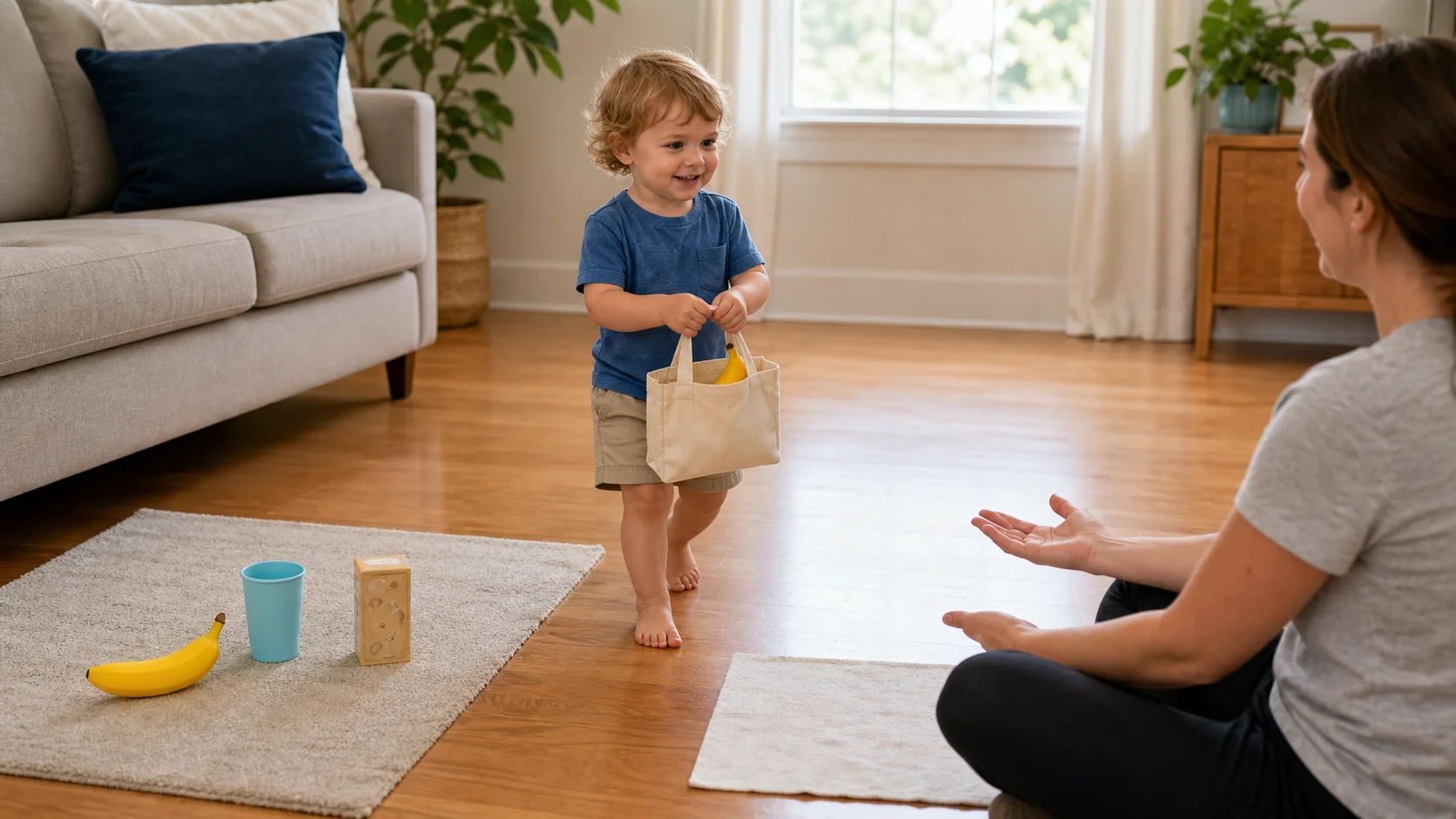
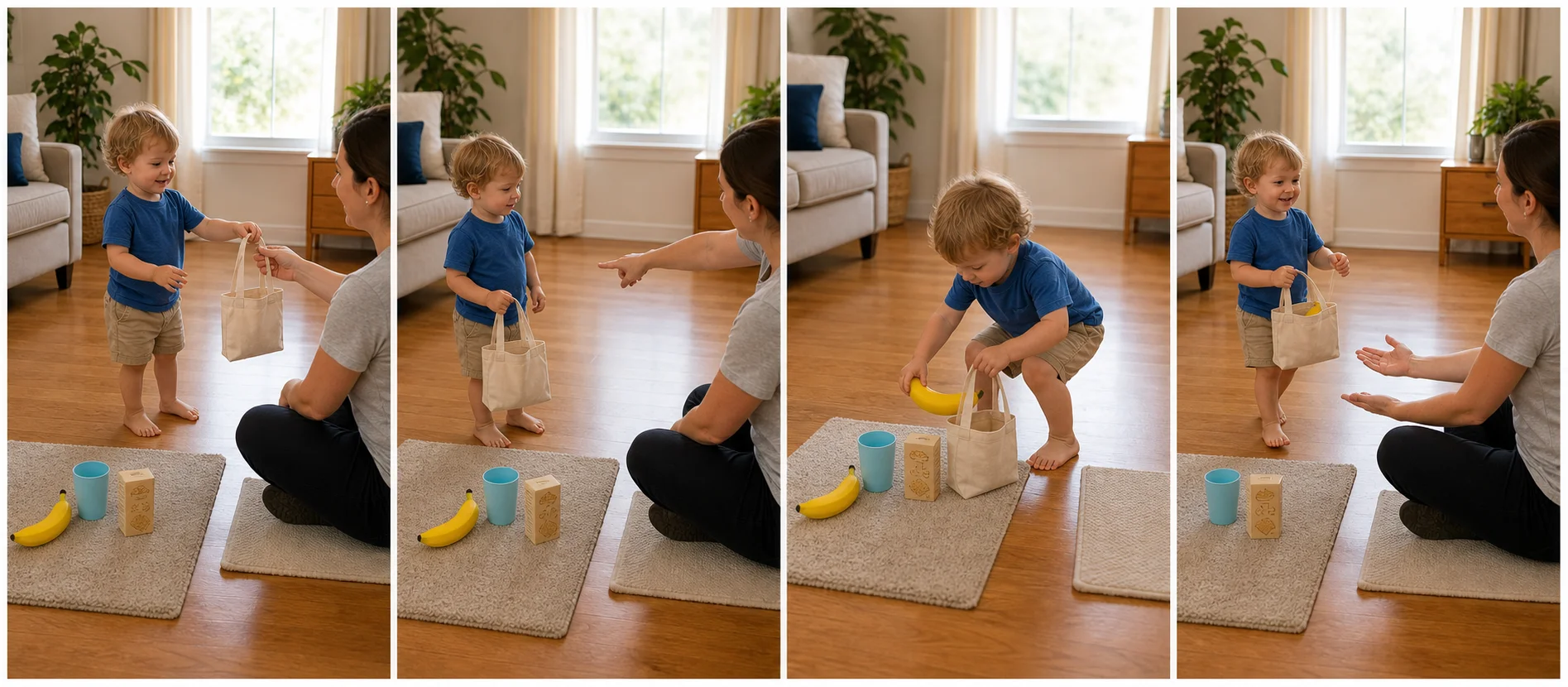
Turn a few toy foods and a shopping bag into a listening game with a clear mission. Your toddler hears one item request, finds the matching object in the pretend shop, and carries it back, practicing understanding and following a short spoken cue.


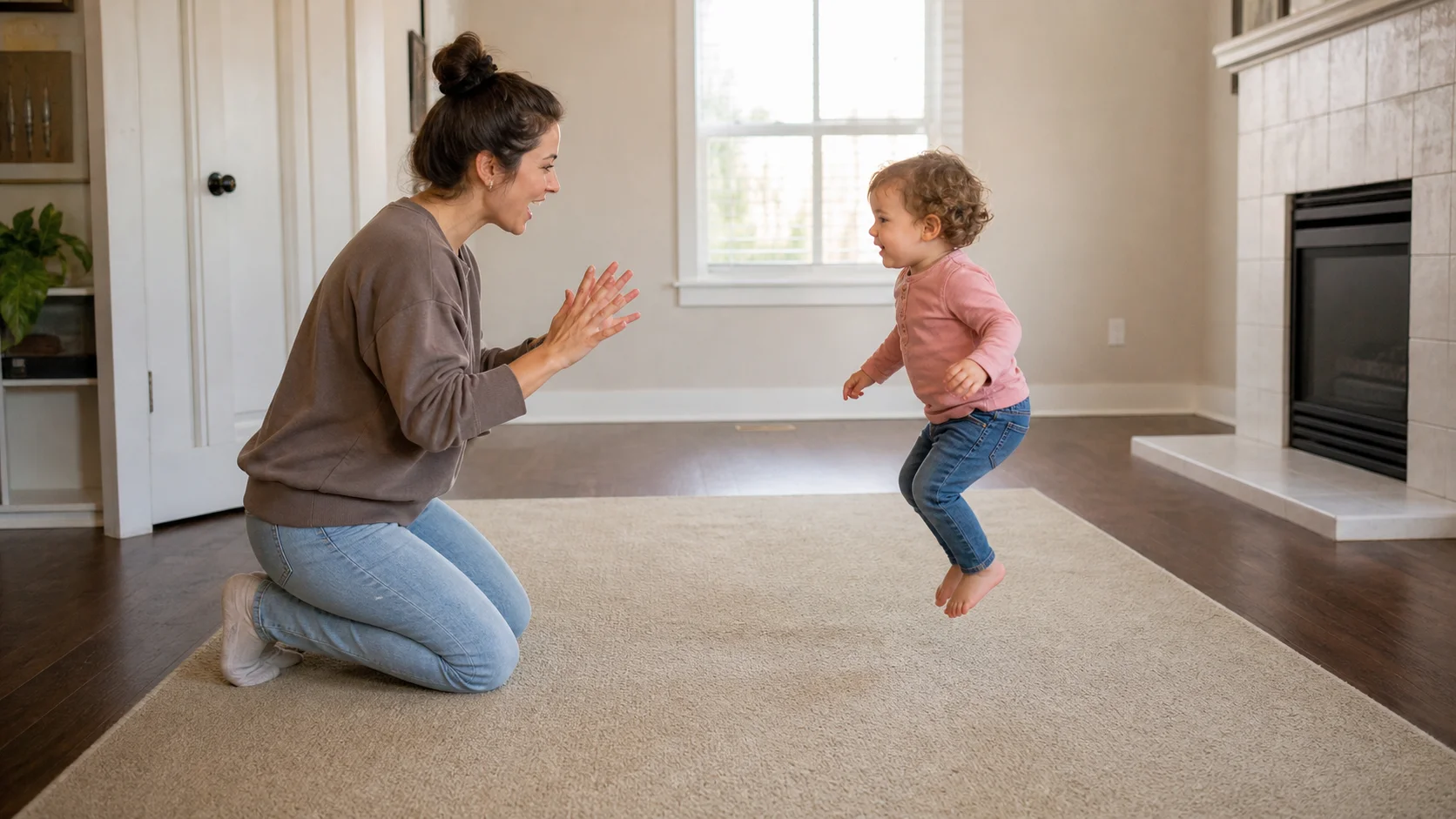
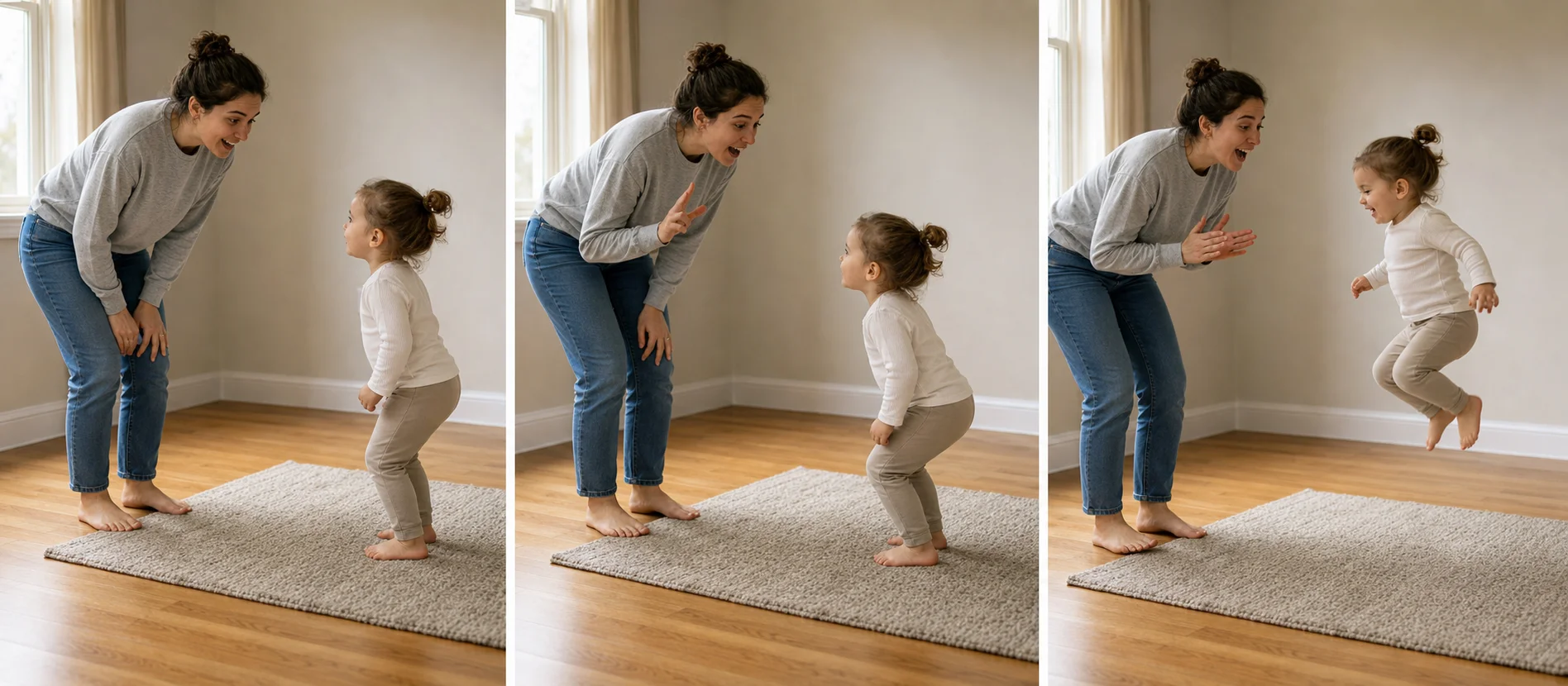
Give your toddler a quick whole-body listening game with no materials to gather. They wait through “ready... steady...,” jump on “go,” and practice linking a spoken cue to an action.


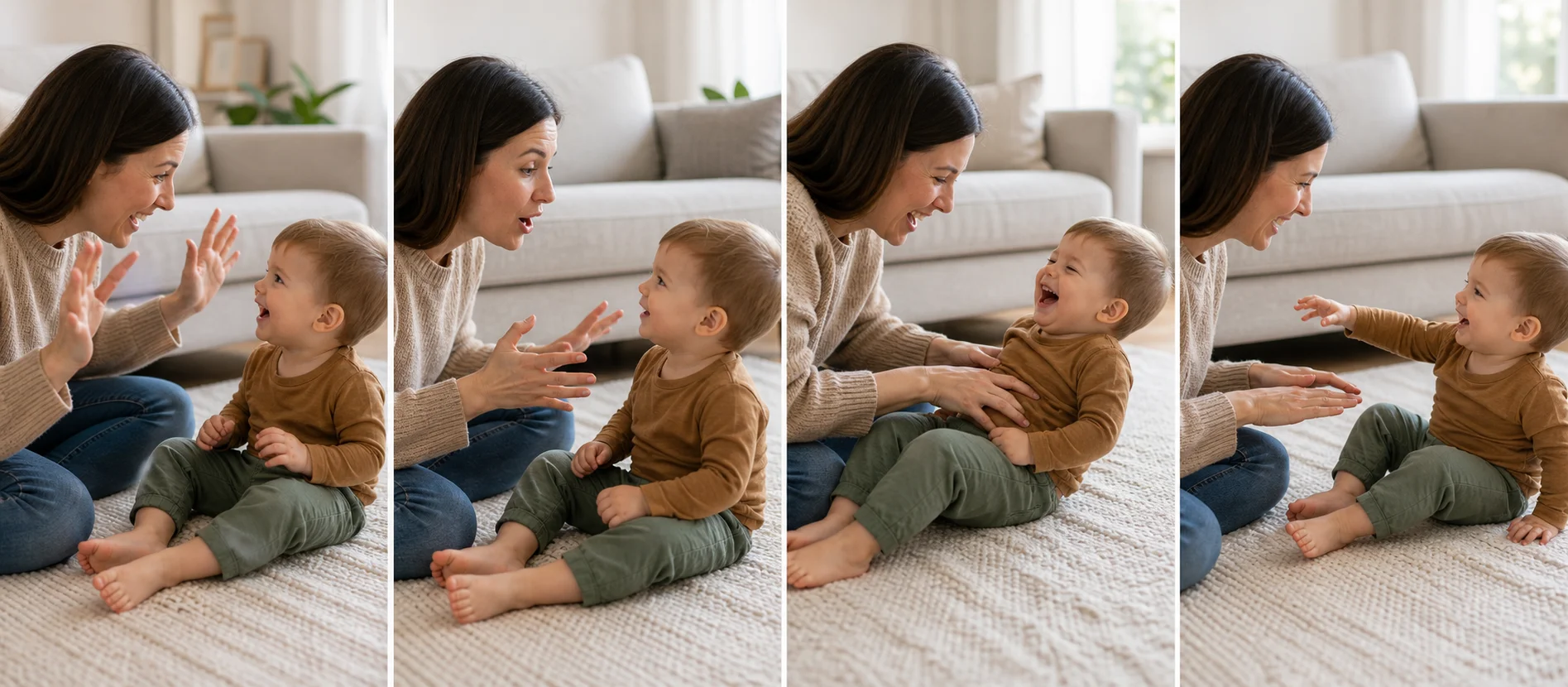
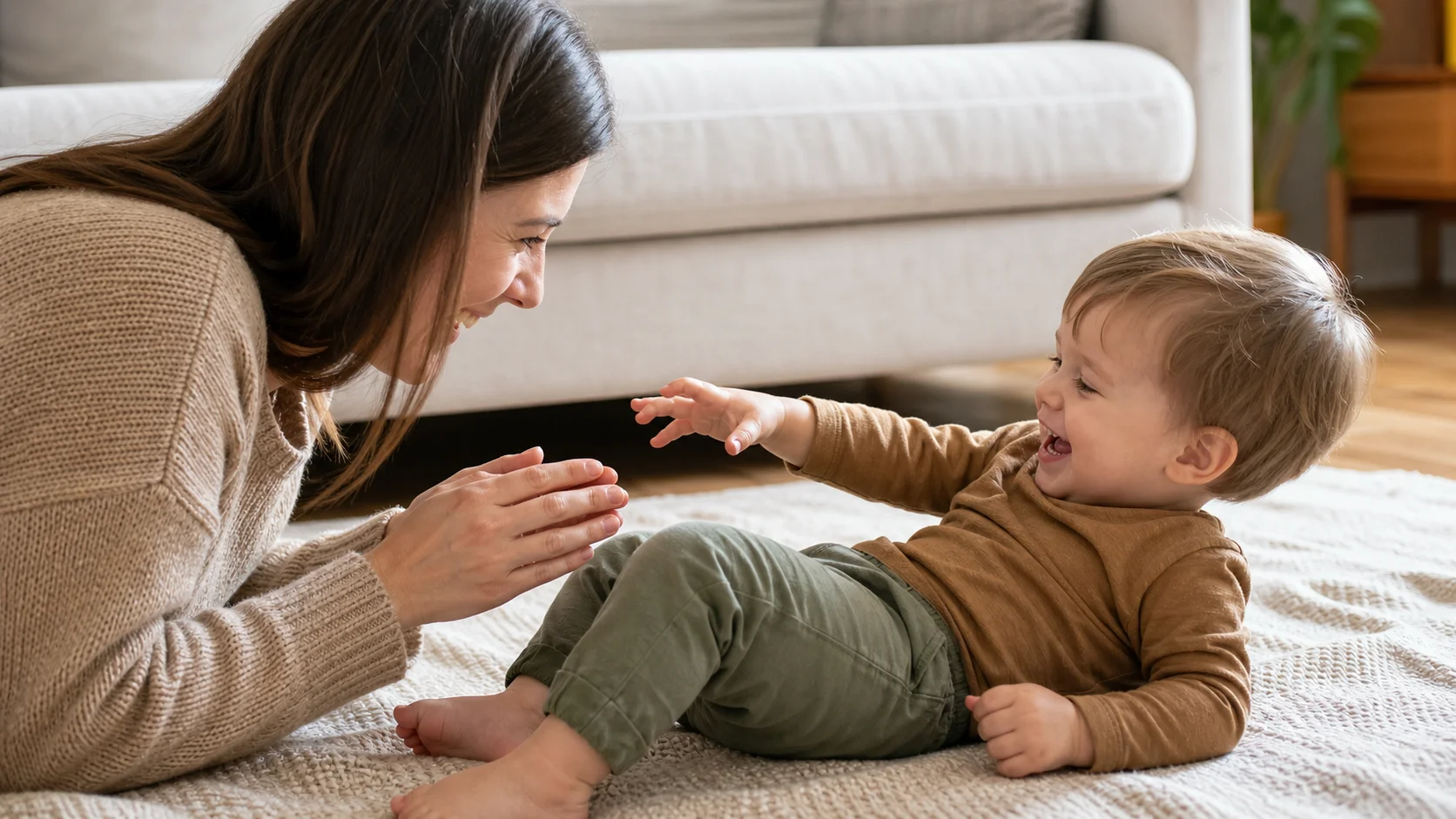
Turn one tiny tickle into a predictable back-and-forth game. Say “Ready... steady... tickle,” give one brief gentle tickle, then pause so your toddler can learn the pattern and ask for another turn with a look, sound, gesture, or movement.


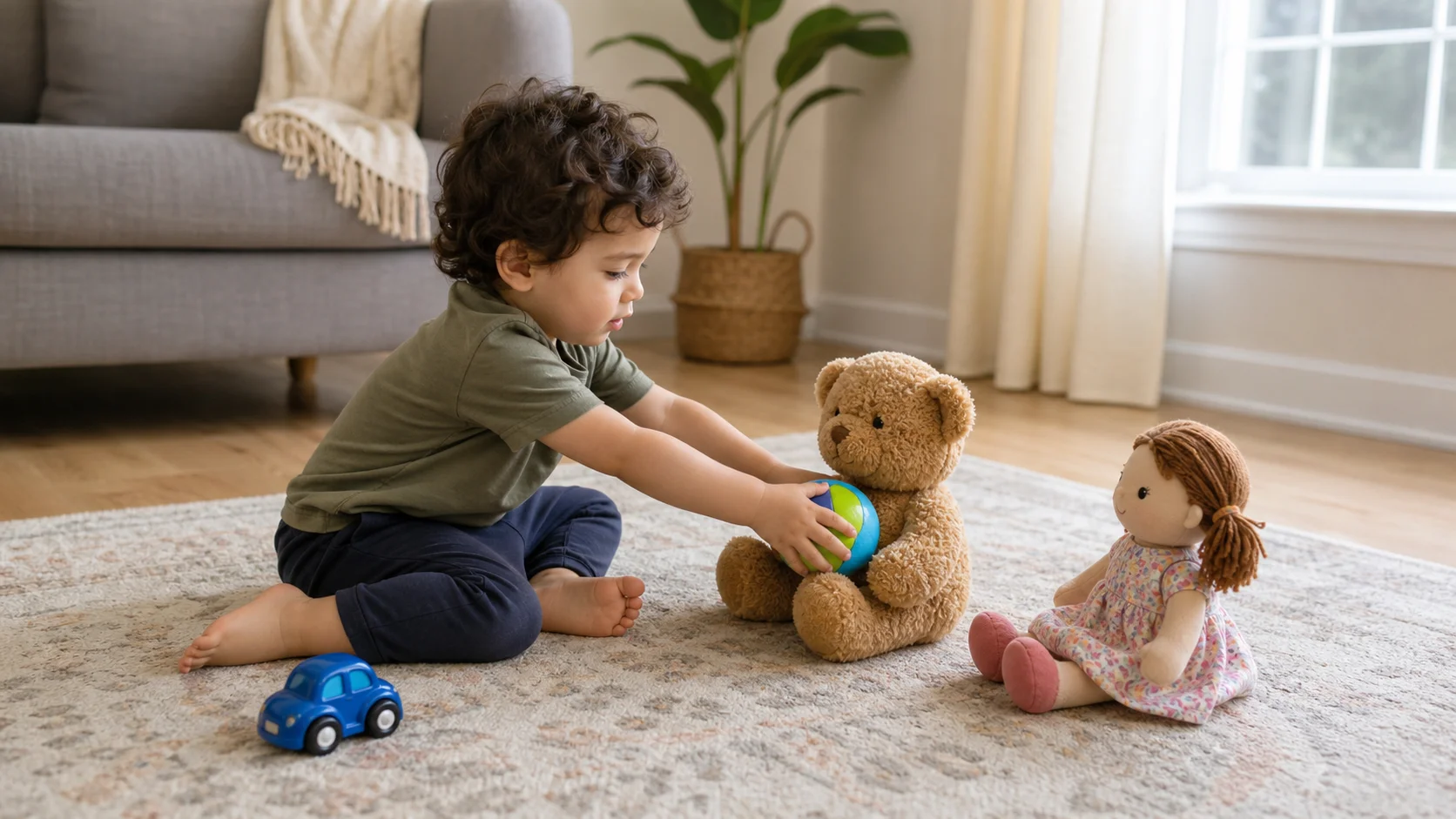
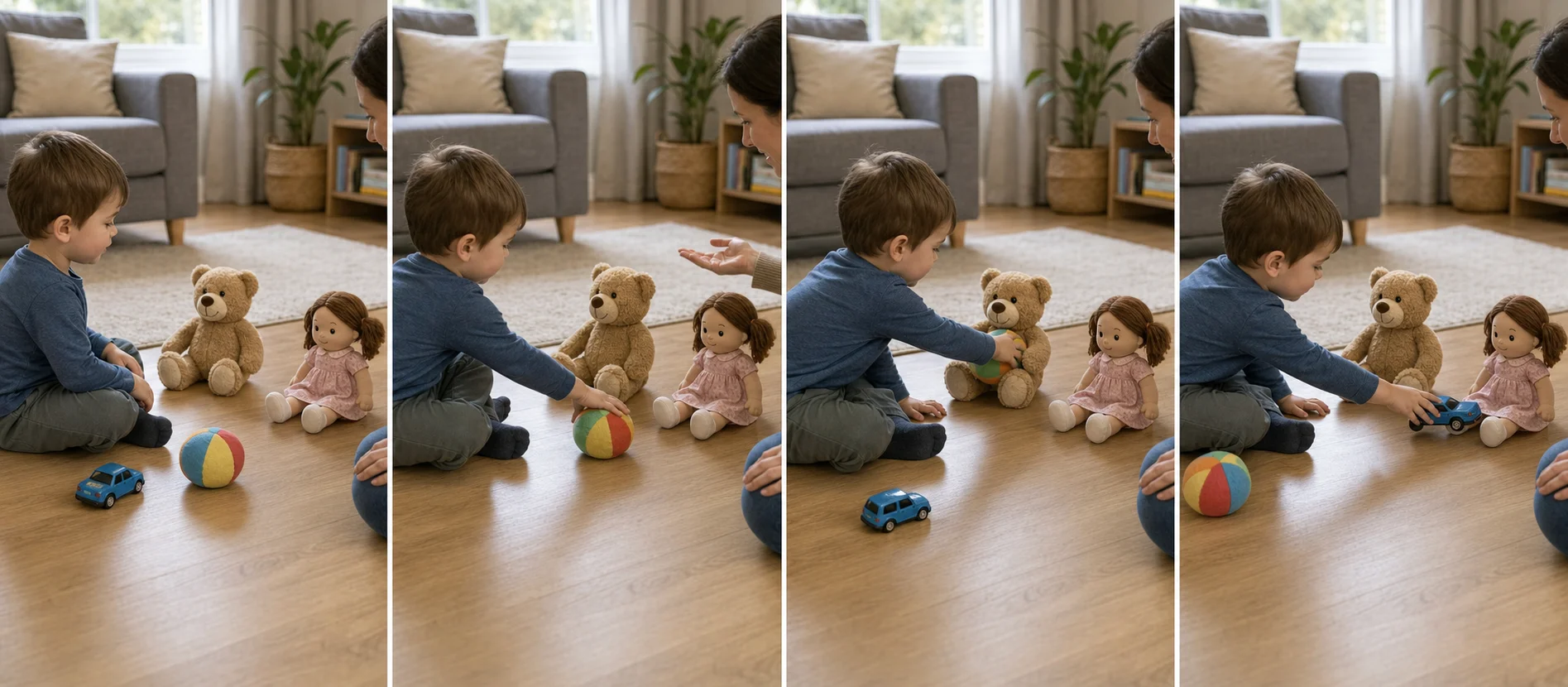
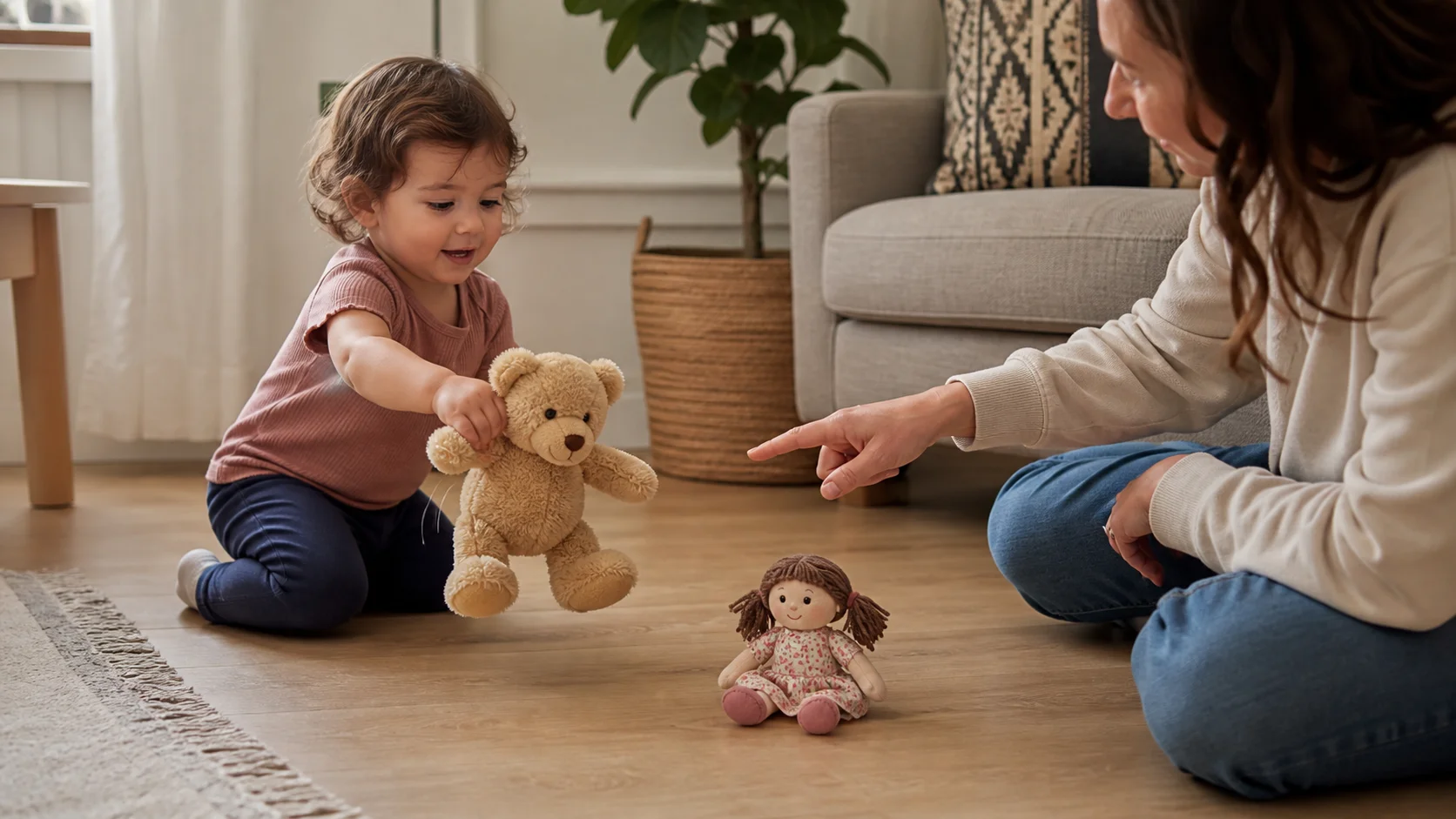
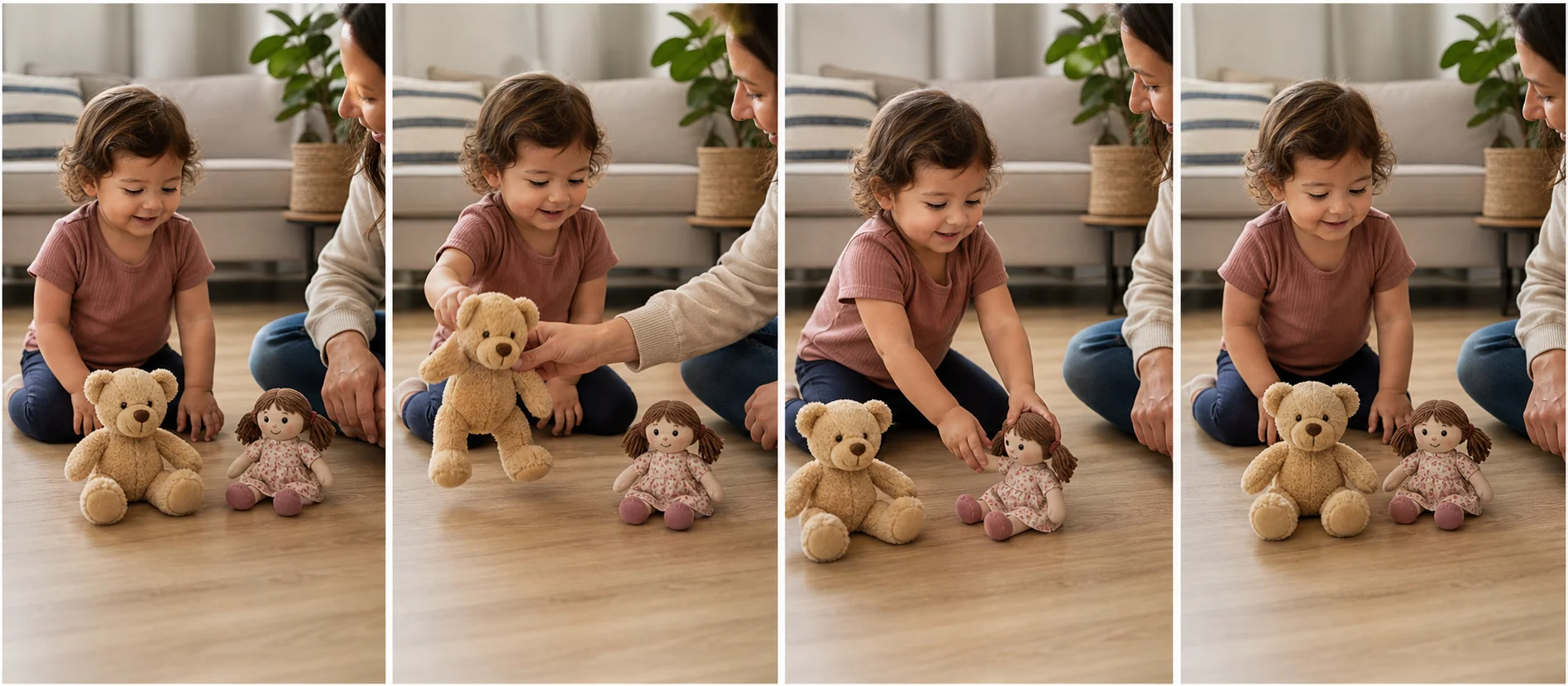
Give your toddler a tiny delivery job built from four familiar toys. They listen for the named object and toy friend, choose the ball or car, and deliver it to teddy or dolly, practicing how to act on two pieces of information in one short direction.


Turn two familiar toys into a quick listening game. Your toddler hears a toy-and-action cue, chooses the named toy, and makes it jump, sit, or walk, practicing how to follow a short spoken direction.


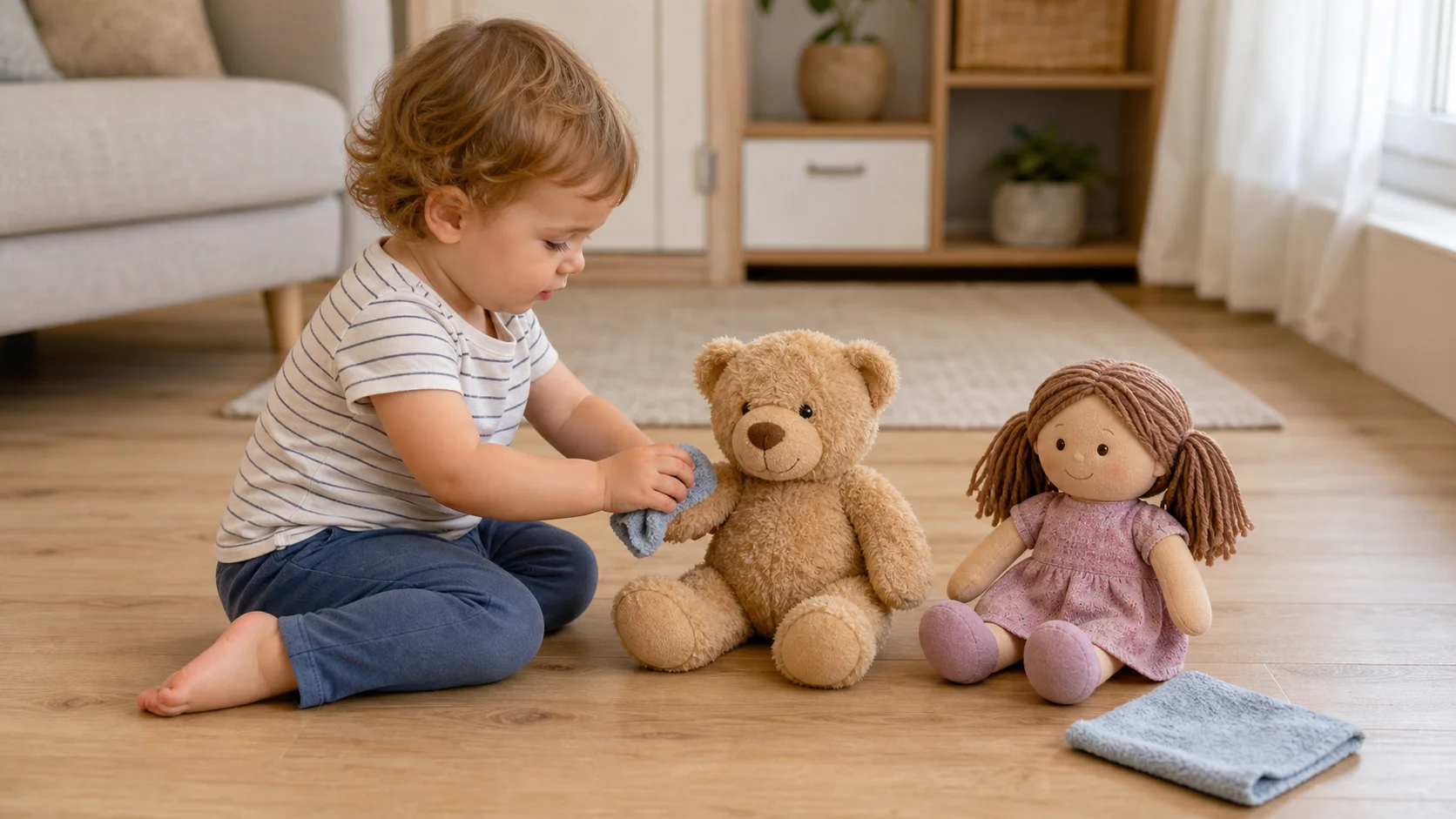
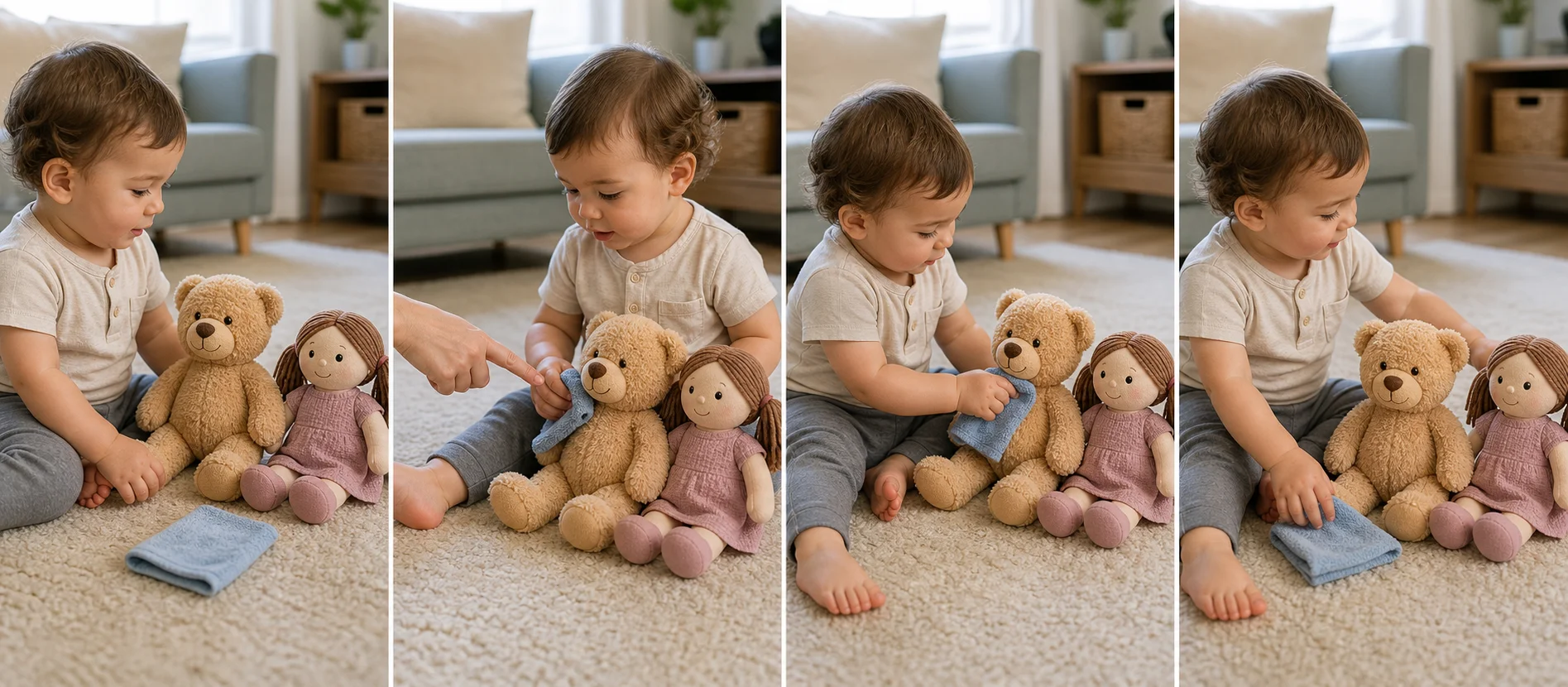
Turn two favorite toys and a dry cloth into a simple listening game. Your toddler hears one short wash or dry direction, finds the named toy body part, and wipes it, practicing how to connect key words with one clear action.