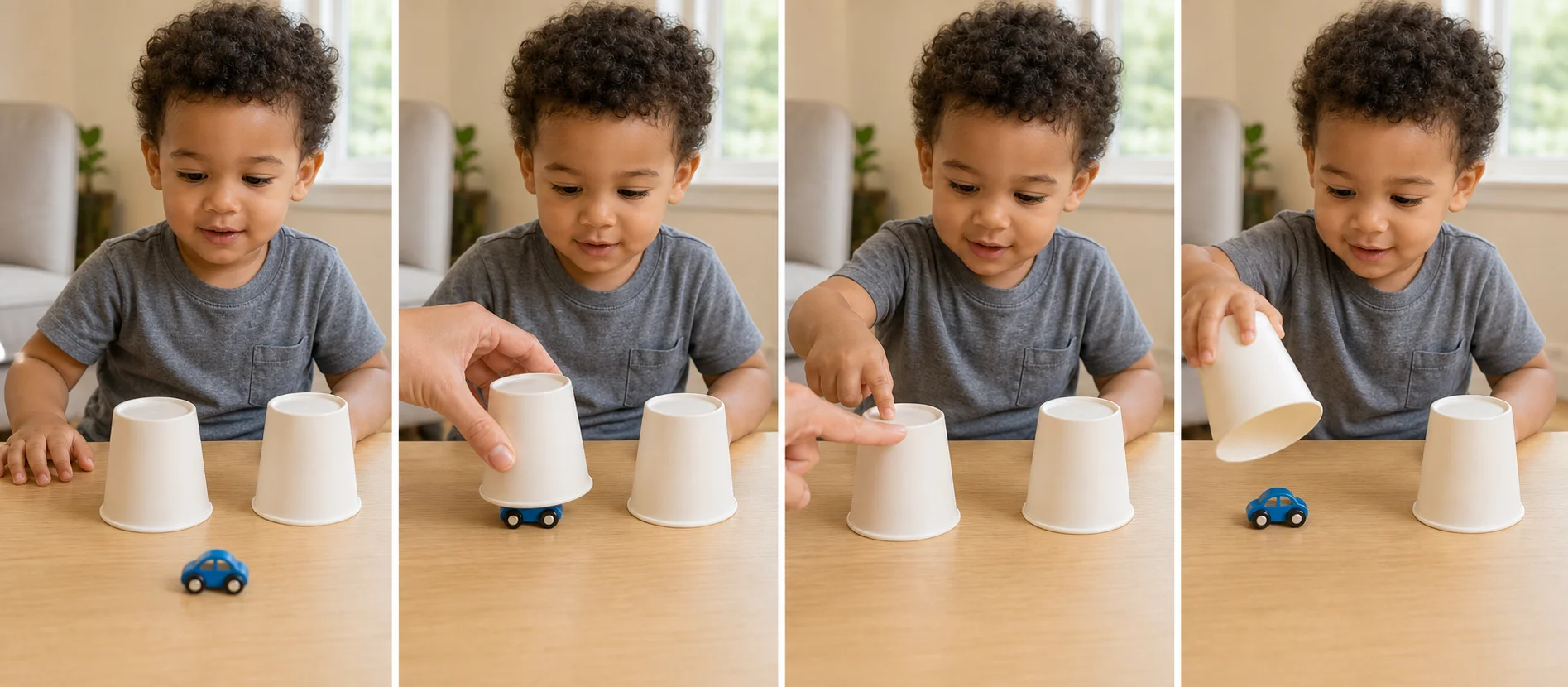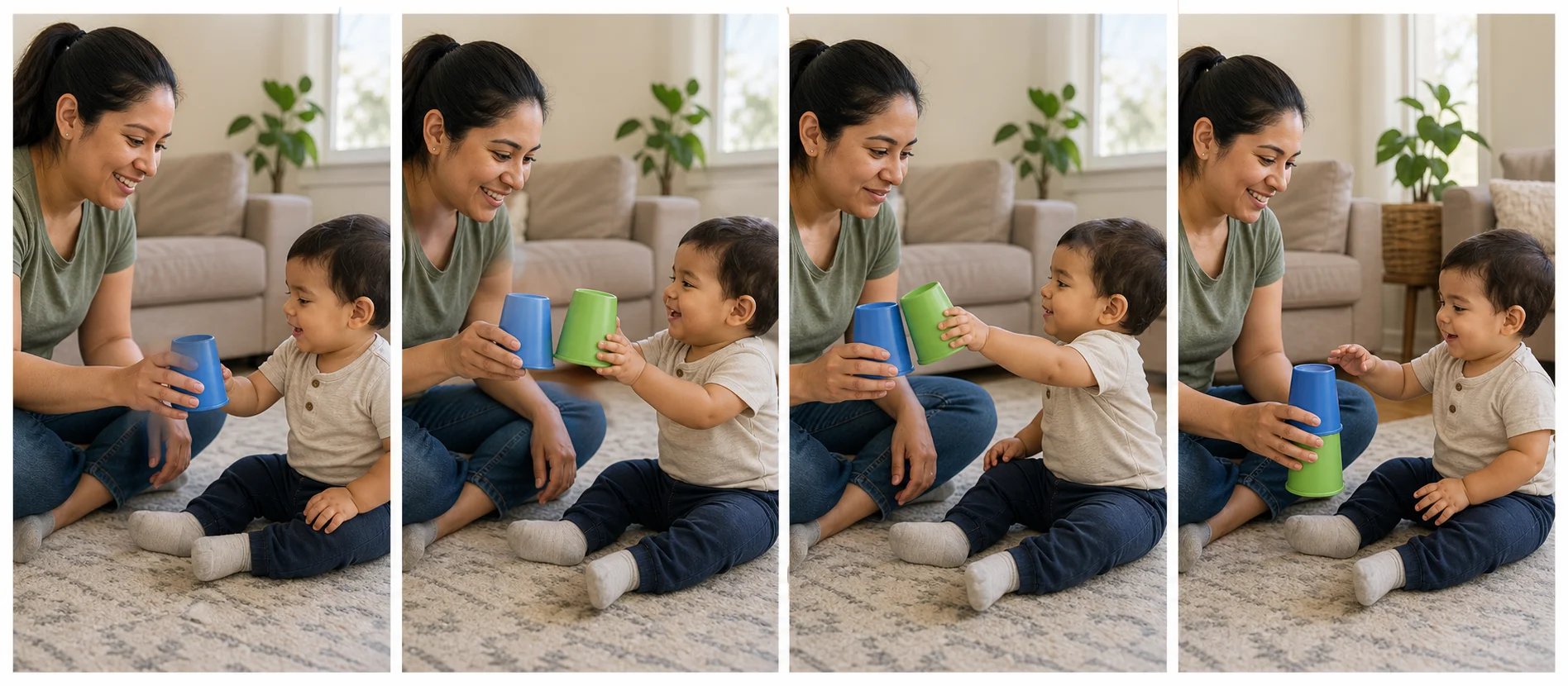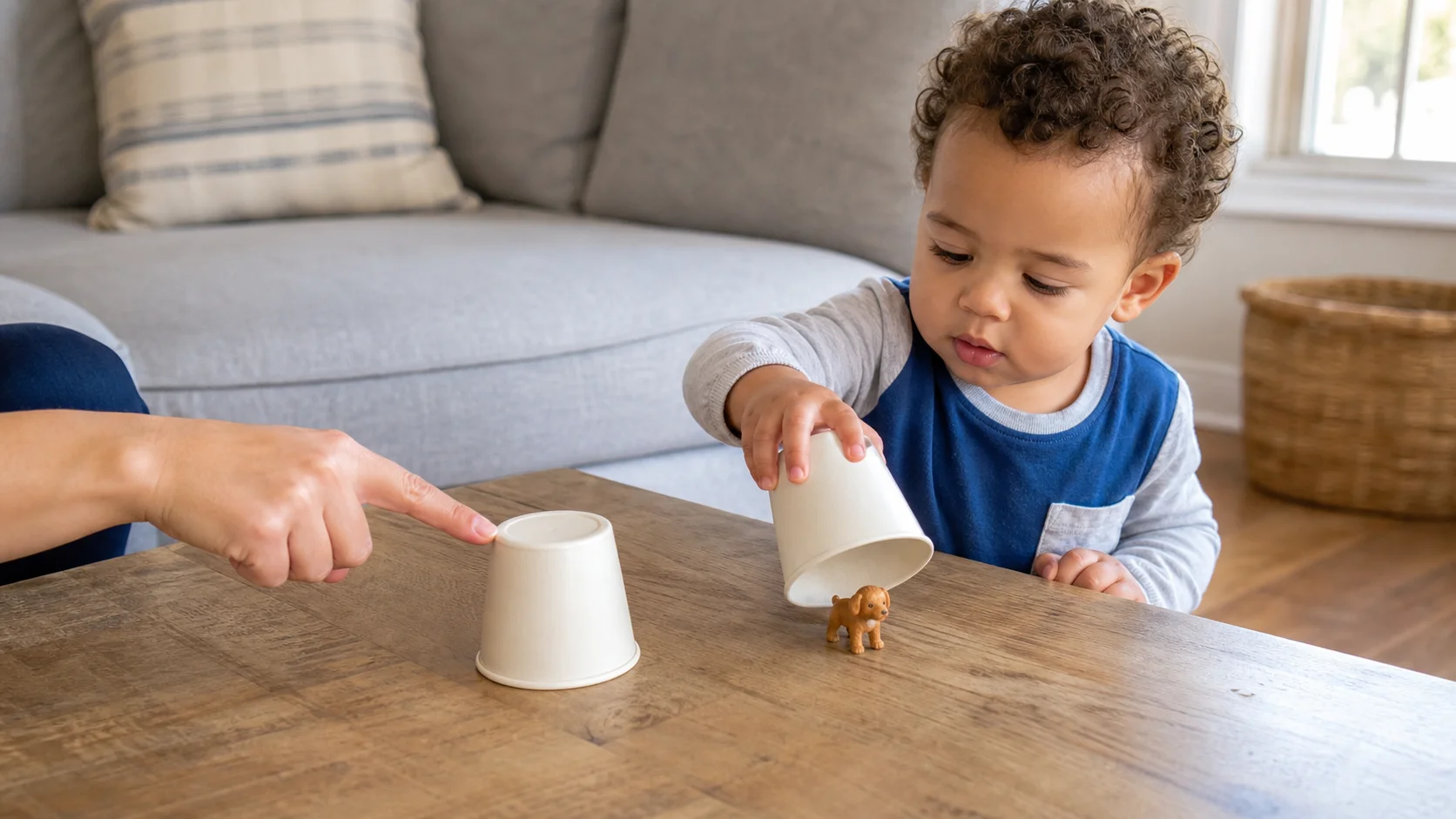

Pointed Prize Cup
Pointed Prize Cup is a follow a point activity for toddlers that helps children follow one-step directions through a clear, repeatable play loop.
Play ideas for toddlers who may benefit from extra developmental support during everyday routines. These activities favor clear steps, flexible participation, repeatable practice, and multiple ways to join in through movement, gestures, sounds, choices, or hands-on exploration. They are everyday play ideas, not early intervention services, therapy, diagnosis, or individualized developmental guidance.


Pointed Prize Cup is a follow a point activity for toddlers that helps children follow one-step directions through a clear, repeatable play loop.


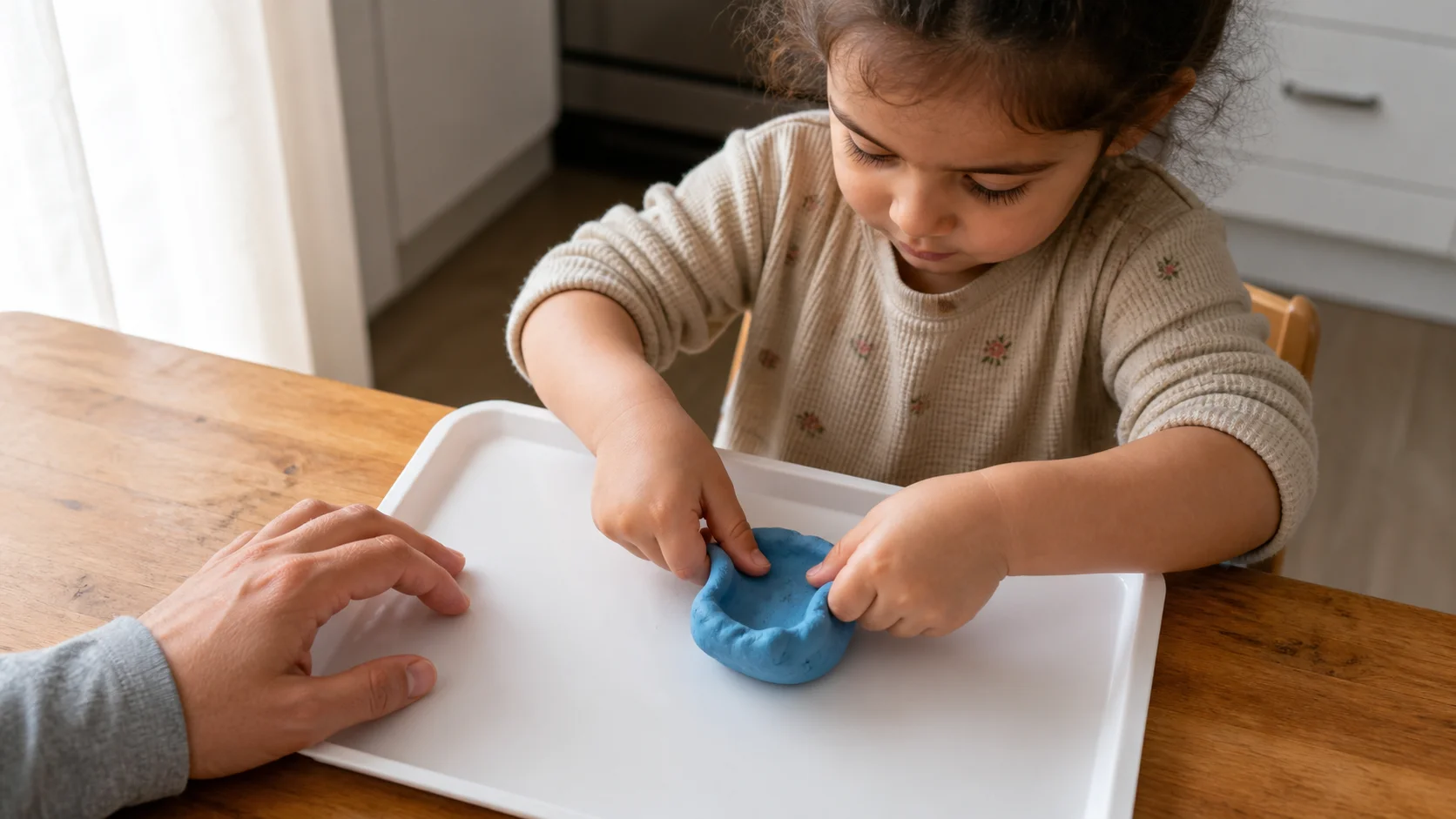
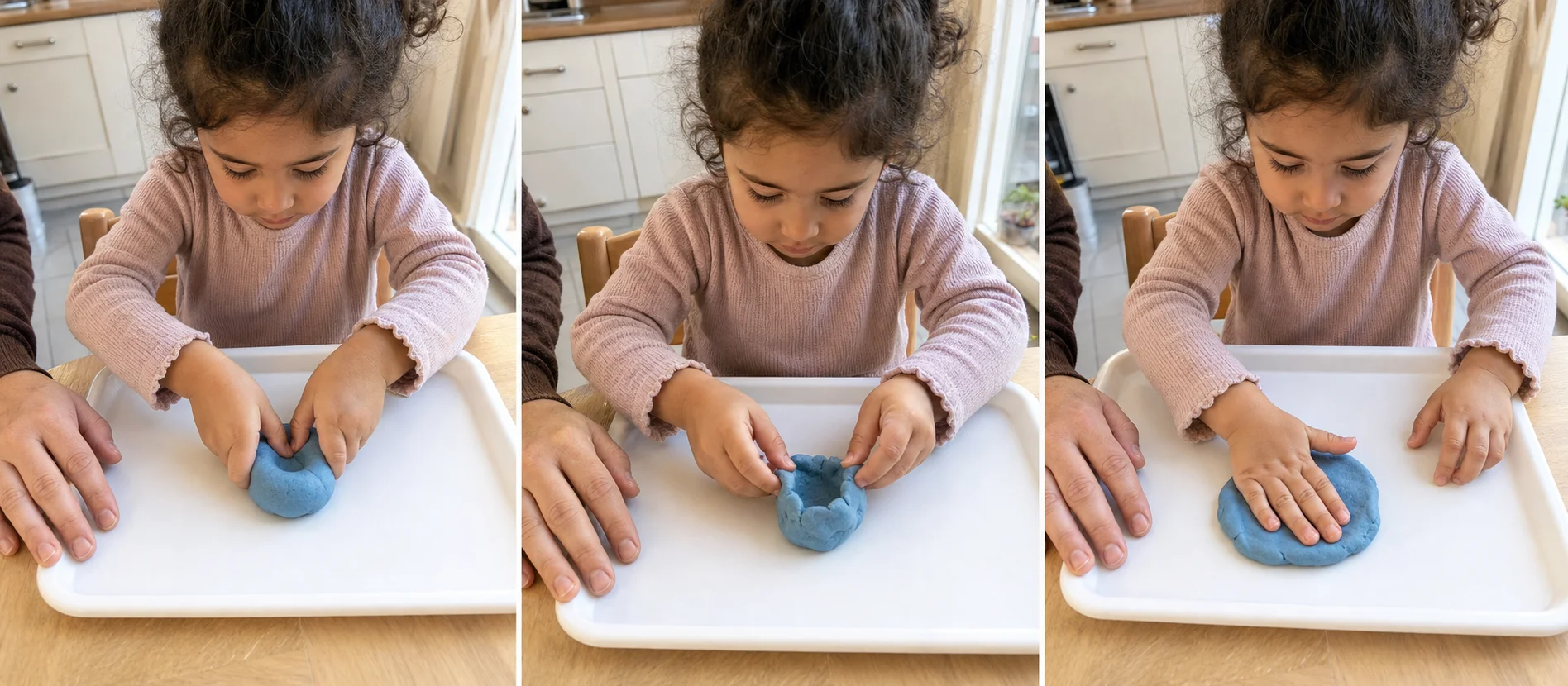
Turn one soft dough ball into a lumpy little pot your child can squash and make again. Pressing both thumbs into the center and pinching around the rim gives them repeatable thumb-and-finger control practice.


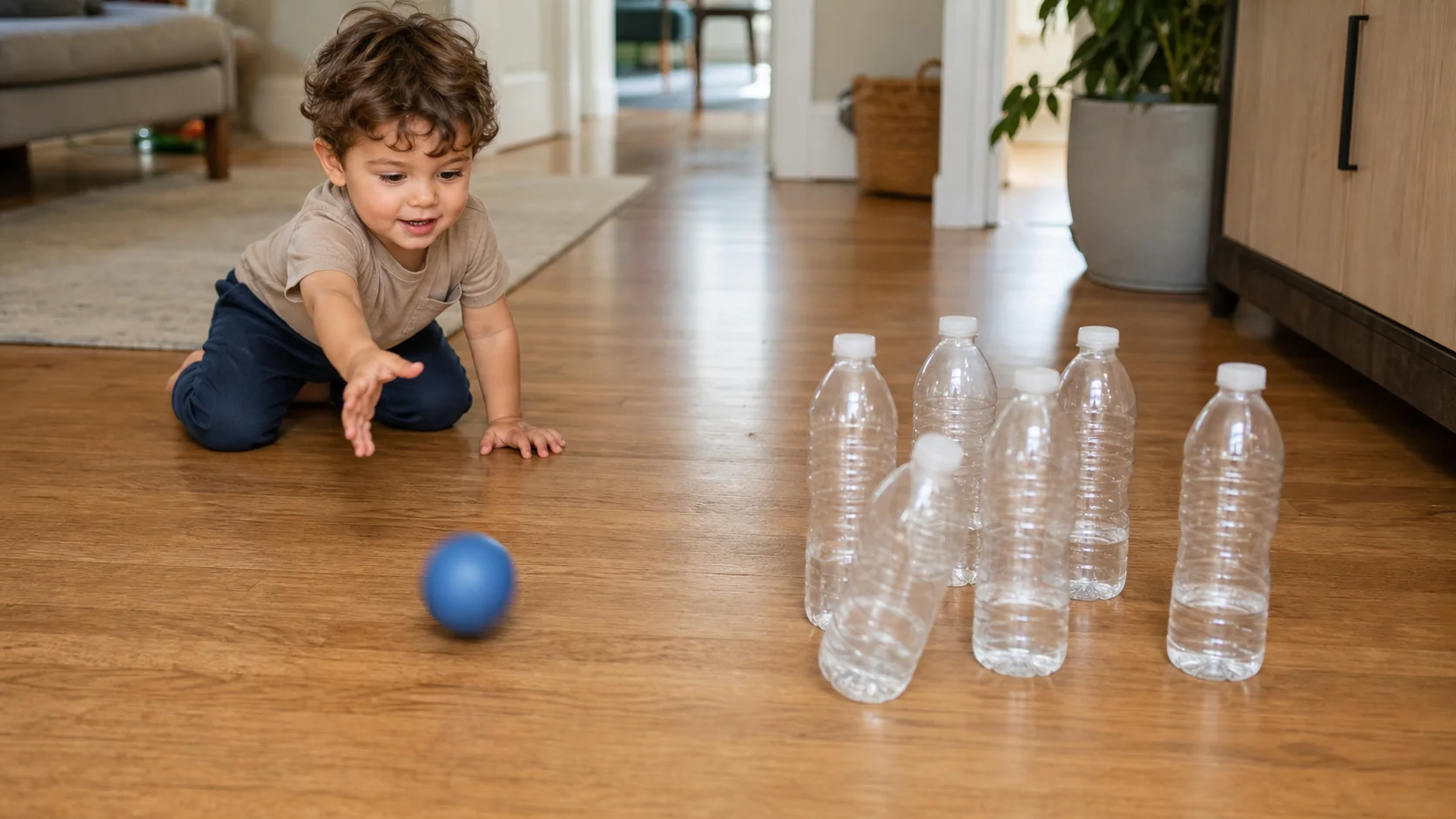
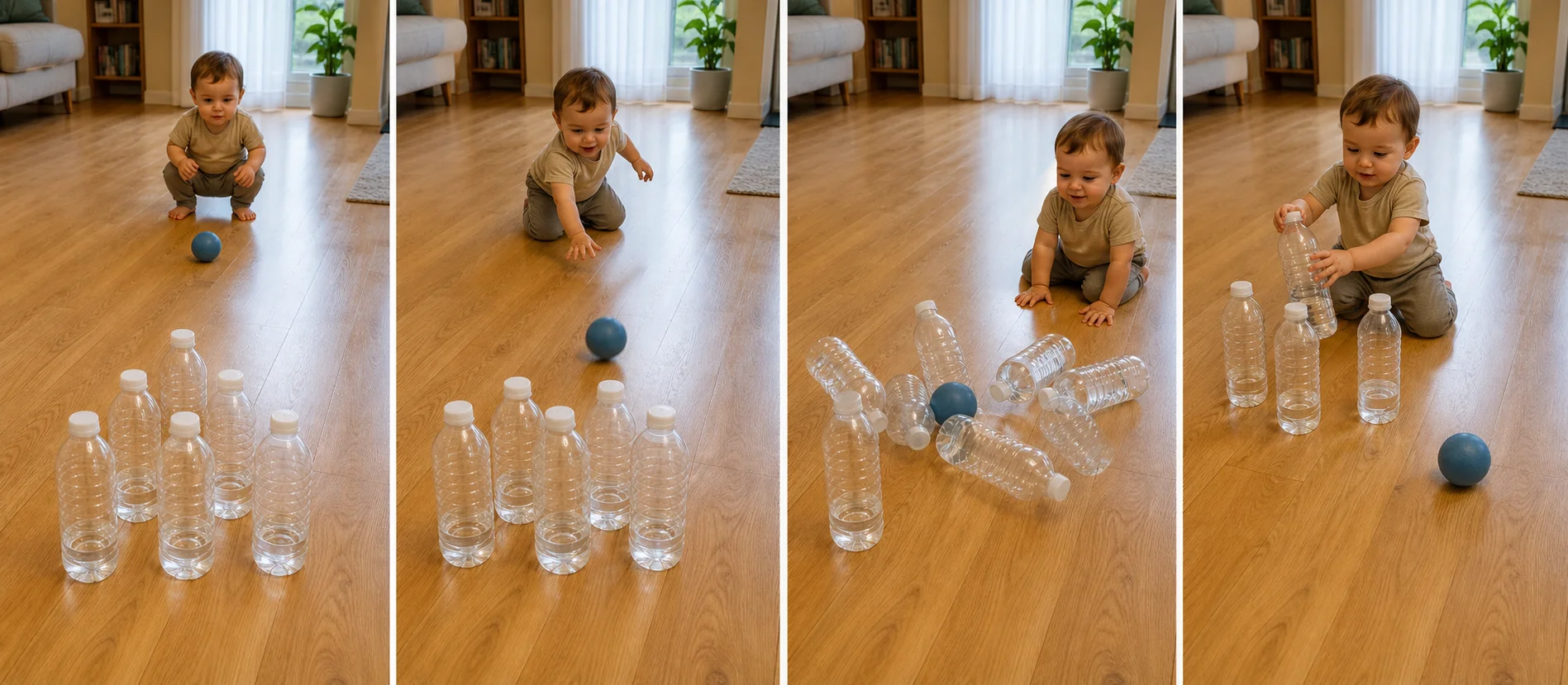
A few plastic bottles turn one simple roll into a satisfying crash. Your child aims a ball at the homemade pins, watches them tumble, and practices gross motor control and eye-hand coordination with every turn.


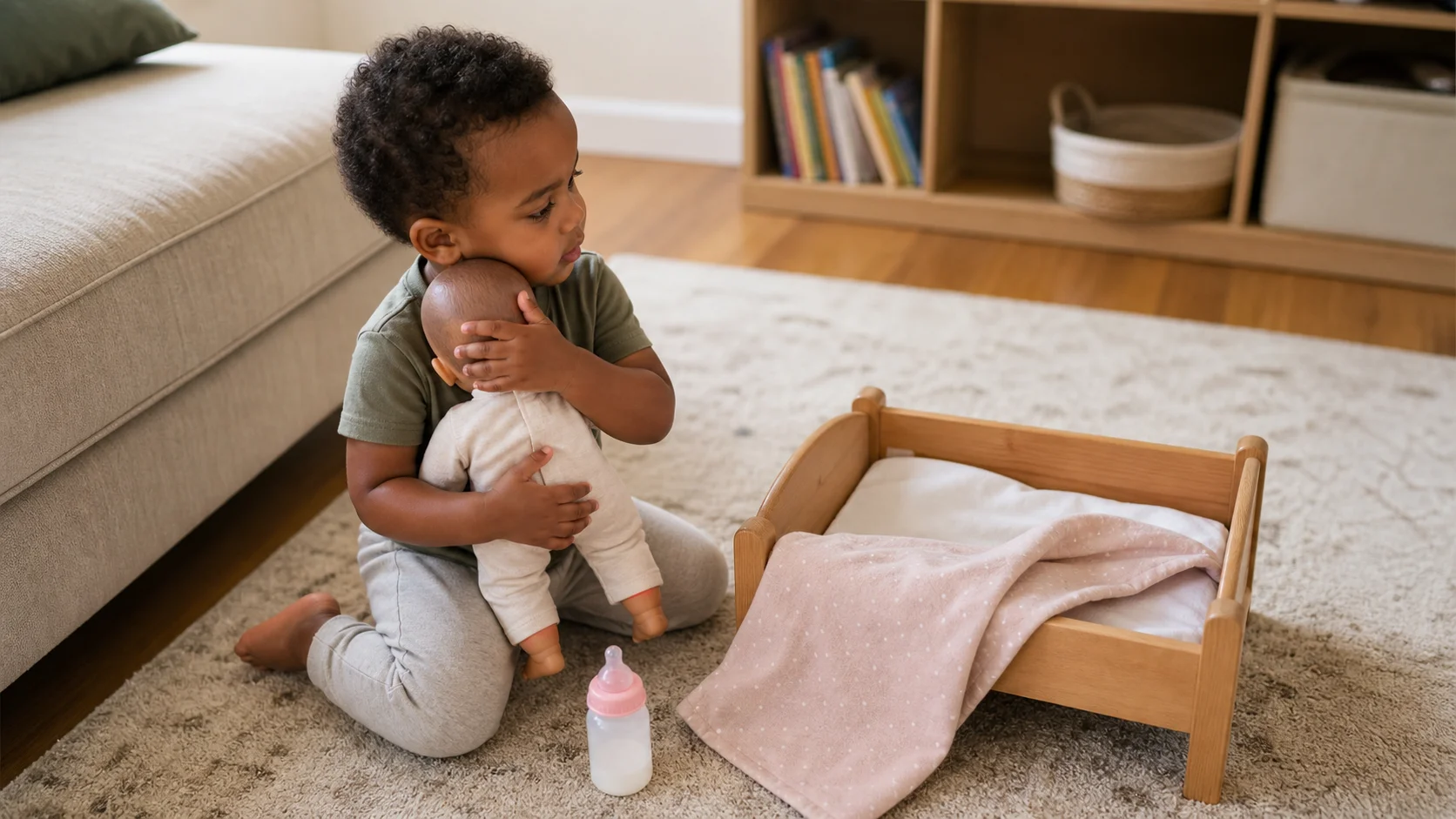
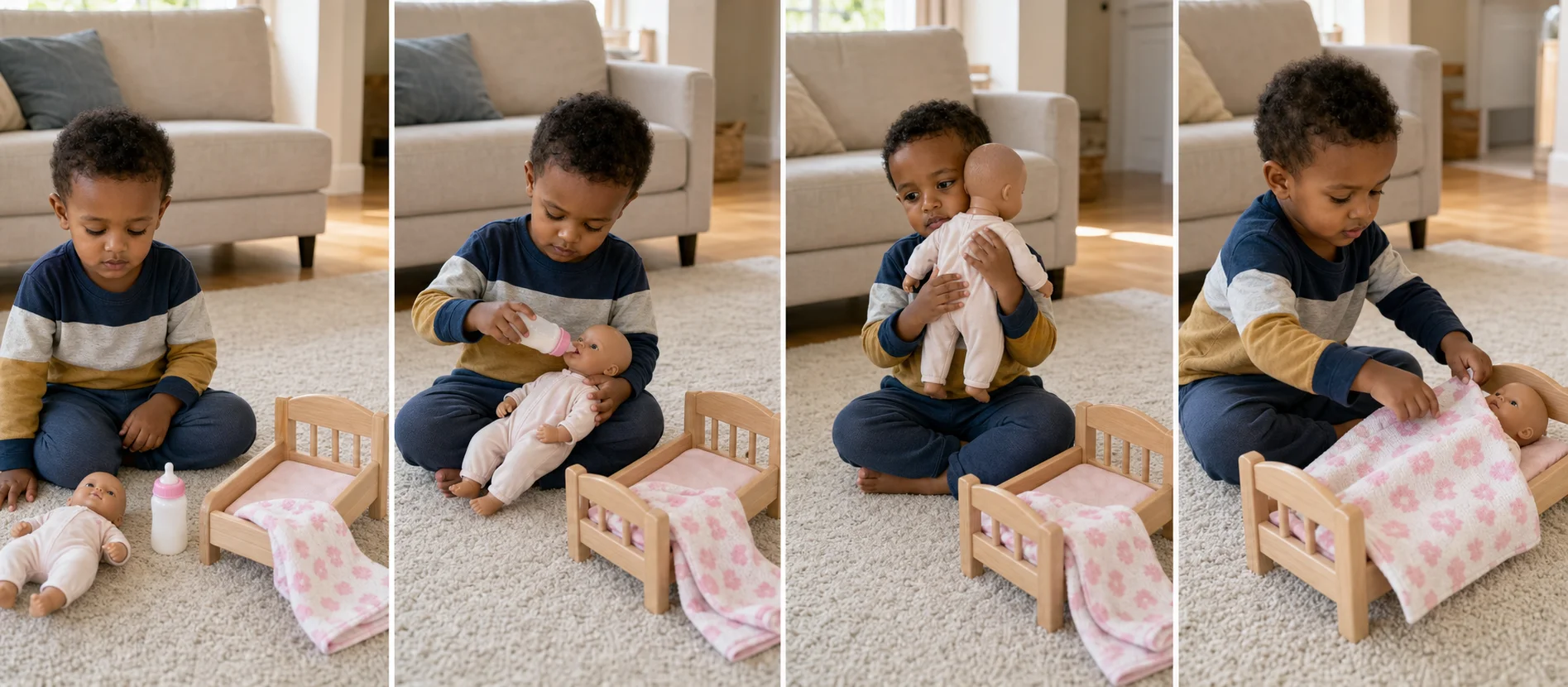
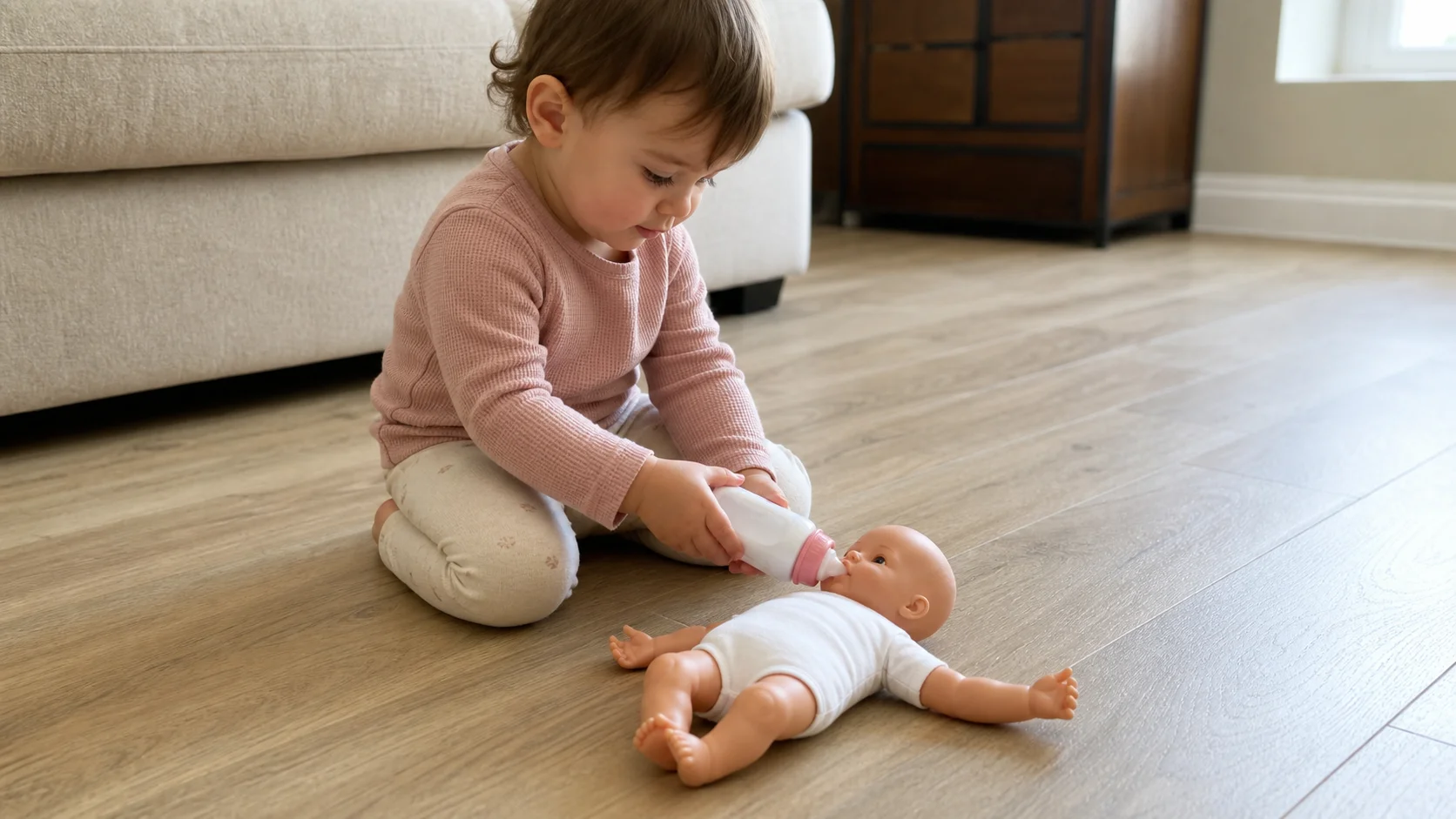
Turn familiar caregiving into a tiny pretend-play routine. Your child feeds a doll, lifts it for a burp, then tucks it into bed to practice imitation and following a simple sequence.


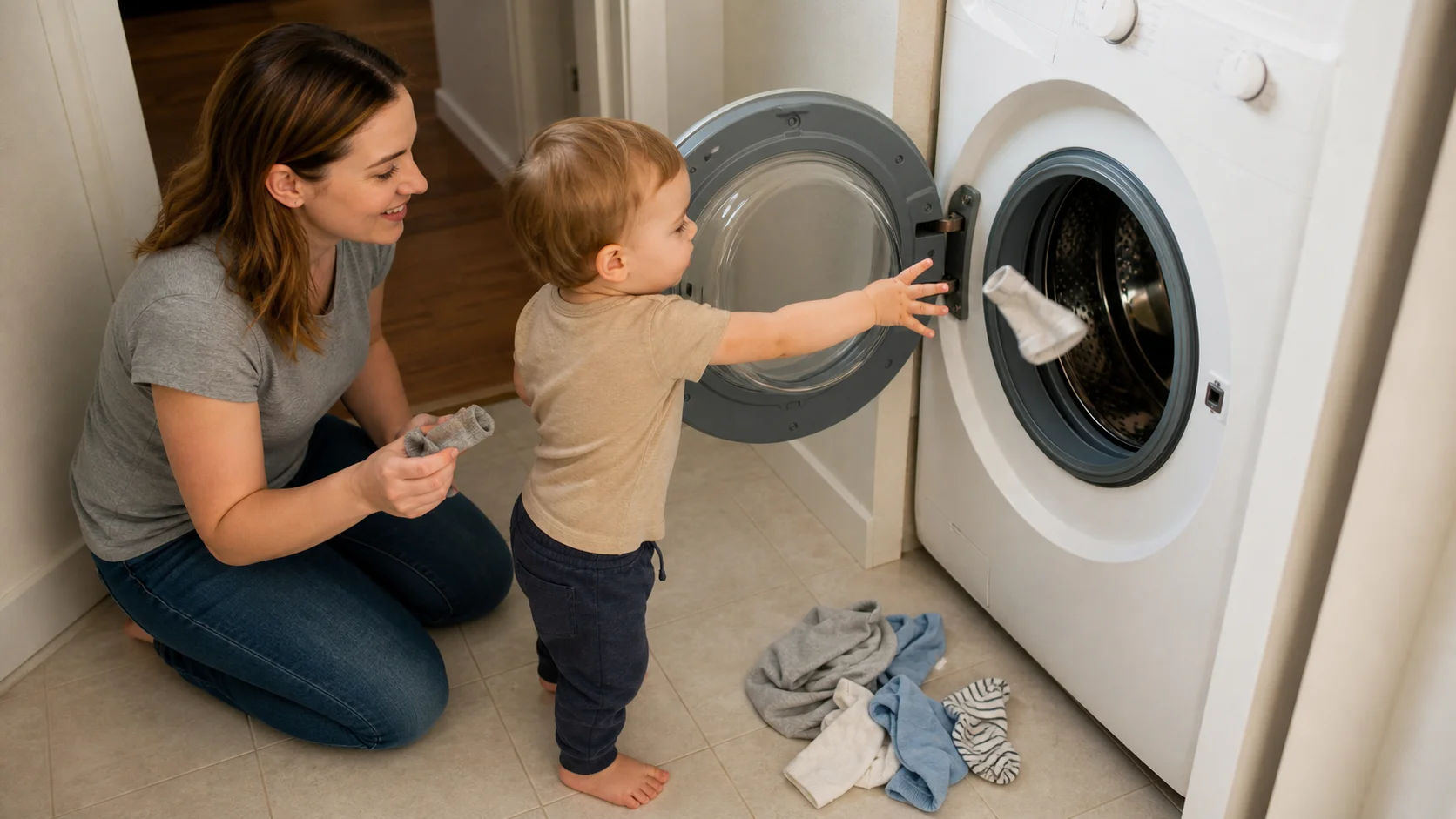
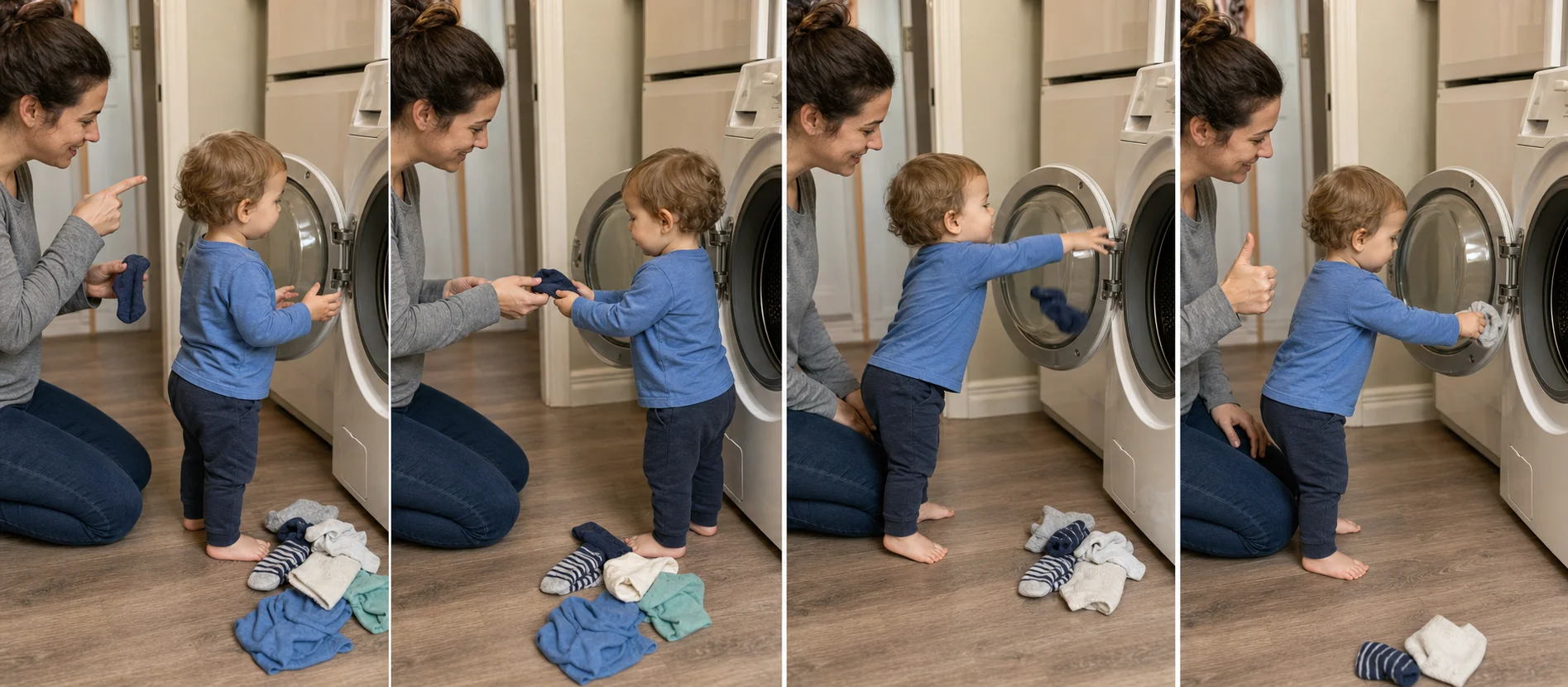
Turn laundry loading into a target game your toddler can win. Hand them one soft clothing item at a time and let them drop or toss it into the open washer, practicing a real helping job with every turn.


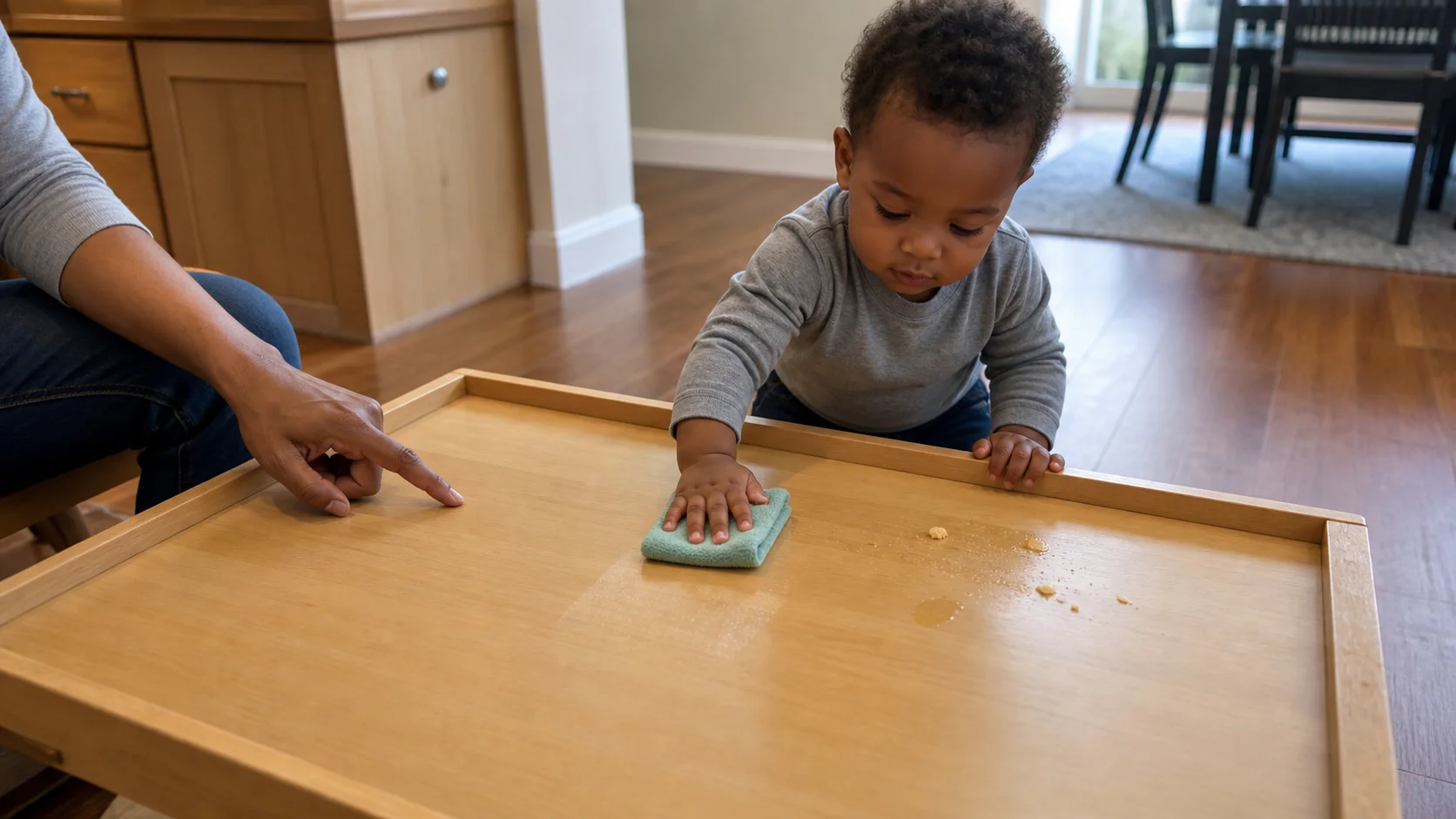
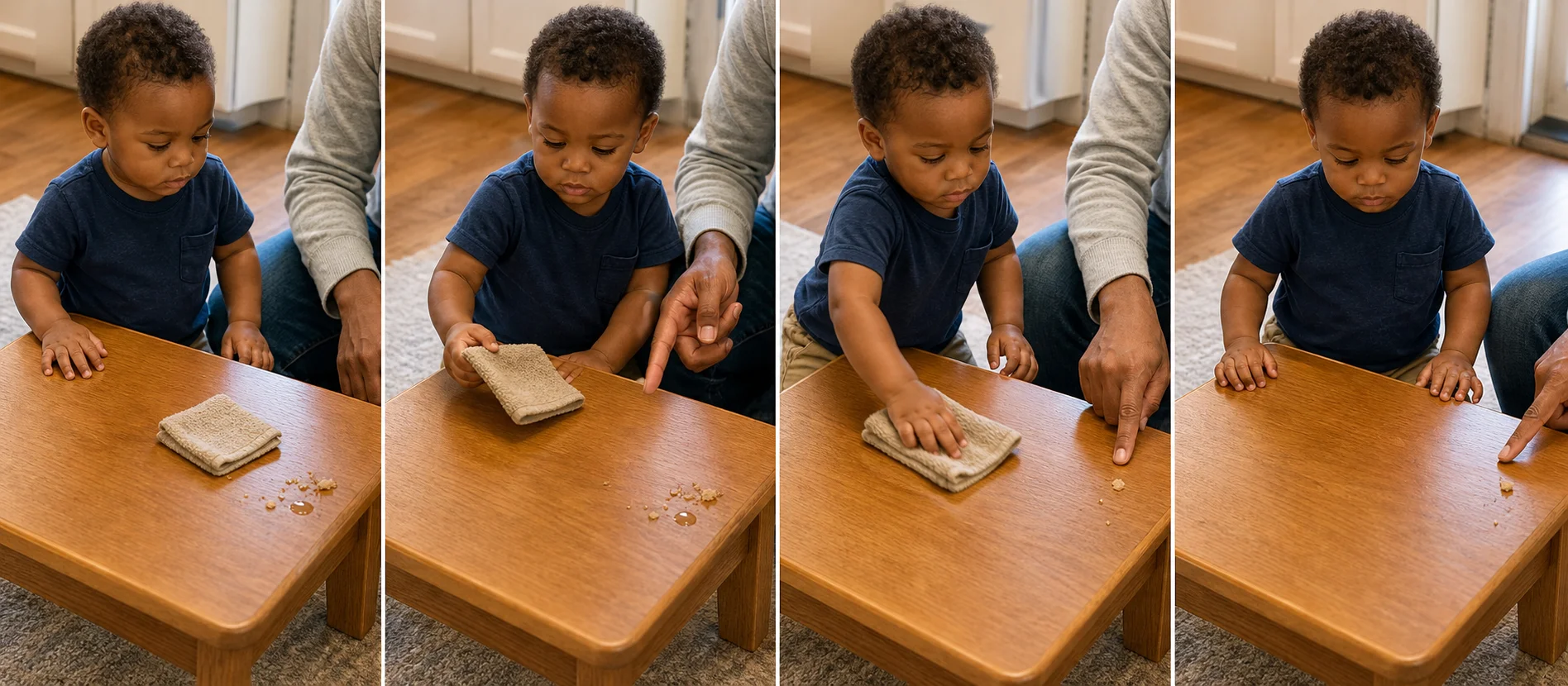
Sponge Table Swipe is a table wiping activity for toddlers that helps children join a household helping job through a clear, repeatable play loop.


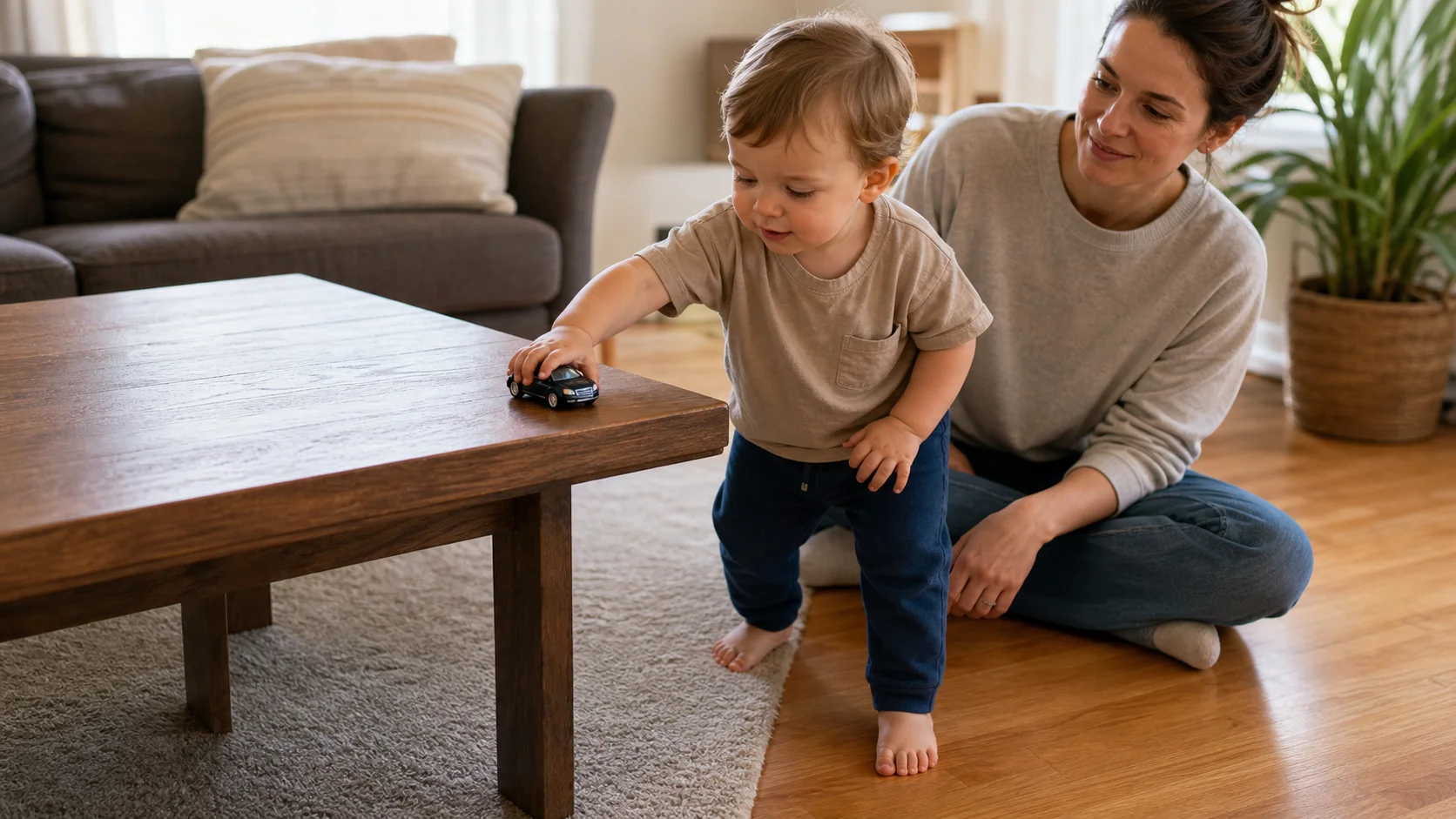
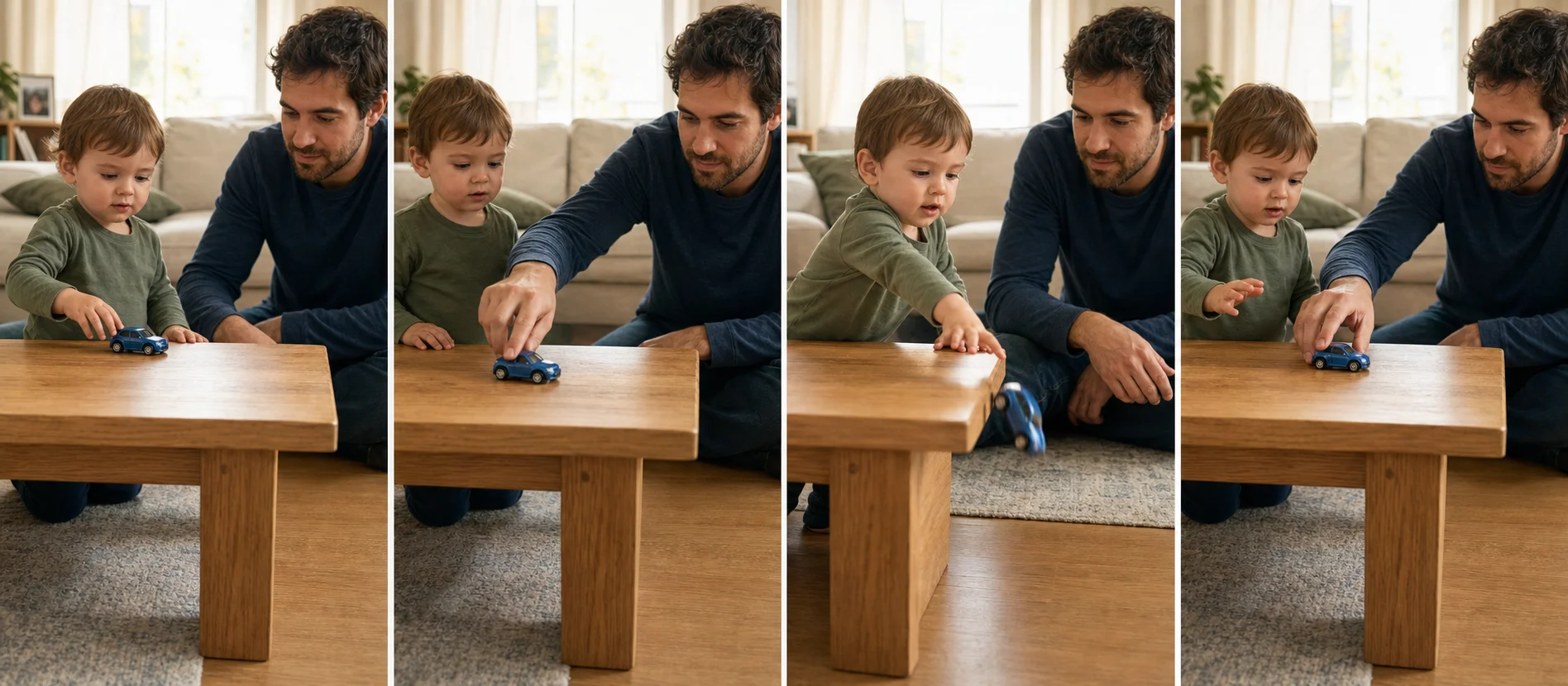
Turn one toy car and a table edge into instant cause-and-effect fun. Your child pushes the car forward, watches it drop with a crash, then sees the same action create the same result again.


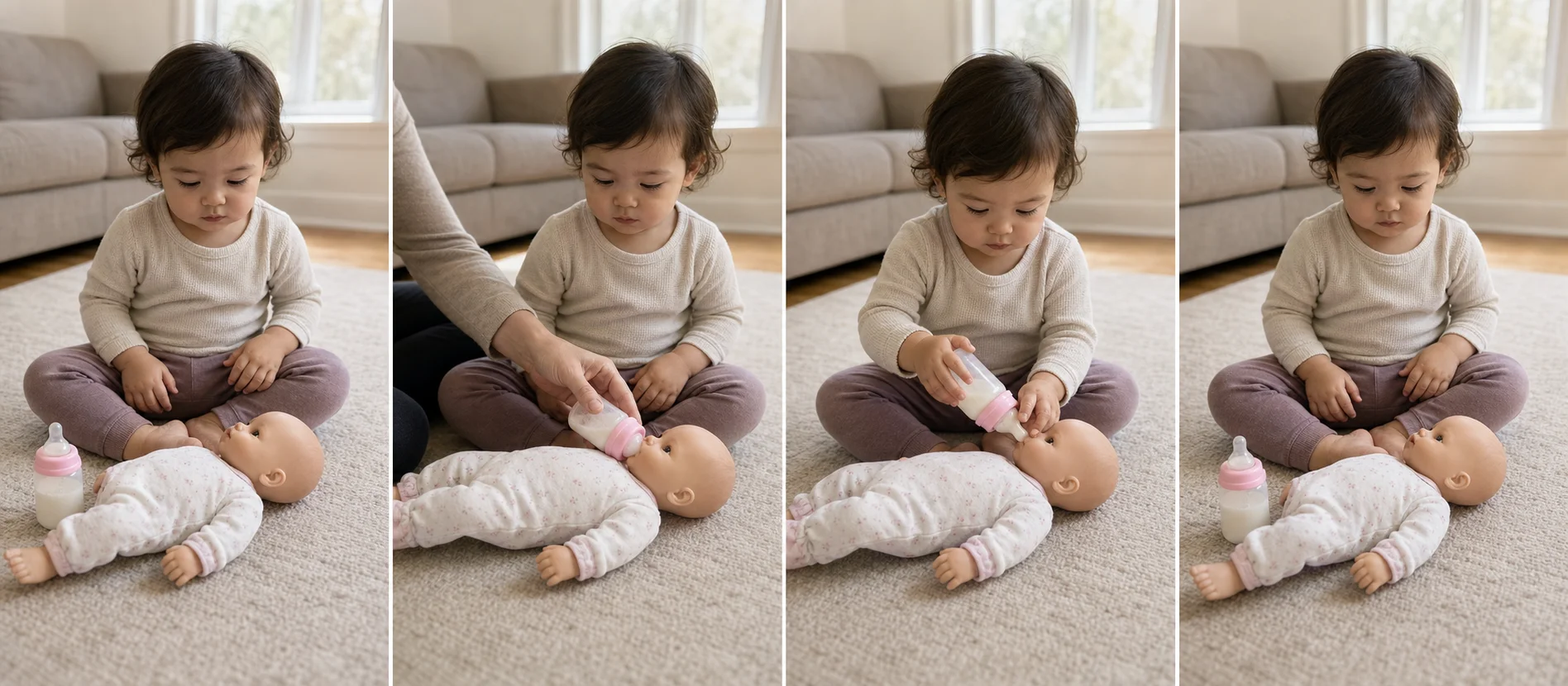
Give your toddler an easy first step into pretend play with just a doll and bottle. After watching one feeding turn, they bring the bottle to the doll's mouth, practicing imitation through a familiar make-believe action.


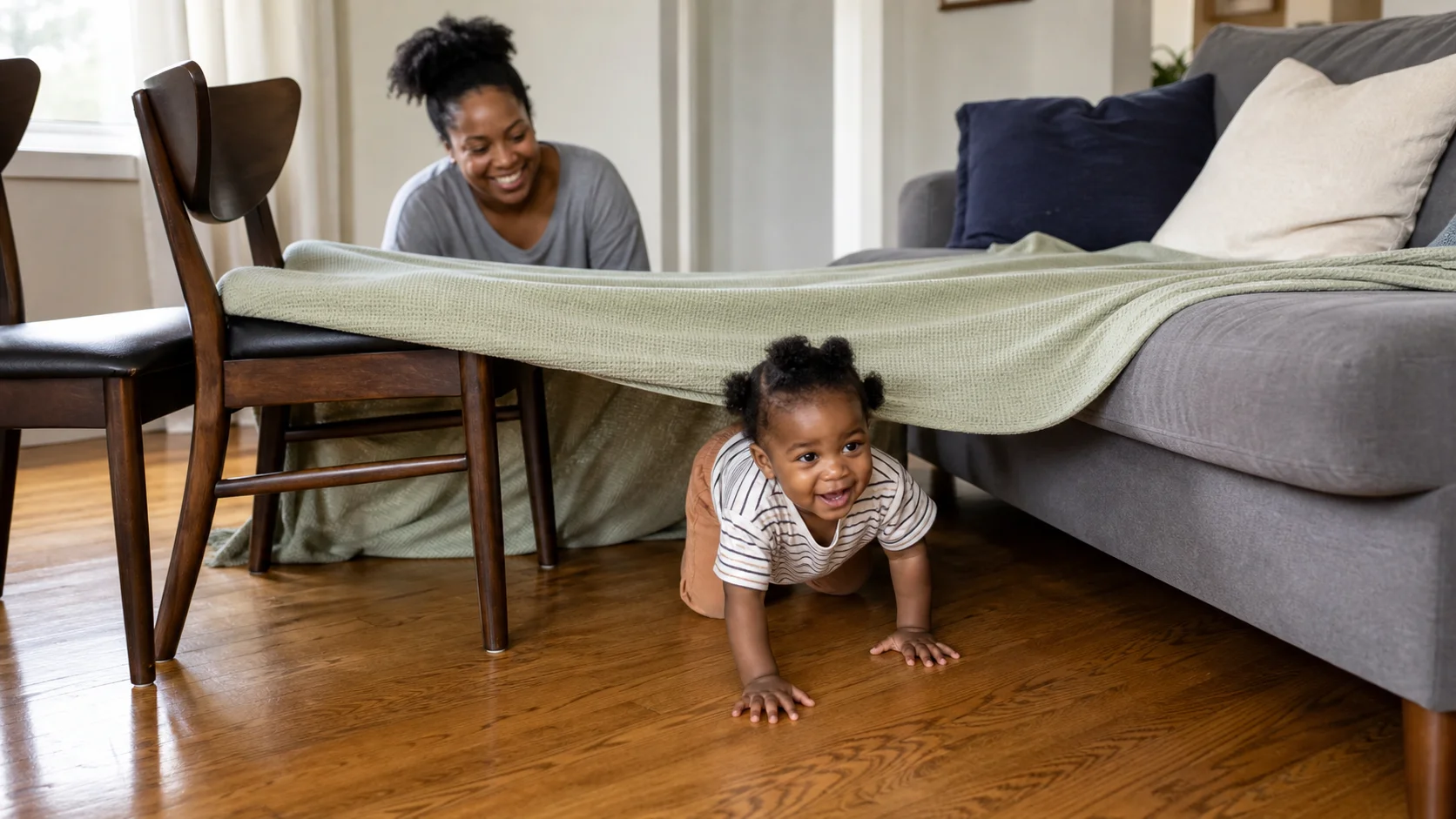
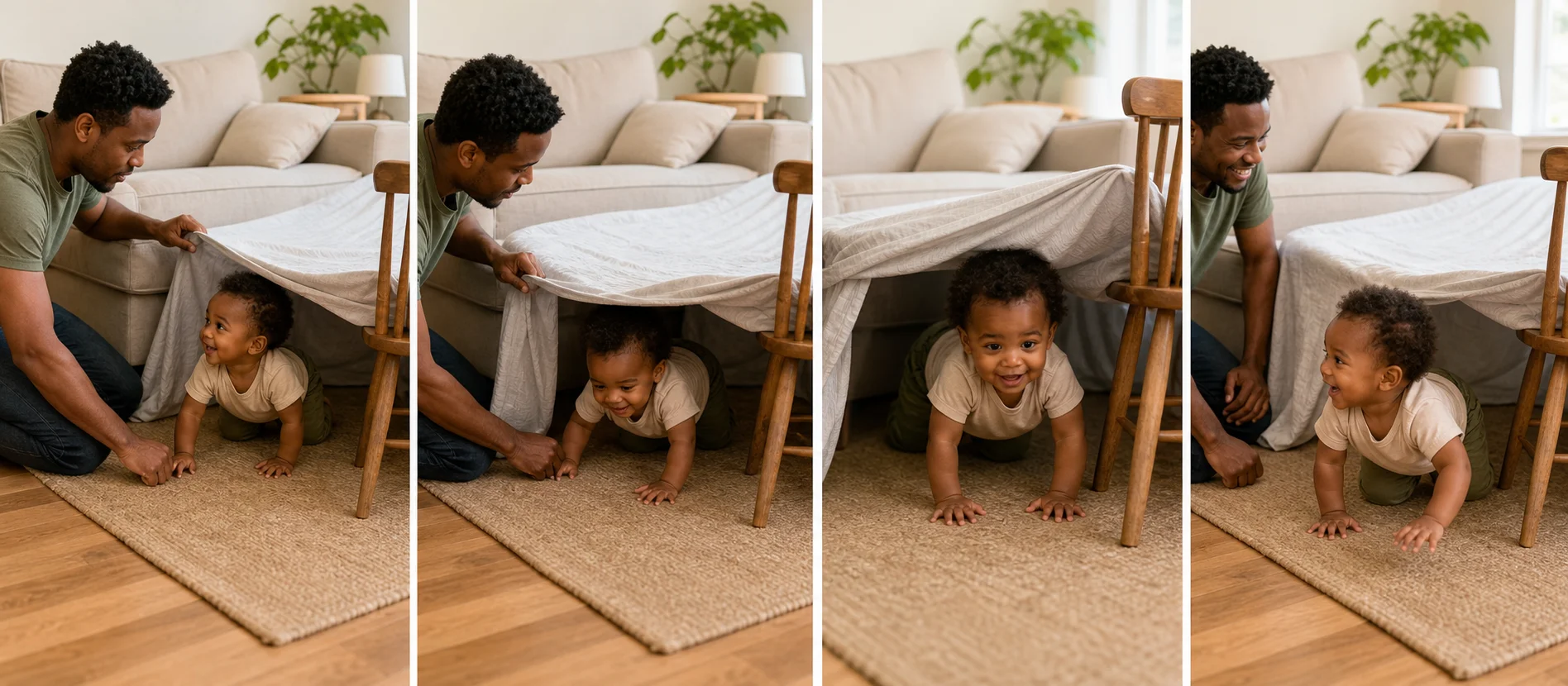
Turn a blanket, couch, and chairs into a little fort your toddler can crawl in and out of. Each trip gets their whole body moving and gives spatial words like "in," "out," and "under" a visible meaning.


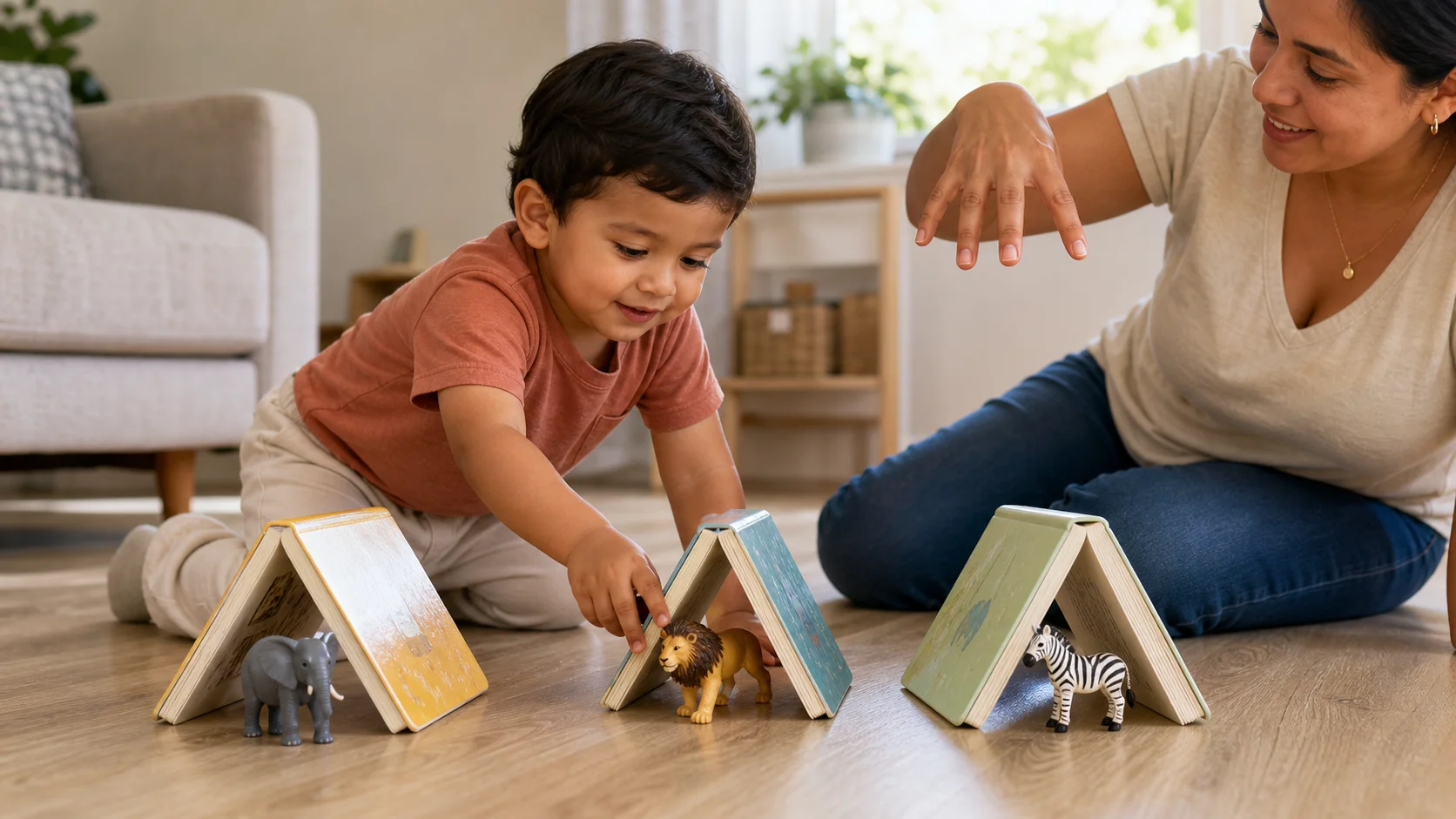
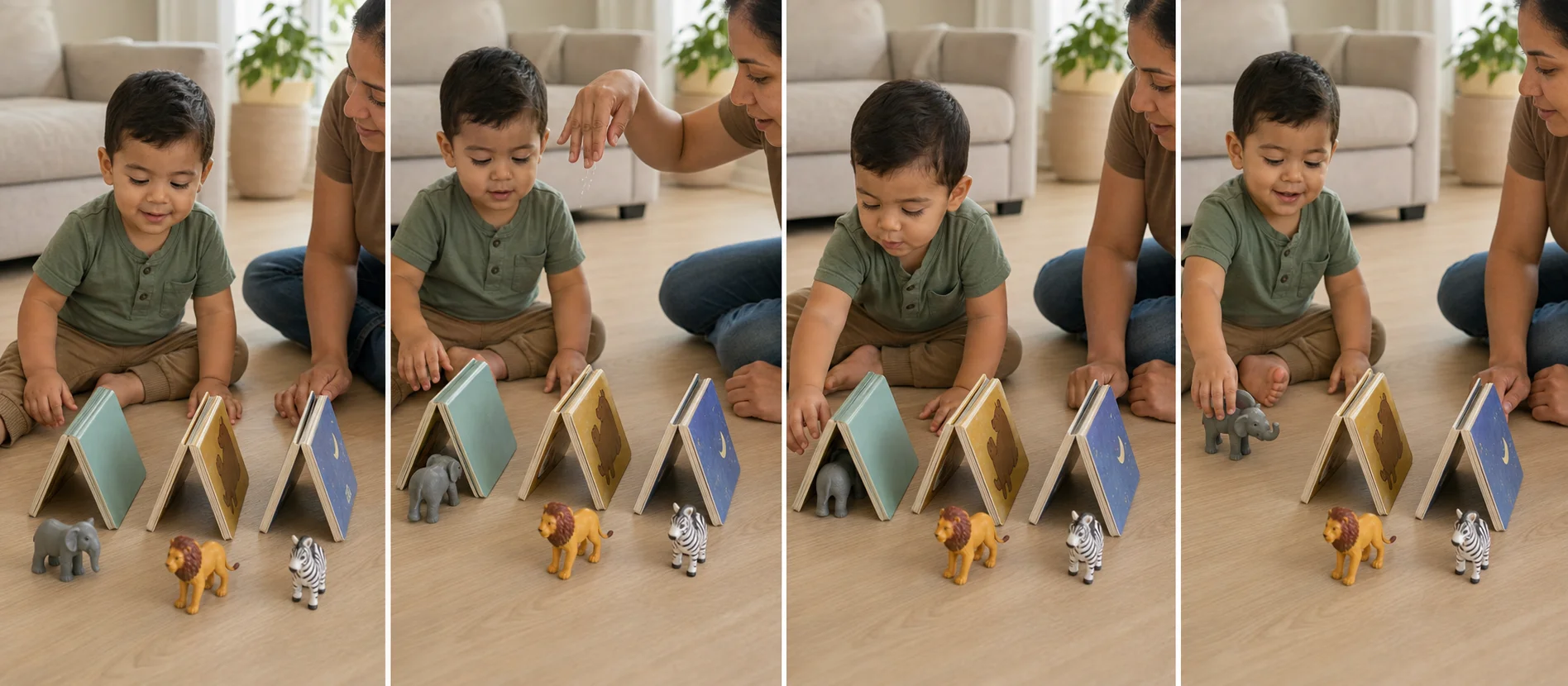
Turn board books into tiny shelters for a quiet pretend rescue where your toddler slides toy animals in from the rain, then brings them back out when the storm stops, practicing a clear in-and-out sequence.


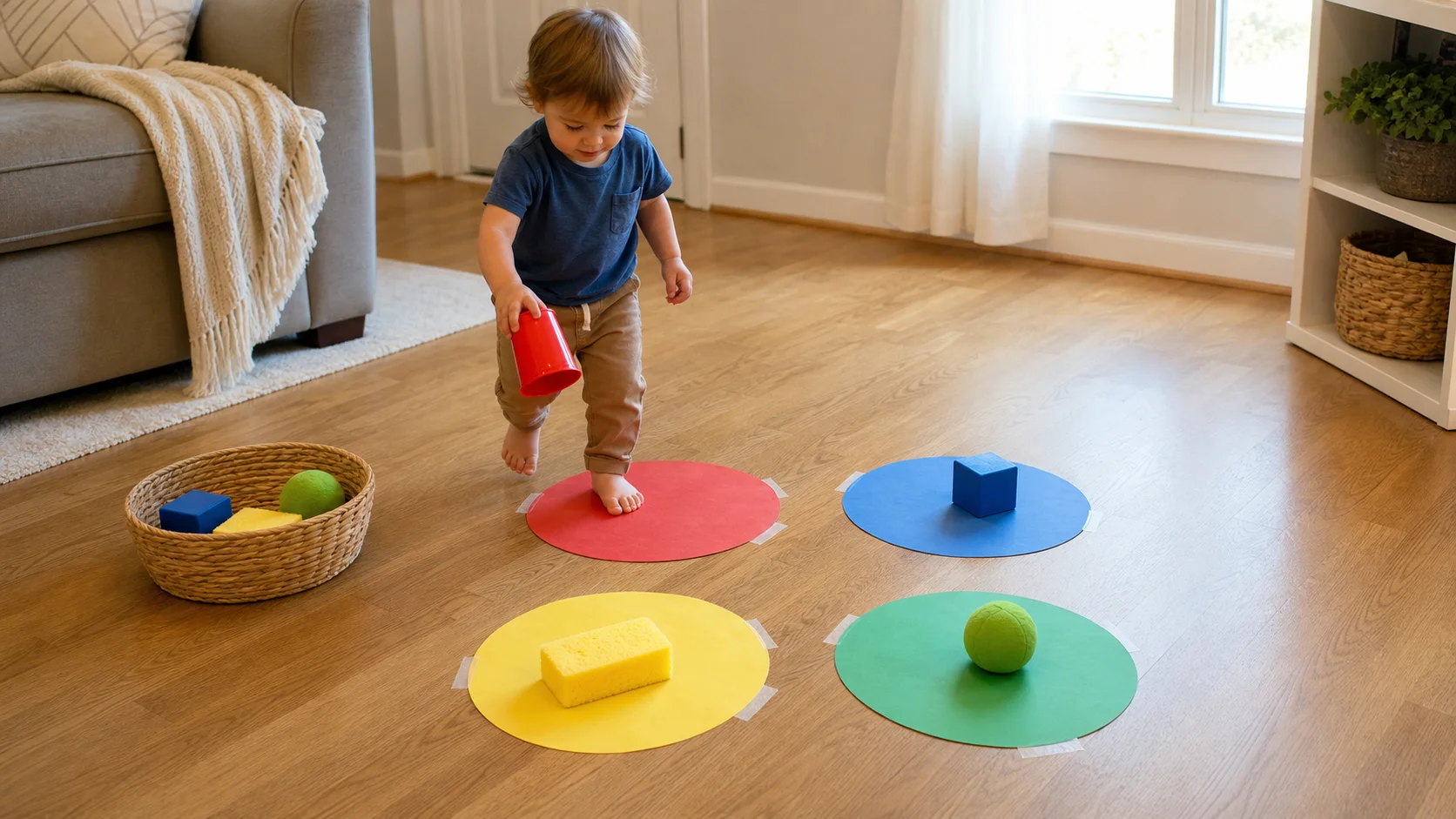
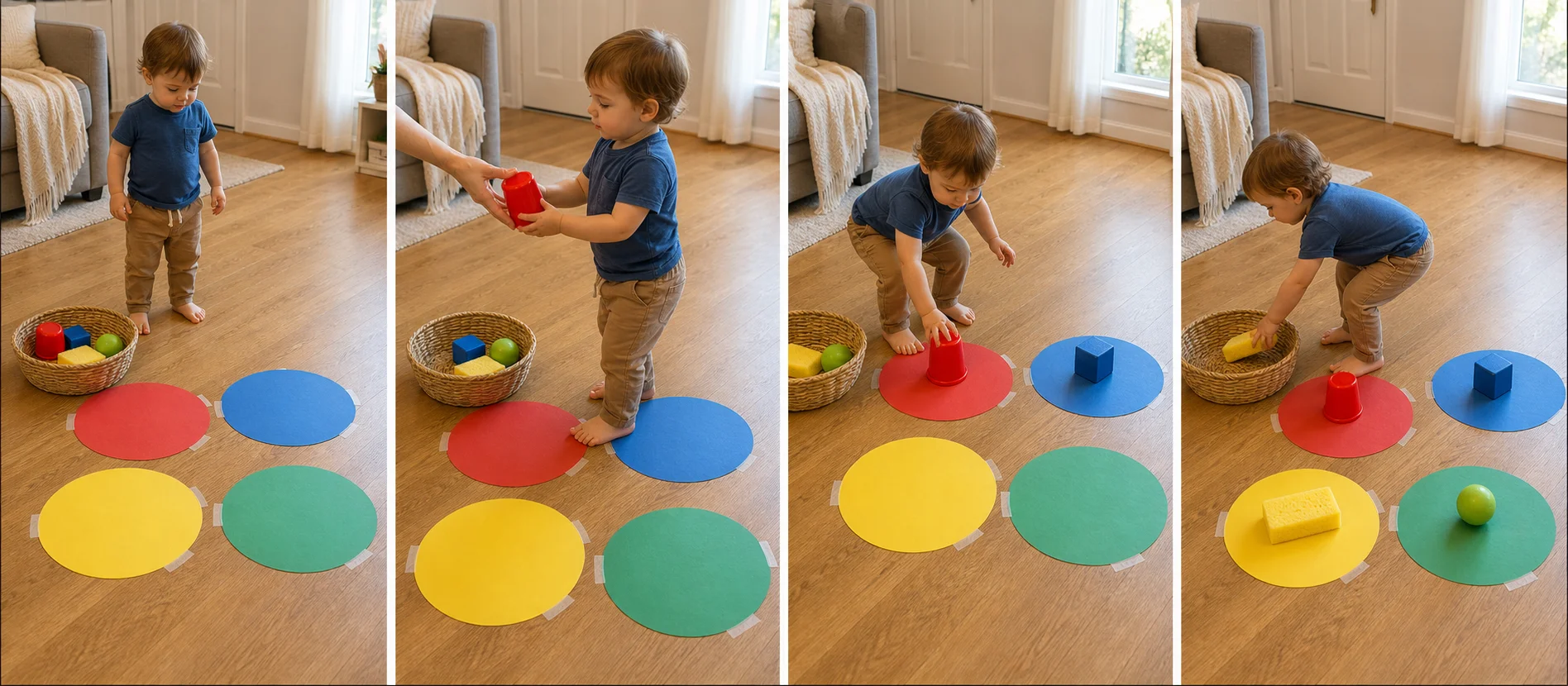
Turn a few paper circles and household objects into a carry-and-match game. Your toddler compares each object's color, walks it to the same-color spot, and builds early visual matching and sorting skills.


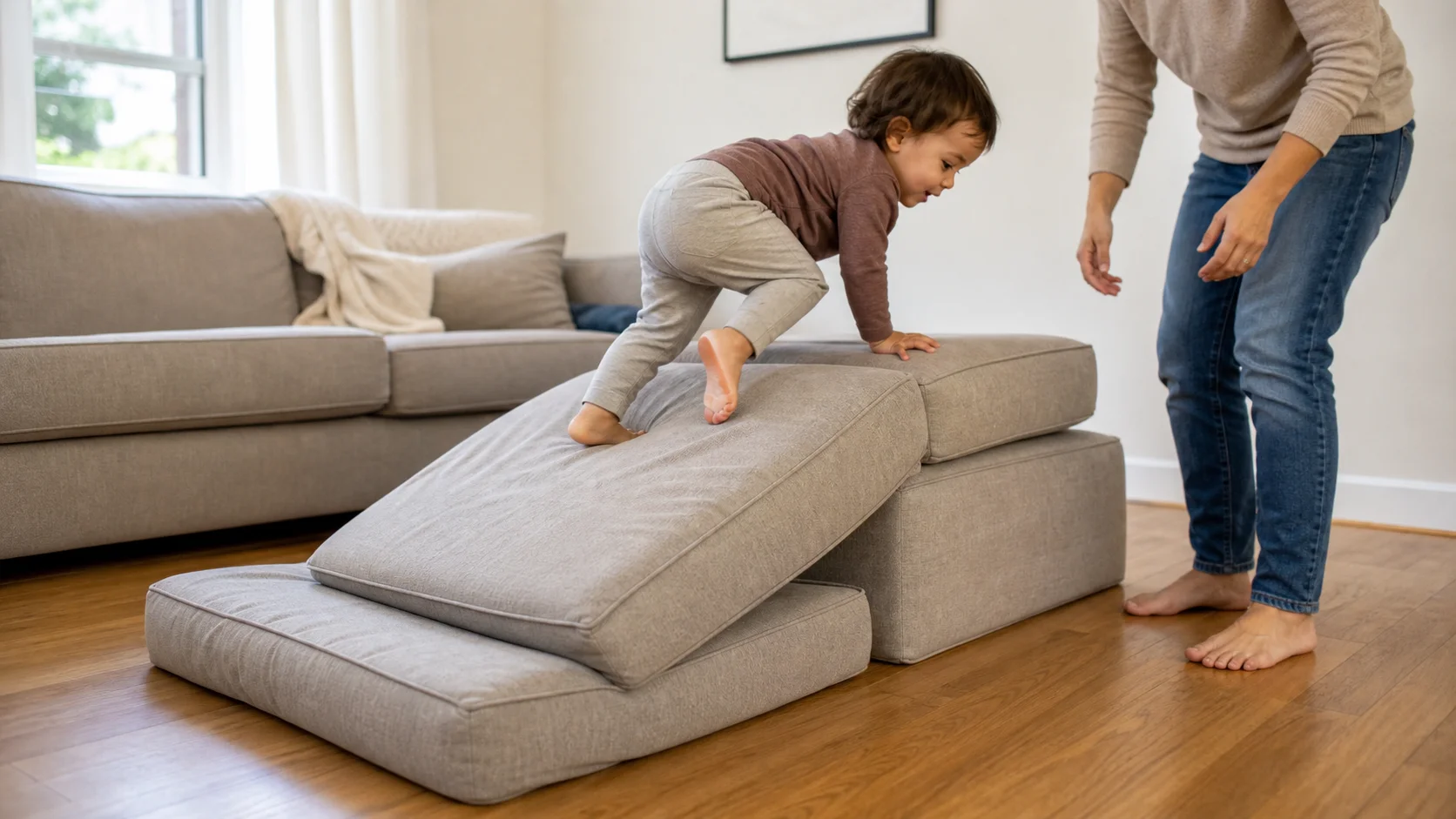
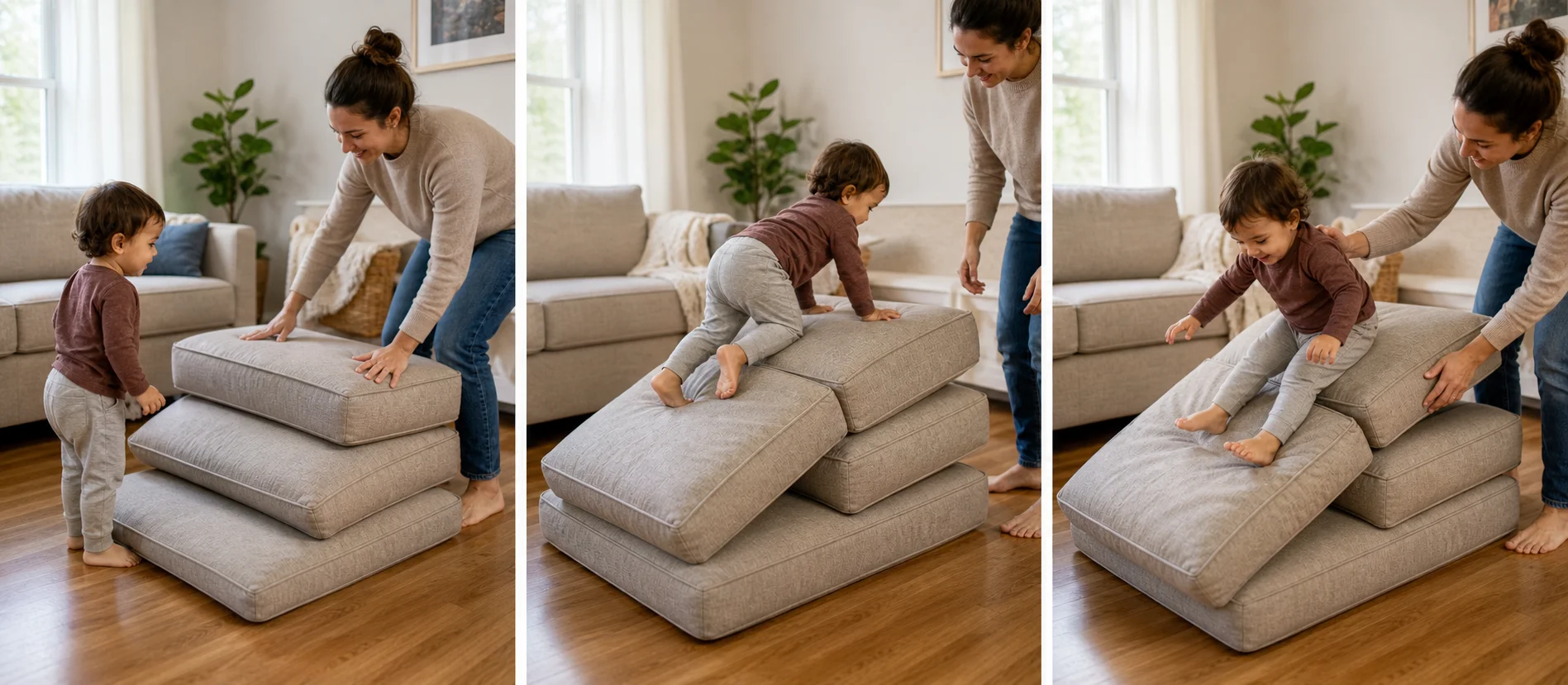
Turn two or three couch cushions into a low indoor climbing challenge. Your toddler climbs to the top and back down, using arms, legs, balance, and coordination on each trip.

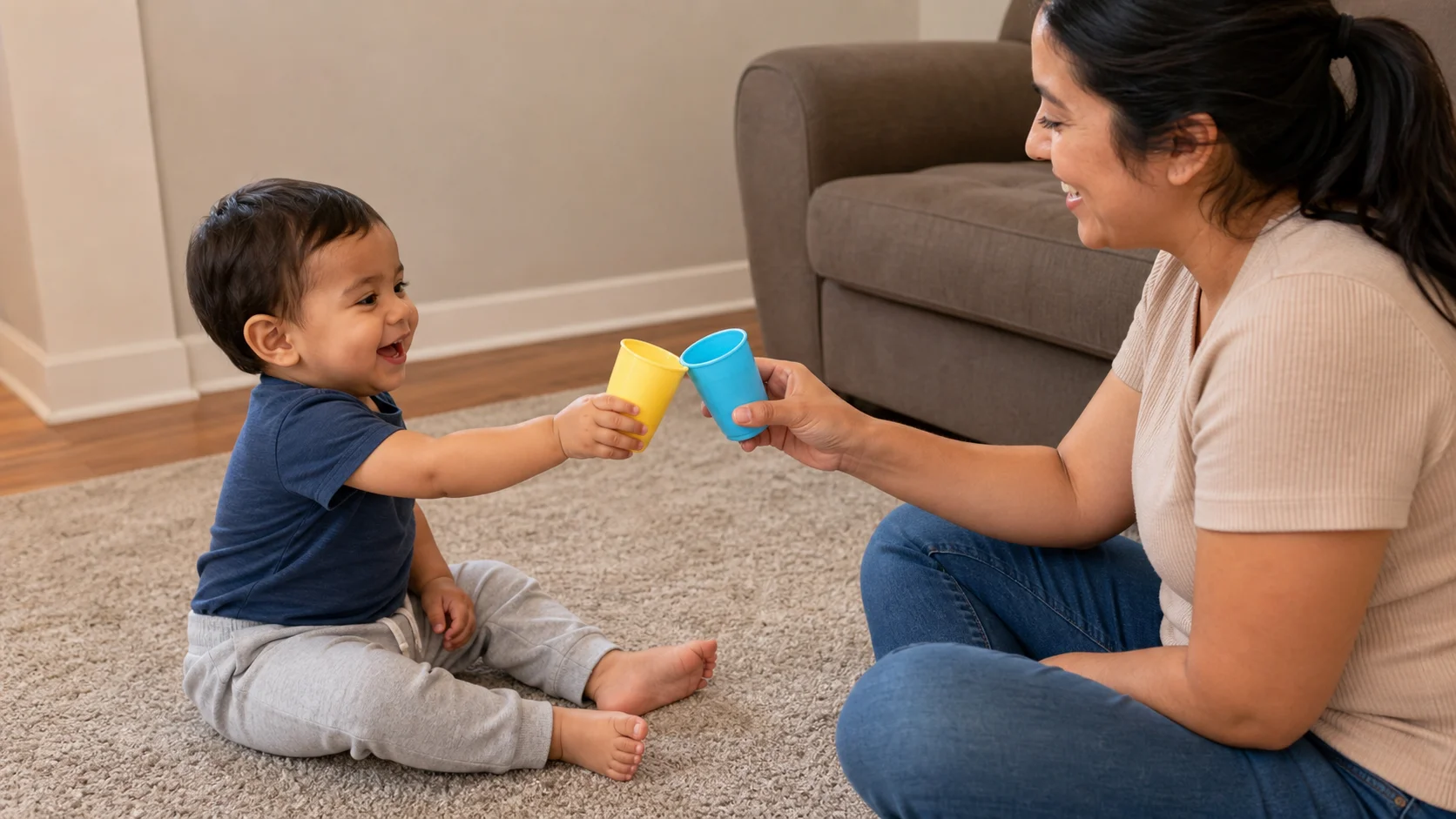
Turn two lightweight cups into a tiny back-and-forth game with an instant clank. Your toddler copies your cheers tap, pauses, and starts the next turn, practicing imitation and turn-taking.


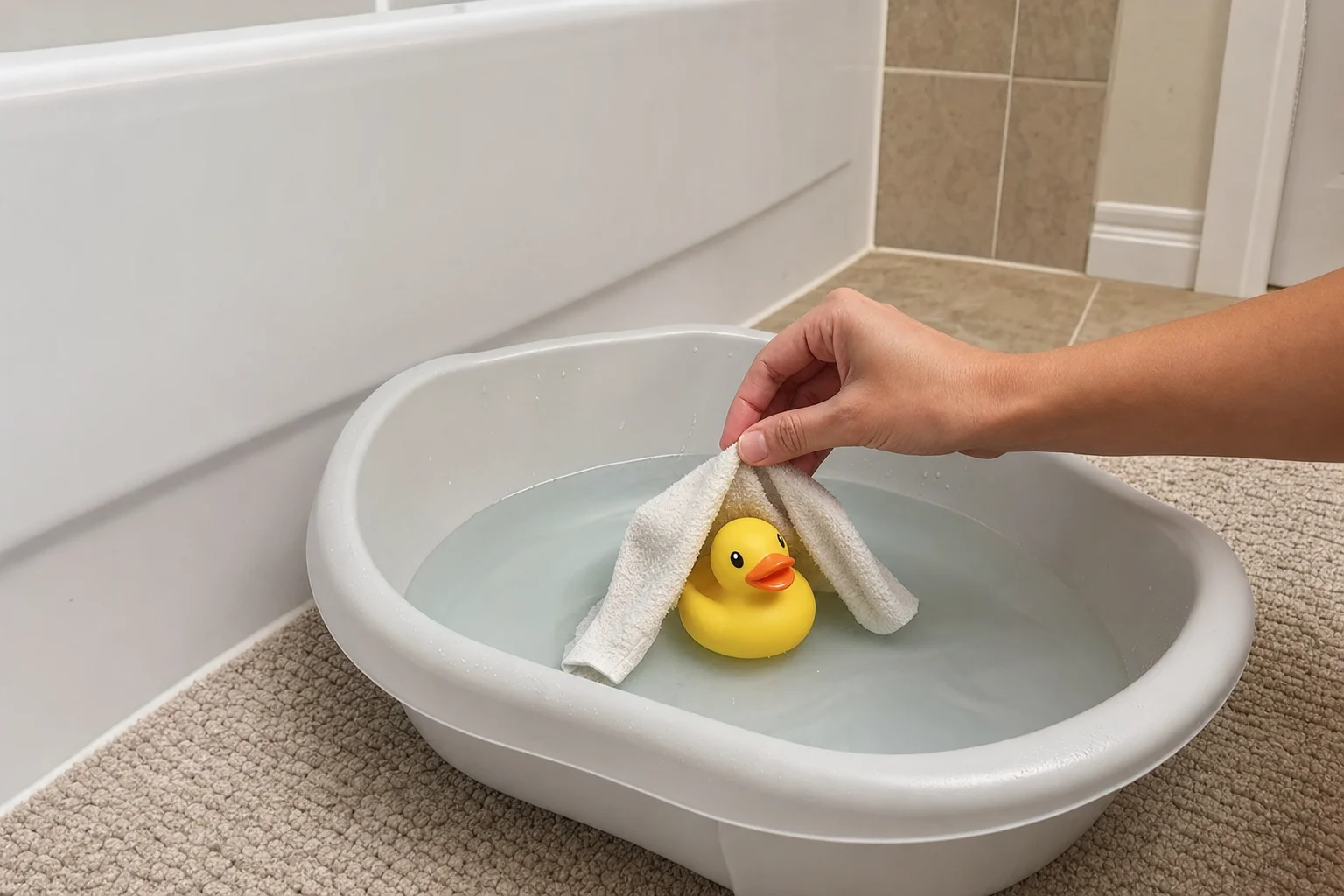
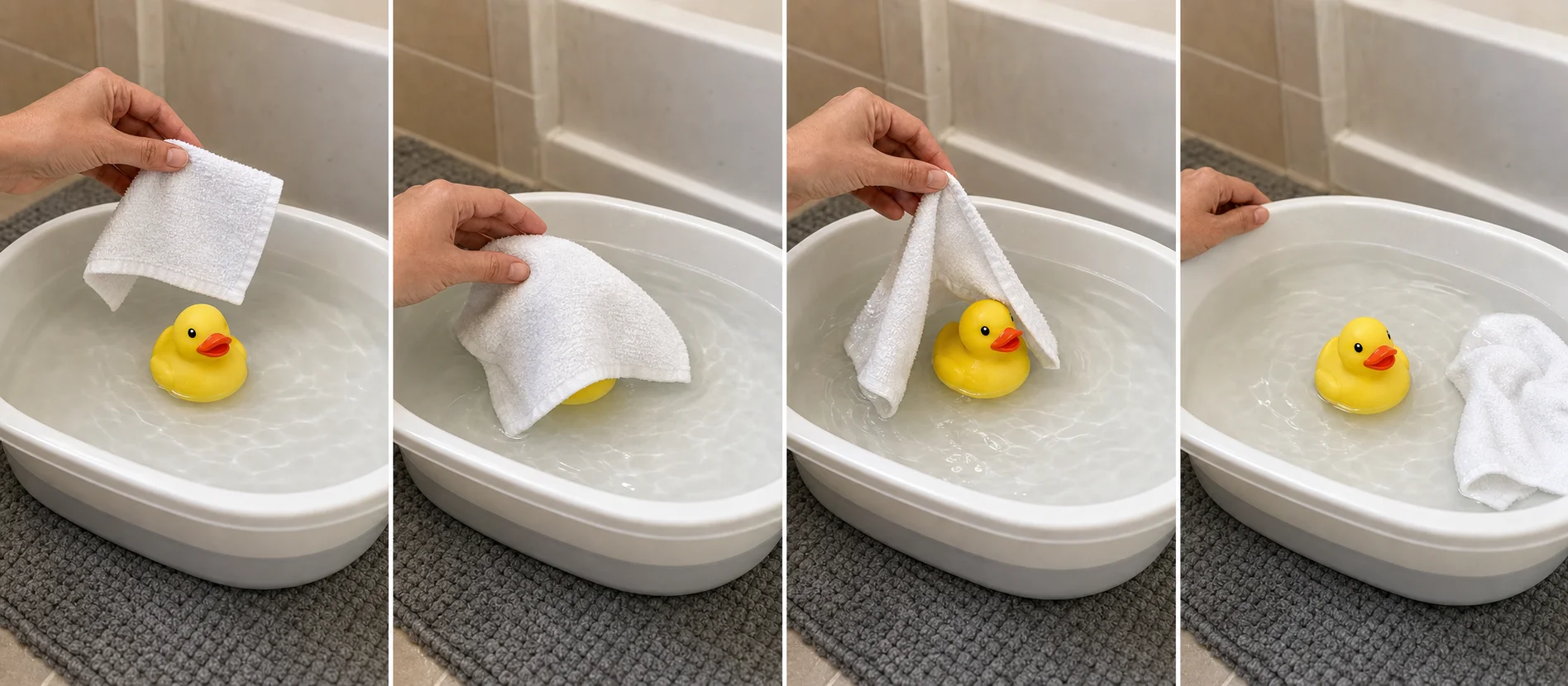
Turn one bath toy and a washcloth into a quick hide-and-find game. Your toddler pulls the cloth away or reaches underneath to reveal the duck, practicing memory and search skills with each repeat.

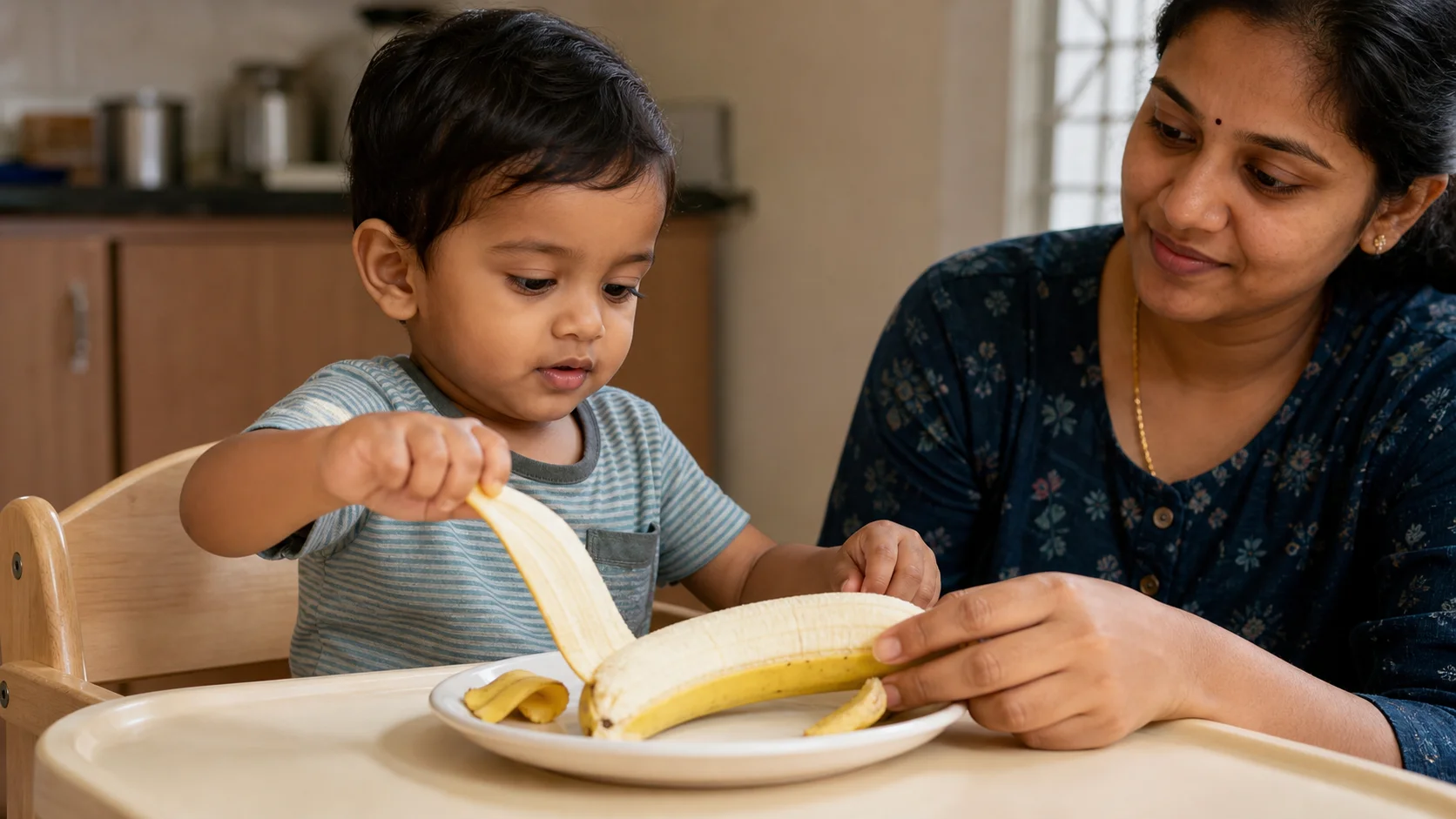
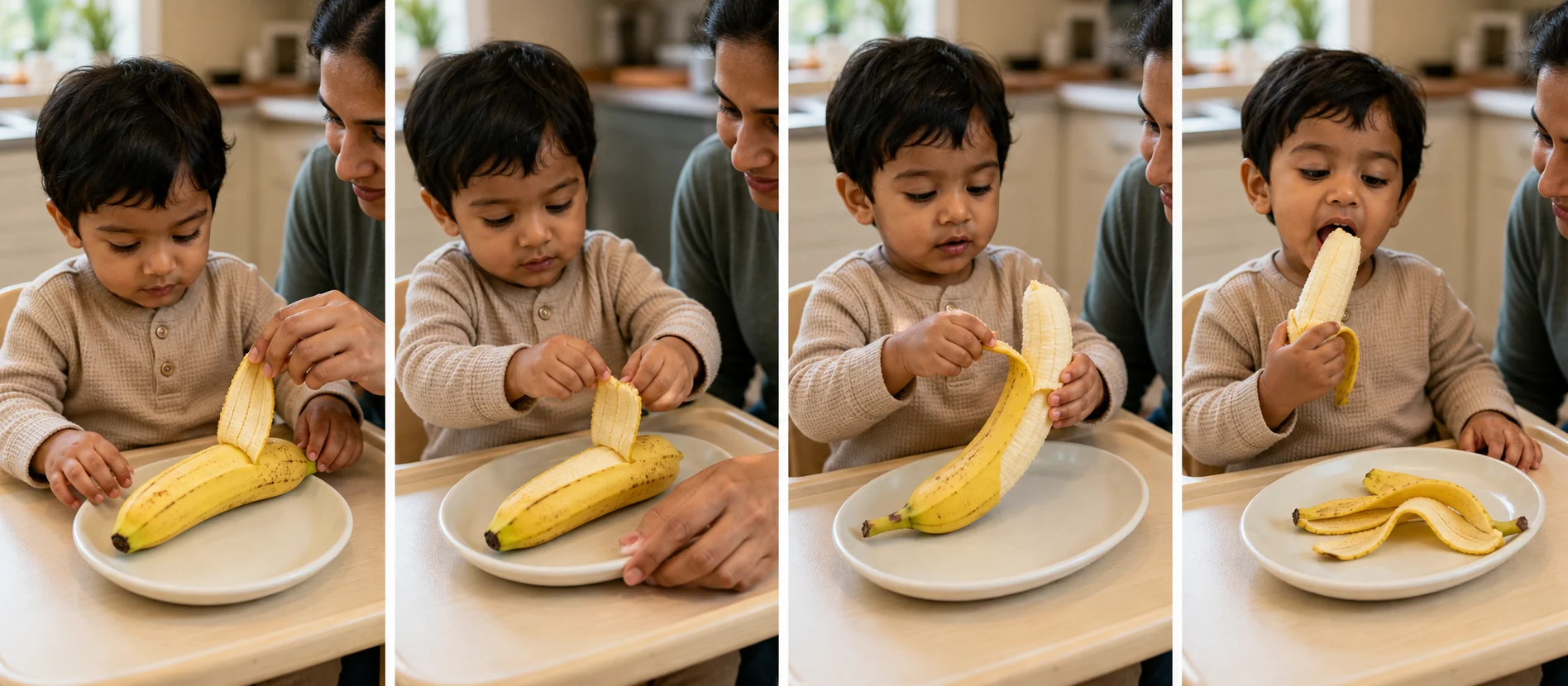
Turn snack prep into a real helping job. Your toddler pinches a started banana or clementine peel, pulls each section away, and practices finger strength and two-hand coordination while getting the fruit ready to eat.

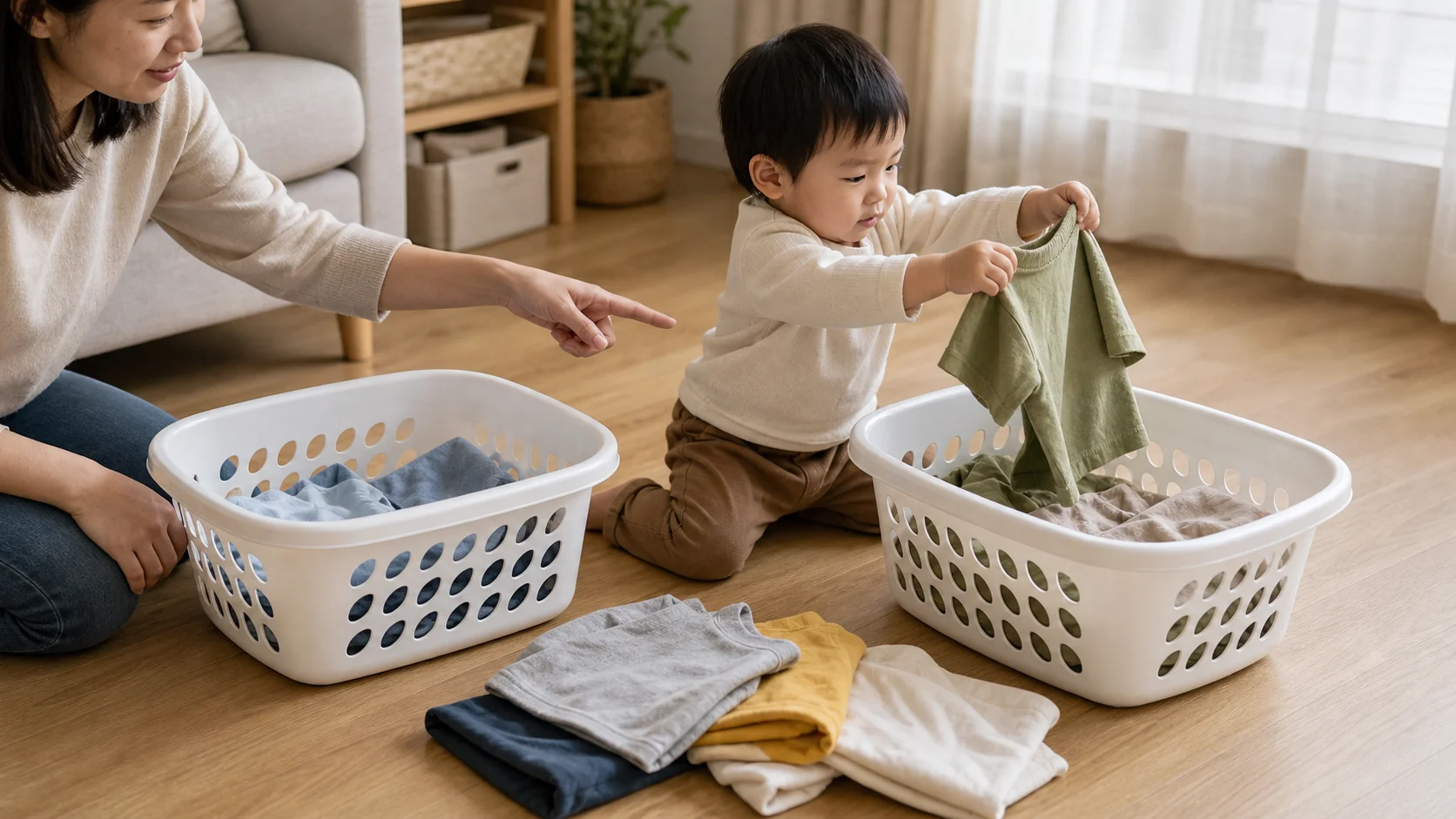
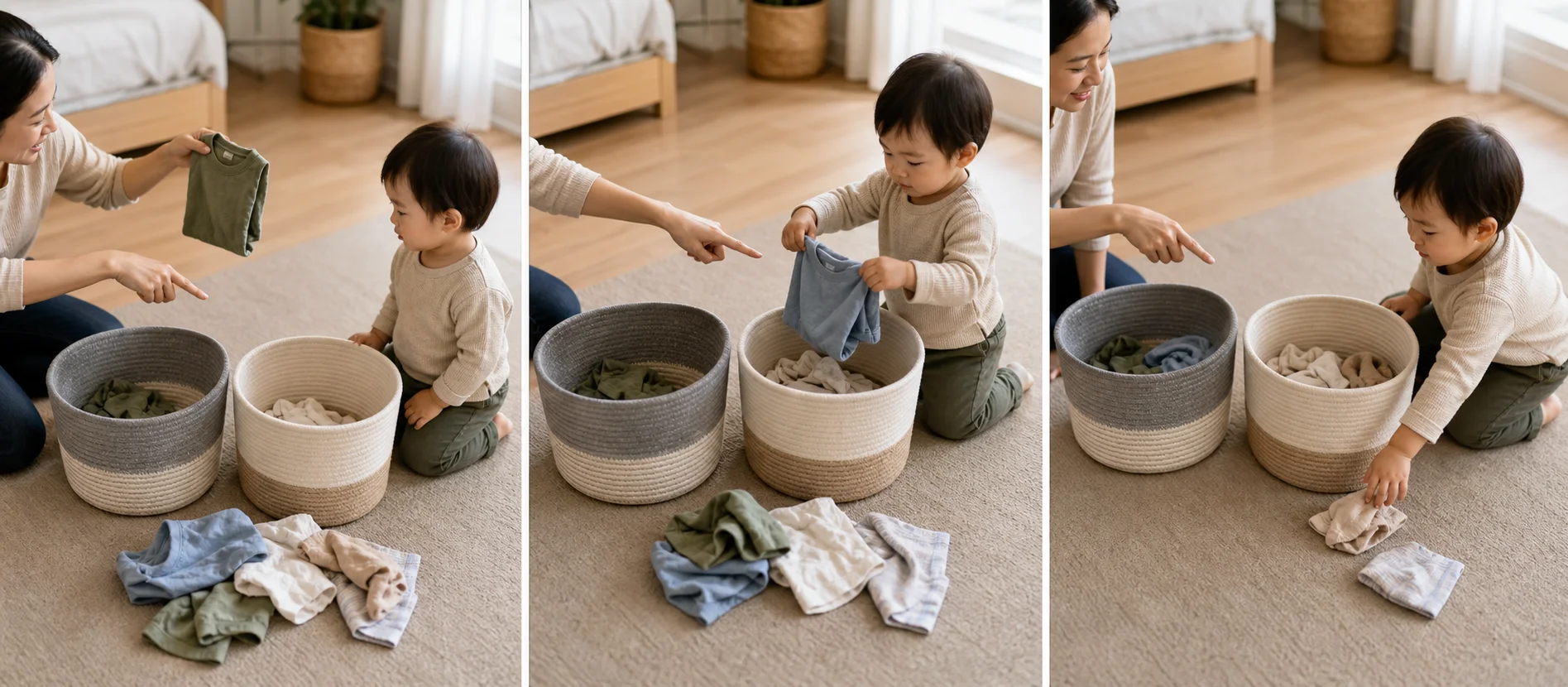
Give your toddler a real laundry job with two baskets and a few clean clothes. They match each item to its owner's basket, carry it over, and drop it in, practicing sorting by one clear rule.


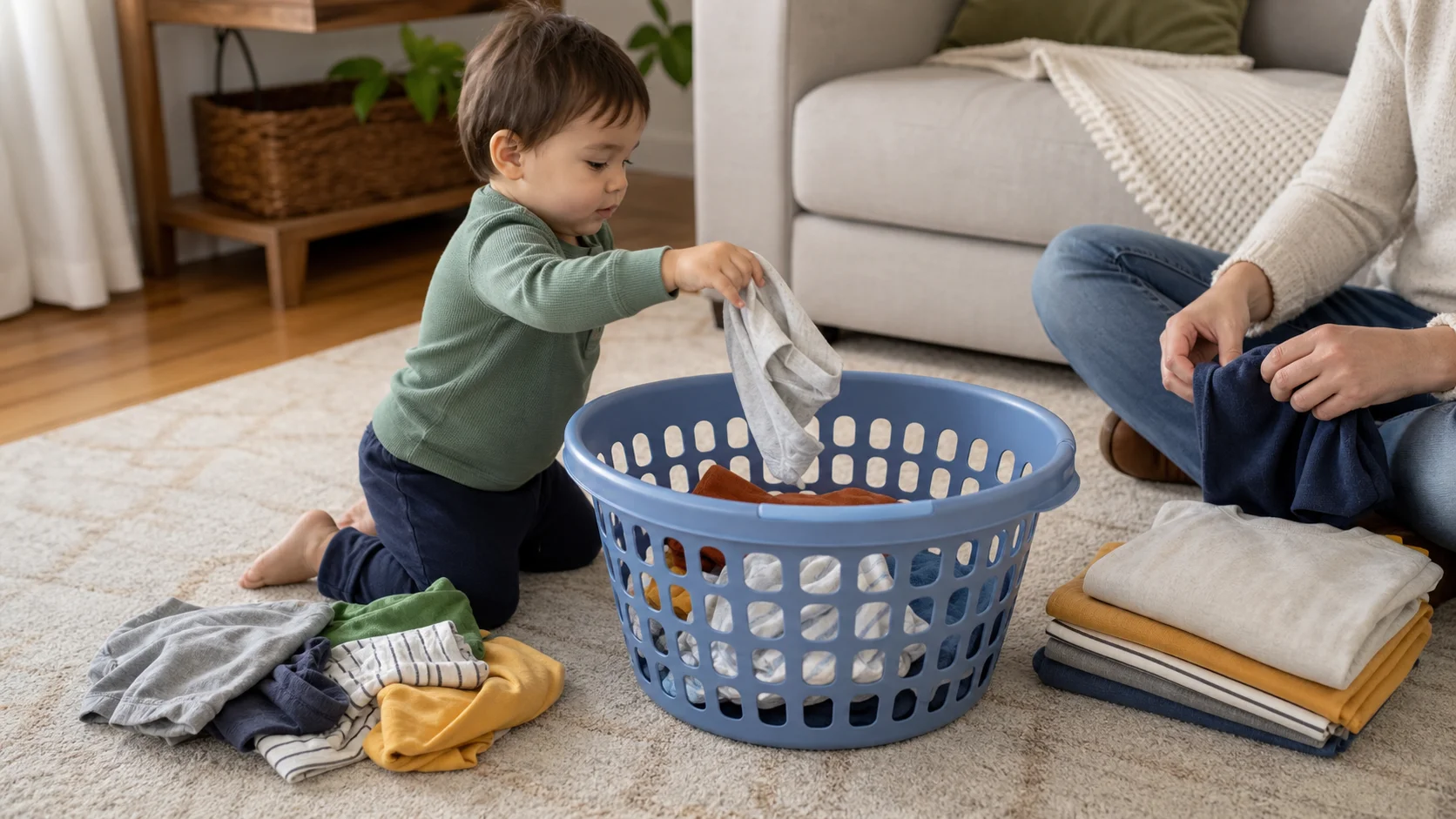
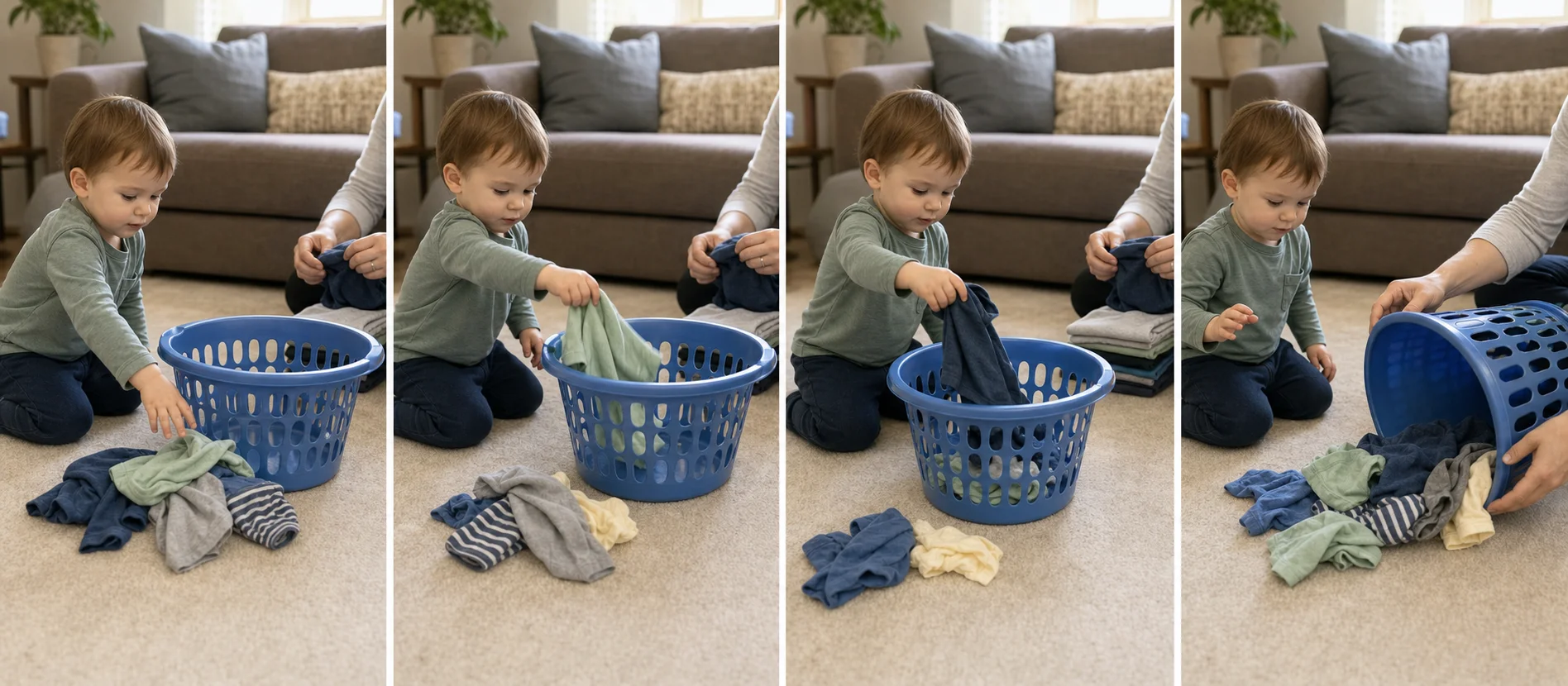
Laundry Basket Fill-and-Empty is a laundry basket activity for toddlers that helps children fill, empty, and reset through a clear, repeatable play loop.


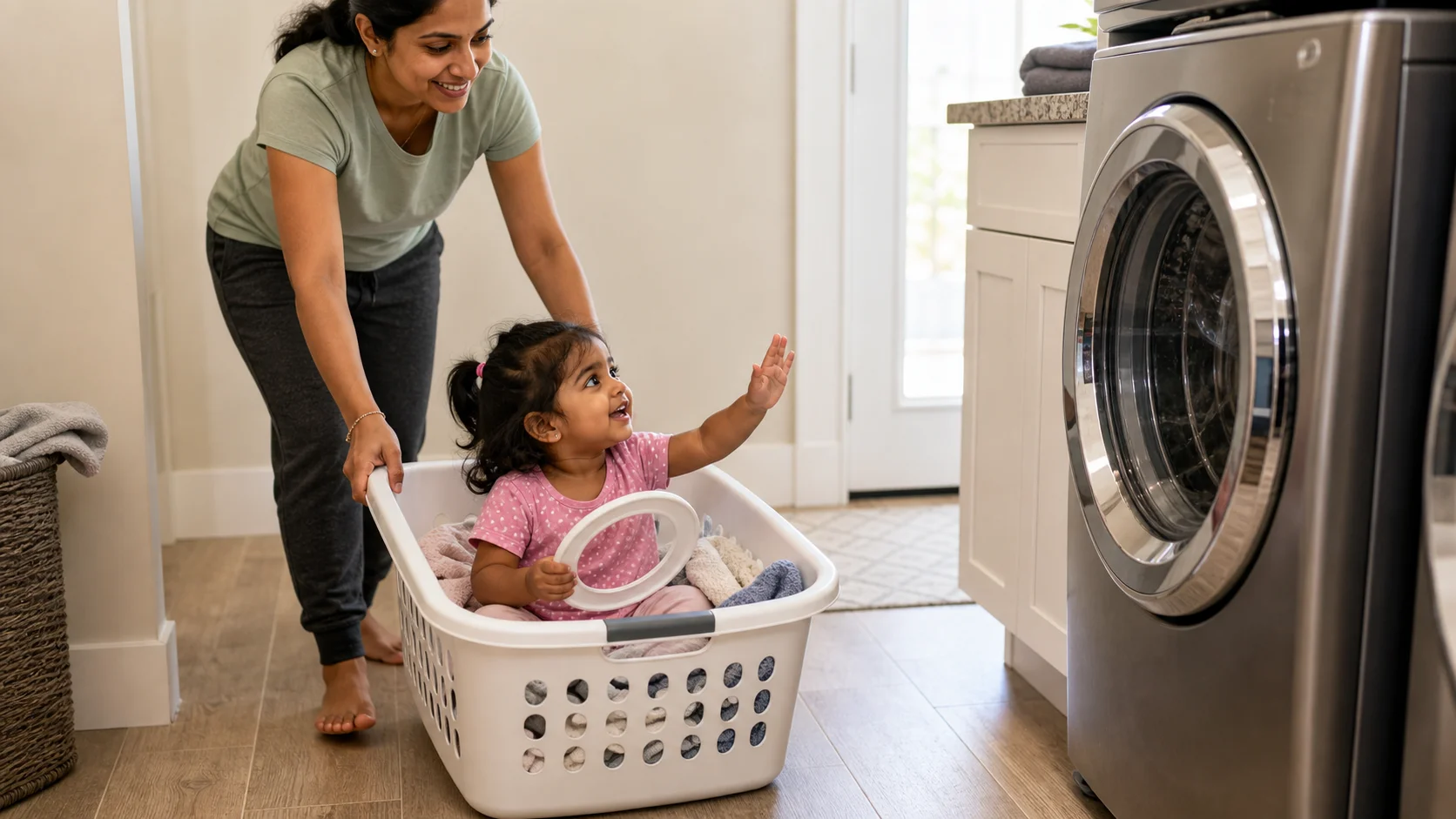
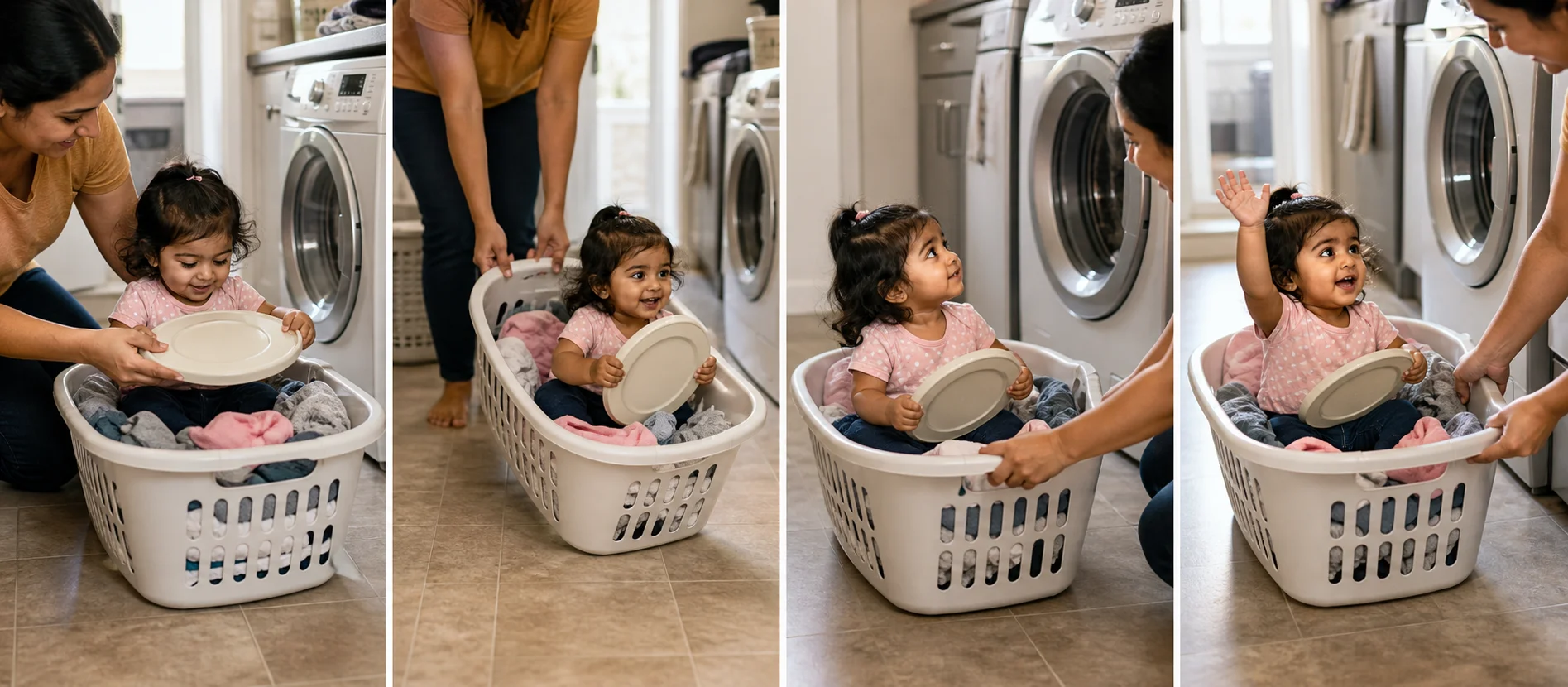
Turn the trip to and from the washer into a communication game. You move and stop the basket; your child signals go, more, fast, or slow before the ride resumes.


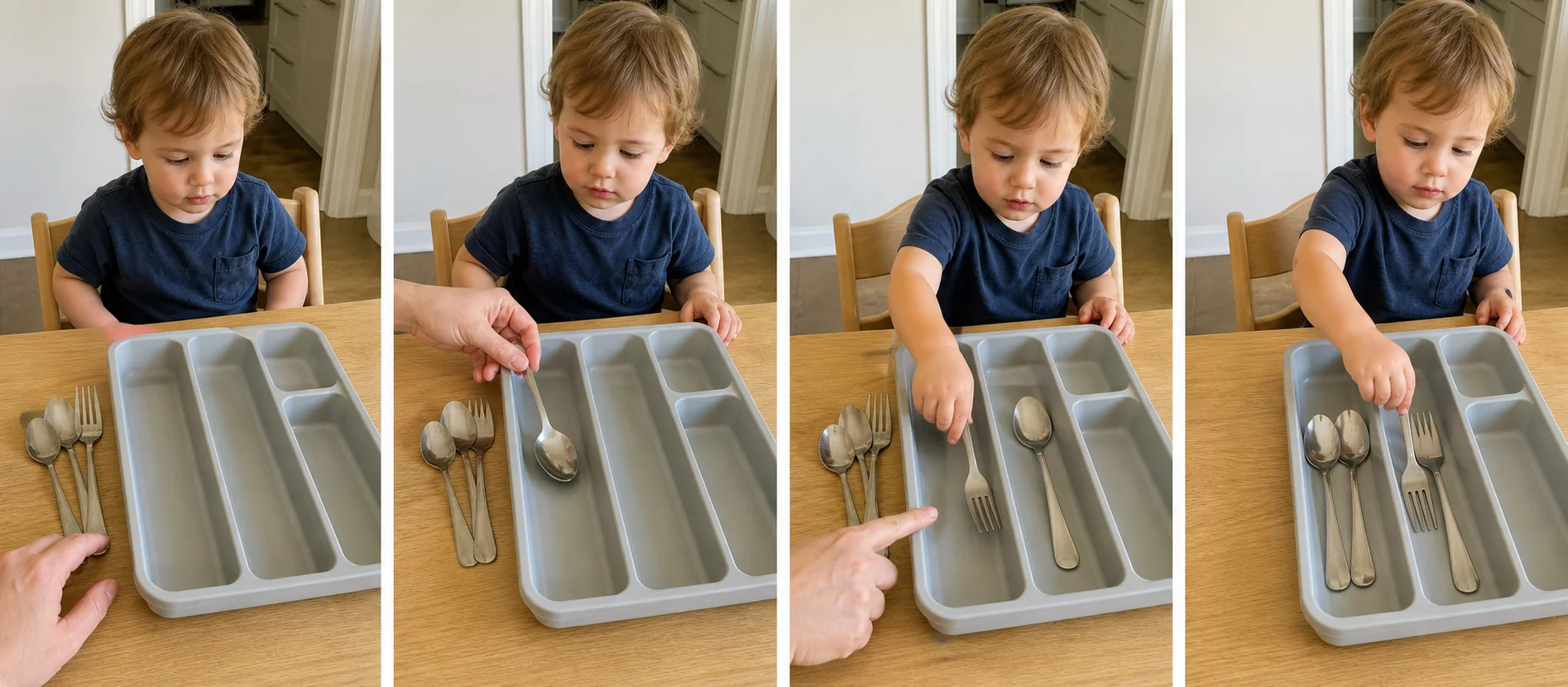
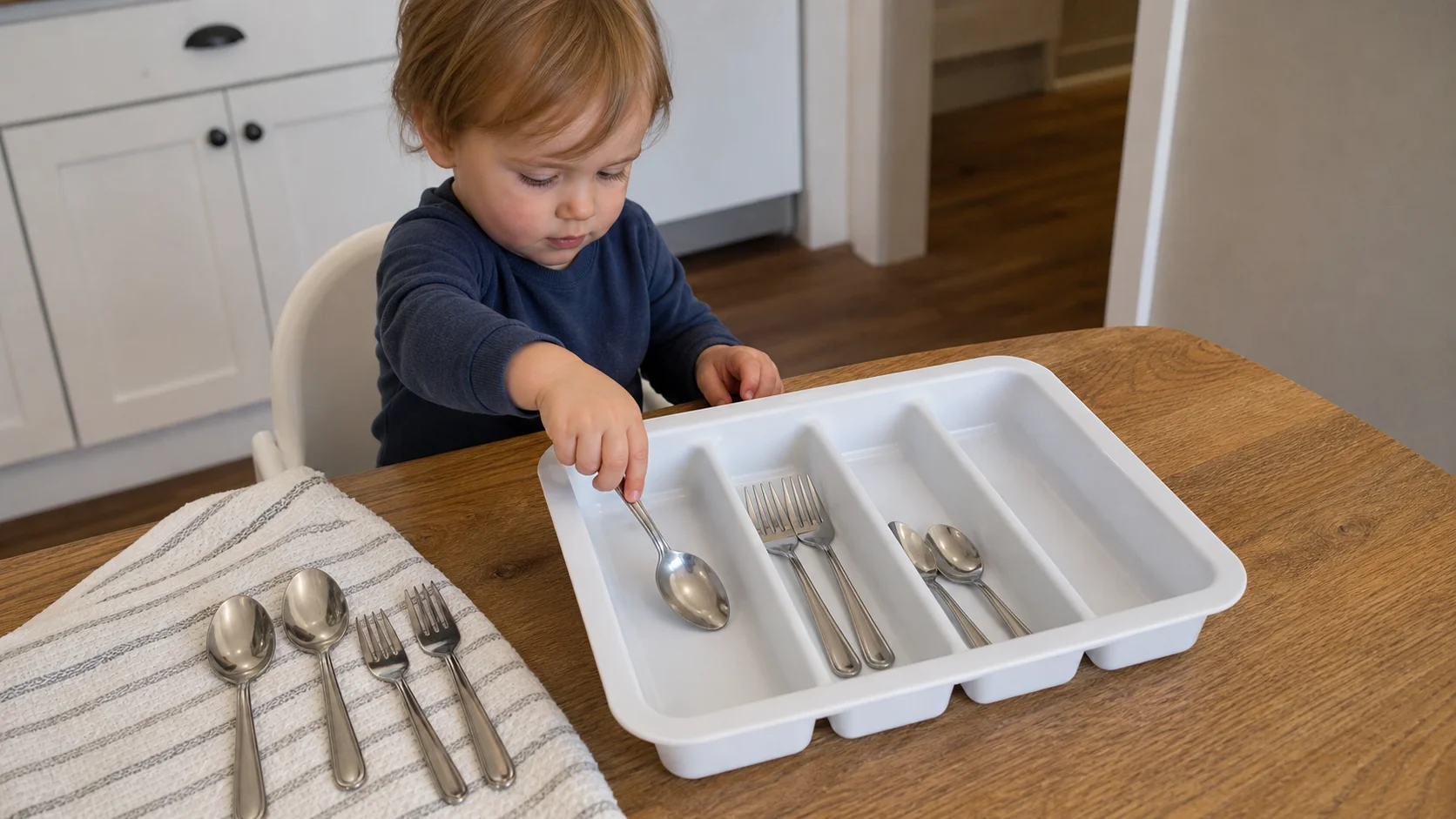
Turn a few clean spoons and forks into a toddler-sized kitchen job with a fast, visible finish. Your child compares each utensil, places it with the same type in a silverware tray, and practices sorting familiar objects by kind.


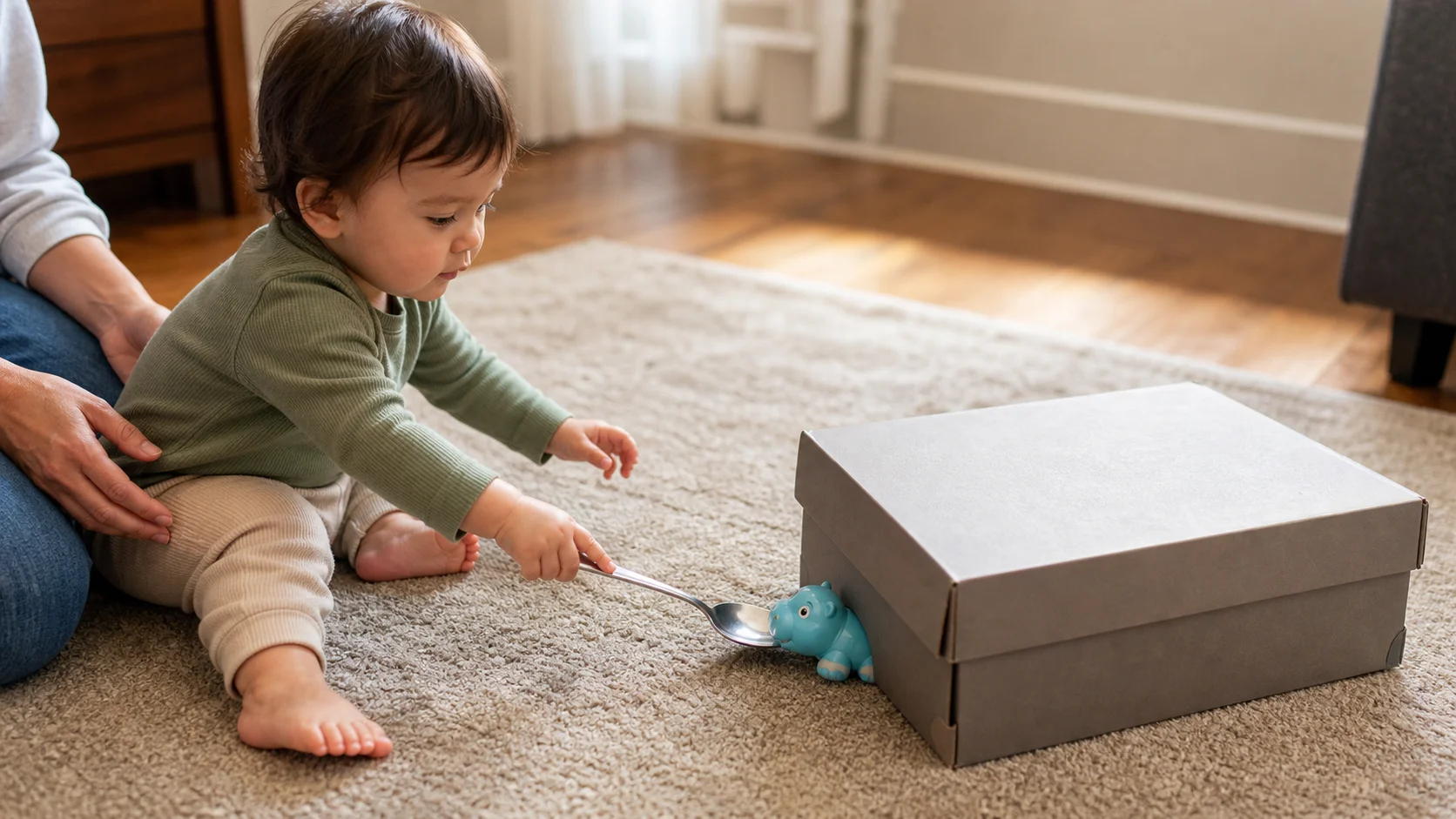
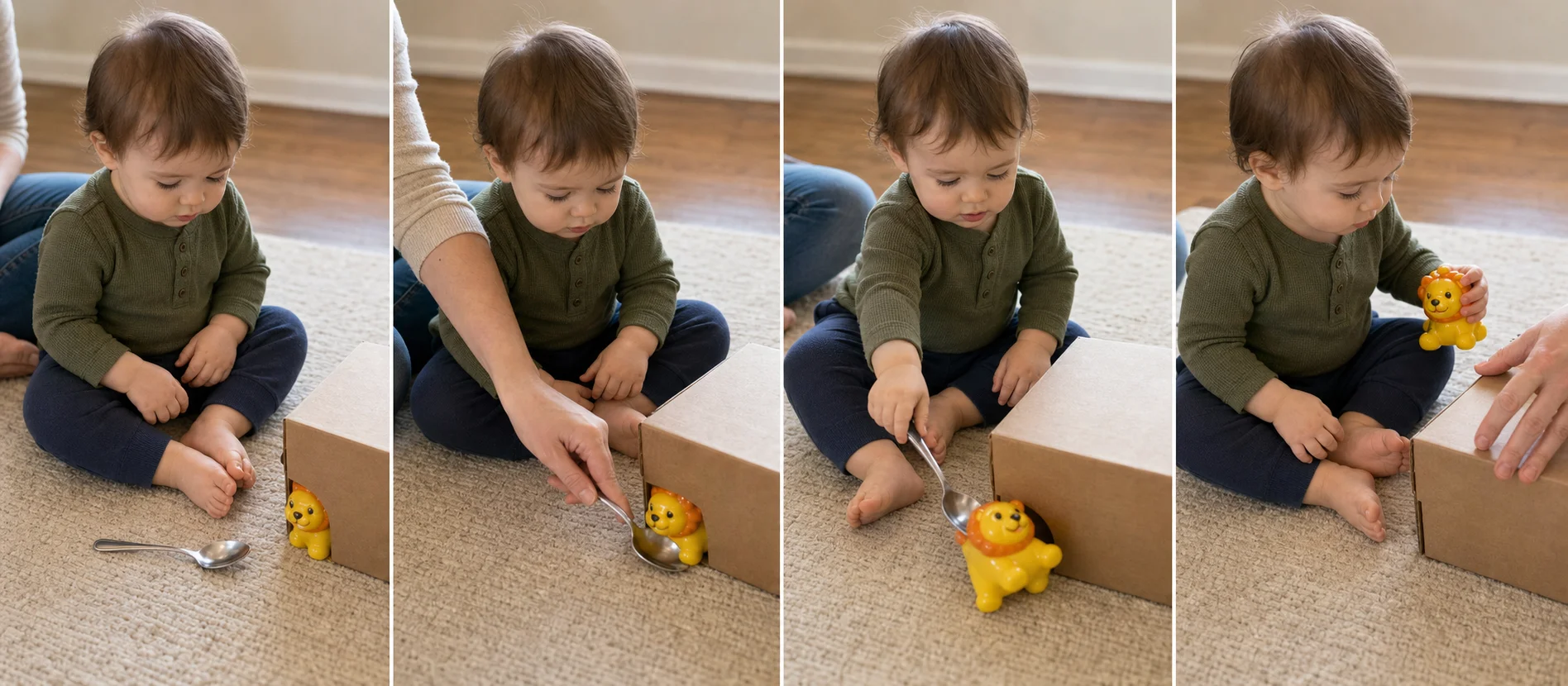
Rescue a favorite toy placed just beyond reach by using a spoon to pull it closer. The simple tool challenge builds problem-solving, hand-eye coordination, and cause-and-effect understanding.


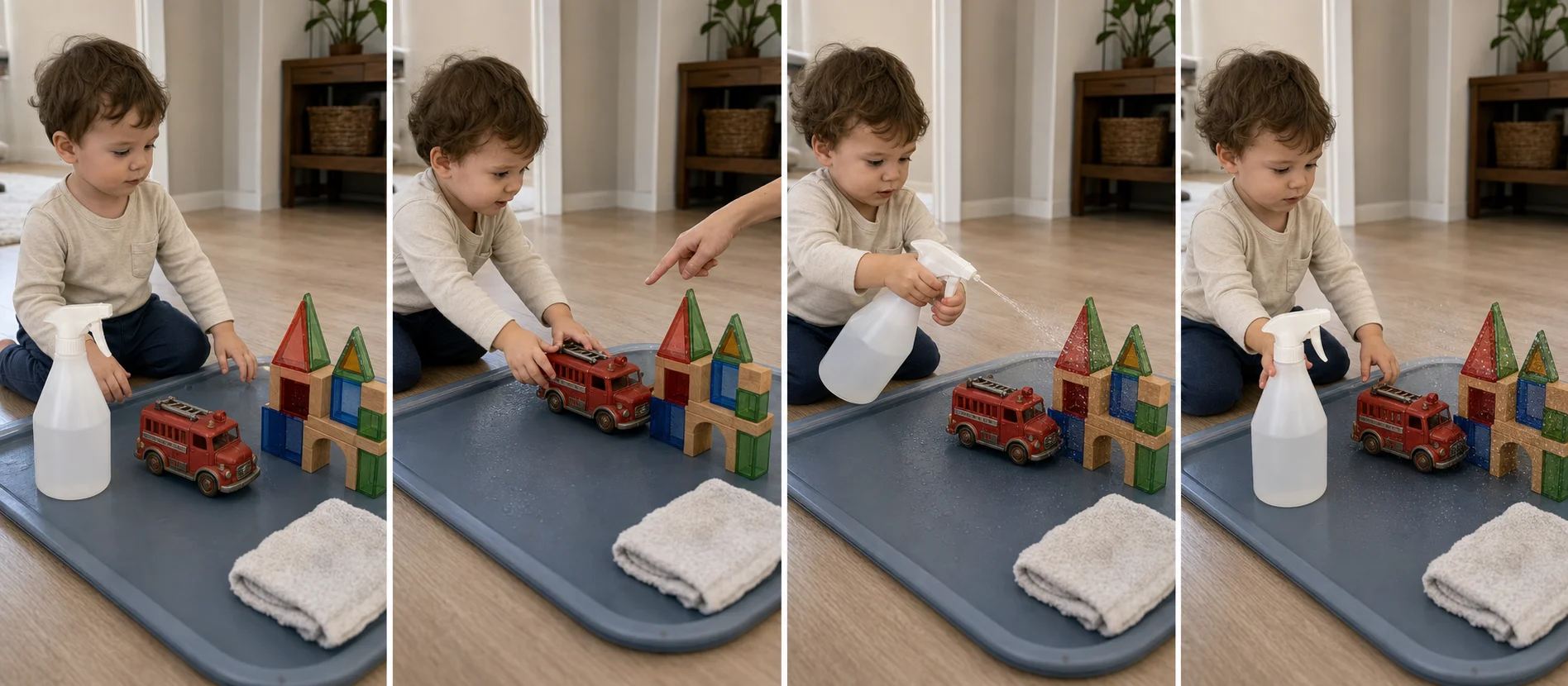
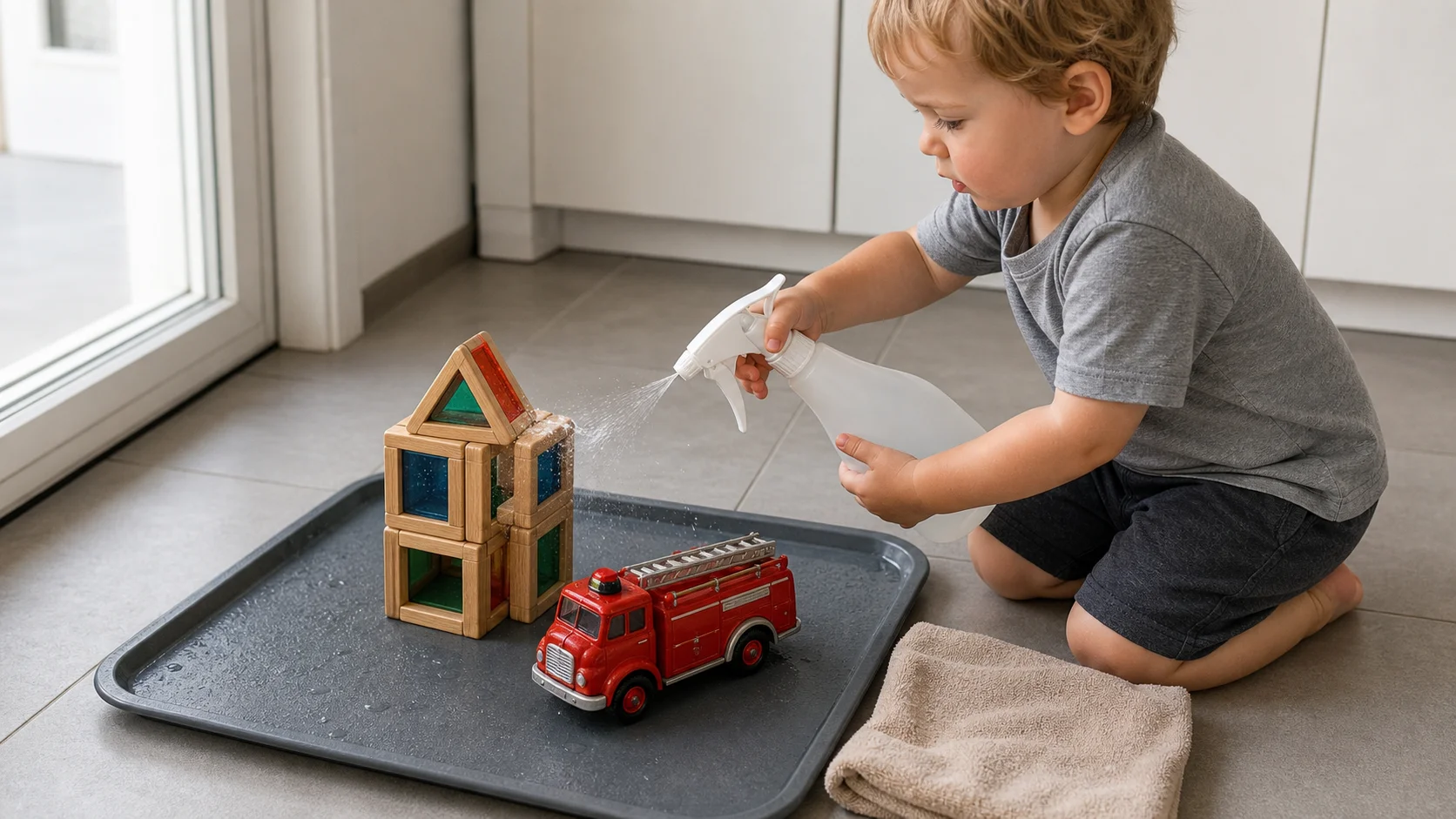
Turn water play into a quick pretend rescue. Your child drives a toy firetruck to a building, sprays the pretend fire, and watches the water put it out.