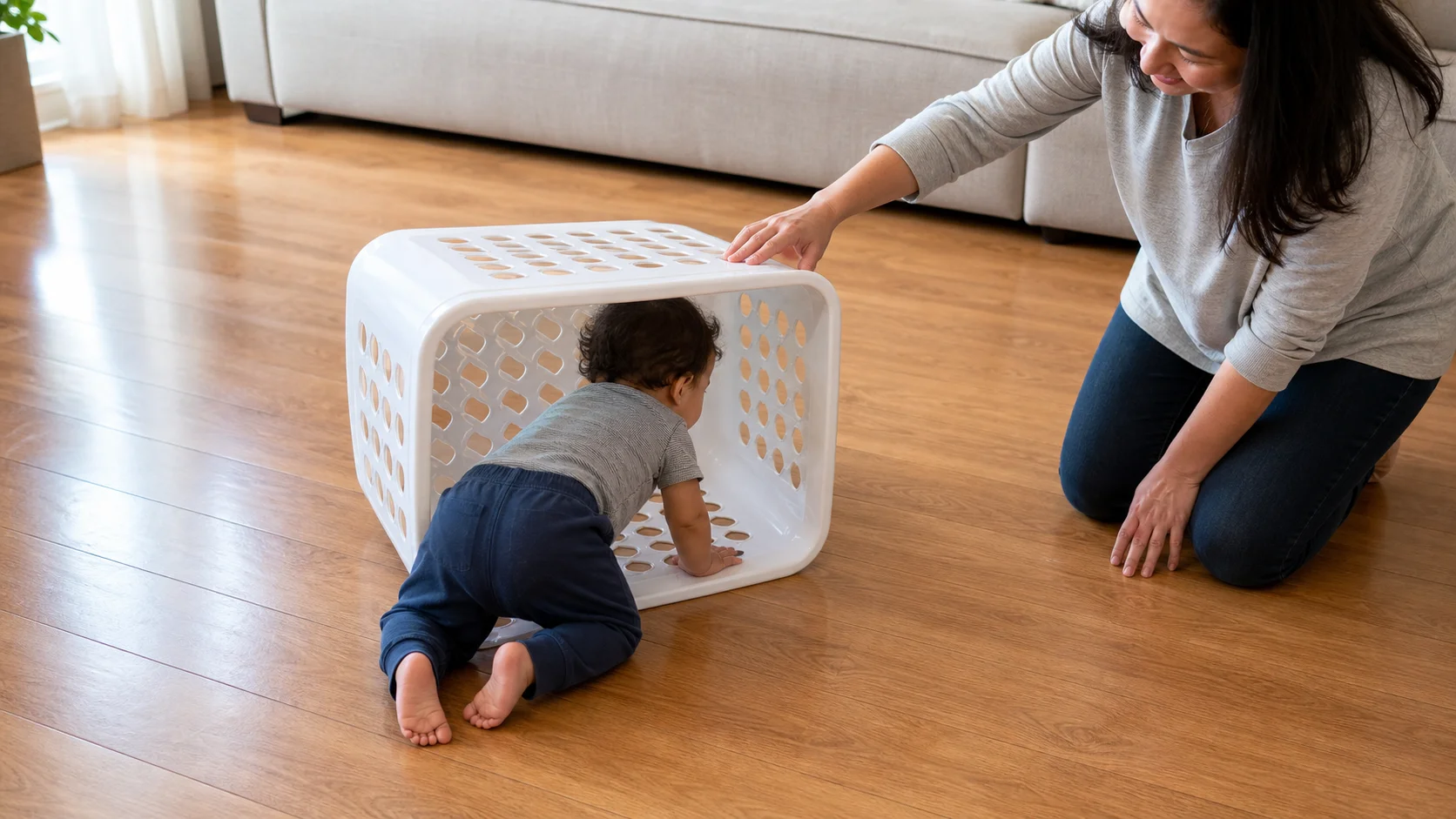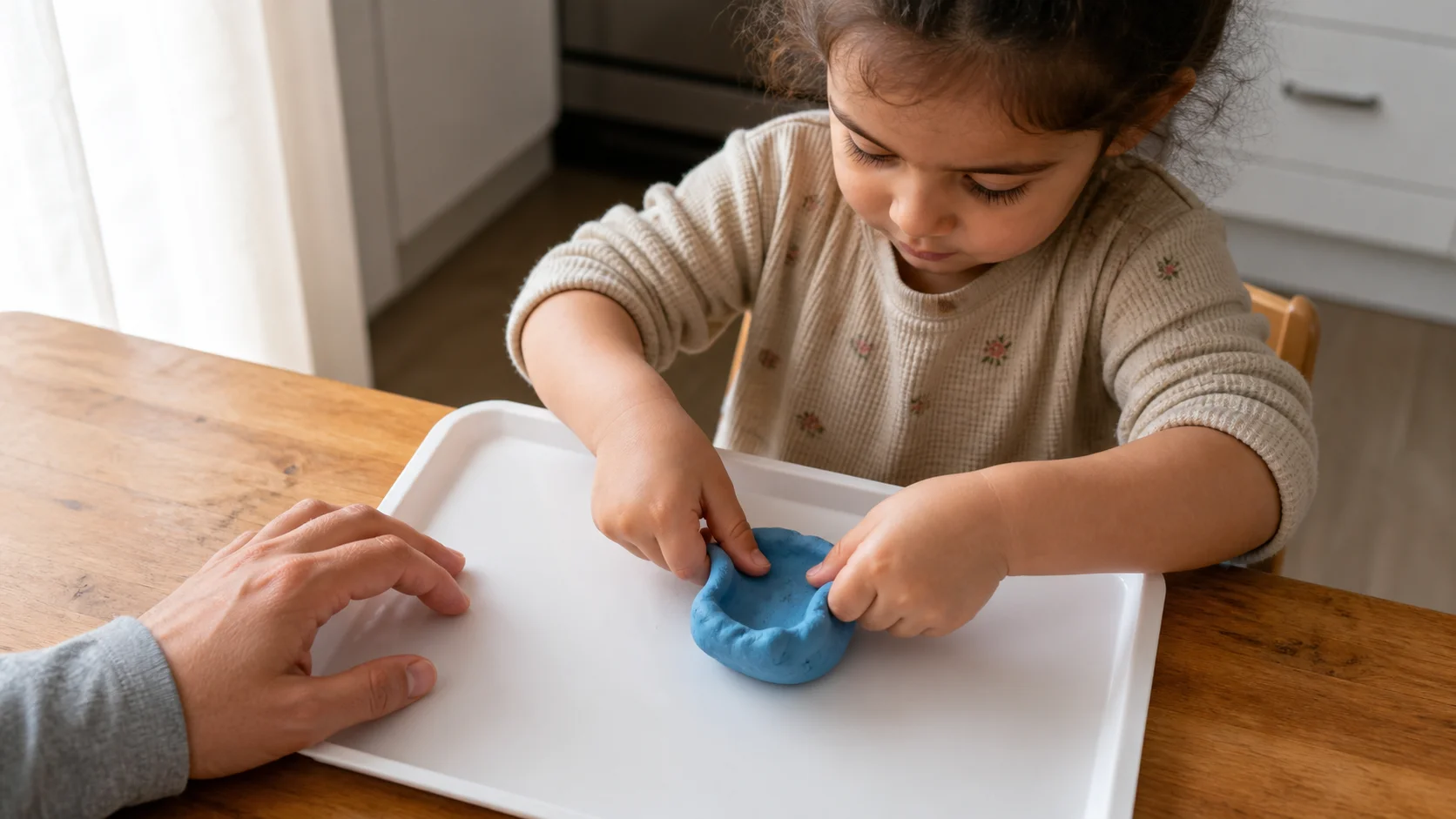
Toddler pressing thumbs into a dough ball on a tray while a grown-up steadies the setup.
Fine motorDevelopmental supportOT-adjacent supportSqueeze And ReleaseIndoor

Dough Pinch Pot.

Make a small lumpy pot from one dough ball, squash it flat, and build it again.

Play time
5-10+ min
Age
2-4 years
Energy
Low
Mess
Low
Effort
Low
Where
Indoor
Start here

The recipe.

Low parent effort
4 things

What you need

  • 1 tray, placemat, or wipe-clean table spot
  • 1 palm-size ball of non-toxic dough or clay
  • 1 adult
  • 1 child
5 min minimum

Setup

Then start the loop
Step 01
Clear a low table, tray, placemat, or wipe-clean table spot where both hands can work.
Step 02
Put 1 palm-size ball of non-toxic dough or clay in the middle of the play space.
Step 03
Sit beside your child with your hands visible so you can steady, turn, or reroll the dough if it cracks or collapses.
Step 04
Keep extra dough or clay out of sight so your child has one clear thing to shape.
"Thumbs in."
The loop

How play unfolds.

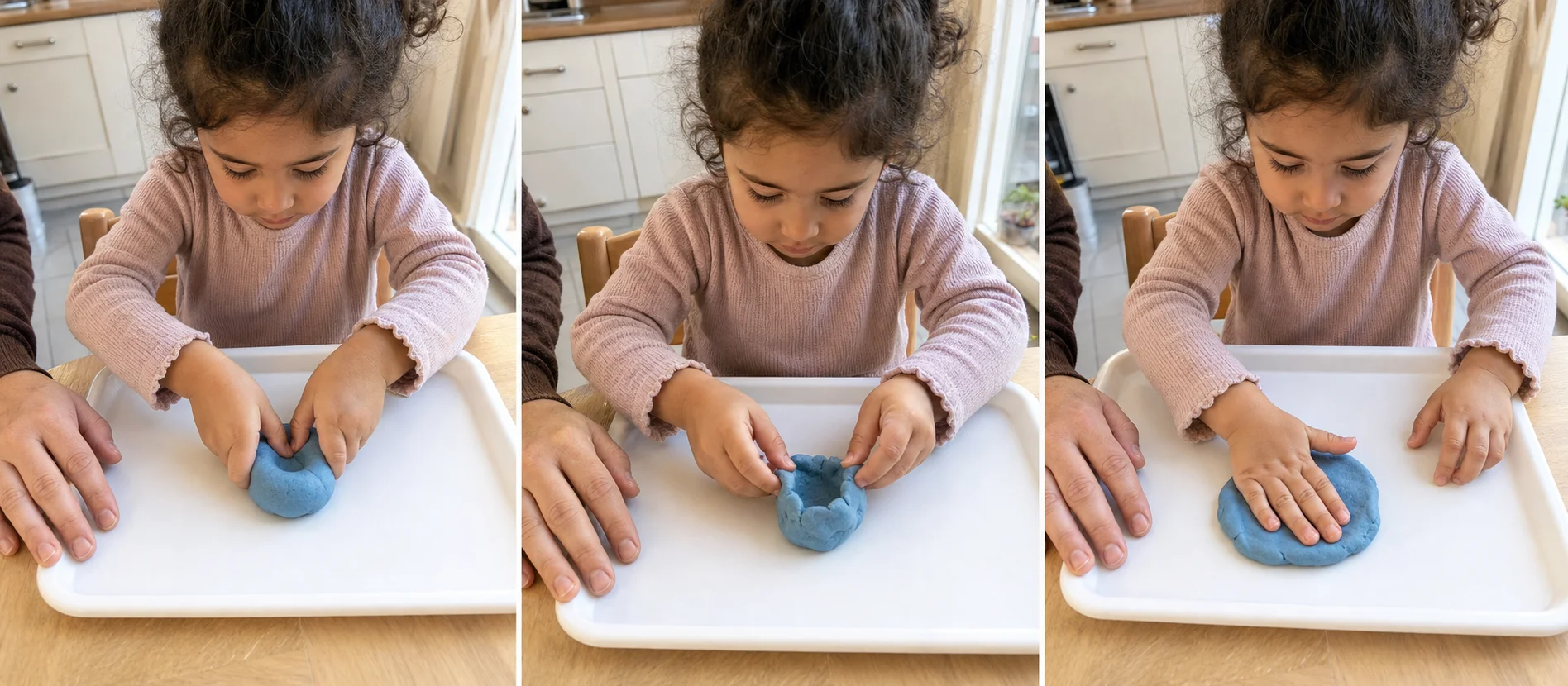
Three-panel sequence showing a child pressing a thumb cave, pinching the rim, and squashing the dough flat to restart.
  1. 01
    Roll the dough into one ball and say, "Thumbs make a cave."
  2. 02
    Help your child press both thumbs into the middle.
  3. 03
    Pinch one spot on the rim, turn the dough, and say, "Pinch, turn."
  4. 04
    Keep pinching until there is a center dent and at least one raised edge. A lumpy pot counts.
  5. 05
    Let your child hold or look at the pot, then say, "Squash," flatten it, and roll it into a ball for another round.

Safety Check

  • Use non-toxic dough or clay and supervise closely, especially if your child may mouth materials.
  • Stop or switch activities if the dough is mouthed, thrown, smeared off the tray, or takes over the play.
  • Do not use dry, crumbly clay that breaks into small loose bits.
  • Keep the goal to a soft lumpy pot, not neat pottery.
Supporting the play

What to say in the moment

Match what you say to what you see.

Prompt ladder
Level 1 (Start)
Press both thumbs into the dough to make the first cave.
Level 2 (Keep going)
Pinch the edge once, then turn the dough a little.
Level 3 (Stretch)
Keep pinching around the rim until the pot can sit.
Level 4 (Extend)
Squash it flat and rebuild the pot with a new rim.
If your child seems...
What you'd see
Focused
What to do
Say
"Keep your fingers on the rim."
Add
Count one pinch as it happens.
Extend
Let your child squash the pot and start the next ball.

Make it easier

Younger end
  • -Start with a slightly flattened ball so the thumb press opens the center faster.
  • -Turn the dough after each squeeze so your child can focus on one pinch at a time.
  • -Accept one thumb cave and one raised edge as a complete pot.

Make it harder

Older end
  • +Ask your child to roll the next ball without adult reshaping.
  • +Let your child pinch all the way around before the squash reset.
  • +Make two pots in a row and compare which one has the taller rim.

If it's not working

If you see
If child ignores it
Make one tiny pot yourself, set it in front of your child, and invite only the thumb press: "Your thumb makes the cave."
If you see
If child misuses it
If the dough is thrown, mouthed, or smeared off the tray, pause the turn, bring the dough back to the middle, and restart with one adult-modeled press.
If you see
If child gets frustrated
Squash the pot together and switch to the easiest win: press two thumbs in, admire the dent, then stop or try one pinch.
Skill spotlight
Squeeze Control

Thumb-and-finger squeeze control

This helps your child use thumb-and-finger pressure while both hands work around one object, which matters for dressing, eating tools, early drawing, and other small hand jobs.

  • Pressing thumbs into dough gives your child clear feedback about how much pressure changes the shape.
  • The pinch, turn, pinch loop lets both hands work around one small object.
  • The squash reset makes collapsed pots part of the game instead of a mistake.
  • One dough ball on one surface keeps tactile play contained for children who need texture limits.
Real-world transfer
  • Using fingers and thumbs for small self-care steps
  • Holding and shaping soft foods or safe tools
  • Pressing, pinching, and turning objects without rushing
  • Finishing one small job before resetting for another

Parent questions