
Classroom observation
30 Plain-English Toddler Observation Examples Teachers Can Write in Under a Minute
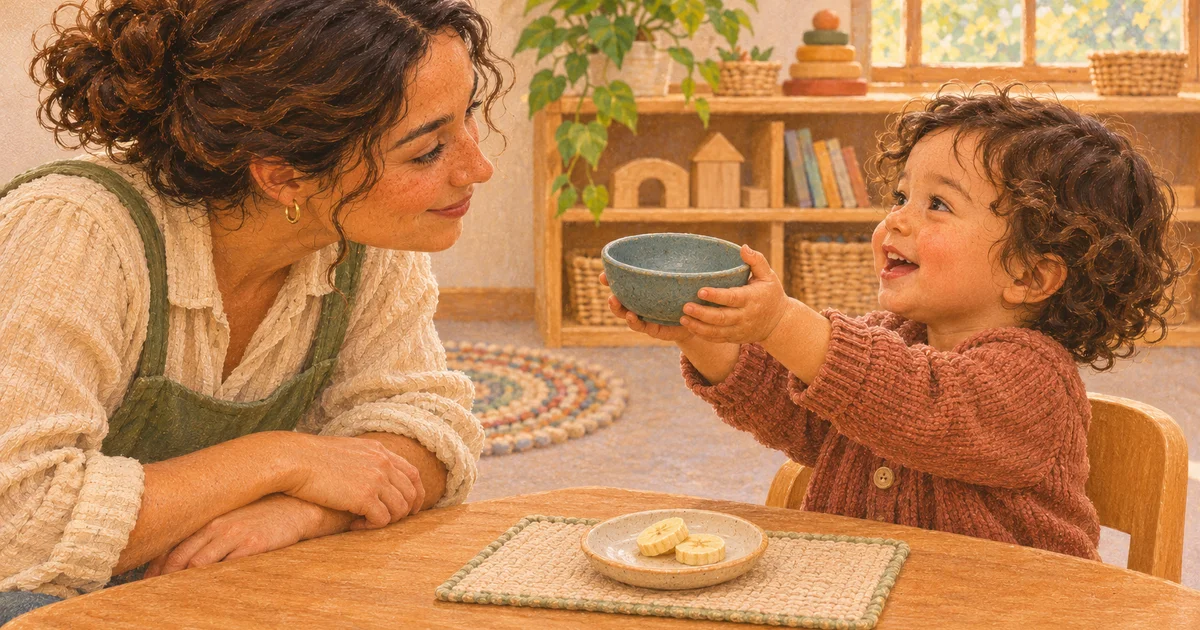
A toddler classroom moves at full speed. In the span of three minutes, one child is dumping a bin of Duplos, another is climbing onto the sensory table, and someone just bit a classmate over a blue shovel. Between diaper changes, snack cleanup, and potty runs, sitting down to write academic notes about "parallel play" and "emerging autonomy" is simply not going to happen.
Even better: you don't need textbook phrasing—and a 13-month-old learning to walk looks completely different from a 34-month-old learning to use the potty. That is why this guide splits examples cleanly into Younger Toddlers (12–24 months) and Older Toddlers (24–36 months).
What is an objective toddler observation? An objective toddler observation is a short, fact-only record of what a toddler actually did, pointed to, or said—without labeling their behavior, guessing their feelings, or using clinical jargon. A concrete note gives your teaching team and the child’s family a record of what happened.
Whether you are onboarding a brand-new assistant or catching up on portfolios during nap time, stick to one rule:
The Camera & Microphone Rule: If a camera couldn't see it and a microphone couldn't record it, leave it out.
Every note below follows a quick three-part formula: Context (when or where) + Action (what their body or hands did) + Exact Words or Sounds (what they said, if anything).
Objective vs. Subjective: The 5-Second Fix
Toddler classrooms are full of big feelings and fast hands, which makes it easy to lean on shorthand labels ("tantrum," "biter," "stubborn"). Here is how to trade labels and textbook jargon for clean facts:
| Skip This (Jargon or Labels) | Write This Instead (Plain Facts) | Why It Works Better |
|---|---|---|
| "Leo had a huge tantrum because he was stubborn at cleanup." | "When asked to put the cars in the bin, Leo lay face down on the rug, kicked both legs, and yelled, 'No!' for two minutes." | Shows what triggered the moment and how long it lasted. |
| "Maya engaged in parallel play at the sensory table." | "Maya stood elbow-to-elbow with Noah at the rice tub, scooping into her own cup without talking or trading tools." | Any parent or new hire pictures the exact social stage immediately. |
| "Sam was aggressive and selfish with the trucks." | "When Ava reached for the blue dump truck, Sam pulled it to his chest and bit Ava's left forearm." | Gives clear, neutral facts for incident reports and parent calls. |
| "Chloe refused to use the potty and was scared." | "When asked if she wanted to sit on the toilet, Chloe stepped backward, shook her head, and said, 'Diaper.'" | Records communication without guessing fear or defiance. |
| "Eli tried to build a tower and got mad." | "Eli stacked three foam blocks; when the fourth fell, he swept the blocks off the table and cried." | Captures the exact skill level and frustration point. |
Part 1: 15 Younger Toddler Observation Examples (12–24 Months)
Swap in [Name], jot down the date, and finish any of these in 20 to 45 seconds—built for newly walking, exploring one-year-olds.
Social, Emotions & Playing Side-by-Side
- Playing next to a peer: [Name] sat beside [Peer] on the rug for four minutes, pushing a wooden train back and forth on the carpet while [Peer] stacked rings six inches away.
- Checking in for comfort: After tripping on the foam mat, [Name] cried, walked straight to Ms. [Teacher], leaned against her knees for 30 seconds, and then walked back to the ball bin.
- Showing an item to an adult: [Name] picked up a yellow rubber duck from the basket, walked over to Ms. [Teacher], held it up to her face, and smiled while saying, "Duck!"
First Words, Gestures & Understanding
- Pointing with a word: Standing by the window, [Name] pointed one finger toward the parking lot, looked back at Ms. [Teacher], and said, "Bus!"
- Combining two words: At snack, [Name] held up their empty plastic bowl toward Ms. [Teacher] and said, "More banana."
- Following a one-step direction: When Ms. [Teacher] held out her hand and said, "Bring me the red ball," [Name] walked across the rug, picked up the red ball, and placed it in her palm.
Exploring, Imitating & Problem-Solving
- Feeding a baby doll: In the house area, [Name] picked up a plastic spoon, held it to a baby doll's mouth twice, and made a smacking sound.
- Matching shapes: Sitting with the wooden shape sorter, [Name] turned the round peg twice until it slid through the circle hole, then clapped both hands.
- Dumping and refilling: [Name] tipped the tub of wooden blocks onto the carpet, picked up five blocks one by one, and dropped each back inside the tub.
Walking, Climbing & Hands
- Pushing and walking: [Name] pushed the wooden shopping cart across the length of the room, paused at the shelf, turned the cart around, and walked back without falling.
- Stacking blocks: Sitting at the low table, [Name] stacked three wooden cubes on top of each other without knocking them over.
- Early scribbling: Gripping a chunky crayon in their whole fist, [Name] moved their arm back and forth to make wide blue marks across the paper for two minutes.
Meals, Dressing & Daily Routines
- Using a spoon: At lunch, [Name] scooped oatmeal onto a plastic spoon and brought it to their mouth four times, spilling a few drops onto the bib.
- Drinking from an open cup: Holding the small plastic cup with both hands, [Name] brought the rim to their lips, took two sips of water, and set it flat on the table.
- Helping get dressed: Before going outside, when Ms. [Teacher] held out [Name]'s jacket, [Name] pushed their right arm straight into the sleeve without being guided.
Part 2: 15 Older Toddler Observation Examples (24–36 Months)
Built for fast-talking, boundary-testing two-year-olds stepping into pretend play, big movement, and potty learning.
Peer Play, Big Feelings & Tough Moments
- Simple turn-taking: At the slide outside, [Name] stood at the bottom of the ladder behind [Peer] and waited until [Peer] reached the bottom before climbing up.
- Grabbing or biting conflict: When [Peer] picked up the red fire truck beside [Name], [Name] yelled, "Mine!" and grabbed [Peer]'s shirt sleeve with both hands until Ms. [Teacher] stepped in.
- Calming with a cozy spot: After crying at drop-off, [Name] walked to the soft chair, hugged the stuffed bear for two minutes, wiped their eyes, and walked over to the playdough table.
Phrases, Sentences & Early Books
- Speaking in short sentences: Looking out the window during snack, [Name] pointed at the sky and told [Peer], "Big blue truck go fast!"
- Following a two-step direction: When told, "Throw your napkin in the trash and sit on the rug," [Name] dropped the napkin in the bin and sat cross-legged on a carpet square.
- Joining in a familiar book: While reading Brown Bear on the rug, [Name] turned the board-book pages one at a time and shouted, "Red bird!" right before Ms. [Teacher] finished the line.
Sorting, Counting & Pretend Play
- Sorting by color: At the sensory table, [Name] pulled all five yellow bears out of the bin and placed them in a row on the tray while leaving the red and blue bears in the tub.
- Early counting: [Name] pointed to three crackers on their napkin and counted aloud, "One, two, three!" before eating the first one.
- Multi-step pretend play: In dramatic play, [Name] put a plastic pot on the play stove, stirred it with a wooden spoon, scooped onto a plate, and handed it to [Peer] saying, "Hot soup—blow on it!"
Running, Jumping & Small-Hand Control
- Jumping with both feet: Outside on the grass, [Name] bent both knees, swung both arms, and jumped forward off the sidewalk curb with both feet leaving the ground at the same time.
- Kicking a ball: Standing on the turf, [Name] walked up to a stationary rubber ball and kicked it forward about six feet with their right foot without losing balance.
- Stringing large beads: Sitting at the art table, [Name] held a stiff shoelace in one hand and pushed four large wooden beads onto the string one by one.
Potty Learning, Self-Help & Transitions
- Potty learning communication: During block play, [Name] grabbed the front of their shorts, ran to Ms. [Teacher], and said, "Go potty!" before walking to the bathroom.
- Pulling up clothes: After using the bathroom, [Name] hooked both thumbs into the waistband of their elastic shorts and pulled them all the way up without help.
- Putting away toys at transitions: When the cleanup song started, [Name] carried three plastic animals from the rug to the shelf bin and put on their own slip-on shoes by the cubby.
(Have older twos getting ready to transition up? Check out our preschool observation examples for ages 3–4.)
10 Words to Cut From Toddler Observation Notes
Toddler rooms come with a whole dictionary of habits and labels that creep into notes without us noticing. Cut these ten on sight and replace them with what your eyes and ears picked up:
- Tantrum / Meltdown — Write what actually happened: dropped to the floor, cried for 90 seconds, or threw two blocks.
- Stubborn / Defiant — Describe the response to the prompt: shook head, crossed arms, ran away, or said "No!"
- Aggressive / Biter — Never label the child. Record the exact action and what happened five seconds before it.
- Selfish / Doesn't share — One- and two-year-olds are still learning ownership. Write: "held both trucks to chest and yelled 'Mine!'"
- Wild / Hyper — Show the movement: ran laps around the block rug, climbed onto the chair three times, or jumped off the step.
- Clingy — Note the contact: held onto Ms. Ana's leg for five minutes after drop-off before stepping toward the train track.
- Picky — State the facts at the table: "ate six pieces of banana and left the peas untouched."
- Cute / Sweet — Warm to read, zero developmental detail. Write the exact quote or gentle action instead.
- Scared / Shy — Describe the posture: stepped behind Dad's legs, hid face in shoulder, or watched peers from three feet away.
- Tried to / Wanted to — You can't see intentions. Write what their hands or feet actually did.
Why Plain English Matters Most During Biting & Tough-Moment Calls
No toddler teacher enjoys the 5:00 PM conversation about a bite, scratch, or push. Both families are already stressed—and judgmental words pour gasoline on the fire.
Compare how a parent hears these two updates at pickup:
- The label: "Liam was really aggressive today. He kept refusing to share and bit another kid."
- The plain facts: "At 10:20 in the block area, another child grabbed the fire truck right out of Liam's hands. Liam yelled 'No!' and bit the child's arm. Right now we're practicing handing Liam a backup truck and coaching him to say 'My turn' before hands go up."
The first update makes a parent feel like their two-year-old is being branded a "bad kid." The second update tells the parent the exact trigger (a toy grabbed out of his hands), shows that your team understands toddler development, and shares the exact coaching plan.
How to Capture Observations While Chasing Toddlers
Leaving a clipboard on a toddler-height shelf guarantees someone will either chew the corner or scribble across your attendance sheet. Try the Apron & Label-Strip Method:
- Wear your notes. Stick one strip of 5 or 6 blank return-address labels onto the front of your classroom apron (or keep a pocket-sized sticky pad tucked in your waistband) with a click pen clipped beside it.
- Jot a 5-second raw fragment right after the moment. Don't wait until the end of the day—you'll forget the exact two-word quote. Write:
Initials + Date + Raw Action/Quote(Example:JR 2/18 - window: pointed outside, "Big blue truck go fast!"). - Peel and stick at nap time. Once the room settles onto cots, peel the labels straight onto each child's portfolio sheet or snap one quick photo of the strip to type into your center's app in three minutes flat.
Toddlerhood is the fastest leap in early childhood—going from first wobbly steps to full pretend soup kitchens in twenty-four short months. Short, plain-English notes let you capture every bit of it without taking your eyes off the room.
Frequently Asked Questions
What is the difference between younger toddler and older toddler observations?
Younger toddler notes (12–24 months) usually capture early walking, pointing, one- and two-word phrases, spoon use, and playing side-by-side. Older toddler notes (24–36 months) focus more on short sentences, two-step directions, jumping, early pretend play, peer conflicts, and potty learning.
How should teachers document biting, pushing, or tantrums objectively?
Leave out labels like "aggressive," "biter," or "stubborn." Record the time, what happened right before, the exact physical action, and any words spoken—for example: "When a peer reached for the fire truck at 10:20, Sam yelled 'No!' and bit the child's left forearm."
How long should a toddler anecdotal note be?
One to three short sentences is ideal. Include the context (where and when), the specific action, and any exact words or sounds the child made. Short notes are faster to write in a busy room and easier for parents to read.
How do toddler teachers take notes without losing sight of the room?
Stick a strip of blank return-address labels on a classroom apron or keep a pocket sticky pad clipped to a pen. Jot the child's initials, date, and a quick raw quote in real time, then peel and transfer the notes into portfolios or your family app during nap time.