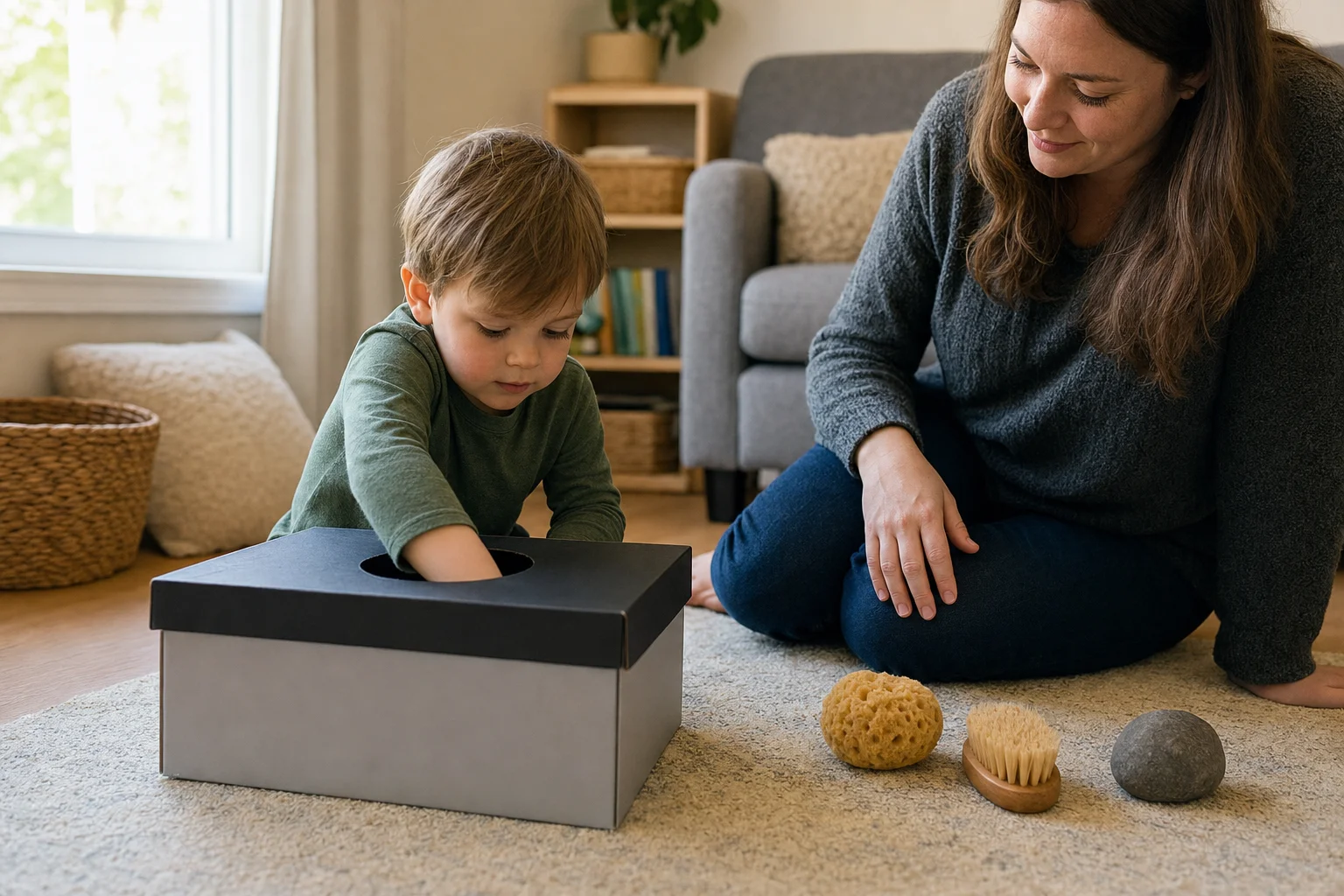
A young child reaches one hand into a shoe box with a hand hole while a grown-up sits nearby and a few familiar objects wait beside the box.
ThinkingSensory-friendly supportTest And CompareIndoor

Texture Floor Guess Box.

A textured shoe box and one hidden object turn touch exploration into a short, calm mystery game.

Play time
5-10+ min
Age
2-5 years
Energy
Low
Mess
Low
Effort
Low
Where
Indoor
Start here

The recipe.

Low parent effort
5 things

What you need

  • 1 shoe box with a lid
  • scissors or a craft knife for the grown-up to cut 1 hand hole
  • a few dry texture pieces for the floor of the box, such as carpet, sandpaper, tile, or wax paper
  • tape or glue to secure the texture pieces
  • 3 to 5 familiar safe objects large enough not to mouth, such as a spoon, block, toy car, or chunky puzzle piece
5 min minimum

Setup

Then start the loop
Step 01
On a table or the floor, cut one hand hole into the lid of the shoe box and close the lid so the objects inside stay hidden.
Step 02
Inside the box, tape or glue a few dry texture pieces onto the floor of the box so your child will feel them while reaching around.
Step 03
Put one familiar object into the box and place the box in front of your child with the hand hole facing up.
"Mystery box."
The loop

How play unfolds.

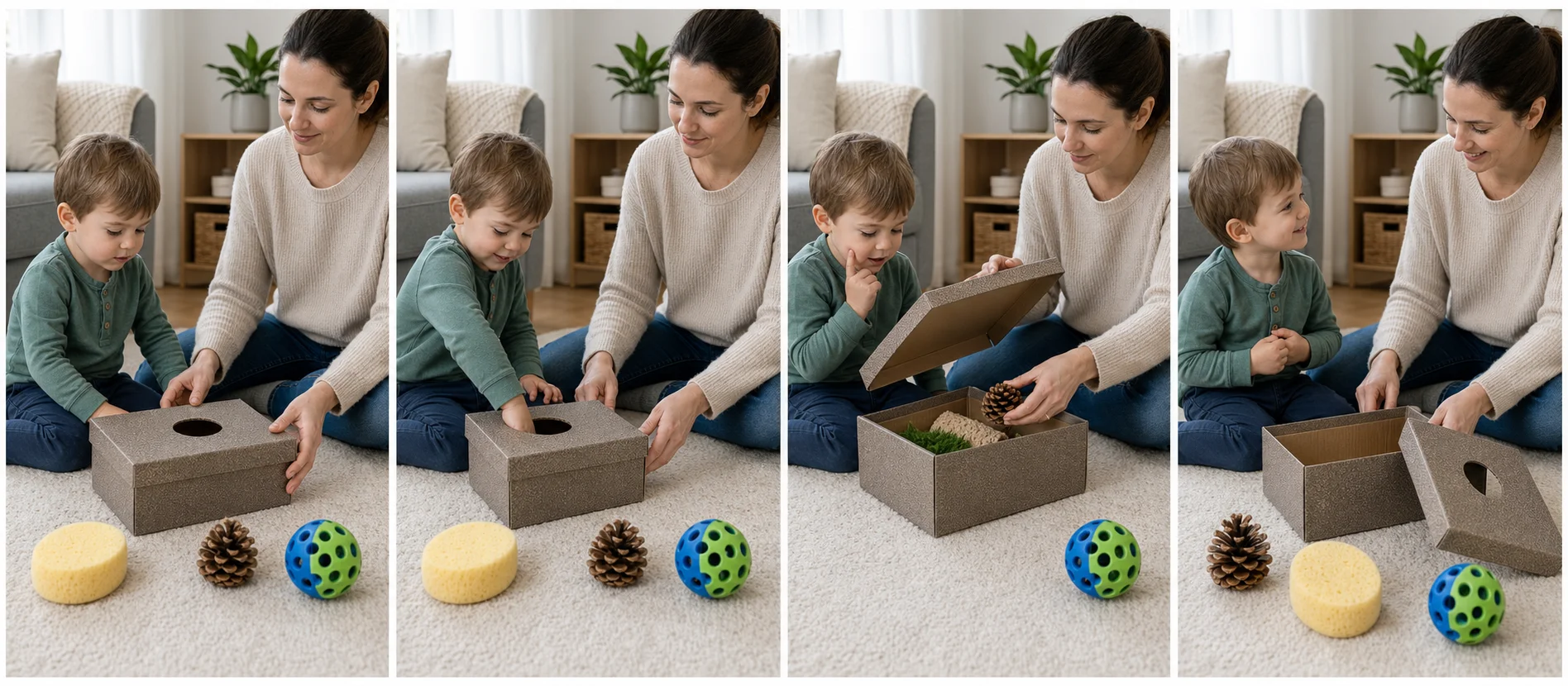
A four-panel sequence shows a grown-up setting out the textured shoe box, a child reaching in to feel one hidden object, guessing, and then checking the object after the reveal.
  1. 01
    Say, "Reach in and feel," and let your child slide one hand through the hole without looking.
  2. 02
    Give your child time to feel the textured box floor and the hidden object.
  3. 03
    Ask for one guess, then open the box or lift the object out so your child can check.
  4. 04
    Put the same object back in for one more turn or switch to a new object and repeat.

Safety Check

  • Stay with your child the whole time.
  • Use only dry textures and large familiar objects that are safe for your child to touch and not tempting to mouth.
  • Stop right away if your child pulls back, stiffens, whimpers, laughs uncontrollably, or shows that the sensation feels too uncomfortable.
  • Keep the grown-up-only cutting step completely separate from play.
Supporting the play

What to say in the moment

Match what you say to what you see.

Prompt ladder
Level 1 (Start)
"Feel inside."
Level 2 (Keep going)
"What do you think it is?"
Level 3 (Stretch)
"Is it smooth or rough?"
Level 4 (Extend)
"Want one more mystery thing?"
If your child seems...
What you'd see
Focused
What to do
Say
"You are really feeling it."
Add
Name one texture word like smooth or bumpy after the reveal.
Extend
Offer one new object with a clearly different feel.

Make it easier

Younger end
  • -Use one object your child knows well.
  • -Let your child touch the object before it goes in the box.
  • -Keep the guess to one word or a point.

Make it harder

Older end
  • +Switch to two objects that feel different but look similar in size.
  • +Ask your child to say smooth, rough, soft, or hard before the reveal.
  • +Let your child choose the next object and hide it for your turn.

If it's not working

If you see
If child ignores it
Let them watch you reach in first, then offer one very easy object they already know well.
If you see
If child misuses it
Remove extra objects, keep just one object in the box, and restart with "One hand, one feel."
If you see
If child gets frustrated
Let them touch the object outside the box first, then hide it again for one short retry or stop after the reveal.
Skill spotlight
Test And Compare

noticing and identifying objects by touch

This helps a child slow down, gather sensory information, and compare what they felt with what they expected, which supports everyday object recognition and self-advocacy around touch.

  • The hidden box keeps the touch experience small and contained instead of spilling into the whole room or onto the child's body.
  • One guess and one quick reveal give your child a predictable stopping point.
  • Familiar objects make it easier to build confidence before you try anything that feels more surprising.
Real-world transfer
  • Noticing how objects feel before picking them up or using them
  • Talking about what feels okay, surprising, rough, or uncomfortable
Back to library
Keep playing

Related activities.