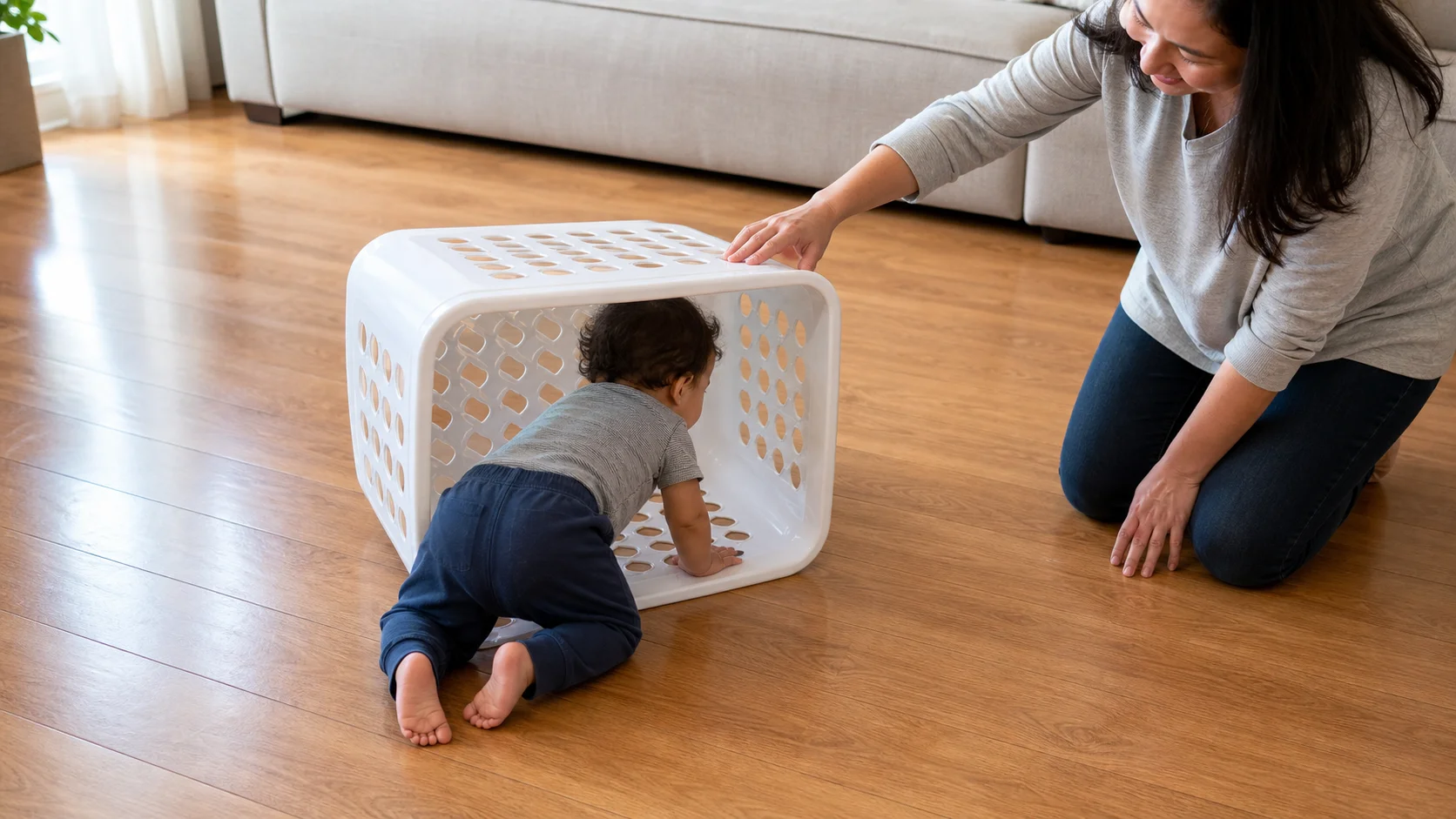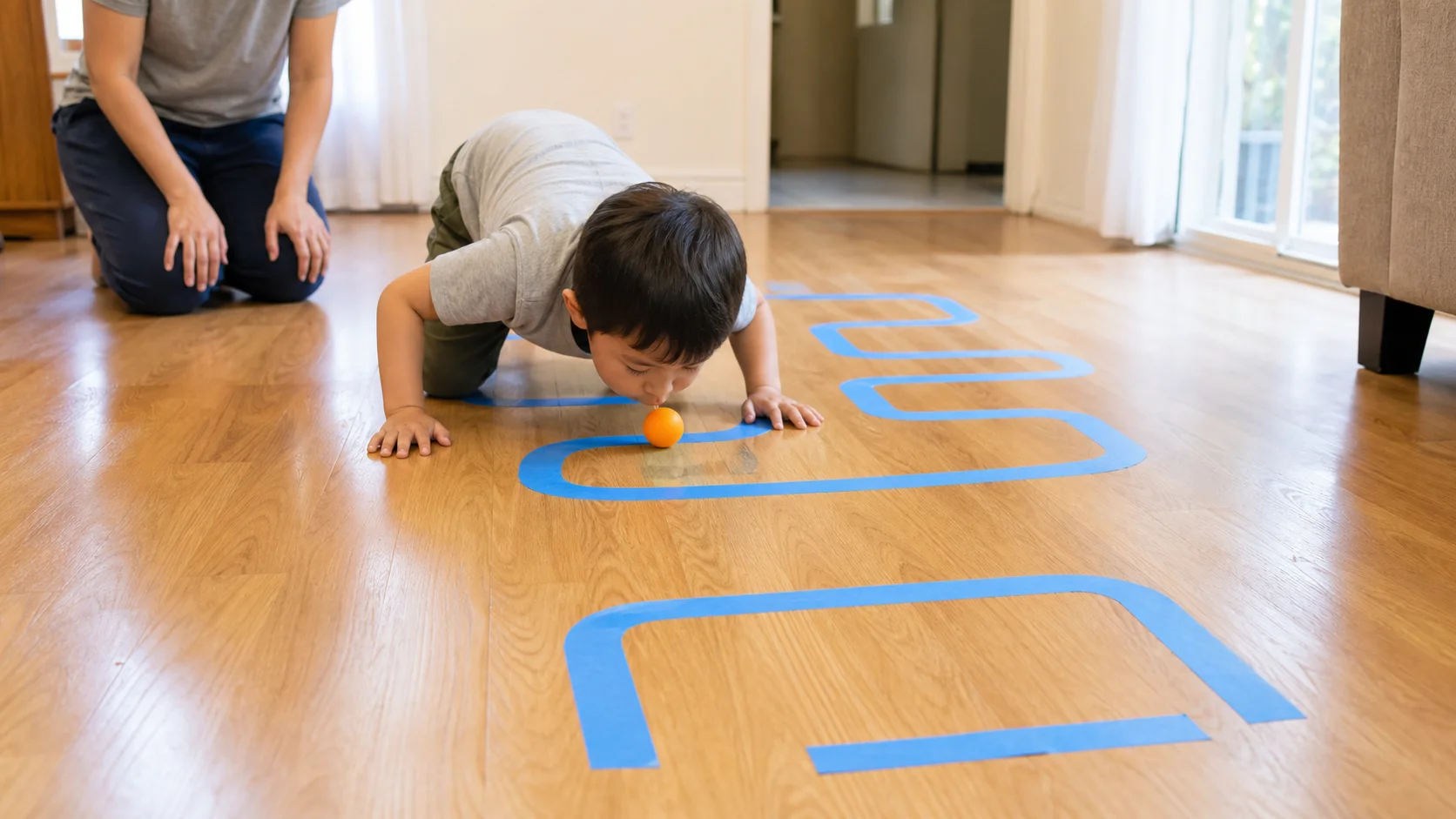
A toddler crawls on hands and knees and nudges a ping-pong ball through a taped floor maze with the nose.
Gross motorOT-adjacent supportNavigate PathIndoor Floor Or Rug

Nosey Ball Maze.

A taped maze and lightweight ball turn crawling into a focused indoor movement challenge.

Play time
5-10+ min
Age
3-5 years
Energy
Medium
Mess
Low
Effort
Medium
Where
Indoor Floor Or Rug
Start here

The recipe.

Medium parent effort
5 things

What you need

  • Masking tape
  • 1 ping-pong ball
  • 1 smooth floor or rug area
  • 1 adult for supervision
  • 1 child
5 min minimum

Setup

Then start the loop
Step 01
On a smooth floor or rug, tape 1 winding path with turns wide enough for the ping-pong ball to roll through without getting trapped.
Step 02
At 1 end of the tape path, mark a clear start line.
Step 03
At the other end of the tape path, mark a clear finish line.
Step 04
Around the taped path, clear nearby furniture edges so your child has open crawling space.
Step 05
At the start line, place the ping-pong ball on the path.
Step 06
Help your child get on hands and knees behind the ball with both hands flat on the floor.
"Nose ready."
The loop

How play unfolds.

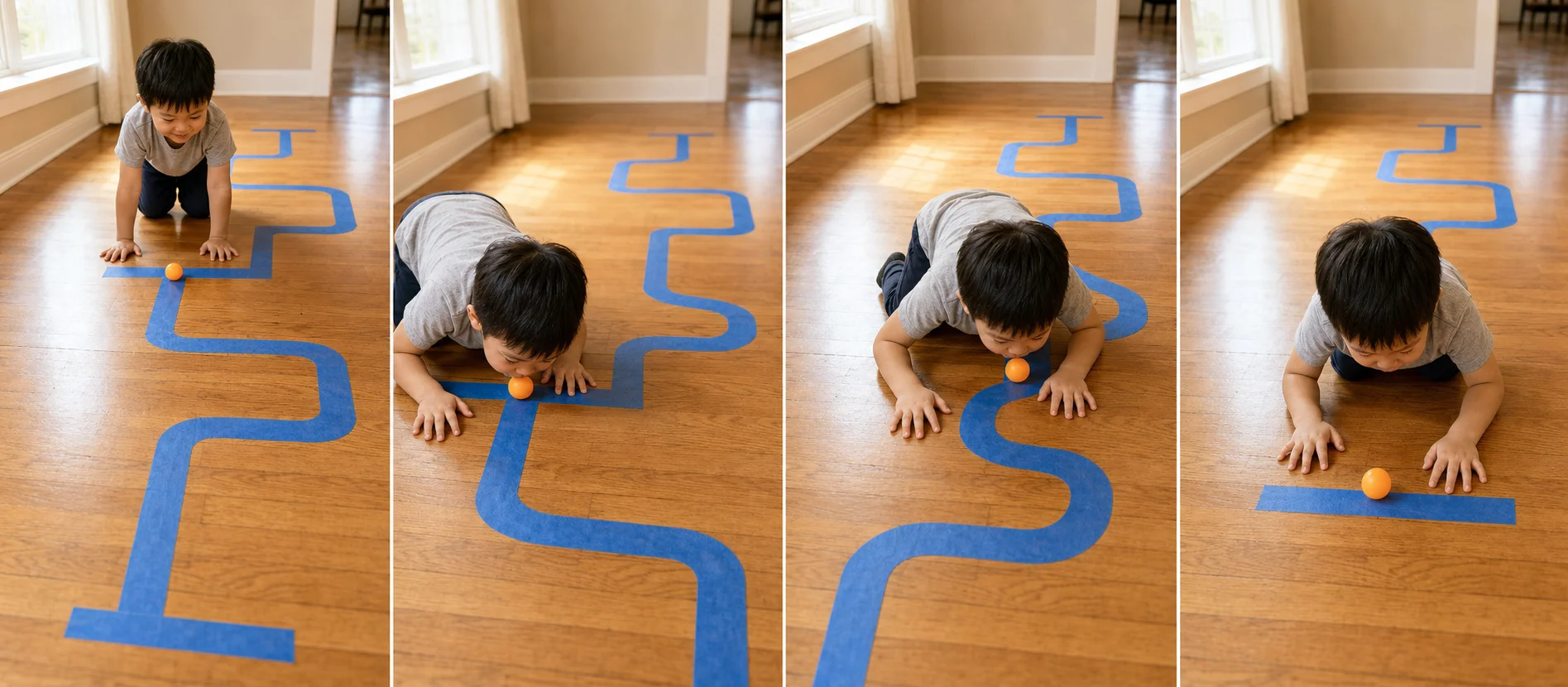
Four panels show a grown-up taping a winding floor path, a ping-pong ball at the start line, a child crawling and nudging the ball with the nose, and the ball reaching the finish line.
  1. 01
    Put the ball at the start and say, "Hands stay down. Can your nose roll the ball to the finish?"
  2. 02
    Let your child crawl behind the ball and nudge it through the path with small nose pushes.
  3. 03
    If the ball leaves the tape or stalls at a turn, reset it at the last easy spot and keep going.
  4. 04
    When the ball reaches the finish, carry it back to the start and play another round.

Safety Check

  • Stay close and supervise the whole time so your child does not bump their head on nearby furniture during floor play.
  • Keep hard edges and loose objects away from the crawling area before the first round starts.
  • Stop or choose another activity if your child cannot comfortably stay on hands and knees or strongly dislikes nose-to-ball contact.
Supporting the play

What to say in the moment

Match what you say to what you see.

Prompt ladder
Level 1 (Start)
Push the ball with your nose down the path.
Level 2 (Keep going)
Keep it inside the tape to the next bend.
Level 3 (Stretch)
Can you reach the next turn without stopping?
Level 4 (Extend)
Try another round with the same calm pushes.
If your child seems...
What you'd see
Focused
What to do
Say
"You found the path."
Add
Name one maze spot, like "turn" or "finish."
Extend
Invite one more bend before the reset.

Make it easier

Younger end
  • -Start from the middle of the maze so your child practices 1 controlled section first.
  • -Pause after each bend and let your child reset body position before the next nose push.
  • -Crawl beside the maze and tap the next turn as a visual target without touching the ball.

Make it harder

Older end
  • +Ask for 2 full finish-line runs before ending the activity.
  • +Re-tape the next round with 1 extra bend once the current maze feels easy.
  • +Challenge your child to use gentler pushes at corners so the ball stays centered.

If it's not working

If you see
If child ignores it
Model 1 quick nose push yourself or shorten the first turn to one easy bend.
If you see
If child misuses it
Pause, put the ball back where it left the path, and restart with "Hands stay down. Nose moves the ball."
If you see
If child gets frustrated
Move the finish line closer or stop after 1 successful section instead of asking for the full maze.
Skill spotlight
Navigate Path

Steady path crawling, Body awareness

This helps your child feel where their body is while moving, slow down near edges, and plan the next small movement before rushing ahead.

  • Small nose pushes help your child watch the ball and the tape edges at the same time.
  • Crawling behind the ball gives practice slowing the body before turns instead of rushing through them.
  • The same start, finish, and reset loop makes it easy to repeat careful movement without needing many words.
Real-world transfer
  • Moving carefully around furniture or people
  • Slowing the body near edges and corners
  • Holding a steady hands-and-knees position during play
  • Planning 1 movement before making the next one