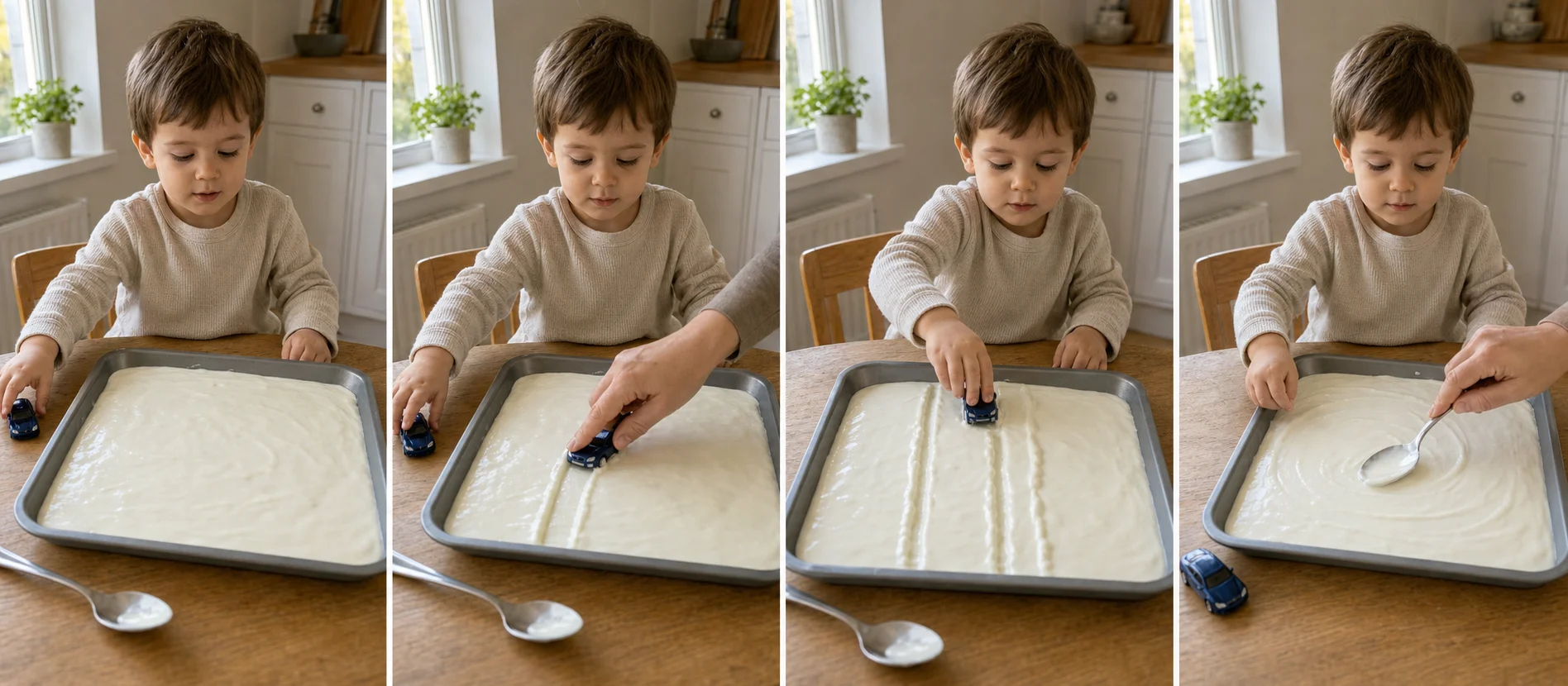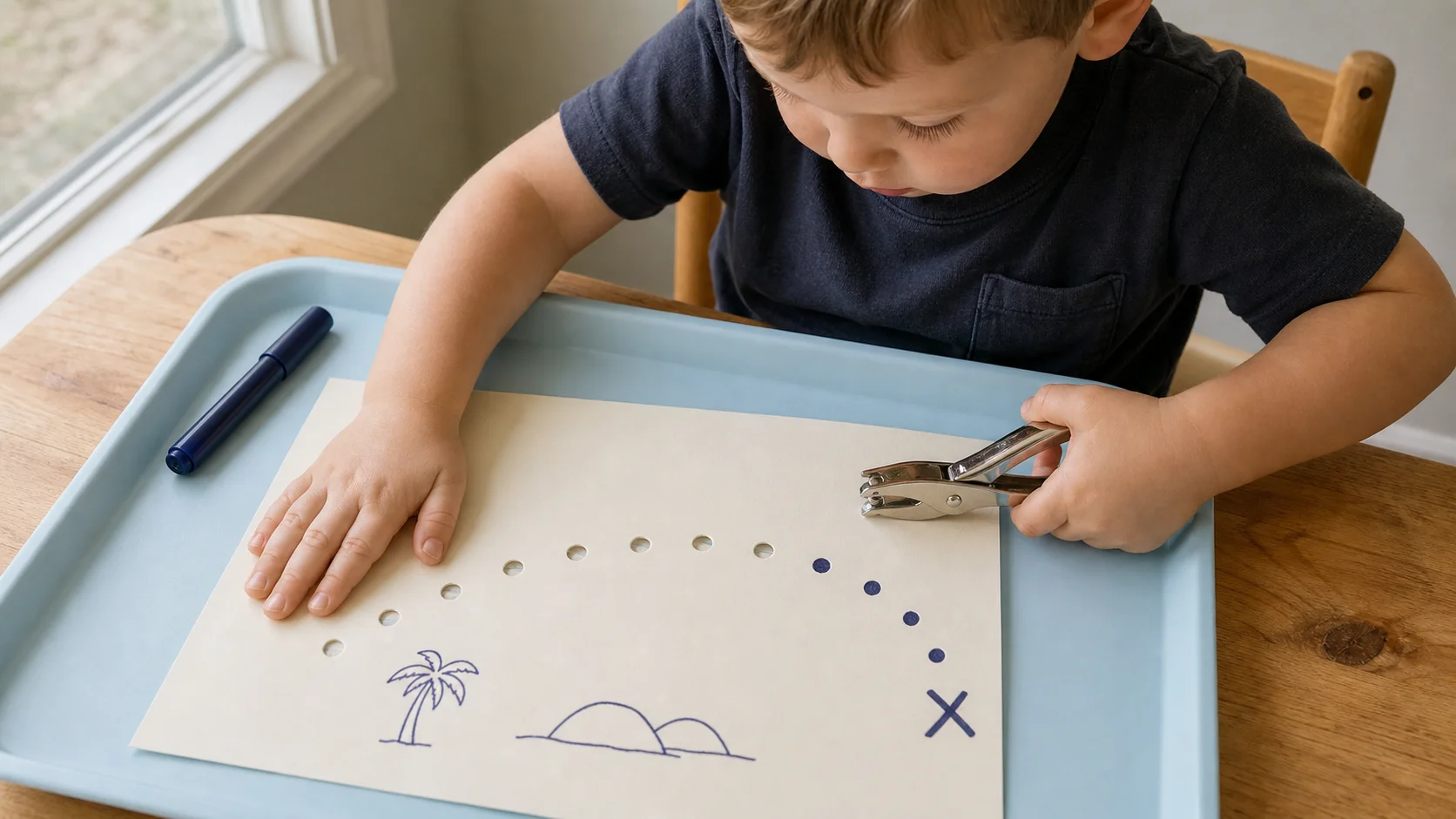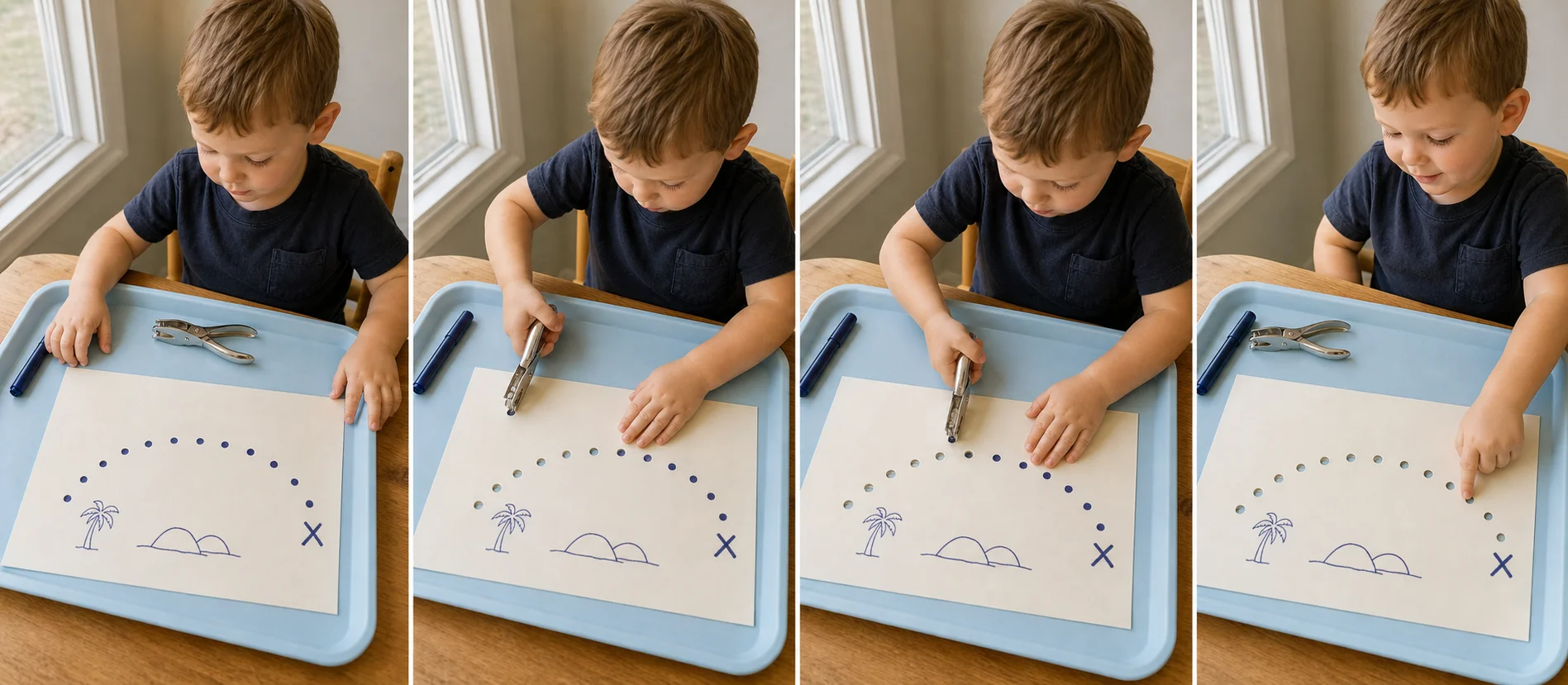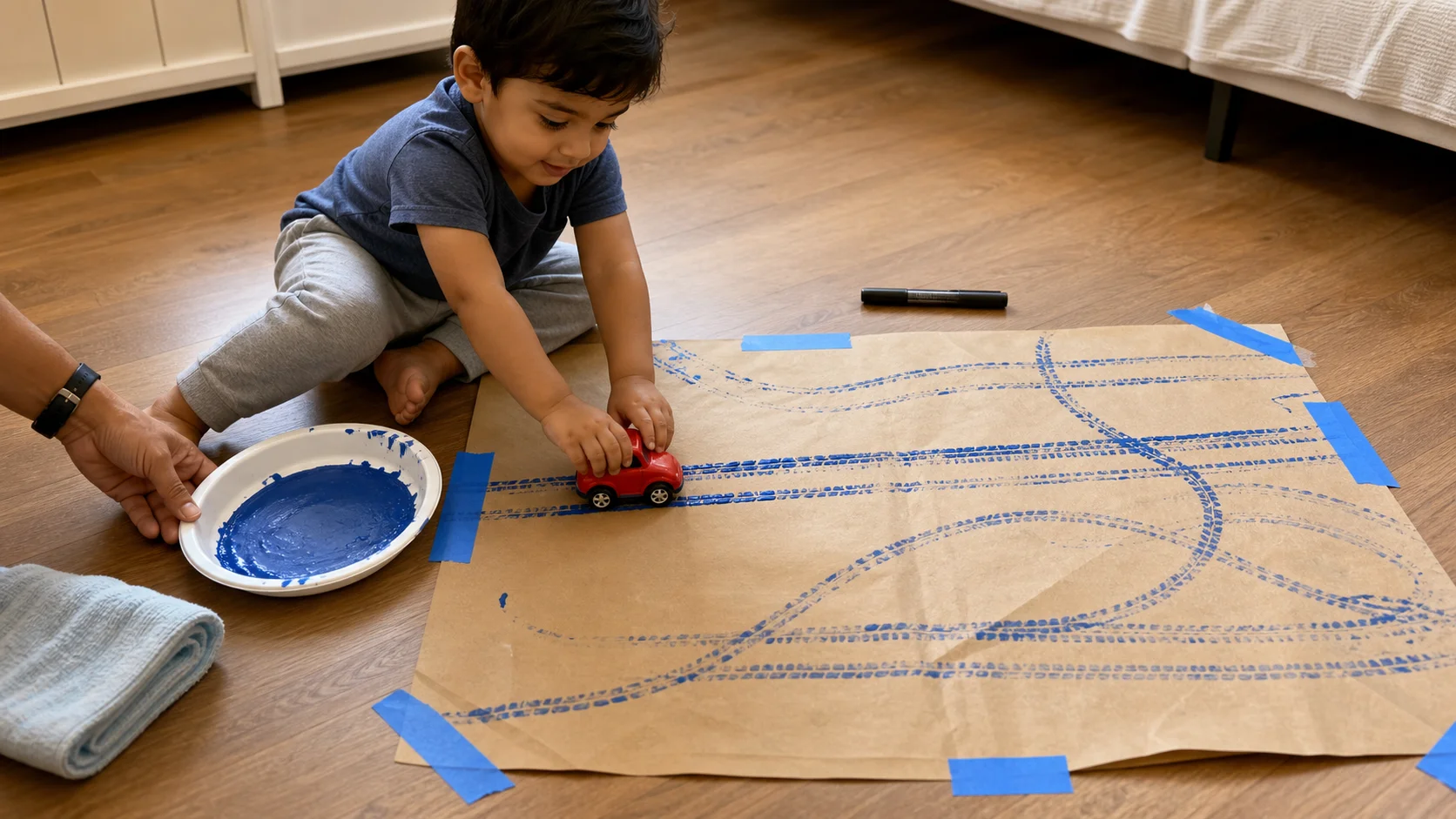
Toddler rolling a toy car with wet wheels across taped paper while track lines appear.
Fine motorPlace With ControlIndoor Floor

Wheel Writing.

Turn a toy car into a first writing tool. Your child dips the wheels in water or washable paint, drives across paper, and watches lines and curves appear while building the hand control used for early writing.

Play time
5-7+ min
Age
1 years
Energy
Low To Medium
Mess
Low With Water Medium With Washable Paint
Effort
Low
Where
Indoor Floor
Start here

The recipe.

Low parent effort
8 things

What you need

  • 1 toy car or truck
  • 1 paper grocery bag
  • Water, or washable toddler-safe paint
  • 1 shallow dish or tray wide enough for the wheels
  • Painter's tape
  • Scissors for adult setup
  • 1 adult writing tool for writing your child's name
  • Optional cloth if using paint
5 min minimum

Setup

Then start the loop
Step 01
Cut a paper grocery bag down one side and across the bottom to open it into one large sheet.
Step 02
Lay the paper flat and tape down the edges with painter's tape.
Step 03
Pour a shallow layer of water or washable toddler-safe paint into a dish or tray wide enough for the wheels of one toy car or truck.
"Dip, drive, look."
The loop

How play unfolds.

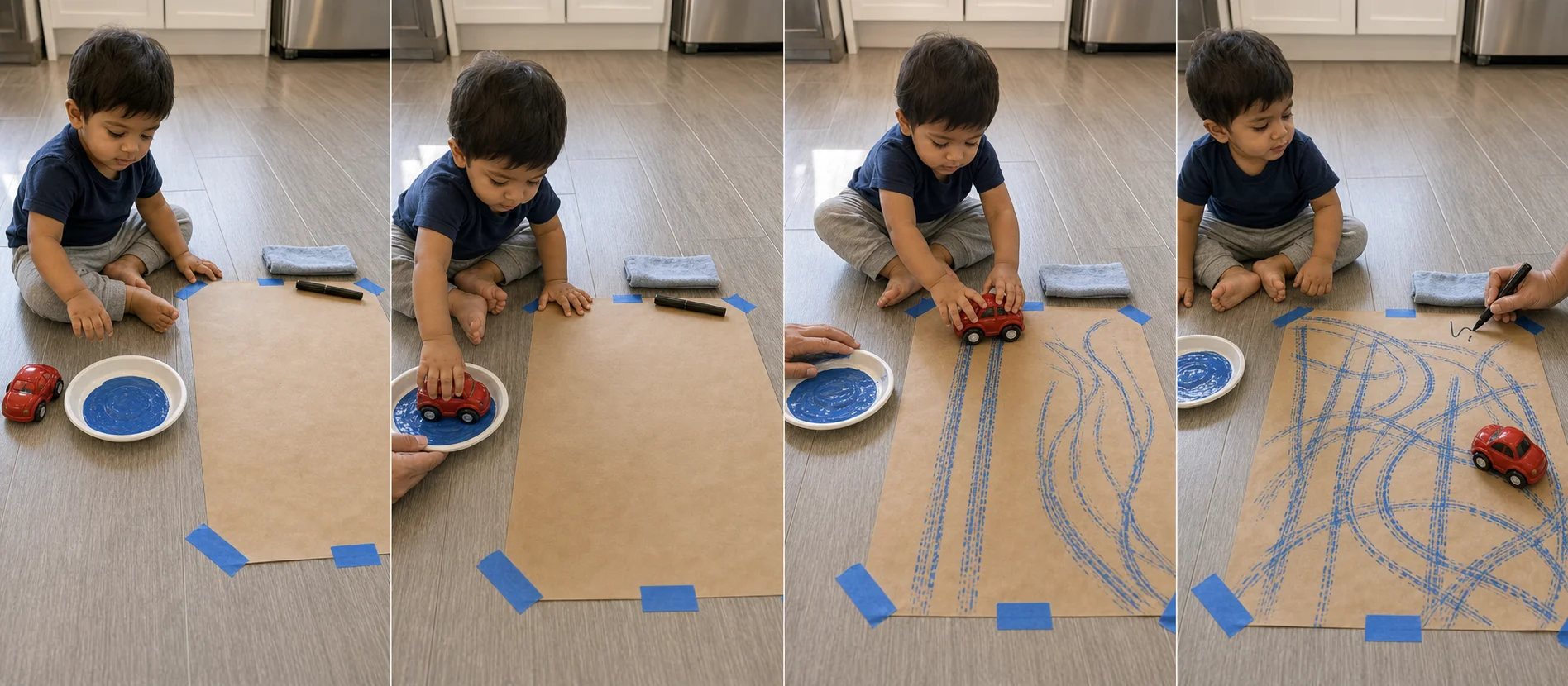
Three panels showing wheels dipped in a shallow dish, the toy car driven across paper, and an adult writing the child's name on the track picture.
  1. 01
    Show your child how to dip the vehicle's wheels and roll it across the paper to make a track.
  2. 02
    Let your child dip the wheels and drive across the paper, watching a line appear.
  3. 03
    Dip again and drive in different directions to make more lines and curves.
  4. 04
    When the picture is finished, write your child's name on the paper while your child watches.

Safety Check

  • Use an intact toddler-safe vehicle with no loose wheels or small parts.
  • Use washable toddler-safe paint if you choose paint.
  • Keep the water or paint shallow so the dish does not invite dumping or floor slipping.
  • Wipe puddles before the vehicle leaves the paper.
  • Keep the paper taped flat so it does not slide, bunch, or tear into loose pieces.
  • Pause or end the turn if your child mouths the vehicle, smears paint near the mouth, or pulls up the taped paper.
Skill spotlight
Controlled Placement

Guiding a tool to make marks

This builds hand control with a moving object and helps the child notice that marks on paper can stand for something. The same control shows up later with crayons, pencils, simple tools, and name or label awareness.

  • Wheel Writing turns steering into early mark-making, so your child practices hand control while the tracks appear right away.
  • The dip-and-drive loop keeps cause and effect visible: wet wheels make lines, turns make curves, and another dip starts a new road.
  • Writing your child's name on the finished paper connects their own marks to real print without turning the activity into a lesson.
Real-world transfer
  • Guiding crayons, markers, spoons, and other small hand tools
  • Noticing lines, curves, names, labels, and signs
  • Talking about how a mark was made
  • Using enough control to keep play on a page, tray, or work spot
Supporting the play

What to say in the moment

Match what you say to what you see.

Prompt ladder
Level 1 (Start)
"Drive across the paper and watch the wheels."
Level 2 (Keep going)
"Can your car make another road?"
Level 3 (Stretch)
"Try a slow road."
Level 4 (Extend)
"Turn around and drive back."
If your child seems...
What you'd see
Focused
What to do
Say
"You are driving all over the paper."
Add
"That road is curvy."
Extend
"Pick one empty spot for the next road."

Make it easier

Younger end
  • -Start with one short path from the dish to the middle of the paper.
  • -Keep your hand beside the vehicle as a soft guide, not on top of your child's hand.
  • -Pause the vocabulary and name only the visible track after your child finishes rolling.

Make it harder

Older end
  • +Invite your child to fill one empty corner before driving somewhere else.
  • +Ask for one slow road and one fast road.
  • +Let your child choose whether the next road goes up, down, or sideways.

If it's not working

If you see
If child ignores it
Drive the vehicle yourself for one short pass, make one clear sound or word, and hand it over.
If you see
If child misuses it
If your child mouths the vehicle, pause and swap to a clean dry vehicle or end the turn. If your child dumps the dish, move the dish out of reach and let them keep driving on the damp paper for a few rolls.
If you see
If child gets frustrated
Skip dipping for a moment and let your child drive freely on the paper, then offer one easy "dip, roll" turn when the mood settles.

Parent questions