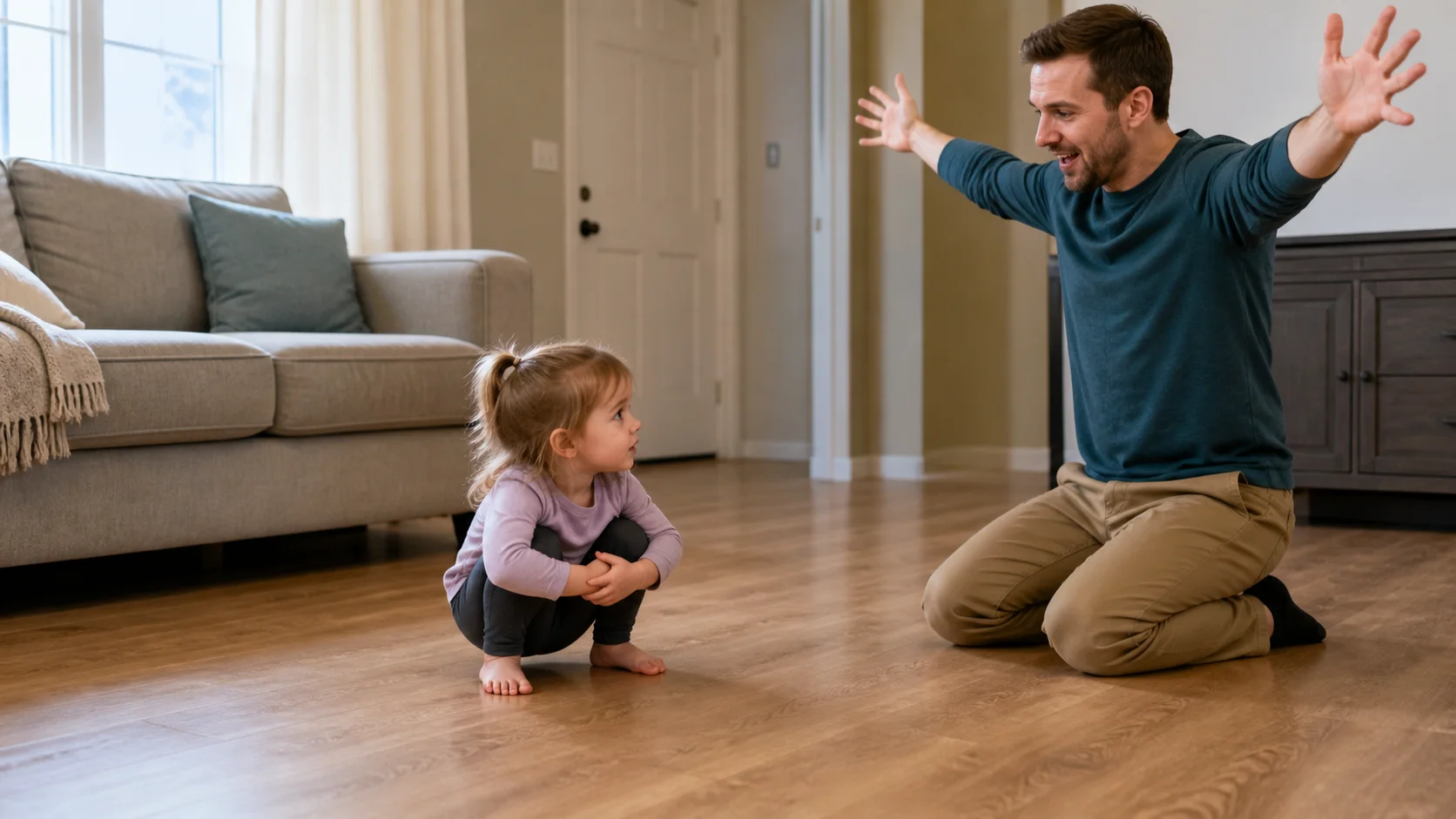
Child reaching arms up tall, then crouching into a small ball on a clear indoor floor.
Fine motorSensory-friendly supportOT-adjacent supportChange Body LevelIndoor

Tall Star Small Ball.

Your child reaches into a tall star, folds into a small ball, stands back up, and repeats the same slow body pattern.

Play time
3-5+ min
Age
2-3 years
Energy
Low
Mess
No
Effort
Low
Where
Indoor
Start here

The recipe.

Low parent effort
3 things

What you need

  • 1 clear indoor floor spot
  • 1 adult
  • 1 child
3 min minimum

Setup

Then start the loop
Step 01
On a clear indoor floor spot, move toys, loose rugs, and furniture edges out of the up-and-down space.
Step 02
In the clear floor spot, check that your child can reach arms overhead and bend knees without bumping anything.
Step 03
At the edge of the clear spot, stand facing your child close enough to steady them if balance looks wobbly.
Step 04
In the middle of the clear spot, have your child stand with both feet on the floor.
Step 05
Model the two shapes once
arms high for tall star, then knees bent or body tucked for small ball.
"Tall star."
The loop

How play unfolds.

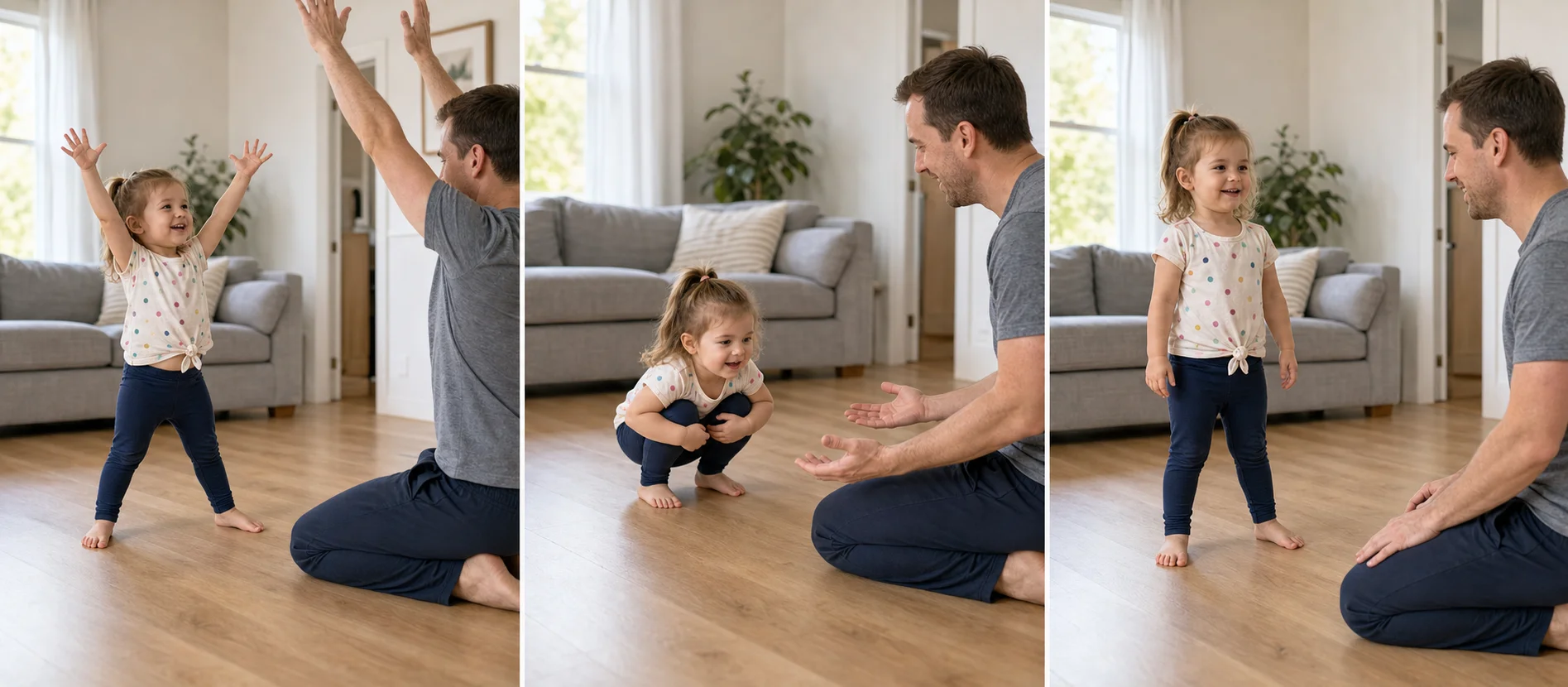
Three-panel sequence showing a child reaching tall, making a small ball, and standing back up to repeat.
  1. 01
    Reach your arms overhead and say, "Tall star."
  2. 02
    Let your child make any safe taller shape, then pause for one calm breath.
  3. 03
    Say, "Small ball," and crouch, bend, or tuck small together.
  4. 04
    Stand back up and repeat a few slow rounds.
  5. 05
    Finish with, "All done. Bodies rest."

Safety Check

  • Keep open space above your child's hands and around their knees before starting.
  • Stay close enough to steady your child if the up-and-down movement gets wobbly.
  • A full crouch is not required. A small knee bend, shoulder shrug, or hands-on-belly tuck can count as small ball.
  • Keep the movement slow if your child starts jumping, running, crashing down, or grabbing furniture.
  • Stop if your child looks dizzy, tired, sore, scared, or off balance.
Supporting the play

What to say in the moment

Match what you say to what you see.

Prompt ladder
Level 1 (Start)
Copy me into a tall star.
Level 2 (Keep going)
Now make your body a small ball.
Level 3 (Stretch)
Can you make the tall star slower?
Level 4 (Extend)
You choose the next shape.
If your child seems...
What you'd see
Focused
What to do
Say
"Tall, small, stand."
Add
Name the shape your child is already making.
Extend
Let your child call one tall or small cue.

Make it harder

Older end
  • +Let your child lead the cue while you copy their timing.
  • +Add a quiet freeze after tall before moving to small.
  • +Ask for the same tall-small pattern two times in a row without extra talking.

If it's not working

If you see
If child ignores it
Do one playful adult-only tall-small round, then offer, "Your turn: tall or small?"
If you see
If child misuses it
If your child jumps, runs, or crashes down, pause the game and restart with one slow hands-up reach.
If you see
If child gets frustrated
Switch to the easier version: hands up tall, hands on belly small, with no crouch.
Skill spotlight
Change Body Level

Changing body level with control

This helps the child feel where their body is while moving up and down, then return to standing safely for dressing, bath steps, tidy-up, and busy-to-calm transitions.

  • The tall-small pattern gives your child a clear way to move without running through the room.
  • The standing reset makes each round predictable: reach, tuck, stand, then decide whether to repeat.
  • Tiny bends still count, which keeps the activity usable when balance, energy, or sensory input feels different that day.
Real-world transfer
  • Standing up after floor play
  • Bending safely during dressing or cleanup
  • Noticing when the body is getting too fast or wobbly
  • Using a short movement pattern to reset before the next routine

Parent questions