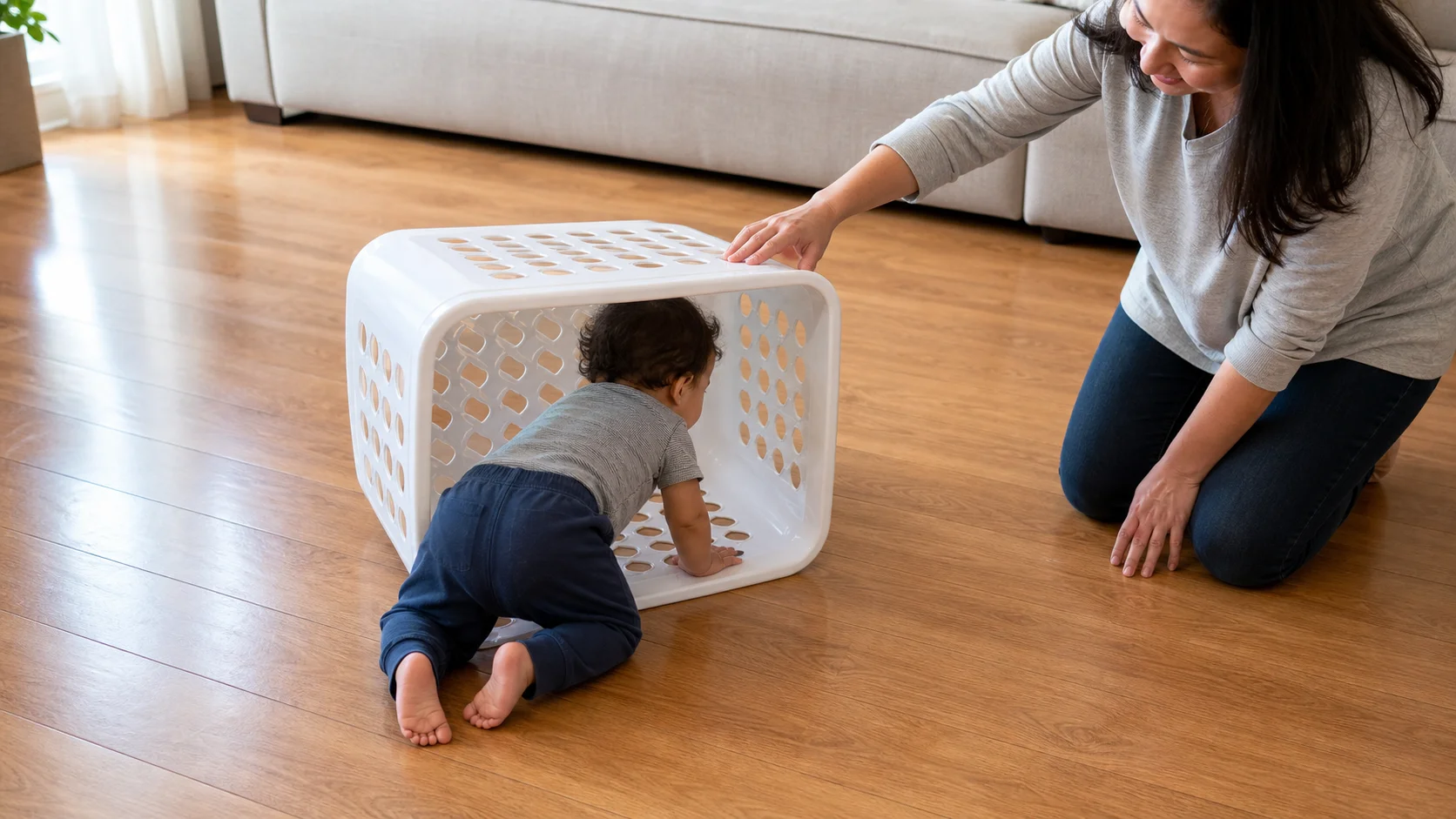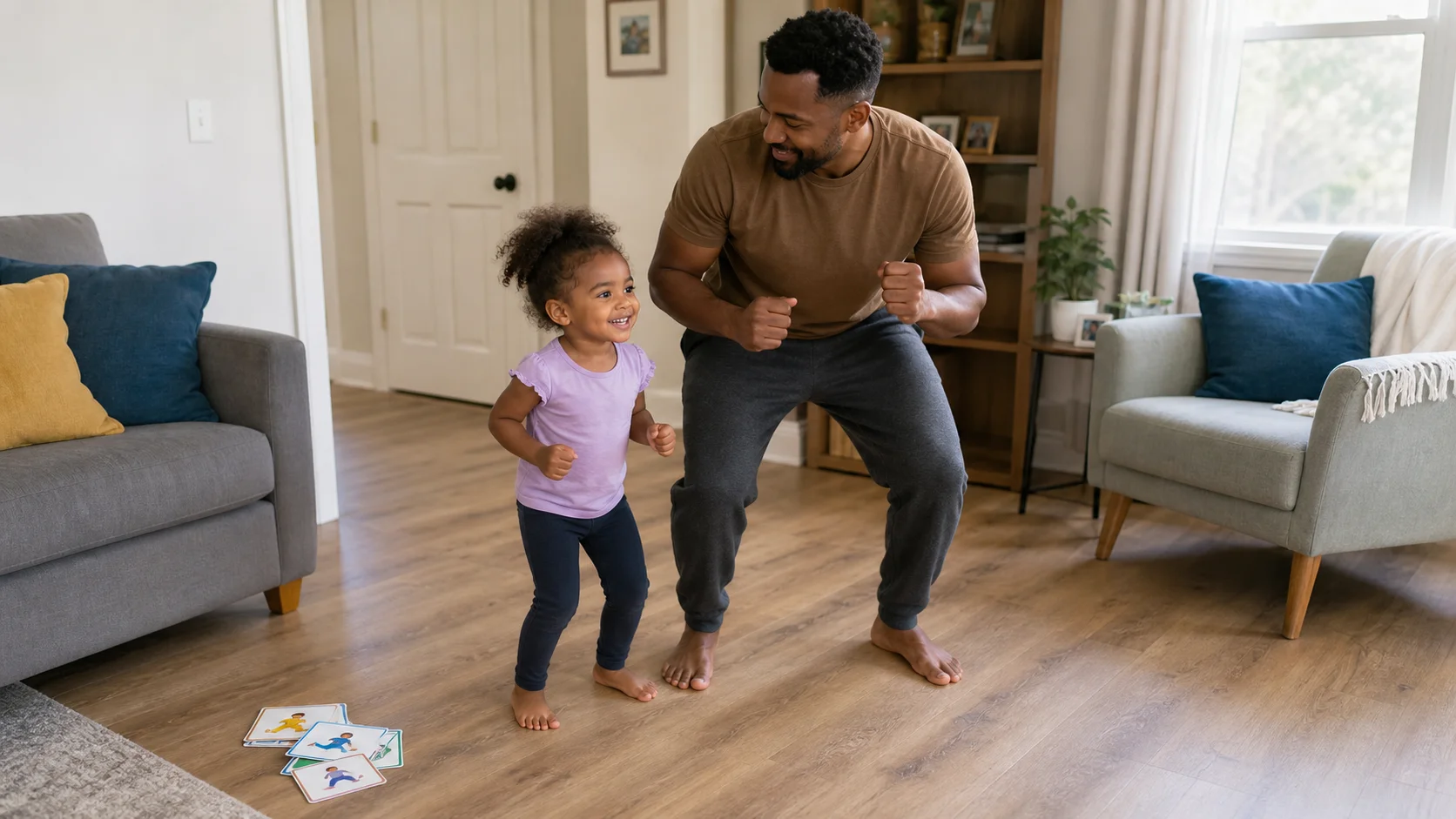
A young child and grown-up standing in an open indoor floor space while the child freezes mid-movement during a stop and go game.
Fine motorStop And StartIndoor

Stop and Go Moves.

One open floor spot and two simple cues turn movement into a repeatable freeze game.

Play time
5-10+ min
Age
2-5 years
Energy
Medium To High
Mess
No
Effort
Low
Where
Indoor
Start here

The recipe.

Low parent effort
4 things

What you need

  • 1 open floor space
  • movement cards or your own simple movement ideas
  • scissors if you are cutting printed movement cards
  • music, optional
5 min minimum

Setup

Then start the loop
Step 01
Clear one open floor spot where your child can move in place and stop without hitting furniture.
Step 02
Choose one easy movement for the first round, such as jumping, running in place, or toe touches.
Step 03
Stand beside your child in the open space so you can do the movement and freeze with them.
"Go time."
The loop

How play unfolds.

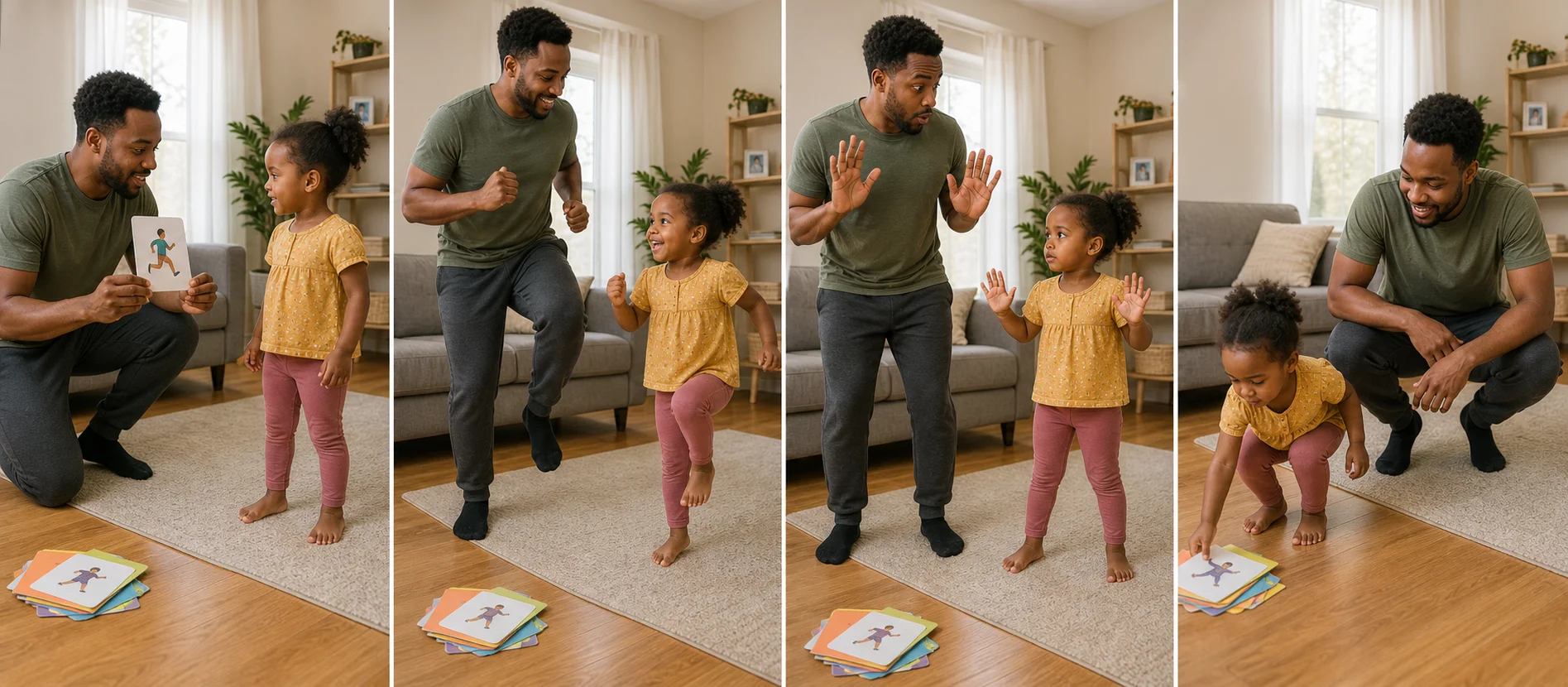
Four panels showing a grown-up choosing a simple movement, both players moving on go, freezing on stop, and restarting with a new movement.
  1. 01
    Show the movement and say, "When I say go, we move. When I say stop, we freeze."
  2. 02
    Say "Go" and do the movement with your child.
  3. 03
    After a few seconds, say "Stop" and freeze your own body right away.
  4. 04
    Say "Go" again and restart the same movement.
  5. 05
    Repeat a few short rounds, then switch to a new movement and play again.

Safety Check

  • Stay close enough to stop the game if your child starts crashing into the room or running too far.
  • Use movements in place at first so your child can practice the stop cue without crossing the room.
  • Keep the music device outside the moving area if you use the music version.
Supporting the play

What to say in the moment

Match what you say to what you see.

Prompt ladder
Level 1 (Start)
"Go, go, go."
Level 2 (Keep going)
"Freeze."
Level 3 (Stretch)
"Can you hold your freeze?"
Level 4 (Extend)
"New move. Ready?"
If your child seems...
What you'd see
Focused
What to do
Say
"You heard stop."
Add
Hold the freeze for one extra beat before you say "go" again.
Extend
Let your child pick the next movement card.

Make it easier

Younger end
  • -Use only one movement for the whole game.
  • -Keep every round short with a fast stop cue.
  • -Stay side by side so your child can copy your freeze.

Make it harder

Older end
  • +Hold the freeze for two beats before saying "go."
  • +Let your child choose between two movement cards.
  • +Switch between a slow movement and a faster movement.

If it's not working

If you see
If child ignores it
Do one exaggerated round by yourself, then invite one turn with "Your body goes too."
If you see
If child misuses it
Switch to a slower movement in place, such as toe touches, and restart with one short round.
If you see
If child gets frustrated
Keep the movement slow, count any small pause as a successful stop, and go back to the same easy movement once more.
Skill spotlight
Stop And Start

Stopping and restarting the body on cue

This helps a child control body speed, pause after a cue, and restart without melting down when the action changes. Those skills matter in group games, transitions, and everyday safety moments.

  • The stop cue gives your child repeated practice slowing the body down without ending the game.
  • The quick restart helps your child shift from pause back into action with a simple rule.
  • One movement at a time keeps the game clear, repeatable, and easy to adjust when your child needs more support.
Real-world transfer
  • Freezing the body before bolting forward.
  • Restarting after a pause in a game or transition.
  • Listening for a short direction and acting on it.

Parent questions