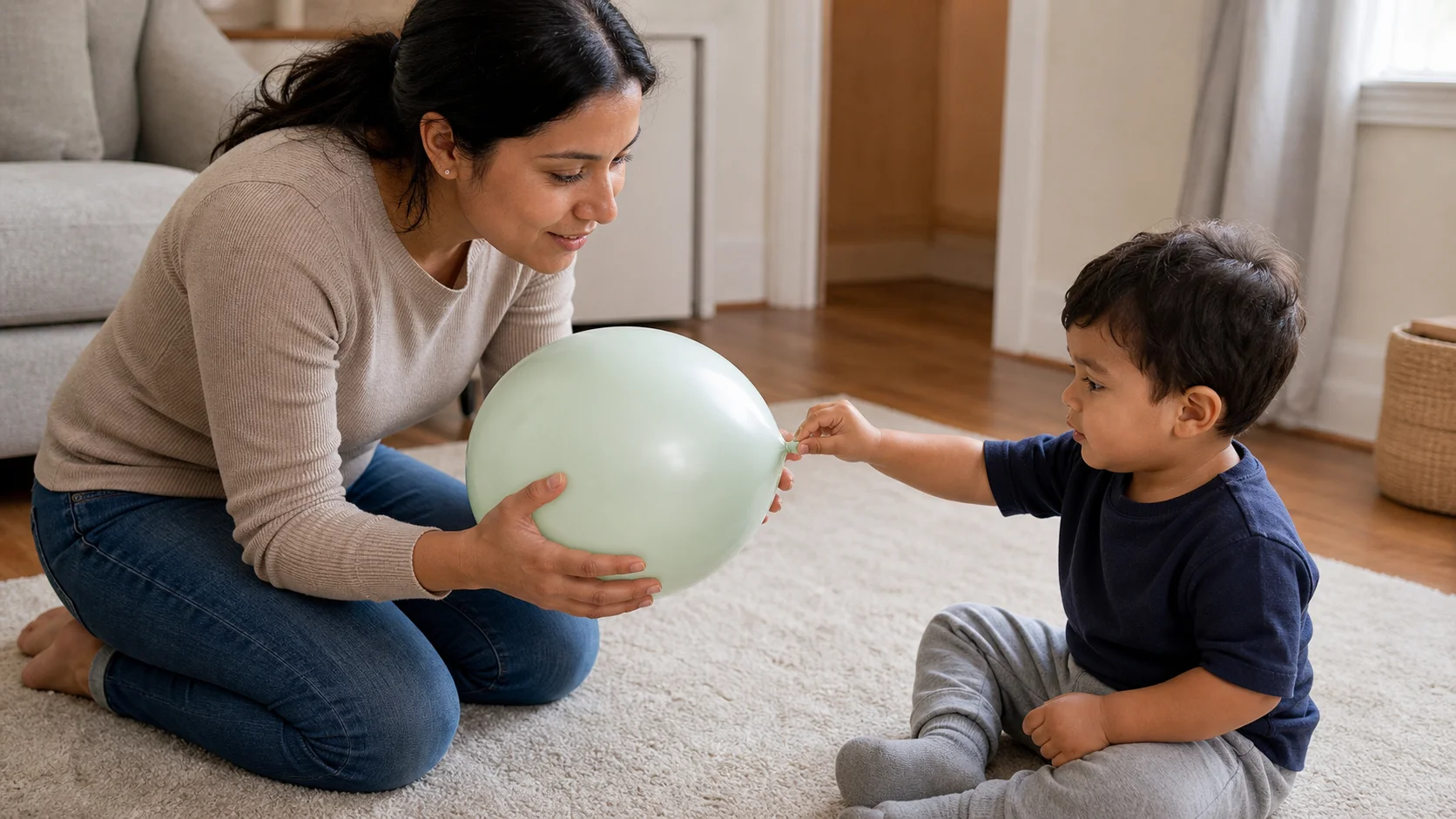
A grown-up holds a balloon low in front of a toddler, who pinches the neck for one tiny squeak while both watch the balloon.
ThinkingSensory-friendly supportAction ResultIndoor Quiet Spot

Squeaky Balloon Pinch.

This adult-held balloon game gives your child one tiny squeak, one visible balloon change, and an easy all-done choice before the sound grows.

Play time
1-5+ min
Age
2-3 years
Energy
Low
Mess
Low
Effort
Low
Where
Indoor Quiet Spot
Start here

The recipe.

Low parent effort
3 things

What you need

  • 1 inflated balloon
  • 1 child
  • 1 adult
1 min minimum

Setup

Then start the loop
Step 01
Sit with your child in one quiet indoor spot and hold the balloon low in front of them with the neck pointing toward their hand.
Step 02
Keep your fingers pinching the neck almost closed so only a tiny squeak can slip out before you stop it again.
Step 03
Point to the pinch spot and say, "Tiny squeak, then stop."
"Tiny squeak."
The loop

How play unfolds.

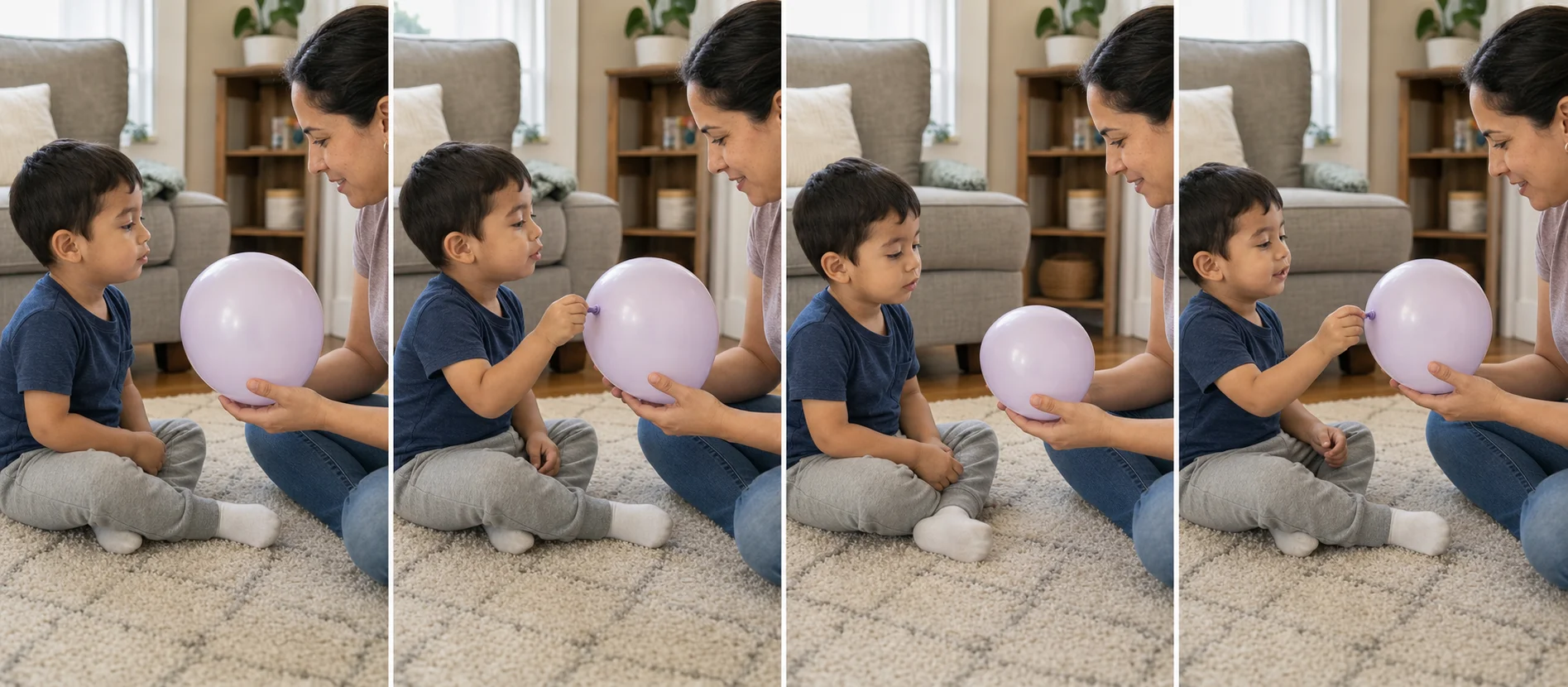
Four panels show a grown-up holding a balloon, a toddler pinching the neck for a tiny squeak, the balloon shrinking a little, and the child choosing more or all done.
  1. 01
    If needed, do one tiny demo squeak so your child can watch the pinch-and-stop before trying.
  2. 02
    Let your child pinch for one brief squeak, then close the neck again before it turns into a longer hiss.
  3. 03
    Pause to watch the balloon shrink a little.
  4. 04
    Ask, "More squeak or all done?" then repeat for another tiny turn or finish.

Safety Check

  • Keep the balloon in adult hands the whole time, and clear every piece right away if it pops because balloon pieces are a choking hazard.
  • Stop if the squeak, hiss, or pop startles your child or feels too strong instead of calming.
  • Skip the popping version of this game and keep it to one small squeak-and-stop turn at a time.
Supporting the play

What to say in the moment

Match what you say to what you see.

Prompt ladder
Level 1 (Start)
"Make a tiny squeak."
Level 2 (Keep going)
"Pinch and stop."
Level 3 (Stretch)
"Your squeak, then look."
Level 4 (Extend)
"Show me when to start."
If your child seems...
What you'd see
Focused
What to do
Say
"You made that tiny."
Add
Use one learning prompt after the squeak, like "Did it get smaller?"
Extend
Let your child point, nod, or say go before the next turn starts.

Make it easier

Younger end
  • -Rest the balloon lightly against your lap or leg so it does not wiggle while your child aims.
  • -Turn the pinch spot directly toward your child's stronger hand before each round.
  • -Let your child touch the neck first before any air comes out.

Make it harder

Older end
  • +Wait for your child to give the start signal with a word, look, or tap before the squeak.
  • +Pause for two breaths after each squeak so your child has to ask for the next turn again.
  • +Rotate the balloon neck a little between rounds so your child has to find the pinch spot again.

If it's not working

If you see
If child ignores it
Do one quick squeak yourself, let your child watch, and stop after that single demo if they still do not want a turn.
If you see
If child misuses it
If your child grabs, throws, or yanks the balloon, bring it back to your own hands, point to the neck again, and offer one more try or finish.
If you see
If child gets frustrated
If the squeak feels too loud or the balloon slips, say, "That was the balloon," switch to a smaller squeak or watch-only turn, and stop if your child stays upset.
Skill spotlight
Action Result

Start-stop sound control

This helps the child learn that one small hand action can start a sound and another can stop it. That matters for handling noisy moments, making simple choices, and staying with a short shared routine.

  • One tiny squeak plus one visible balloon change helps your child connect one hand action to one result.
  • The fast stop lets your child practice making a sound and ending it before it grows.
  • The short more-or-all-done choice keeps the game predictable and easy to leave.
Real-world transfer
  • Handling short everyday sounds with less surprise
  • Showing stop, more, or all done during noisy play and routines
  • Using finger control to make a small change and check what happened