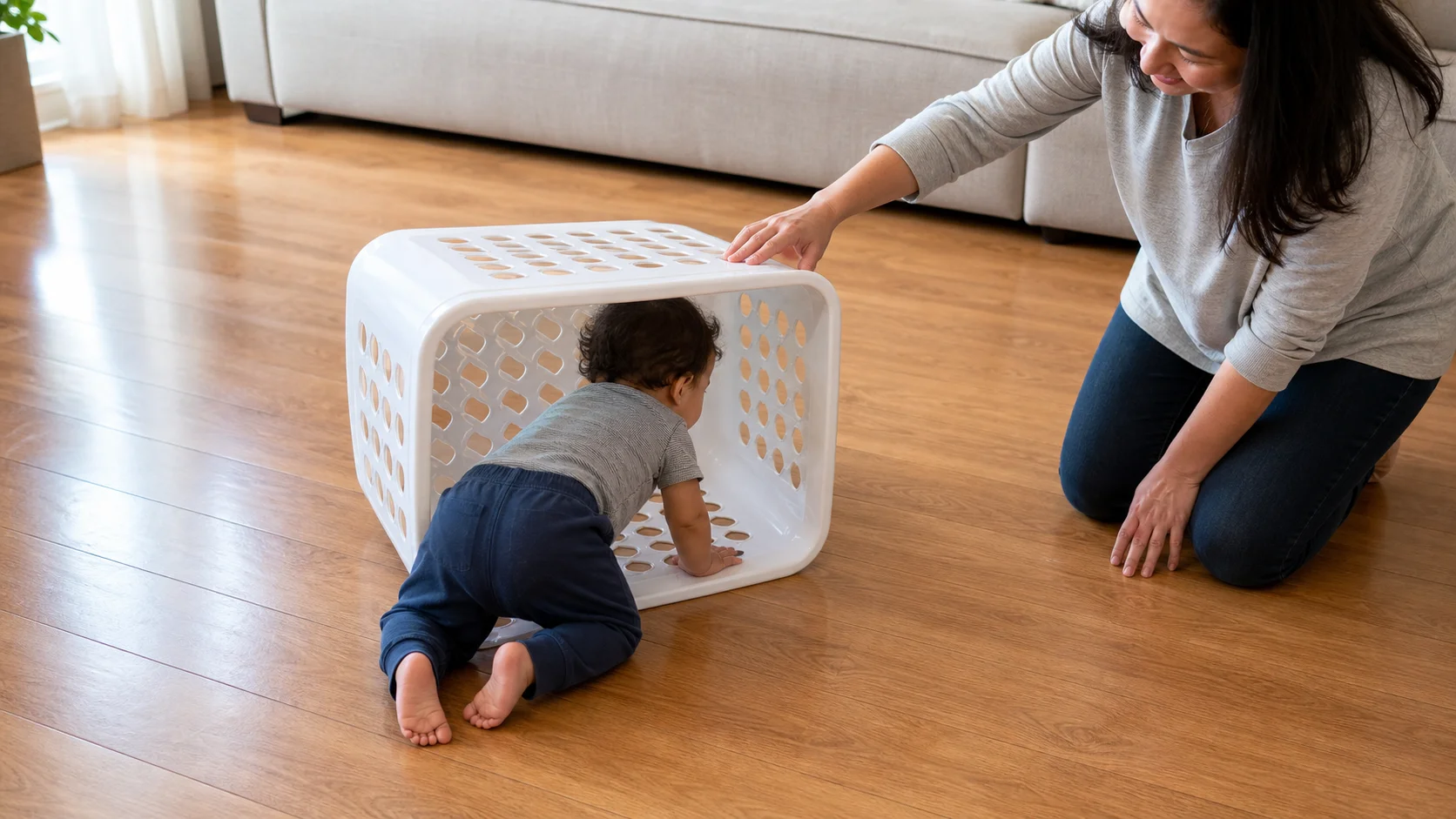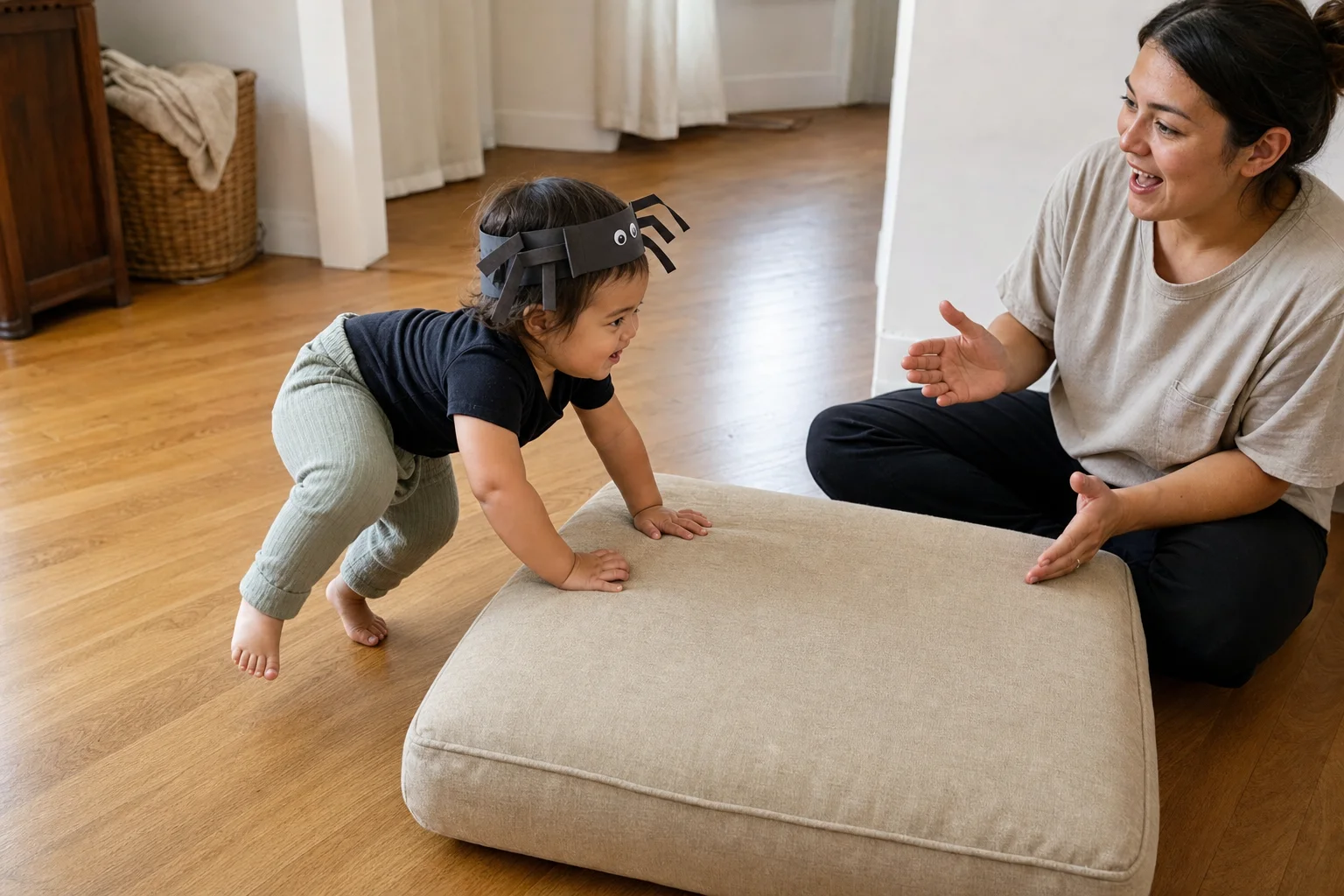
A toddler wearing a paper spider headband climbs up a sofa cushion while a grown-up sings nearby.
Fine motorChange Body LevelIndoor Or Outdoor

Spider Singing Climb.

Sing one familiar spider song and let your child climb up, down, and up again on one safe surface.

Play time
10-15+ min
Age
1 years
Energy
Medium
Mess
Low
Effort
Medium
Where
Indoor Or Outdoor
Start here

The recipe.

Medium parent effort
3 things

What you need

  • 1 sheet of black or brown paper
  • tape
  • 1 safe climb surface, such as a sofa cushion, low sofa edge, toddler slide, or sturdy chair
10 min minimum

Setup

Then start the loop
Step 01
Cut the paper into strips, tape 1 or 2 strips into a headband, and tape 8 folded strips onto it as spider legs.
Step 02
Clear the floor around the climb surface so your child can climb down and turn back without stepping over toys.
Step 03
Put the spider headband beside the climb surface and sit close enough to move straight from lap song to climbing.
"Spider up."
The loop

How play unfolds.

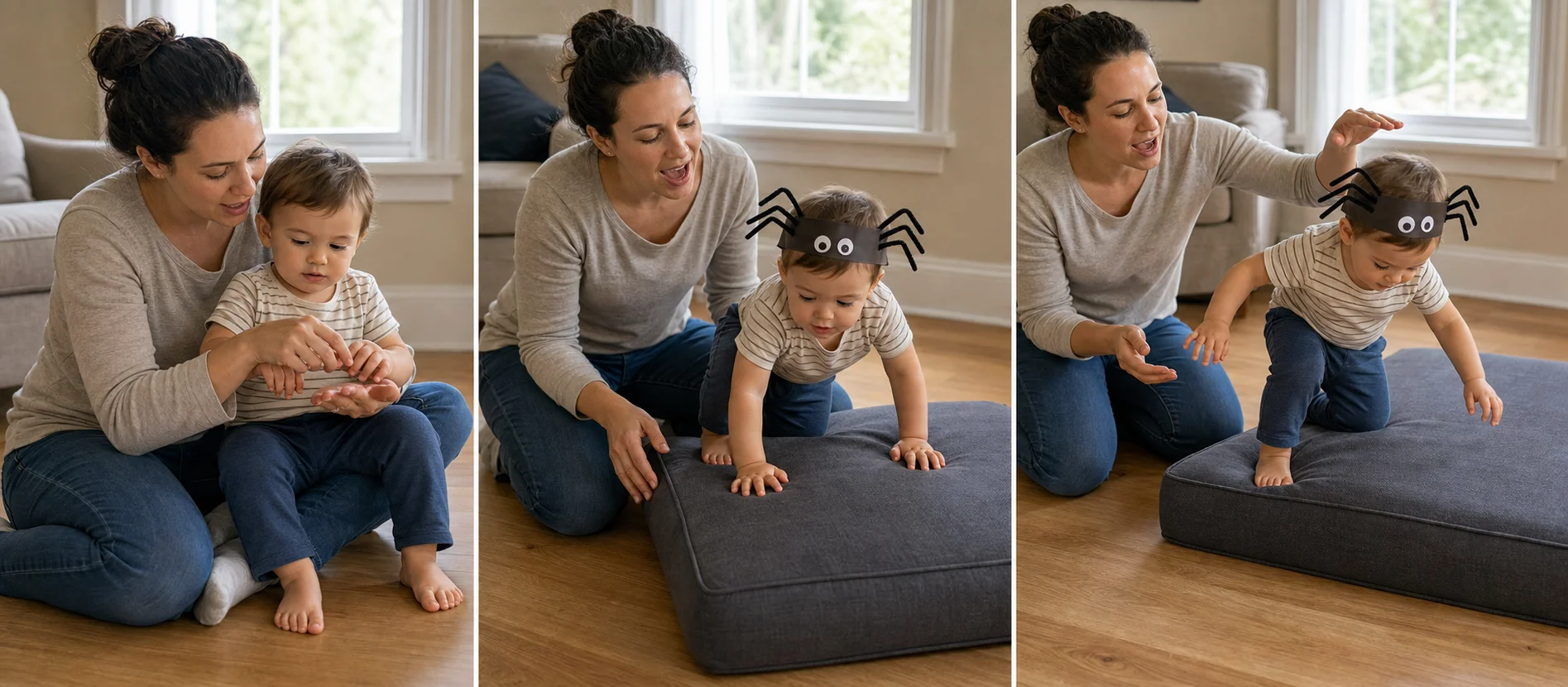
A three-panel sequence showing fingerplay on a grown-up's lap, the toddler climbing up a cushion, and the toddler climbing back down during the song.
  1. 01
    Do one quick fingerplay version of "The Itsy Bitsy Spider" with your child close to you.
  2. 02
    Show the spider headband, say, "Let's be the spider," and move to the climb surface.
  3. 03
    Sing the climb-up line and help your child climb up.
  4. 04
    Sing the rain line and guide your child down, then finish with the spider climbing up again.
  5. 05
    Cheer and repeat if your child wants another round.

Safety Check

  • Stay within arm's reach while your child climbs.
  • Use only a stable surface that already matches your child's usual climbing ability.
  • Stop if the activity turns into jumping, diving, or sliding off instead of controlled climbing with the song.
Supporting the play

What to say in the moment

Match what you say to what you see.

Prompt ladder
Level 1 (Start)
"Spider goes up."
Level 2 (Keep going)
"Now down in the rain."
Level 3 (Stretch)
"Can spider climb again?"
Level 4 (Extend)
"Should spider go fast or slow?"
If your child seems...
What you'd see
Focused
What to do
Say
"You heard the up part."
Add
Repeat the same climb verse one more time before changing speed or role.
Extend
Let your child choose whether the next round is fast spider or slow spider.

Make it easier

Younger end
  • -Keep the child on the same climb surface for every round.
  • -Hold the headband yourself instead of putting it on the child.
  • -Accept 1 climb up and 1 climb down as a full turn.

Make it harder

Older end
  • +Pause before the rain line and wait to see if your child starts climbing down on cue.
  • +Let your child choose whether to wear the headband or hand it to you for the next round.
  • +Switch roles for 1 round so your child watches you be the spider and then copies it back.

If it's not working

If you see
If child ignores it
Skip the headband, do 1 quick fingerplay on your lap, and move straight to 1 climb-up turn with the song.
If you see
If child misuses it
Hold the headband yourself, say, "Spider climbs up," and keep the job on the climb surface only.
If you see
If child gets frustrated
Shorten the song to the climb-up, climb-down, climb-up parts and help with your hands at the child's hips or hands as needed.
Skill spotlight
Level Changes

Changing body level with control during a familiar movement cue

This helps a child shift body level with control, which shows up later in everyday climbing, getting on and off furniture safely, and moving their body to a familiar cue.

  • Early. Your child watches the song and needs your body close or your hands nearby before climbing.
  • Later. Your child anticipates the climb cues, changes direction on time, and asks for another round.
  • Middle. Your child starts climbing during the right song line and comes back down with a little cue or touch.
Real-world transfer
  • Climbing on and off low furniture with more body control.
  • Following a familiar movement cue during songs, routines, and simple games.