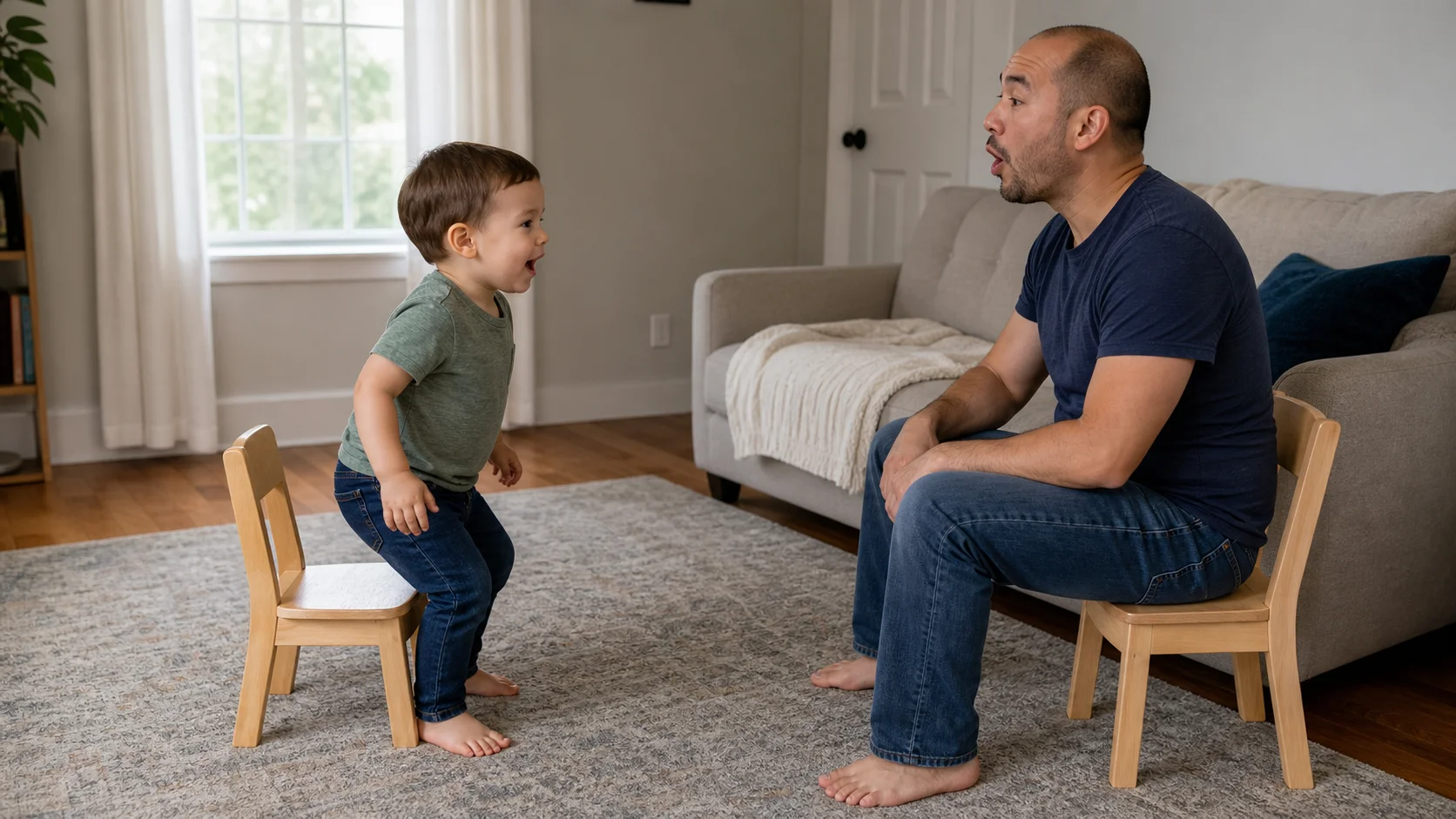
A young child sitting on the floor facing a grown-up, then standing up with a smile after hearing the target sound cue.
LiteracySpeech delay supportRespond To SoundIndoor

Sound Stand-Up Game.

Give listening a visible action: your child stays seated through one familiar sound and pops up when they hear the chosen one. Repeating the same sit, listen, and stand rule helps them practice telling sounds apart before moving.

Play time
5-10+ min
Age
2-3 years
Energy
Low To Medium
Mess
No
Effort
Low
Where
Indoor
Start here

The recipe.

Low parent effort
4 things

What you need

  • 1 grown-up
  • 1 child
  • 2 or 3 familiar sounds to use one at a time, such as a dog bark, bell ring, or car horn sound
  • 1 clear indoor floor spot or chair spot where your child can stand up and sit back down safely
5 min minimum

Setup

Then start the loop
Step 01
Choose a clear floor or stable chair spot with room for your child to sit and stand safely.
Step 02
Choose two familiar sounds you can make clearly, such as a dog bark and a bell ring, and pick one as the stand-up sound.
Step 03
Have your child sit in the starting spot.
"Dog means up."
The loop

How play unfolds.

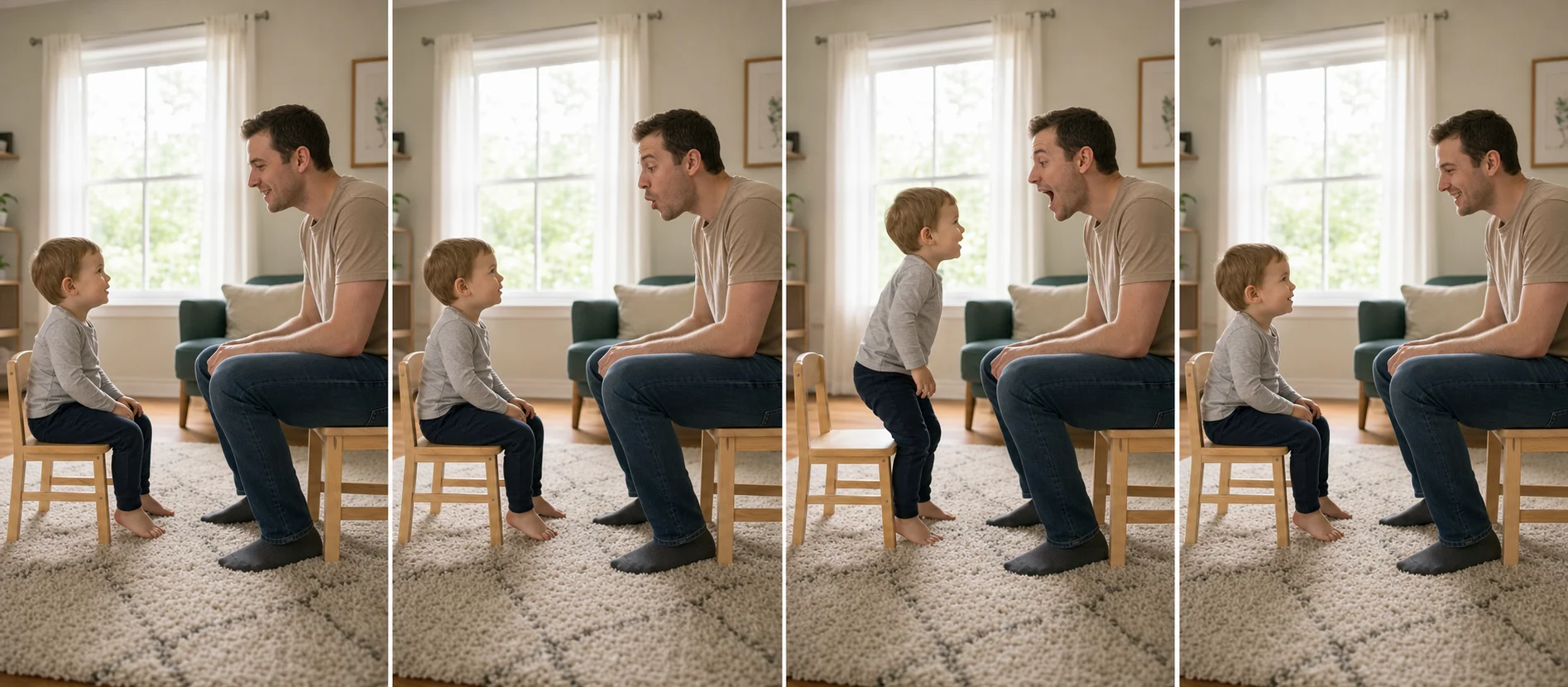
Four panels showing a grown-up and child sitting in a clear play spot, the grown-up modeling the target sound, the child standing on the right cue, and the child sitting back down ready for the next turn.
  1. 01
    Name the stand-up sound, then make it once as you stand and sit to show the rule.
  2. 02
    Make one of the two sounds and let your child listen.
  3. 03
    On the stand-up sound, your child stands and then sits back down. On the other sound, they stay seated.
  4. 04
    Repeat with the same stand-up sound.

Safety Check

  • Keep the play spot clear so quick stand-ups do not turn into trips or crashes.
  • Stay close if your child tends to jump or run instead of standing in place.
  • Keep the sounds gentle and comfortable.
Skill spotlight
Respond To Sound

Listening for a target sound and responding at the right moment

This helps a child notice sound differences, hold a simple listening rule in mind, and connect what they hear to one clear body action.

  • The same short sound rule helps your child practice hearing one cue before moving.
  • Standing only on the target sound turns listening into something your child can show with their whole body.
  • The fast reset gives your child another try without needing a big explanation.
Real-world transfer
  • Listening for the right word or sound before acting.
  • Pausing before moving in games and routines.
  • Joining back-and-forth sound play with a grown-up.
Supporting the play

What to say in the moment

Match what you say to what you see.

Prompt ladder
Level 1 (Start)
"Hear the dog. Stand up."
Level 2 (Keep going)
"Listen. Sit or stand?"
Level 3 (Stretch)
"Was that the one?"
Level 4 (Extend)
"You choose the sound. I stand."
If your child seems...
What you'd see
Focused
What to do
Say
"You heard the right one."
Add
Keep the same target sound for one more round.
Extend
Pause one beat before the next sound so your child holds the rule in mind.

Make it easier

Younger end
  • -Keep the target sound the same for the whole game.
  • -Use only one wrong sound instead of two.
  • -Let your child watch you touch your knees when it is a sit-down turn.

Make it harder

Older end
  • +Add a third sound after your child is getting the first two.
  • +Wait longer between sounds so your child has to hold the rule a little longer.
  • +Let your child stay seated through two wrong sounds before the target appears.

If it's not working

If you see
If child ignores it
Do one exaggerated model turn, then switch to one target sound and one wrong sound only.
If you see
If child misuses it
Say, "Sit, then listen," and wait until your child is back in the starting spot before the next sound.
If you see
If child gets frustrated
Slow the pace and keep only two sounds in play.