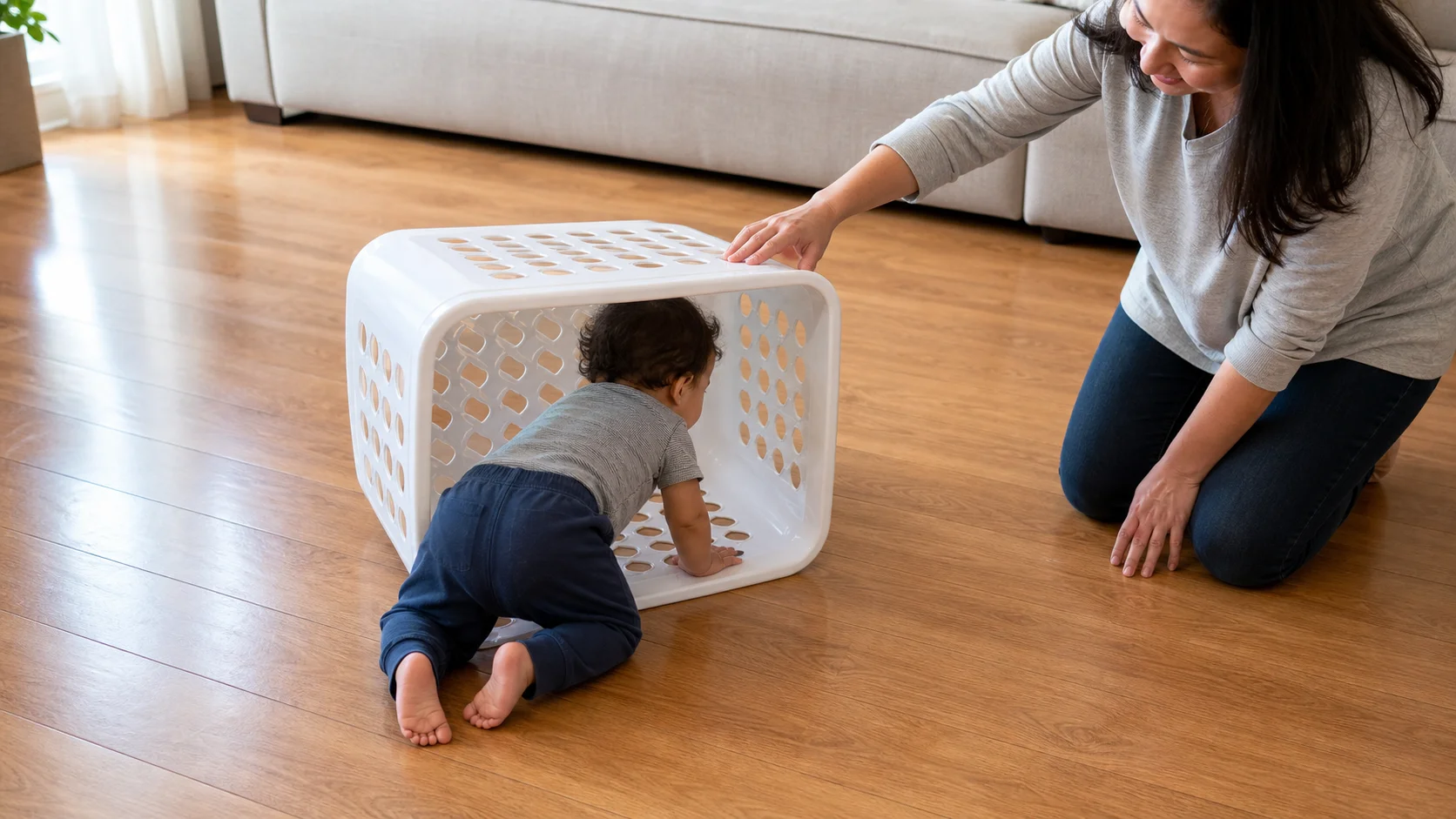
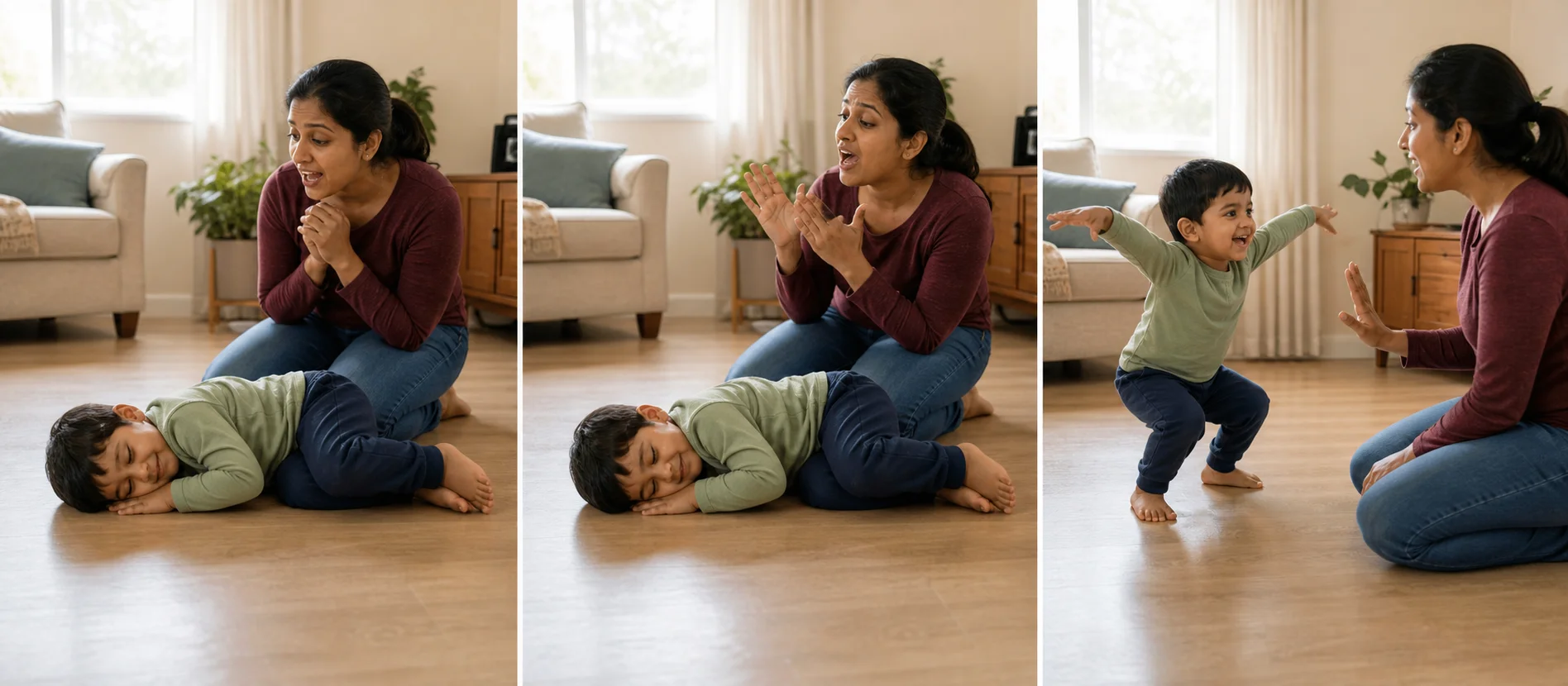
A toddler lies on the floor pretending to sleep, then pops up smiling like a frog while a grown-up sings nearby.
Skill builderPause Before ActionIndoor

Sleeping Animal Wake-Up.

One short song turns waiting, listening, and animal play into an easy indoor game for toddlers.

Play time
5-10+ min
Age
2-3 years
Energy
Medium
Mess
Low
Effort
Low
Where
Indoor
Start here

The recipe.

Low parent effort
2 things

What you need

  • 1 open floor space
  • 1 grown-up to sing and guide the game
5 min minimum

Setup

Then start the loop
Step 01
Clear one open floor area where your child can lie down or sit with a little space to pop up and move safely.
Step 02
Stand or sit where your child can see and hear you clearly.
Step 03
Gather 1 to 4 children in the play space and say the song will tell them when to wake up and what animal to be.
Step 04
Model one quick round before the first turn so the child can see the sleep, wake, and reset pattern.
"Sleep now."
The loop

How play unfolds.

A three-step toddler game showing a child pretending to sleep, listening to a grown-up sing, and waking up as the named animal.
  1. 01
    Sing, "Sleeping, sleeping, all the children are sleeping. And when they woke up they were... monkeys!"
  2. 02
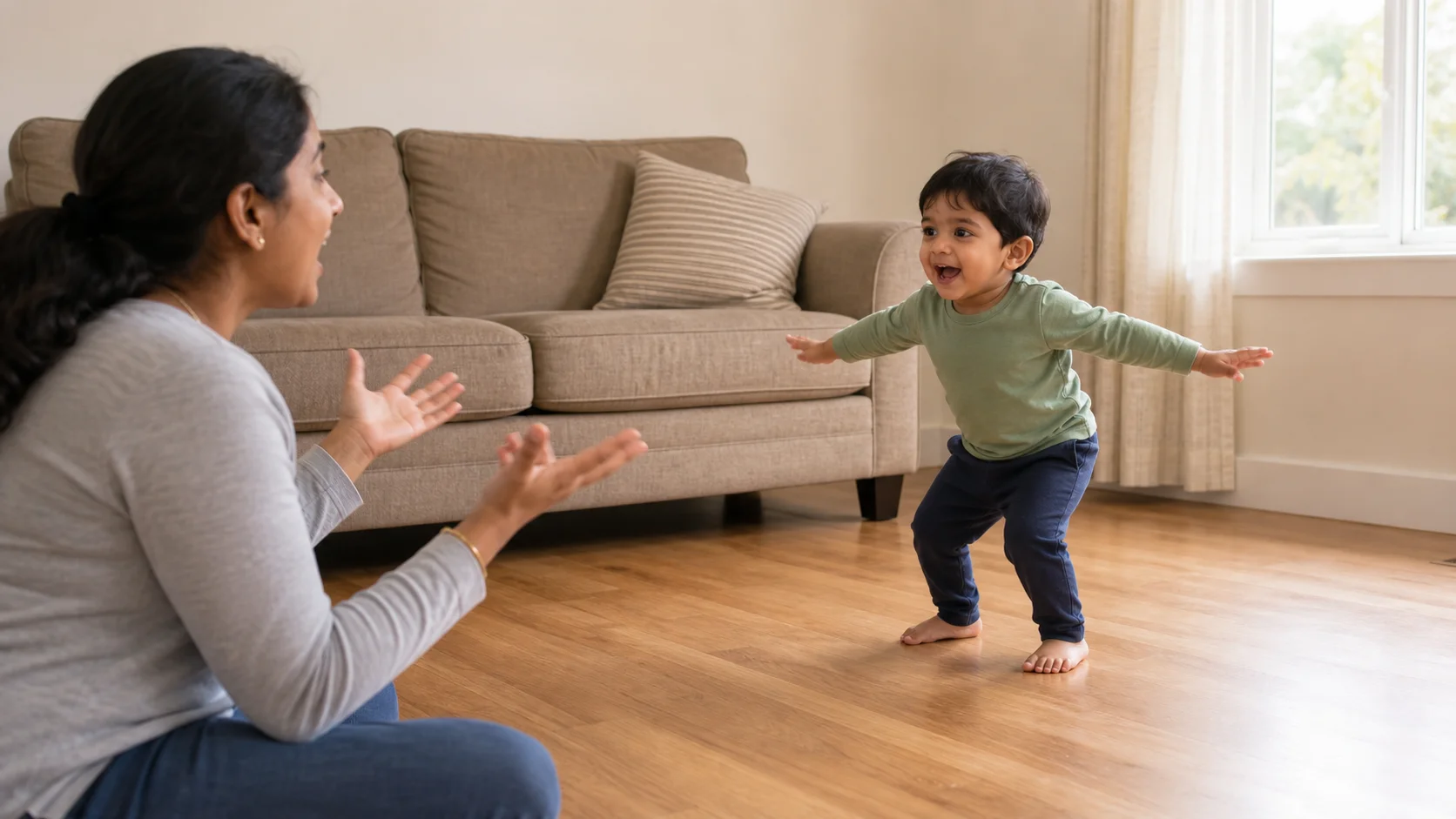
    Let your child wake up on the animal word and make that animal sound or movement.
  3. 03
    Say, "Back to sleep," settle into the sleeping pose again, then sing the next round with a new familiar animal.

Safety Check

  • Keep enough clear floor space for children to lie down, stand up, and move without bumping into each other.
  • Stay close if a child gets too excited when popping up or turns the animal move into rough crashing play.
  • Use familiar animals with simple safe sounds or motions.
Supporting the play

What to say in the moment

Match what you say to what you see.

Prompt ladder
Level 1 (Start)
"Sleep, then wake up like a pig."
Level 2 (Keep going)
"Back to sleep. New animal."
Level 3 (Stretch)
"Can you wait for the animal word?"
Level 4 (Extend)
"You choose the next animal."
If your child seems...
What you'd see
Focused
What to do
Say
"You waited and heard it."
Add
Name the animal after your child acts it out.
Extend
Pause a beat before the animal word so your child listens for it.

Make it easier

Younger end
  • -Stay seated instead of lying down.
  • -Use the same favorite animal more than once.
  • -Play with one child or one pair instead of a bigger group.

Make it harder

Older end
  • +Wait longer before saying the animal word.
  • +Let your child choose the next familiar animal.
  • +Use two different quiet animals back to back without previewing them.

If it's not working

If you see
If child ignores it
Do one exaggerated round yourself with an easy favorite animal, then invite the child to join the next one.
If you see
If child misuses it
Switch to sitting sleep, use one child or one pair, and choose quieter animals with one simple move.
If you see
If child gets frustrated
Wake up together on the cue, count watching as success, and repeat one very familiar animal.
Skill spotlight
Pause Before Action

Waiting for a spoken cue before acting

This helps a child pause their body, listen for one important cue, and switch into the next action without needing constant adult prompting.

  • It gives your child one clear job: wait, listen, then move.
  • It turns a self-control skill into a silly body game instead of a correction.
  • It supports listening for key words inside a familiar repeatable pattern.
Real-world transfer
  • Waiting for one cue before starting a move
  • Listening for key words in songs, games, and routines
  • Shifting from stillness to action in a more organized way