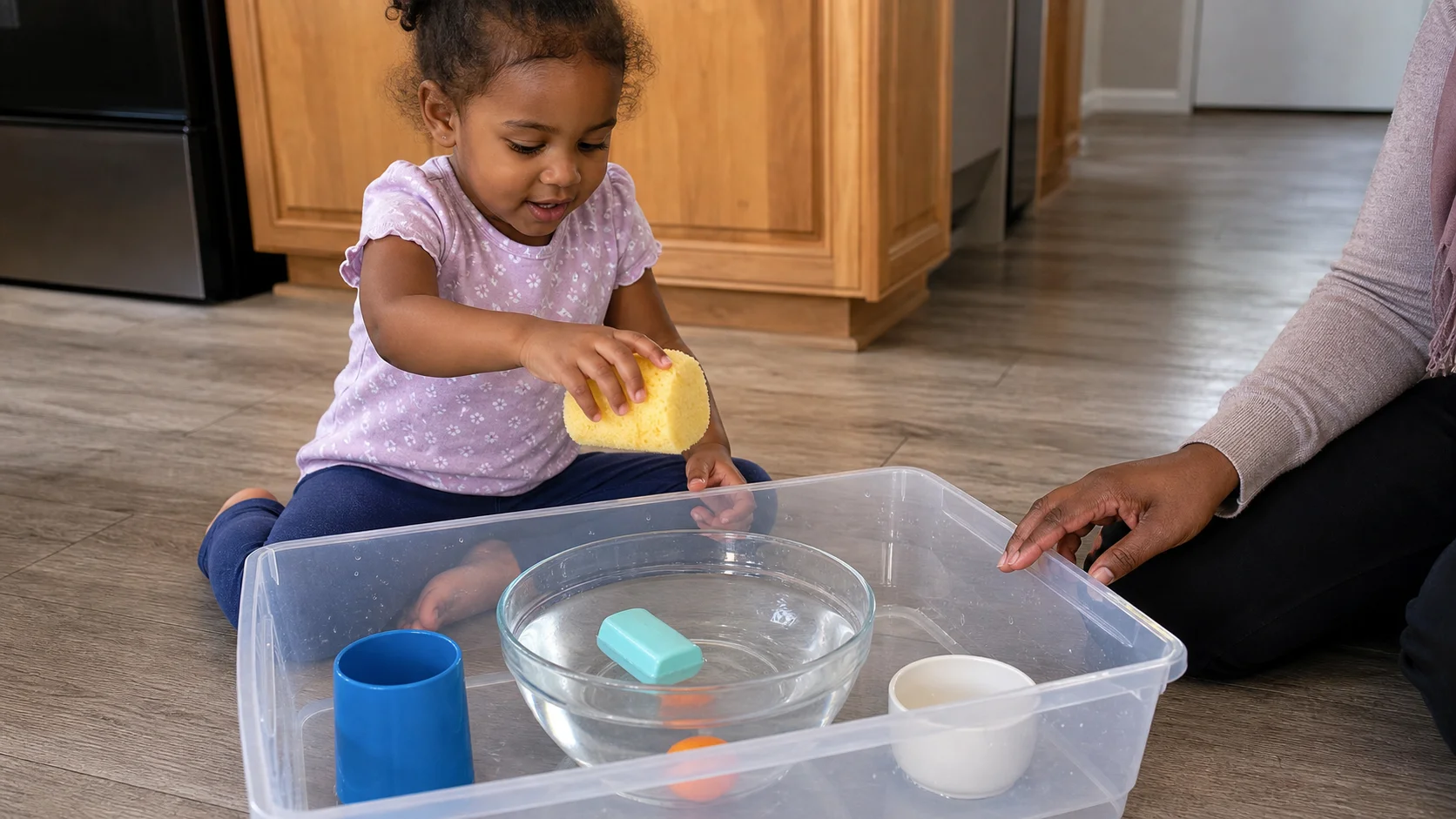
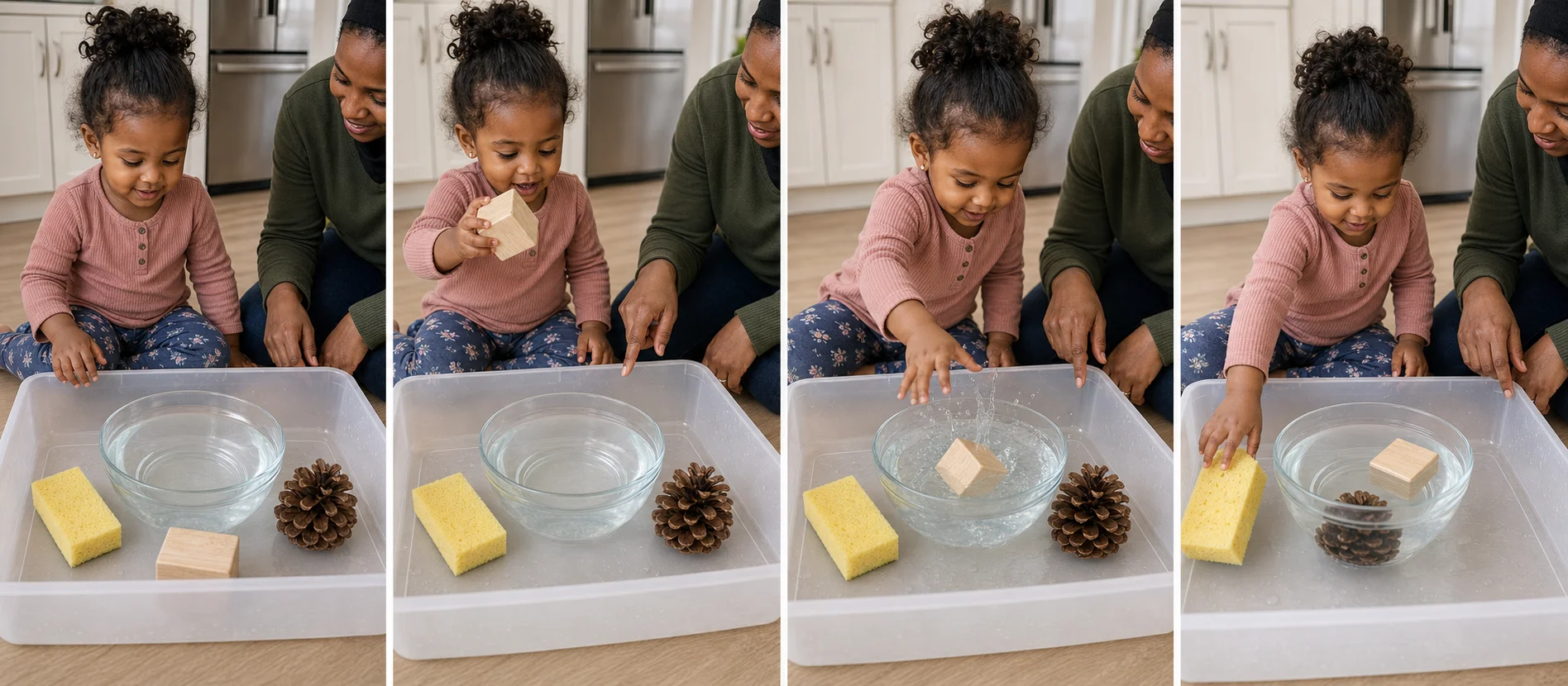
A toddler drops a household item into a bowl of water inside a storage bin while testing sink or float.
ThinkingTest And CompareIndoor

Sink or Float.

A simple water bin activity where your child guesses sink or float, drops one item at a time, and sees what happens.

Play time
5-15+ min
Age
2 years
Energy
Low
Mess
Medium
Effort
Low
Where
Indoor
Start here

The recipe.

Low parent effort
4 things

What you need

  • 1 sensory bin or storage container
  • 1 bowl
  • Water
  • A small handful of household items that can safely get wet
5 min minimum

Setup

Then start the loop
Step 01
On the floor or a low table, put the storage bin in front of your child and set the bowl in the middle.
Step 02
In the bowl, add water until it is about halfway full so drops are easy to see without sending water over the edge.
Step 03
Inside the bin around the bowl, spread a few safe-to-get-wet household items where your child can reach them.
"Sink or float?"
The loop

How play unfolds.

A toddler chooses one household item, drops it into a bowl of water, watches the result, and reaches for the next test item.
  1. 01
    Hold up one item and ask, "Will it sink or float?"
  2. 02
    Let your child guess with a word, point, or look, then drop it into the bowl.
  3. 03
    Watch what happens and say the result together.
  4. 04
    Move the tested item to the side, pick a new one, and repeat. When everything has had a turn, spread the items out again for another round if your child wants.

Safety Check

  • Stay with your child during water play.
  • Skip small items if your child still mouths objects.
  • Use only items that can safely get wet and safely hit the bowl without breaking or splashing hard.
Supporting the play

What to say in the moment

Match what you say to what you see.

Prompt ladder
Level 1 (Start)
"Pick one. Sink or float?"
Level 2 (Keep going)
"You checked it. Grab another."
Level 3 (Stretch)
"What do you think this one will do?"
Level 4 (Extend)
"Can you find one that might do the same thing?"
If your child seems...
What you'd see
Focused
What to do
Say
"You saw what happened."
Add
Ask, "Same or different?" after the item lands.
Extend
Let your child choose the next item for your turn.

Make it easier

Younger end
  • -Use only items that look very different from each other.
  • -Let your child skip the guess and go straight to the drop.
  • -Do one round with you choosing the item and your child doing the drop.

Make it harder

Older end
  • +Ask for the guess before the item gets near the water.
  • +Let your child choose the next test item without help.
  • +Ask your child to find another item they think will do the same thing.

If it's not working

If you see
If child ignores it
Do one fast grown-up turn and say, "I think this one will float. Let's see."
If you see
If child misuses it
Keep the extra items beside you and hand them over one at a time.
If you see
If child gets frustrated
Skip the guess, let your child drop the item first, and say the result together after it lands.
Skill spotlight
Test And Compare

Testing what happens, then comparing the result

This helps a child notice what happened after an action and use that information on the next turn, which matters in everyday play, water exploration, and simple problem solving.

  • The guess -> drop -> check loop helps your child test one idea at a time and watch for a clear result.
  • Repeating the same round with new objects builds simple compare words such as sink, float, same, and different.
  • Dropping one item at a time gives easy practice with hand control and starting the next turn.
Real-world transfer
  • Noticing what objects do in water, the bath, or outside puddles.
  • Trying one idea, watching the result, and adjusting the next try.
  • Talking through simple predictions during play.

Parent questions