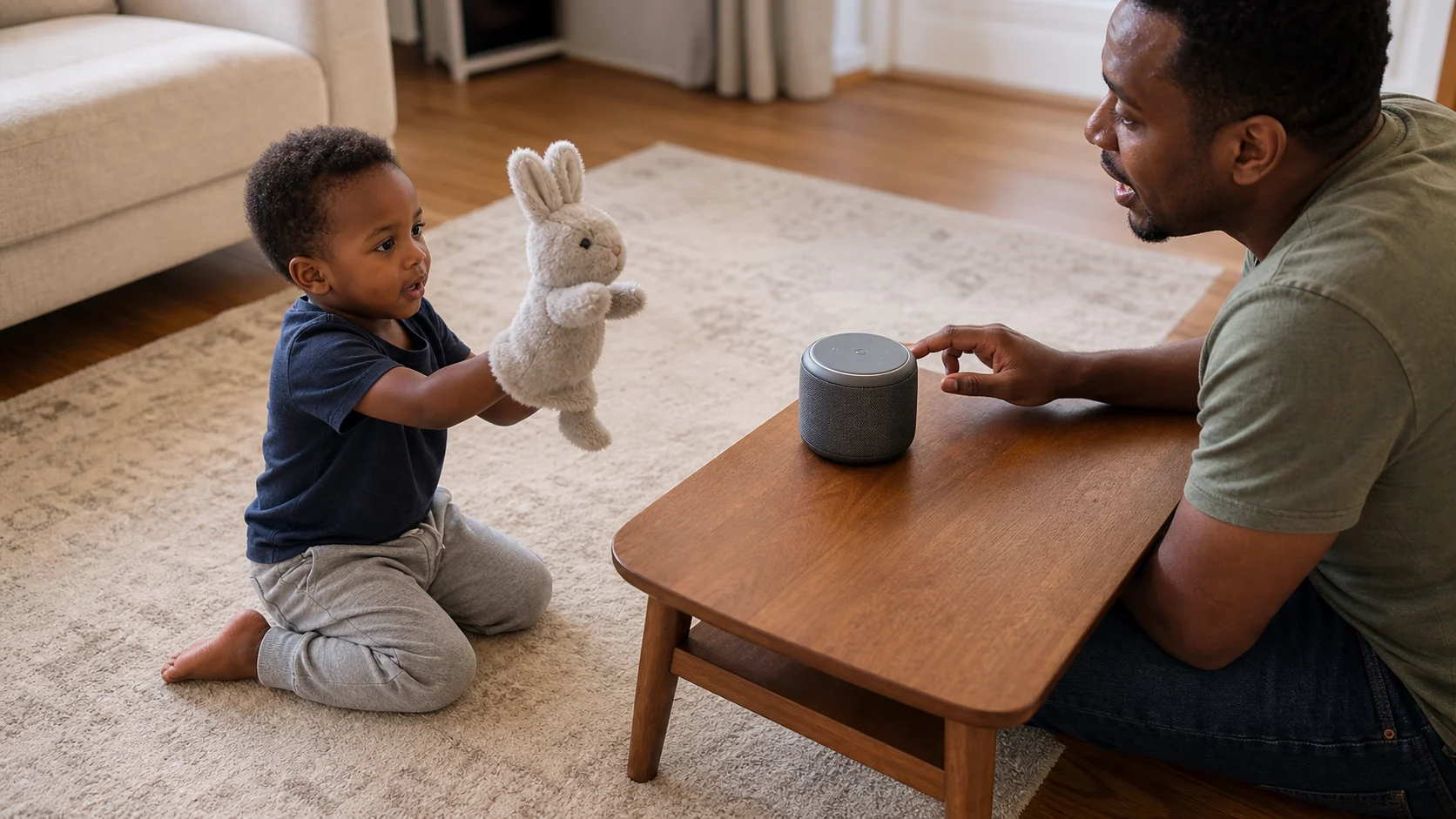
A child holding a puppet while a grown-up plays a quiet music clip nearby.
LiteracySpeech delay supportRespond To SoundIndoor

Quiet Music Story.

Use one puppet and one short music clip to make a tiny listen-show story.

Play time
5-10+ min
Age
2-3 years
Energy
Low
Mess
Low
Effort
Low
Where
Indoor
Start here

The recipe.

Low parent effort
3 things

What you need

  • Phone, tablet, or speaker for playing music
  • Short music clip with clear changes in sound
  • Puppet or doll
5 min minimum

Setup

Then start the loop
Step 01
On a stable surface within your reach, cue one short part of music with a clear change in sound.
Step 02
On that same surface or in your hand, keep the phone, tablet, or speaker out of your child's walking path.
Step 03
In front of your child or in your child's hands, place one puppet or doll.
Step 04
Beside or across from your child, sit close enough for your child to see your face while moving the puppet or doll.
"Listen. My puppet is tiptoeing."
The loop

How play unfolds.

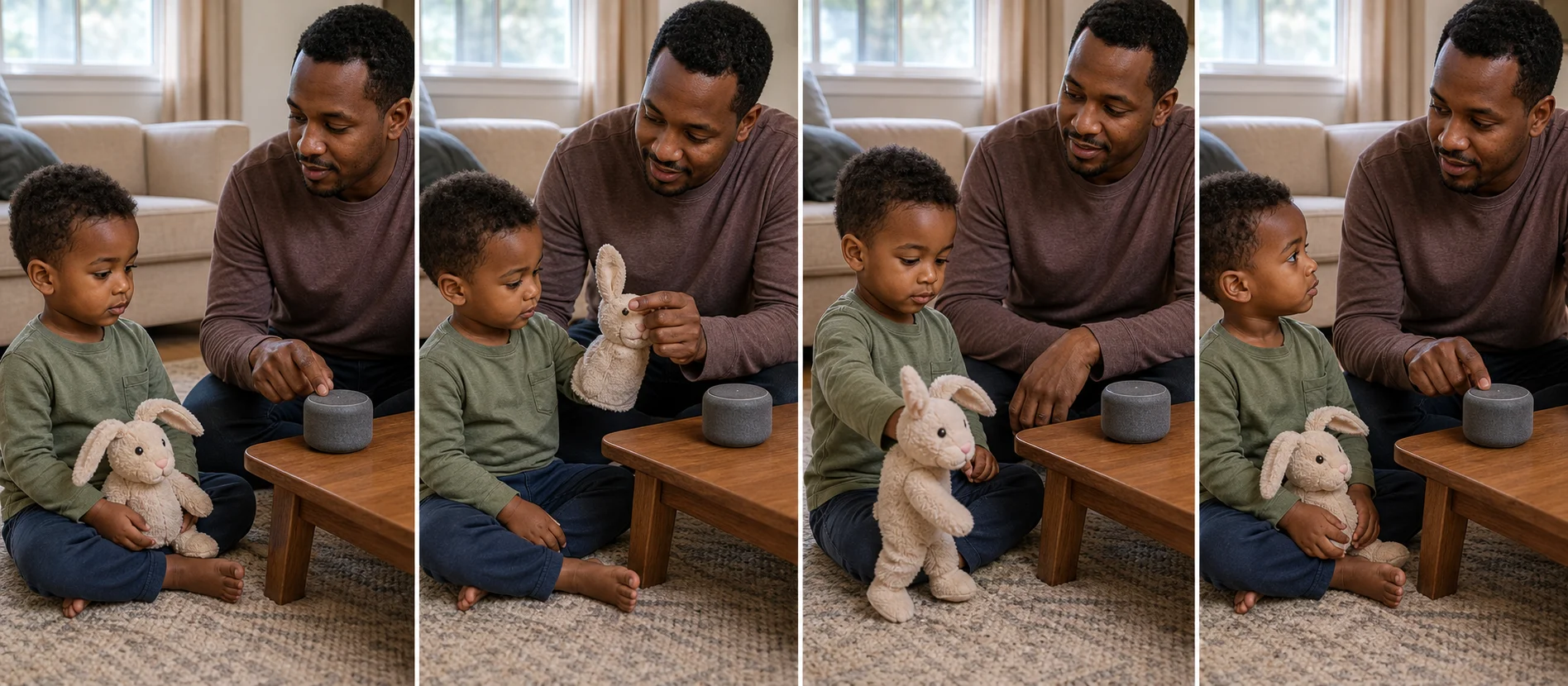
A sequence showing music starting, the puppet moving, the grown-up narrating, pausing, and replaying the same clip.
  1. 01
    Play the first few seconds of music, move the puppet or doll in one simple way, and say, "Listen. My puppet is tiptoeing."
  2. 02
    Offer the puppet or doll and ask, "What is your puppet doing?"
  3. 03
    Let your child move it, point, make a sound, say an idea, or simply watch.
  4. 04
    Narrate the action in one short sentence, then pause for a look, sound, gesture, word, or another movement.
  5. 05
    Replay the same short section once before changing clips or stopping, so the sound change is easier to notice.

Safety Check

  • Keep the volume low enough that you can talk in a normal voice.
  • Keep the phone, tablet, or speaker within adult reach and out of the walking path.
  • Check the puppet or doll for loose small parts if your child still mouths toys.
  • Stop the music right away if your child covers their ears, turns away, looks distressed, or starts moving fast.
Supporting the play

What to say in the moment

Match what you say to what you see.

Prompt ladder
Level 1 (Start)
Move your puppet for one sound and say what it is doing.
Level 2 (Keep going)
Let your child copy your puppet action during the next short listen.
Level 3 (Stretch)
Wait for the sound to change, then invite one new puppet action.
Level 4 (Extend)
Let your child choose the puppet's next move before you replay the same short part.
If your child seems...
What you'd see
Focused
What to do
Say
"Keep showing me the story."
Add
Name one action you see.
Extend
Pause the puppet when the music changes and wait for the child to restart it.

Make it easier

Younger end
  • -Use one repeated action, like walk, bounce, or sleep, for every sound change.
  • -Give a two-choice prompt, such as "fast or slow?"
  • -Let your child watch your puppet while they point or make one sound.

Make it harder

Older end
  • +Ask your child to change the puppet action when the music changes.
  • +Let your child begin the movement before you narrate it.
  • +Invite a two-part puppet story, like walk then hide.

If it's not working

If you see
If child ignores it
Move the puppet yourself for one exaggerated action, narrate it in one sentence, and invite your child to copy.
If you see
If child misuses it
If the puppet gets thrown, mouthed, or used to grab the device, hold the puppet yourself and let your child point, tap, or act out one movement beside you.
If you see
If child gets frustrated
Stop the music, lower the volume or choose a calmer section, and offer one listening-only turn with the puppet resting still.
Skill spotlight
Respond To Sound

Listening for a sound change

This helps a child connect what they hear to one clear action, stay with a short shared story, and respond during songs, books, routines, and simple directions.

  • Listening before moving the puppet gives your child a simple sound-to-action job.
  • One short narration sentence keeps the turn clear without asking your child to perform.
  • The pause after your sentence leaves room for a look, gesture, sound, word, or another puppet move.
  • Replaying the same short section makes the activity predictable enough to try again.
Real-world transfer
  • Listening for changes in songs or stories
  • Waiting through one short adult sentence
  • Using movement or words to show an idea
  • Following a simple sound-based cue
  • Taking part in calm back-and-forth play

Parent questions