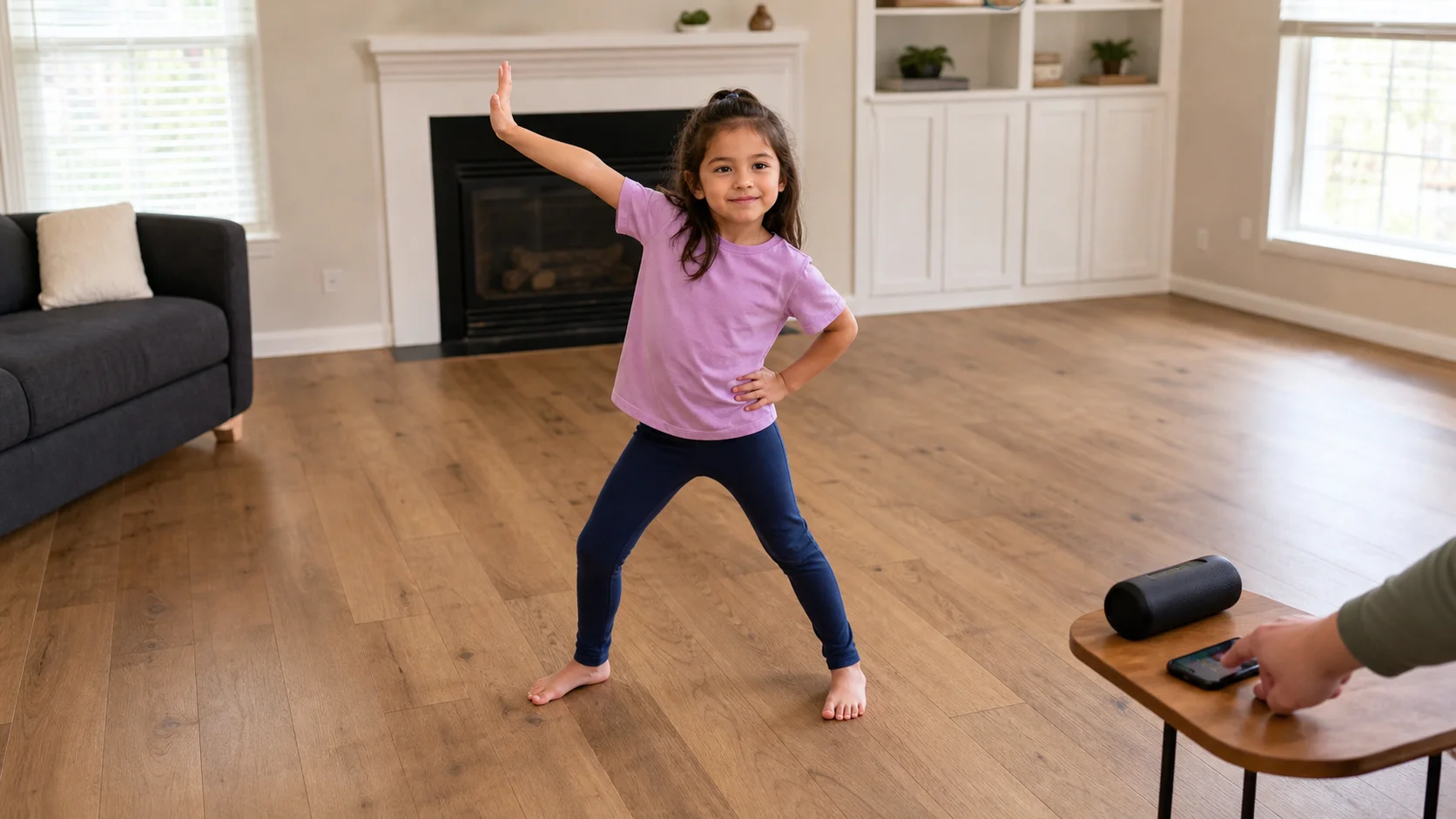
A child dancing in an open room while a grown-up reaches toward a music player ready to stop the song for a freeze.
Fine motorStop And StartIndoor

Freeze Dance.

Turn any song into a stop-and-go movement challenge. Your child dances with the music, freezes when it stops, and starts again to practice body control and responding to sound cues.

Play time
5-10+ min
Age
4-8 years
Energy
Medium To High
Mess
No
Effort
Low
Where
Indoor
Start here

The recipe.

Low parent effort
4 things

What you need

  • 1 music player, phone, tablet, or other device
  • 1 slow song
  • 1 fast song
  • 1 large open indoor play space
5 min minimum

Setup

Then start the loop
Step 01
Choose one slow song and one fast song, and queue them on a device you can pause quickly.
"Dance, then freeze."
The loop

How play unfolds.

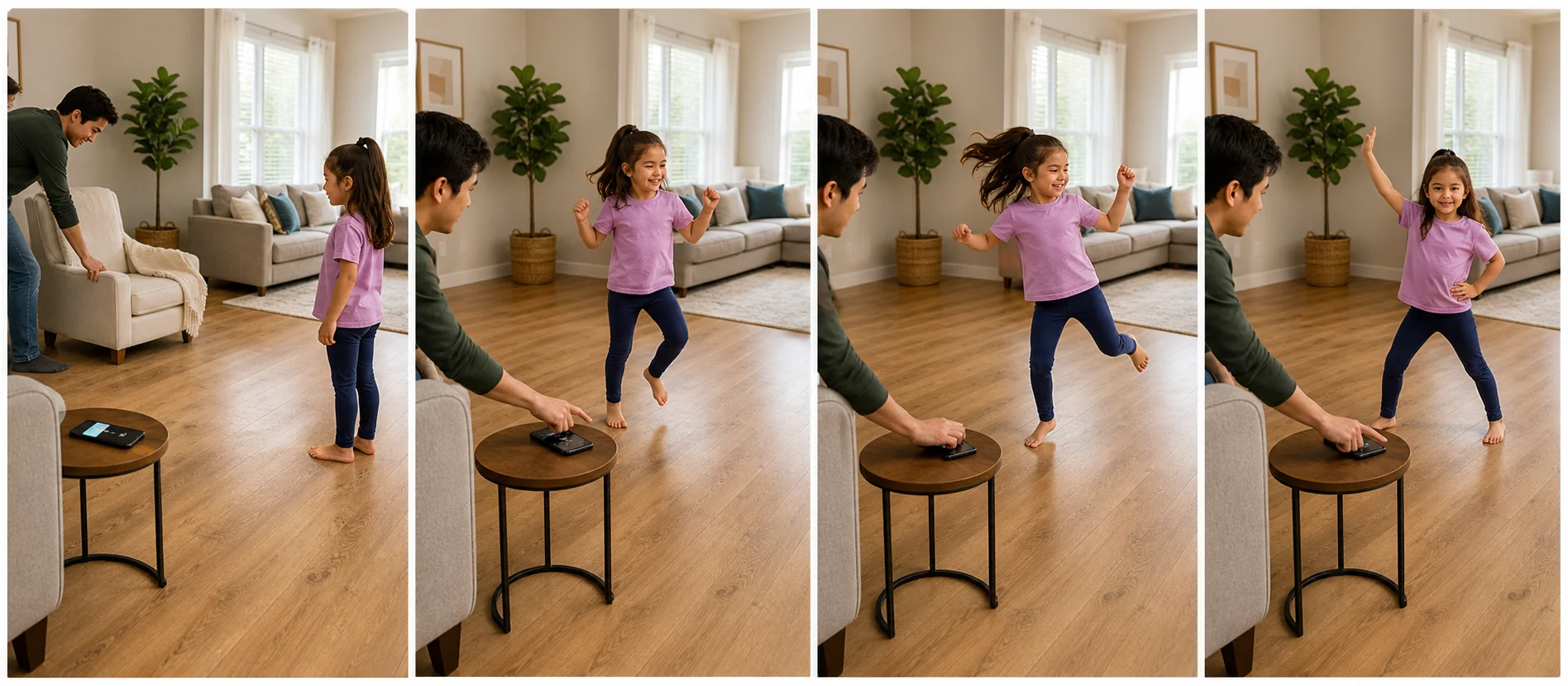
Four panels showing a grown-up clearing a room, starting music, a child dancing fast, and both players freezing when the music stops.
  1. 01
    Start the slow song and have your child dance slowly.
  2. 02
    Pause the music and have them freeze until you restart it.
  3. 03
    Switch to the fast song and have them dance faster, then pause for another freeze.
  4. 04
    Alternate between the songs and repeat.

Safety Check

  • Keep the dance space clear enough for quick stops.
  • Keep the music player outside the moving path.
  • Stop if your child cannot stop safely, gets dizzy, or starts crashing into the room.
  • Keep the volume comfortable enough that the music cue is clear without making the room feel overwhelming.
Skill spotlight
Stop And Start

Stopping and restarting the body on cue

This helps a child change body speed on purpose, stop after a cue, and notice the difference between a revved-up body and a calmer one.

  • Early. Your child may keep moving after the music stops and need your body model to freeze.
  • Later. Your child may hear the change, freeze on cue, answer a short body check, and restart on their own.
  • Middle. Your child may stop quickly in some rounds but still need help holding the freeze or changing speed with the next song.
Real-world transfer
  • Stopping after a clear cue during active play.
  • Shifting from bigger movement into a calmer body.
  • Following one-step movement directions in songs, games, and routines.
Supporting the play

What to say in the moment

Match what you say to what you see.

Prompt ladder
Level 1 (Start)
"Dance slow. Freeze."
Level 2 (Keep going)
"Now fast. Freeze again."
Level 3 (Stretch)
"Can you hold your freeze?"
Level 4 (Extend)
"Show me your next dance speed."
If your child seems...
What you'd see
Focused
What to do
Say
"You heard the stop."
Add
Ask one short body check such as "Fast or slow?"
Extend
Let your child pick whether the next round is the slow song or the fast song.

Make it easier

Younger end
  • -Use only one song speed for the first few rounds.
  • -Keep every dance round short before the freeze.
  • -Freeze in place beside your child instead of dancing around the room.

Make it harder

Older end
  • +Hold the freeze for two beats before starting the next song.
  • +Switch between slow and fast songs more quickly.
  • +Let your child call whether the next round should feel slow or fast.

If it's not working

If you see
If child ignores it
Keep dancing yourself for one short round and invite, "Freeze with me."
If you see
If child misuses it
Bring the game back to dancing in place and restart with, "Feet here. Freeze when it stops."
If you see
If child gets frustrated
Use only the slow song for one round and skip the body check.