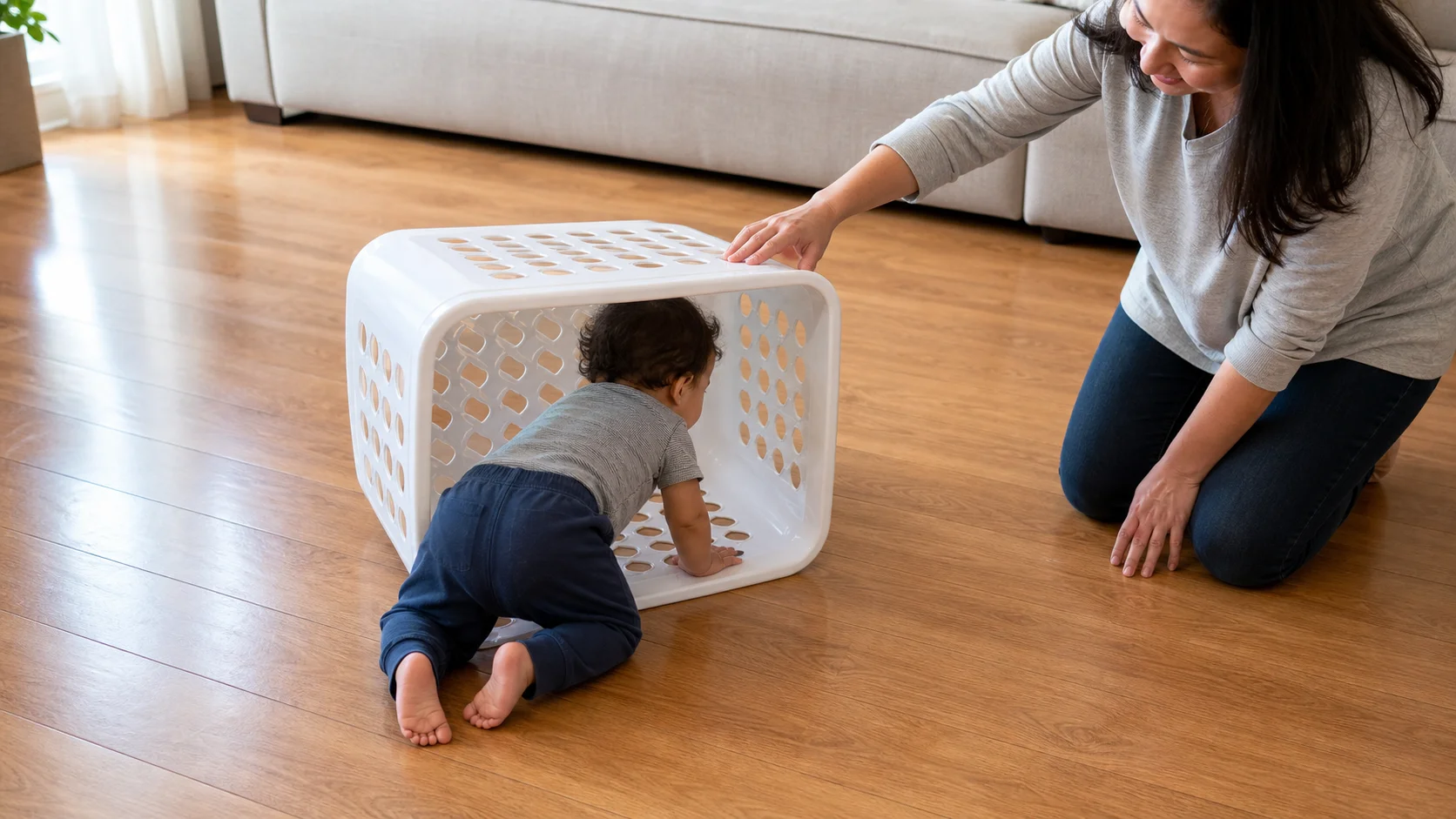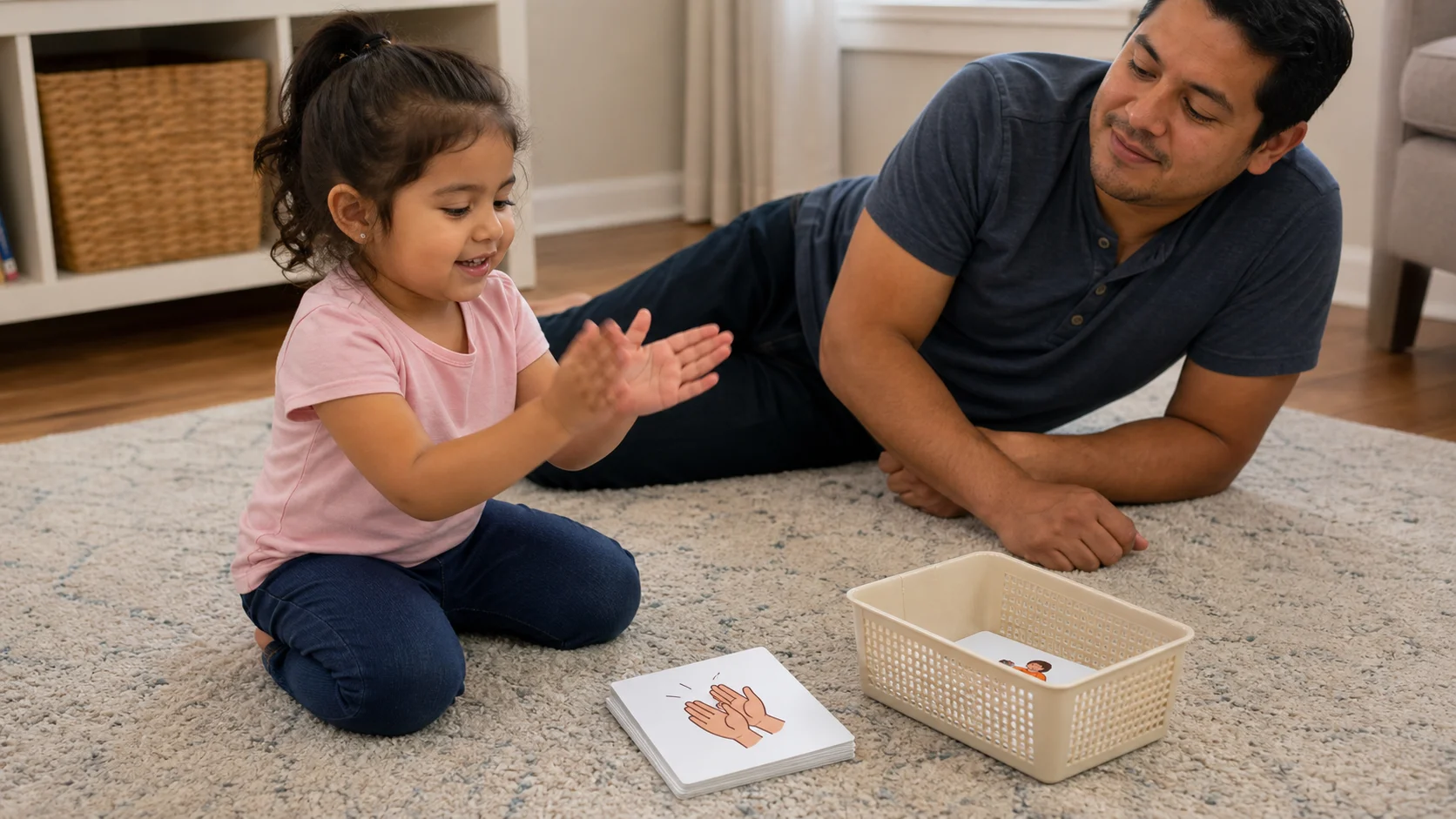
A grown-up and toddler on the floor using action picture cards and dropping each finished card into a small bin after copying the movement.
Skill builderAutism supportFinish And ResetIndoor

Action Picture Drop.

Turn a few picture cards into a movement game with a satisfying finish after every turn. Your child copies one action, drops the used card into a container, and starts the next to practice following a simple visual sequence.

Play time
5-10+ min
Age
2-4 years
Energy
Medium
Mess
No
Effort
Medium
Where
Indoor
Start here

The recipe.

Medium parent effort
3 things

What you need

  • 3 picture cards showing simple actions
  • 1 finished container, pocket, or small bin
  • 1 open floor or table area for easy body actions
5 min minimum

Setup

Then start the loop
Step 01
Stack a few action picture cards with only the top card showing.
Step 02
Put an empty container beside the stack.
"Your turn."
The loop

How play unfolds.

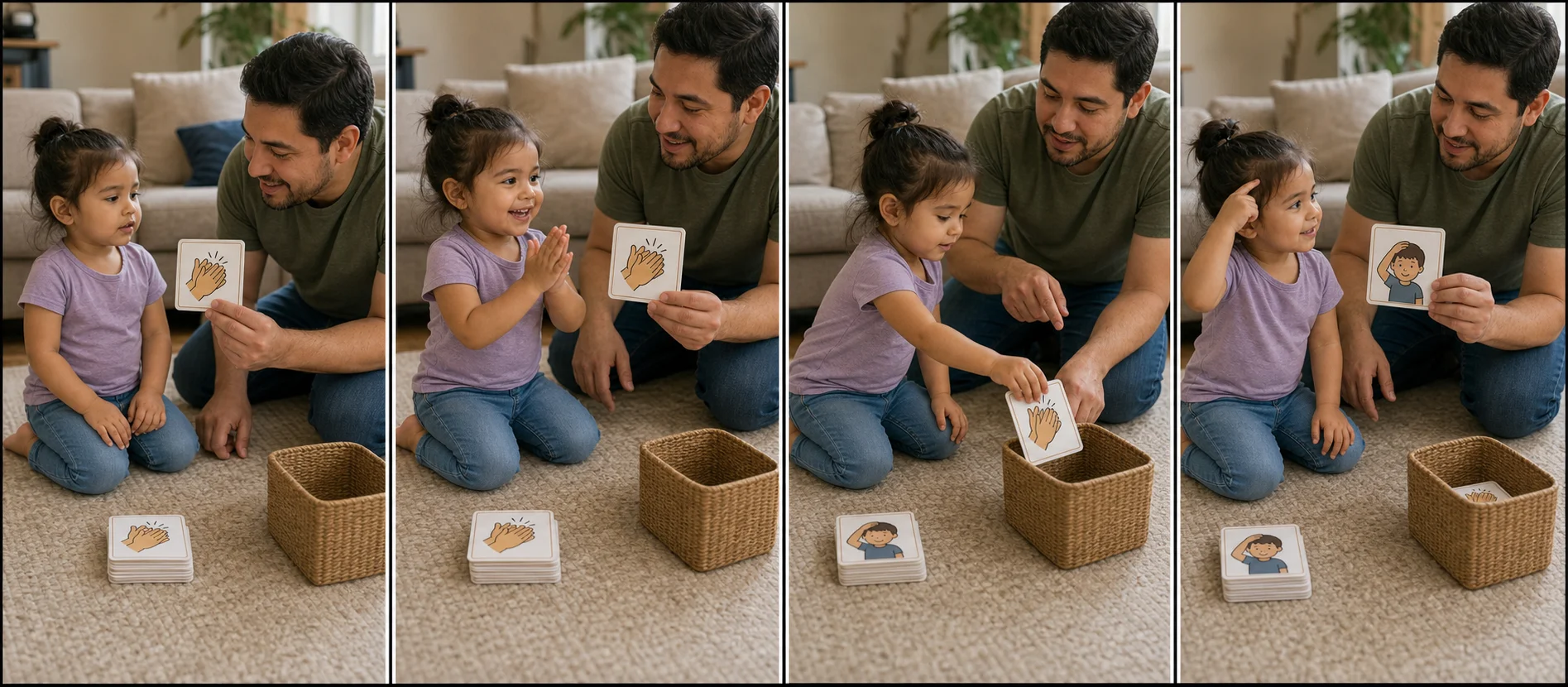
A multi-panel sequence showing a toddler looking at an action card, doing the movement, and dropping the used card into a finished bin before starting the next one.
  1. 01
    Show your child the first card and say, “Do this one.”
  2. 02
    Have them copy the pictured action.
  3. 03
    Have them drop the used card into the finished container.
  4. 04
    Show the next card and repeat until the stack is empty.

Safety Check

  • Keep enough open space for the chosen actions so your child does not bump furniture or another person.
  • Stay close if your child mouths, bends, or throws the cards.
  • Use only simple actions that fit the room and your child's body control.
Skill spotlight
Finish And Reset

Finishing one visual action step before moving to the next

This helps a child follow a short visual routine, complete one step before moving on, and use a visible finish cue to understand when a turn is done.

  • One card at a time gives your child a single visual cue to notice before acting.
  • Doing the action and then dropping the card into finished helps the child practice completing one step before moving on.
  • The same look, act, drop pattern repeats without needing a lot of extra language.
  • The finished container makes the end of each turn easy to see, which can make the routine easier to rejoin.
Real-world transfer
  • Following short picture-led routines
  • Finishing one step before moving to the next
  • Putting completed items into a clear finished spot during everyday tasks
Supporting the play

What to say in the moment

Match what you say to what you see.

Prompt ladder
Level 1 (Start)
"Do this one."
Level 2 (Keep going)
"Now drop it in."
Level 3 (Stretch)
"Show me the next one."
Level 4 (Extend)
"Let's finish all the cards."
If your child seems...
What you'd see
Focused
What to do
Say
"You did that one."
Add
Name the action in one or two words after the turn.
Extend
Pause before modeling the next card so your child gets the first try.

Make it easier

Younger end
  • -Use big obvious actions like clap or touch head.
  • -Let your child drop the card even if you do most of the action together.
  • -Keep the finished container very close to the cards.

Make it harder

Older end
  • +Wait to see if your child can do the pictured action before you model it.
  • +Use 4 or 5 cards in one round.
  • +Ask your child to carry the finished container back to the start for the next round.

If it's not working

If you see
If child ignores it
Do the first action with a bigger movement, then hand the card over for the drop.
If you see
If child misuses it
Hold back the extra cards, return to one card only, and say, "Do it, then in."
If you see
If child gets frustrated
Cut the round down to 1 or 2 cards and use the easiest action first.

Parent questions