
Early literacy
Why “Letter of the Week” Wastes Classroom Time (And How Kids Actually Learn Letters)
Walk into most preschool rooms in September and you already know what is drying on the art rack: twenty green paper A's turned into alligators.
Next week it will be B for bear. By Thanksgiving, the class might reach K. And if you have a four-year-old named Zoe in the room, she will wait until March before the weekly plan finally gets around to the first letter of her own name.
Before going any further, let's be clear about one thing: teaching letters in preschool matters. Knowing letter names and sounds is one of the strongest, most reliable predictors of how well a child will read later. Dropping "Letter of the Week" does not mean stepping back from early reading.
It means dropping one of the slowest ways to teach it and replacing it with routines that take less prep and actually stick.
Why So Many Centers Stick With Letter of the Week
Most articles criticizing Letter of the Week sound like a lecture from someone who has never managed sixteen three-year-olds on a rainy Tuesday. Teachers and directors keep Letter of the Week for sensible, practical reasons:
- It solves the planning problem. One letter gives a teacher an instant theme, book list, and table activity. That's especially helpful when staff are new or covering a room on short notice.
- It gives parents visible proof on Fridays. When a child walks out carrying a paper "M" covered in macaroni, parents feel confident their child is getting ready for kindergarten.
- It feels structured. Telling a busy teacher to "just weave letters into play" sounds vague without a concrete routine to put in its place.
Any replacement has to solve those same three problems. It needs to be easy to run on Monday morning, clear enough for any teacher to follow, and visible to parents at pickup.
4 Ways Letter of the Week Slows Kids Down
Traditional one-letter-a-week pacing runs on habit, not evidence. Once you look closely at what happens across a full school year, four problems stand out.
1. One pass takes more than half the year
At one letter per week, it takes 26 weeks just to see the alphabet once. Children who start in September often forget October's letters by the time the class hits P. Children who enroll in January miss the first half of the alphabet altogether.
Classroom studies compared one-letter-a-week pacing with faster, repeated loops. In the faster groups, teachers introduced letters briefly and cycled through the whole alphabet multiple times a year. Children in those groups learned significantly more letters. Kids remember letters through short, frequent check-ins across the year, not one marathon week in the fall.
2. Craft time pretends to be letter time
Spending twenty minutes gluing cotton balls onto a paper "C" mostly practices pinching, gluing, and following directions. Those are fine hand-strength skills, but they do not teach a child the letter C. Ask a three-year-old at pickup what they made and they will say, "A cloud," not "the letter C."
3. Kids do not meet letters floating alone
Nobody reads isolated letters in real life. Children see letters inside words that matter to them: their own name on a cubby, a friend's name on the job chart, STOP on a block-area sign, or MOO in a favorite board book. Research also shows that teaching a letter's name, its sound, and how it looks together in brief lessons works better than drilling them separately.
4. Not every letter deserves five days
Some letters click fast. Children usually pick up O, X, and the first letter of their own name quickly. They also learn letters faster when the letter's name includes its sound, like B (/b/) or M (/m/). Other letters are genuinely harder because their names give no clue to their sound (H, W, Y) or because they look alike (b, d, p, q). Giving O and W the exact same five-day slot wastes time on easy letters and shortchanges the tricky ones.
What to Run Monday Morning Instead (5 Low-Prep Routines)
You do not need a new wall display or a weekend cutting out paper shapes. Children already care about the letters in their own names. Start there and build five short routines into parts of the day you already run.
1. Morning Sign-In and a Name Wall (5 minutes at arrival)
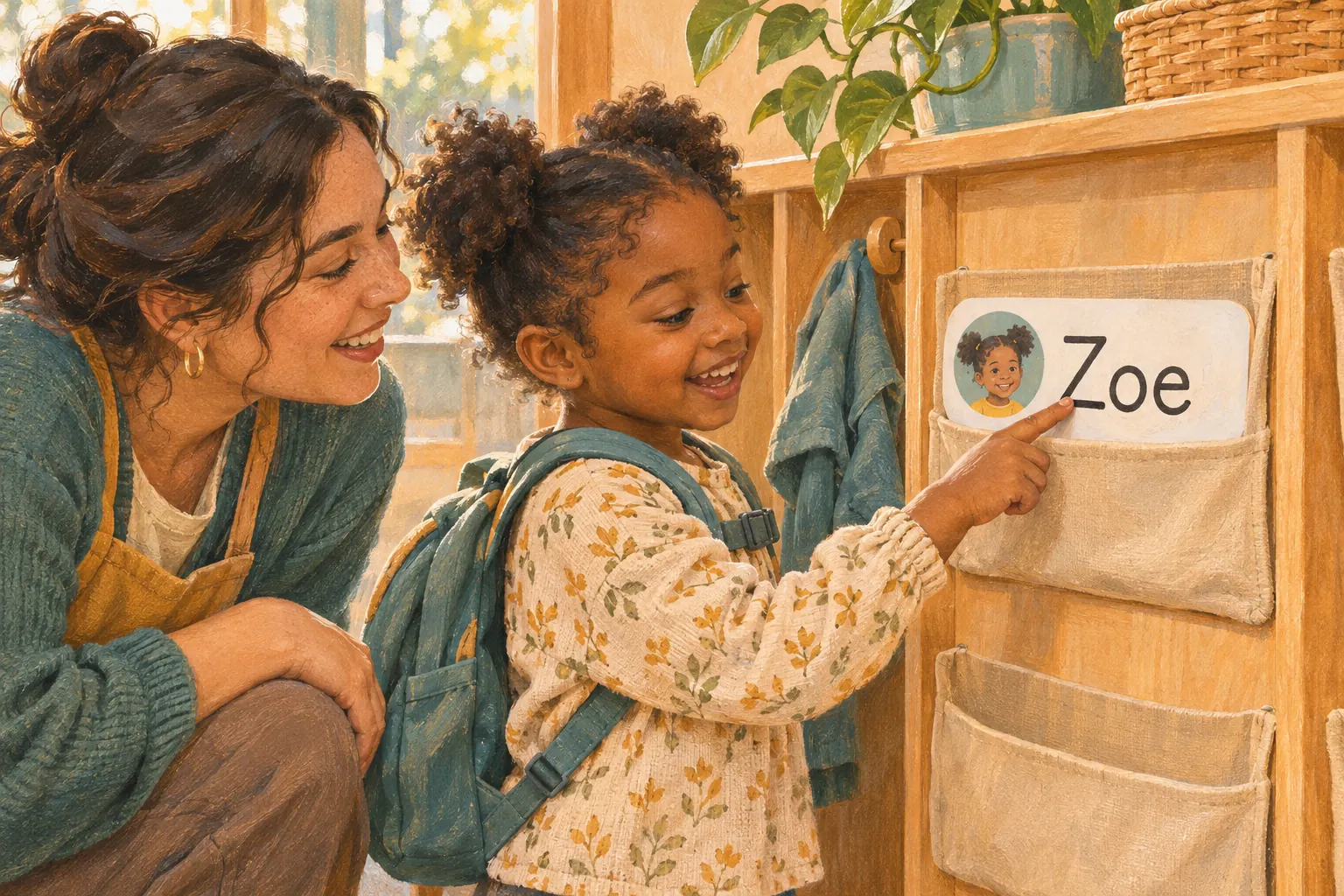
Put a laminated name card (with the child's photo next to it for younger preschoolers) near the door or cubbies. As children arrive, they find their card and move it to a "Here Today" board. Older threes and Pre-K kids can also sign in on a clipboard with a chunky marker, even if their signature starts as a single letter or a scribble.
What to say:
"Look, Maya and Mateo both start with M. Hear that /m/ sound at the beginning of both names?"
A child's own name is their strongest anchor into the alphabet. Starting with the class roster means every child sees letters that belong to them in week one, not week twenty-six.
2. Name-First Short Loops (3–5 minutes at circle or small group)
Instead of marching A to Z over six months, introduce two or three letters a week (or one a day in Pre-K), starting with the first letters of the children in your room. Once you finish the alphabet, loop back through it three to five times over the year, spending extra passes on the letters your group still mixes up.
Keep each mini-lesson under five minutes and hit three things every time:
- Show the uppercase and lowercase letter and say its name and sound together.
- Spot it in a real word (a classmate's name, a cubby tag, or today's book cover).
- Trace the shape once in the air, on the rug with a finger, or on a small whiteboard.
A day or two after you introduce the first letter of a child’s name, show them that letter on its own. Ask, “What’s this letter called?” If they’re unsure, point to it on their name card, say its name, and give them another turn at sign-in tomorrow. If they can already name it, ask what sound it can make. Their answer tells you which part to practice next.
Then move on. Short and steady beats long and dragged out.
3. Clipboards in Play Areas (ongoing, zero craft prep)
Drop clipboards, thick markers, and blank index cards into blocks, dramatic play, and art. Kids will naturally use them to make grocery lists, restaurant menus, doctor clipboards, or "SAVE" signs for block towers they do not want knocked down.
When a child asks you to write a sign for their tower or bakery, write it slowly where they can watch and name the letters out loud as you go: "You want a sign that says OPEN? First is O, then P, then E, then N." That ten-second moment connects letters directly to a real purpose.
4. Two-Minute Letter Moments During Story Time
You do not need a separate letter block when you already read aloud every day. In a multi-state preschool study called Project STAR, teachers who simply pointed out letters, words, and book features briefly during normal daily read-alouds produced real gains in children's early reading skills.
Pick two natural pauses per book to keep story time from turning into a quiz.
- Point to the cover: "This title starts with the same L as Liam's name."
- Point to a big repeated word on a page (like CRASH, NO, or MOO) and run your finger under it as you read it.
- Invite one child to come point to a letter they recognize on the page.
5. Transition Games Instead of Waiting in Line
Transitions eat up twenty to thirty minutes of every preschool day. Turn waiting time into fast letter practice:
- Name-letter dismissal: "If your name starts with S, head to the sink to wash hands." (Once they master first letters, switch to letters inside their name.)
- 60-second room hunt: Hold up a letter card while waiting for lunch or outdoor gear. "Who can spot a T somewhere in this room?" Kids scan snack bins, exit signs, book covers, and cubby labels.
What to Tell Parents Who Ask Where the Letter Crafts Went
This is the part directors worry about most: What happens when a parent compares your classroom to a friend's daycare where kids bring home a letter craft every Friday?
Do not wait for the question. Get ahead of it in your family newsletter or on tours with a plain, confident answer:
"We work on letters every single day, just not one per week. If we spent a full week on each letter, your child wouldn't even see the second half of the alphabet until spring. Instead, we start with the letters in your child's name, classmates' names, books, and signs they make during play. Research shows kids learn and keep letters much faster when they see them often and actually use them."
Then replace the Friday craft with better proof. Snap a quick photo of a child signing in at arrival, pointing to their first letter on a book cover, or writing a pretend menu at the play kitchen. Send it in your family app with a one-line caption:
- "Noah found the N on our morning sign-in board and spotted two friends whose names also have an N."
- "Ava wrote a 'PIZZA' sign for the dramatic play restaurant, practicing letter shapes and sounds while playing."
Parents get concrete proof their child is learning letters, and teachers stop spending Friday afternoons cutting out eighteen identical paper penguins.
Making It Easy for Every Teacher in Your Building
Ditching Letter of the Week only works long-term if teachers do not have to invent a replacement from scratch on Sunday night. When you have a mix of veteran lead teachers and newer staff still finding their footing, "just teach letters through play" falls apart fast without a clear weekly plan.
That is why Playtime Compass builds letter work directly into everyday play plans, story prompts, and classroom routines from Infant through Pre-K 4. Teachers get concrete, low-prep activities they can open and run Monday morning, and directors get consistent early reading work across every room without another stack of paper alligators.
Frequently Asked Questions
What should I do instead of Letter of the Week in preschool?
Start at sign-in. Point to the first letter on a child’s name card, say its name, and let the child hear the sound at the start of their name. Later, show them the letter on its own. On another day, look for it together in a book or a sign the children make during play.
What order should you teach letters to preschoolers?
The first letters in children’s names give you a practical starting point. Use your curriculum’s sequence to bring in letters that rarely appear on the class roster. As you introduce each new letter, bring back an earlier one so children get another turn with it.
How long does it take a preschooler to learn the alphabet without Letter of the Week?
There’s no single timetable. A child may recognize a letter in their name before they can name it on a card or tell you its sound. Try the same letter again a few days later. What the child remembers helps you decide what to practice next.
How do I explain ditching Letter of the Week to parents?
Tell families when you teach letters and give them an example they can picture. You might say, “We teach letters every day. This morning we looked at the first letter in your child’s name. Later, she found that same letter on a book cover. Has she spotted it anywhere with you?”