
ThinkingAction ResultIndoor
Box Water Painting.
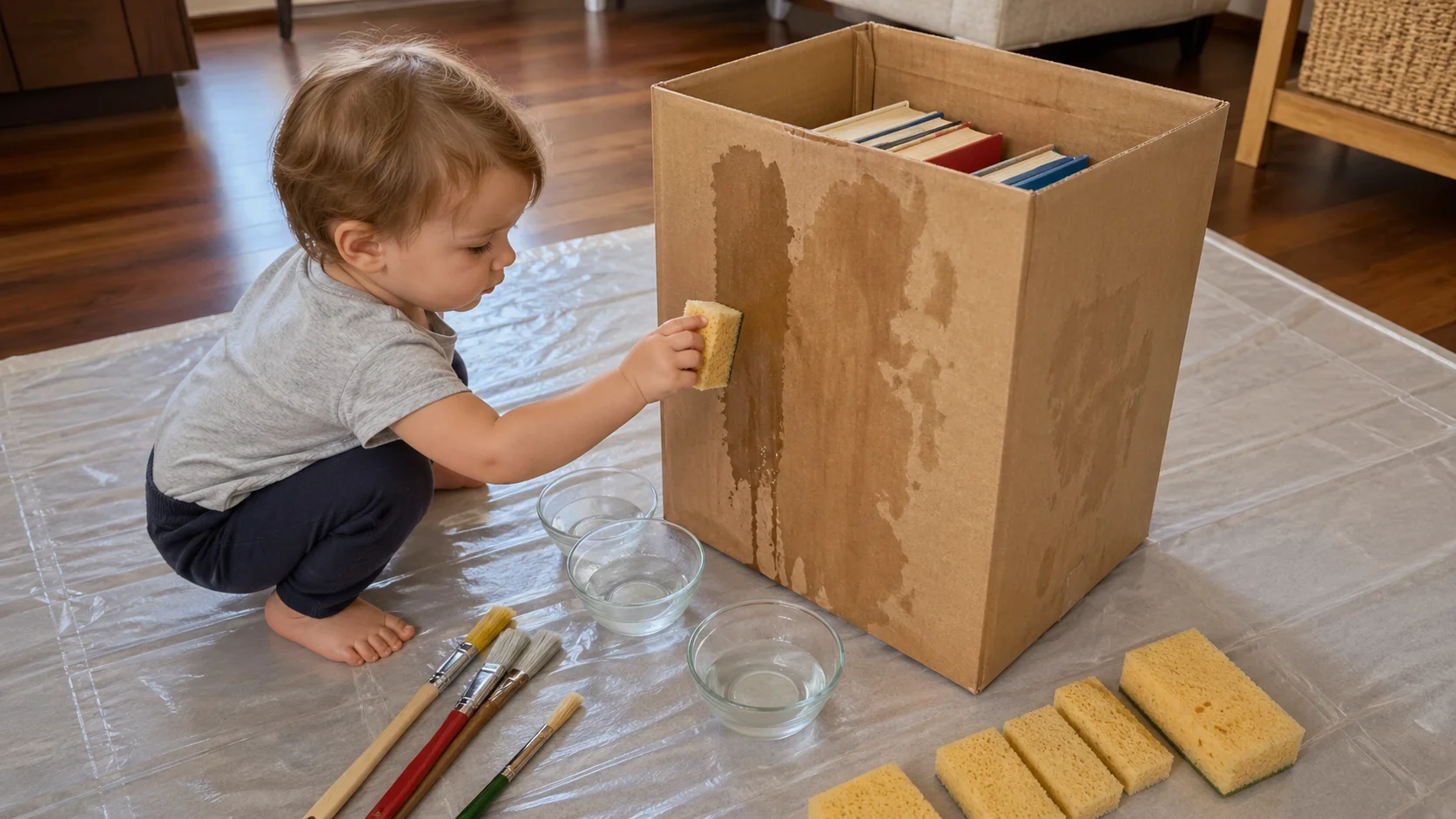
A low-mess cardboard water painting activity where your child makes wet marks, watches them darken, and returns to dry spots to do it again.
Put a towel on the floor, set one weighted cardboard box on it, add one shallow bowl of water, one clean brush, and one clean sponge, then model one wet stripe.
Time
15-30 min
Energy
Medium
Parent effort
Low
Age fit
1-4 years
Mess
Low
Location
Indoor
Today's pick
Start here
The recipe.
Low parent effort
7 things
What you need
- 011 large cardboard box
- 021 waterproof floor covering, such as a picnic blanket, shower curtain, plastic tablecloth, or towels
- 031 heavy book stack or other weight for inside the box
- 04Water
- 05Several small bowls
- 06Several clean paint brushes
- 07Several clean hand-sized sponges
15 min minimum
Setup
Then start the loop
Step 01
Lay the waterproof covering flat on the floor where your child has room to stand or sit beside the box.
Step 02
Stand the cardboard box upright on the covering and put heavy books or another heavy object inside.
Step 03
Give the box a gentle push; it needs to stay mostly in place.
Step 04
Put shallow bowls with a little water beside the box.
Step 05
Place clean paint brushes and hand-sized sponges next to the bowls within your child's reach.
Then continue
Say, "Can you wash the box with water?"
The loop
How play unfolds.
1
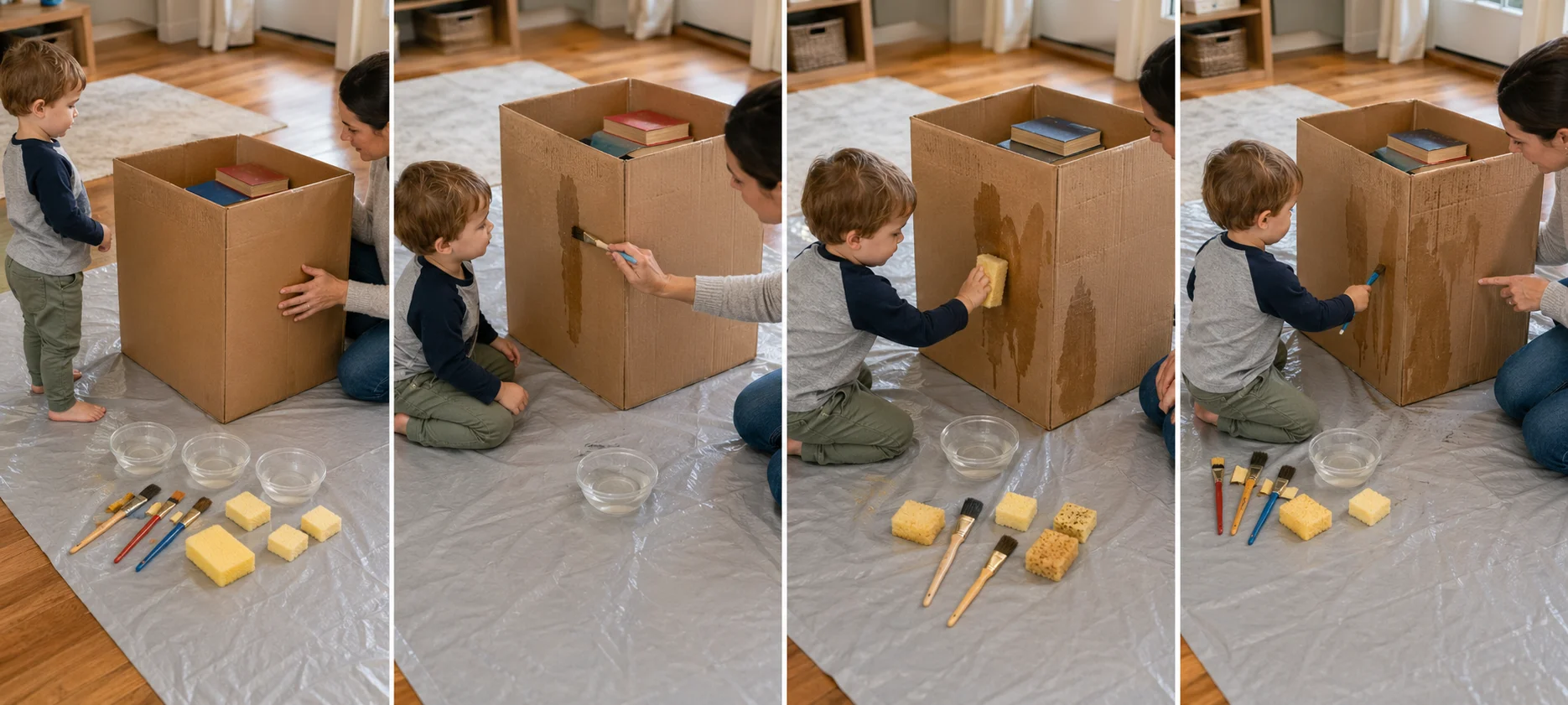
Dip one paint brush in the water and make one slow wet stripe on the outside of the box.
2
Let your child choose a brush, sponge, or wet fingers.
3
Your child paints, wipes, or dabs one part of the box and watches the cardboard turn darker.
4
Name the result
"You made that part wet."
5
Invite your child to find another dry patch or another side of the box.
6
Repeat when your child dips again, switches tools, or returns to a side that has dried.
What to say in the moment
Match what you say to what you see.
Prompt ladder
Level 1 (Start)
Dip the brush and make one wet mark.
Level 2 (Keep going)
Find a dry spot and wash that part.
Level 3 (Stretch)
Try the sponge on a new side.
Level 4 (Extend)
Go around the box and find another dry side.
If your child seems...
What you'd see
Focused
What to do
Say
"You made that part darker."
Add
Ask, "Which part is wet?"
Extend
Let your child choose brush, sponge, or fingers for the next mark.
Make it easier
Younger end- -Offer only one brush or sponge at a time.
- -Point to one dry patch for the next mark.
- -Make the first wet stripe and let your child copy it.
Make it harder
Older end- +Ask your child to find a dry section before dipping again.
- +Invite your child to switch between brush and sponge marks.
- +Let your child work around all four sides of the box.
If it's not working
If you see
If child ignores it
Make one big wet stripe, point to the dark mark, and offer one tool: "Brush or sponge?"
If you see
If child misuses it
If water gets dumped or tools go in the mouth, move the bowl back onto the covering, offer a clean tool, and say, "Water goes on the box."
If you see
If child gets frustrated
Switch to the sponge, make one big wipe together if welcome, or move to a fresh dry side where the wet mark shows quickly.
Skill spotlight
Making wet marks, Using a brush or sponge
Developmental value
This helps your child connect an action with a visible result while using a tool with control.
Source support
Brush use, sponge wiping, finger painting, and water play give children real chances to use their hands, control art supplies, and explore how materials change.
Mechanic evidence
The child picks up a brush or sponge, dips it in water, wipes or dabs the box, watches the cardboard darken, moves to another section, and repeats as areas dry.
Real-World Transfer
- - Wiping a table or spill with purpose.
- - Using a brush, sponge, or cloth with control.
- - Noticing when an action changes something.
- - Staying with a simple care task until the surface is covered.
What You'll See
Early. Your child watches after you make the first wet stripe. Your child may dip often and make one large wet area.
Later. Your child looks for a dry patch before making the next mark. Your child comes back to a side that dried and paints it again.
Middle. Your child wipes, sees the darker patch, and returns for more water. Your child switches between brush, sponge, or fingers.
Why it helps
- Dipping, wiping, and seeing the cardboard darken helps your child connect one action to one visible result.
- Switching between a brush, sponge, or fingers gives your child repeated practice using simple tools on a large surface.
- Looking for a fresh dry patch keeps the play loop going without changing the materials or the job.
Parent questions
Keep playing
Related play
Activities for ages 1 to 4Cause and effect activitiesLow-mess indoor activities