ThinkingMove Through PathIndoor

Box Road.

A cardboard road activity where your child drives toy cars, adds blocks and small animals, and changes the pretend scene.

Flatten the box, draw one quick road, and set out one toy car, a few blocks, and a few small animals. Drive the car once, then let your child take over.
Time
15-30 min
Energy
Low
Parent effort
Low
Age fit
3-6 years
Mess
Low
Location
Indoor
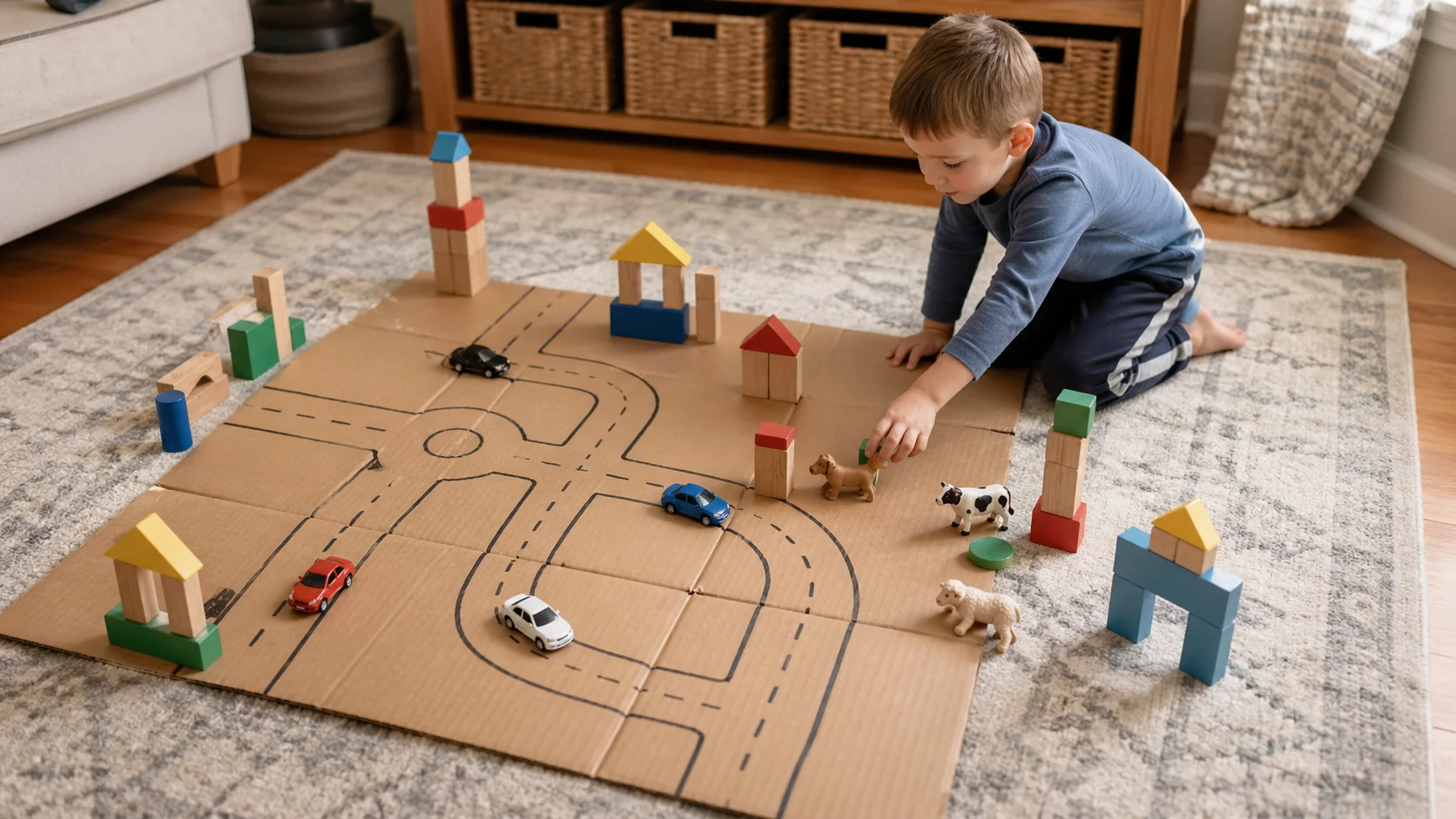
A child driving a toy car along a marker road drawn on flattened cardboard with blocks and small toy animals nearby.
Today's pick
A flattened cardboard box turns toy cars, blocks, and animals into a changeable road scene.
Start here

The recipe.

Low parent effort
6 things

What you need

  1. 01
    1 cardboard box
  2. 02
    1 pair of scissors
  3. 03
    1 marker, pen, or other drawing tool
  4. 04
    Blocks
  5. 05
    Toy cars
  6. 06
    Small toy animals
15 min minimum

Setup

Then start the loop
Step 01
Open the cardboard box with scissors so it lies flat on the floor, then put the scissors away.
Step 02
Draw a simple road across the cardboard. Make it wide enough for toy cars to drive on without careful aim.
Step 03
Place the cardboard road flat in the play area.
Step 04
Set the blocks, toy cars, and small animals beside the cardboard so the road starts open.
Then continue
Say, "Here comes a car on the road. What should it visit?"
The loop

How play unfolds.

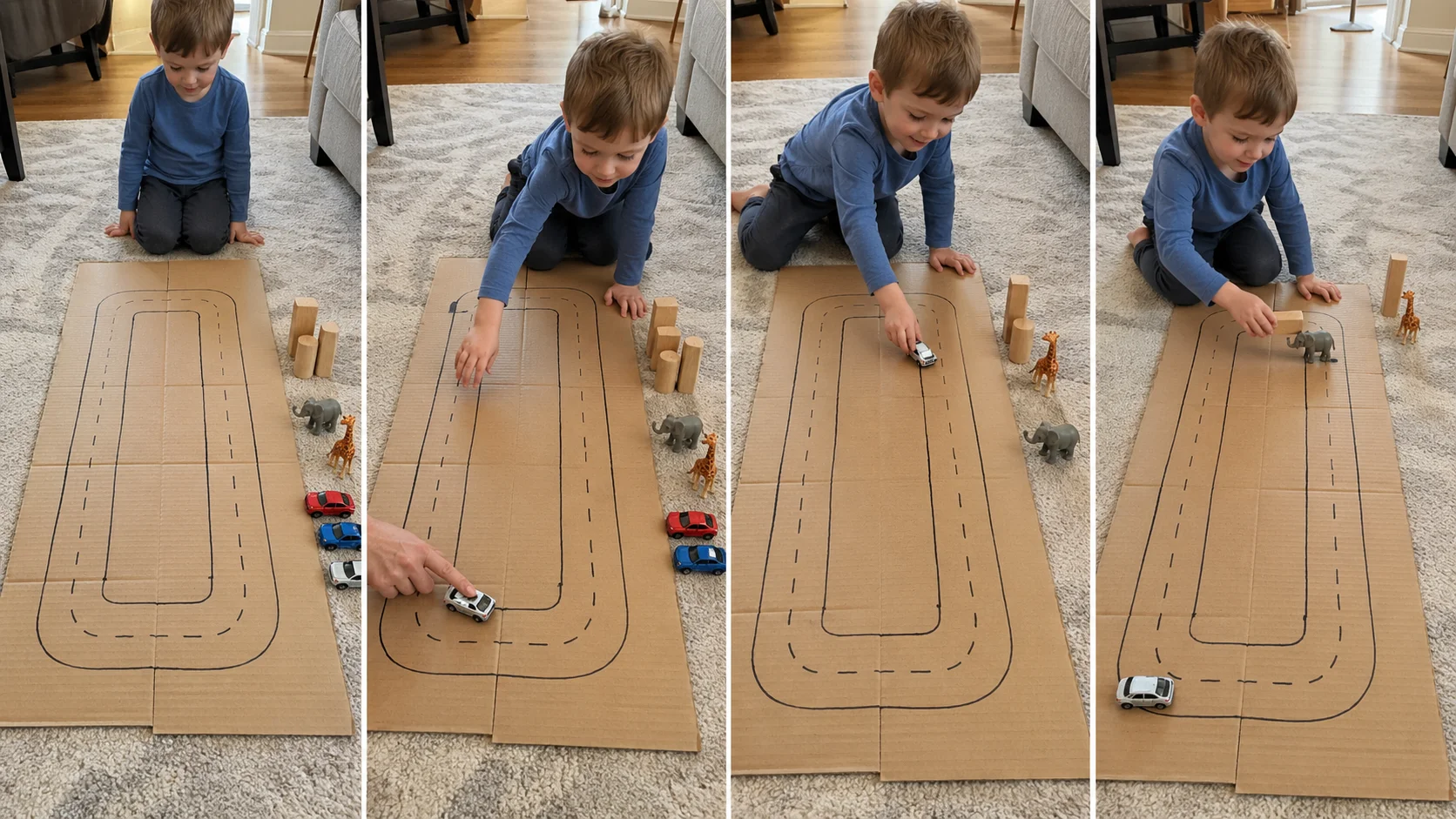
Four panels showing a flattened cardboard road, a grown-up modeling one car trip, a child adding blocks and animals, and the car driving through the changed scene.
1
Put one toy car on the road, drive it toward the blocks and small animals, and stop beside one piece.
2
Let your child drive the car, add or move blocks and small animals, then drive again through the changed scene.
3
Reset the loop when your child moves a car back to the start, turns it around, or changes the blocks and small animals for the next trip.
4
Stop when your child leaves the play, the cardboard is in the way, or the toys need to be put away.

What to say in the moment

Match what you say to what you see.

Prompt ladder
Level 1 (Start)
"Can this car visit the animal?"
Level 2 (Keep going)
"Where should the car stop next?"
Level 3 (Stretch)
"What changes if this block moves?"
Level 4 (Extend)
"Where should the road trip go after this stop?"
If your child seems...
What you'd see
Focused
What to do
Say
"Your car is still moving."
Add
Name one thing the car passes.
Extend
Move one small animal near the road and let your child decide what happens.

Make it easier

Younger end
  • -Use one car and one small animal until your child is moving again.
  • -Keep the road clear and place blocks only beside it.
  • -Narrate your child's action instead of asking questions.

Make it harder

Older end
  • +Add one stop before the car reaches the end of the road.
  • +Let your child decide where each block building belongs.
  • +Ask your child to remember where the car visited last.

If it's not working

If you see
If child ignores it
Drive one car down the road with a simple car sound, stop beside a small animal, and hand the car to your child.
If you see
If child misuses it
If pieces are thrown or the box gets stomped, pause, clear the road, and restart with one car and one small animal.
If you see
If child gets frustrated
Move the extra pieces aside and make it a plain drive-on-the-road game until your child is ready to add blocks or small animals again.
Skill spotlight

Driving toy cars through a path, Building a pretend scene

Move Through Path
Developmental value

This helps your child use a shared play space, choose where pieces belong, and keep a pretend idea going with another person.

Source support

Simple items like boxes, blocks, cars, and small animals can become shared play materials. Children in this range use imaginative play, tell stories, cooperate with other children, and negotiate conflicts.

Mechanic evidence

The child drives a car on a drawn road, places blocks beside it, adds small animals, gives pieces roles, changes the scene, and drives again.

Real-World Transfer
  • - Moving toys through a clear path without knocking everything over.
  • - Placing pieces where they fit in shared play.
  • - Telling another person what is happening.
  • - Adjusting when someone else joins the game.
What You'll See
Early. Your child drives one car on the road after you model it. Your child may move pieces onto the road and need a clear path again.
Later. Your child changes the scene before the next drive. Your child makes room for another player's car or idea.
Middle. Your child adds one stop, moves the car to it, then drives again. Your child starts using small animals or blocks as part of the story.
Why it helps
  • Driving along the drawn road gives your child a visible path to follow and return to.
  • Adding blocks and small animals turns the road into a shared pretend scene with places to visit.
  • Moving one piece before the next drive helps your child notice how the scene changes the route.

Parent questions

Keep playing

Related play

Activities for ages 3 to 6Pretend play activitiesLow-mess indoor activities